

A family dentist can give your household one office for scheduling and a continuous record, along with preventive care and services for different ages. Ask the practice what urgent care it offers. The CDC and the AAPD back this model, and at South Littleton Family Dental we build our care around it.
TL;DR:
- Sealants prevent 80% of cavities on treated back tooth surfaces, while fluoride varnish prevents 33% of cavities in baby teeth.
- Schedule a child’s first dental visit by age 1, then plan at least yearly checkups, with extra visits when the dentist recommends them.
- Before booking, confirm the practice’s age limits, specialist services, insurance participation, fees, and urgent care access, since these vary by office.
- Ask how the dentist sets recall intervals for each family member, transfers records, and decides when a specialist referral is appropriate.
- For a dental emergency, call the dentist immediately, describe the problem, and seek emergency care at once if you believe it is urgent.
Table of Contents
- 1. Which family dentist benefits matter most to busy parents?
- 2. How do routine visits prevent invasive treatment?
- 3. How does one office save you time and hassle?
- 4. Why does a dental home improve care over time?
- 5. What can a family practice treat for every age?
- 6. What should you do in a dental emergency?
- 7. What does the public-health evidence say?
- 8. Why do we care so much about family-centered care?
- 9. How do you get started with a family dentist?
- FAQ
- Sources
1. Which family dentist benefits matter most to busy parents?
- Convenience: one office and one set of directions for every person in your house.
- Scheduling: back-to-back appointments instead of three separate trips.
- Dental home continuity: one chart that follows each of you from the first tooth onward.
- Prevention and early detection: sealants, fluoride and routine exams that catch trouble while it is small.
- Services for every age: cleanings for kids, fillings for parents, denture care for grandparents.
- Emergency access: a dentist who already knows your family’s history when a tooth cracks.
- Trust and comfort: children and anxious adults relax around a team they see again and again.
- Simpler billing: one office handling insurance questions and payment plans for everyone.
2. How do routine visits prevent invasive treatment?
Regular family dental care is associated with fewer oral treatments and lower dental costs, according to the CDC’s oral health overview. Small problems get caught before they turn into root canals or extractions.
Sealants on back teeth prevent 80% of cavities on those surfaces, and fluoride varnish prevents 33% of cavities in primary teeth. These preventive treatments may help reduce the need for more invasive treatment later.
Ask your dentist about these at your next visit:
- Whether your child’s back teeth are ready for sealants.
- Whether fluoride varnish makes sense for baby teeth.
- When the first exam should happen: the CDC recommends a first dental visit by age 1.
- How often each family member should be seen, based on personal risk.
3. How does one office save you time and hassle?
Running a household means juggling school pickups, work and sports. A family dental office cuts down the logistics.
- Back-to-back appointments: ask whether the practice can schedule siblings and parents in the same time block, reducing the need for separate trips.
- Shared records: x-rays, allergy notes and treatment history live in one place, so you never repeat the same paperwork.
- Coordinated billing: one office can verify insurance for everyone and explain what each visit will cost before you commit. For general background on how payment coordination works, see this insurance and billing guide.
- Online booking: ask whether you can request family appointment slots without calling during business hours.
Pro Tip: Ask the office whether preventive visits, such as cleanings and fluoride treatments, can be scheduled for the whole family on the same day.
4. Why does a dental home improve care over time?
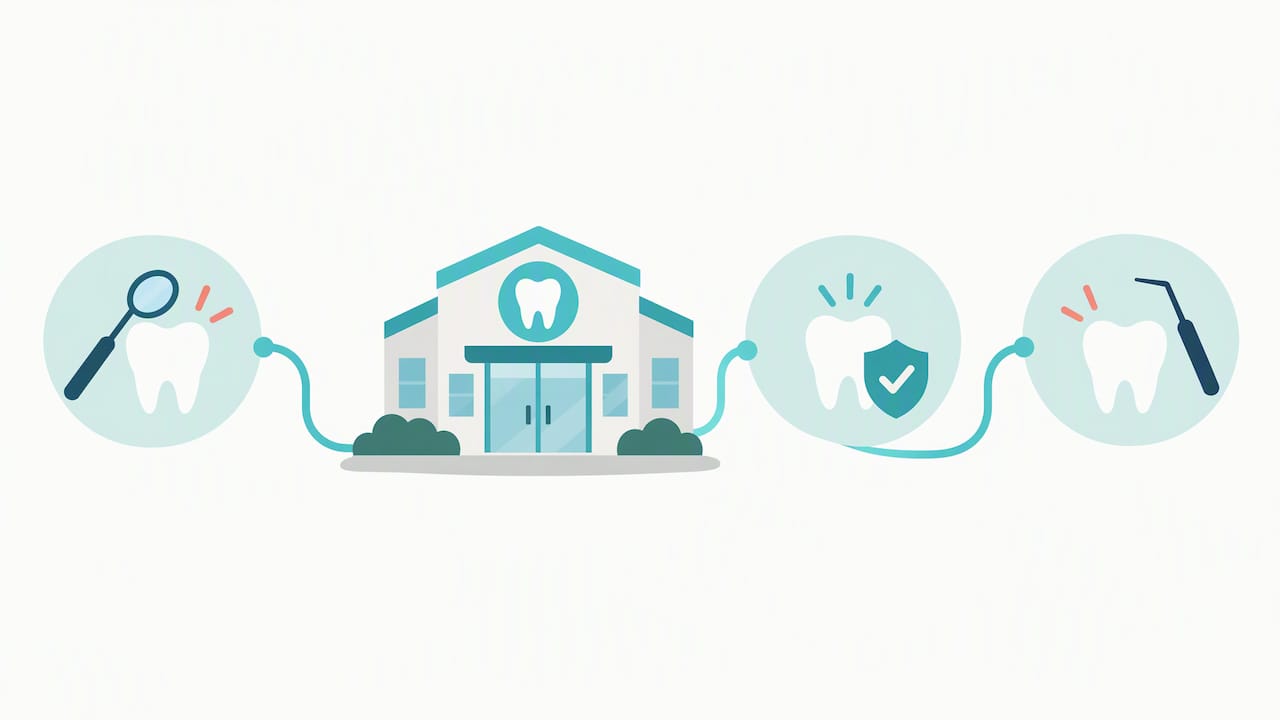
The AAPD describes a “dental home” as ongoing, comprehensive care delivered by one team, with coordinated anticipatory guidance rather than isolated one-off visits. The AAPD overview of the dental home says it should begin by 12 months of age, and the Policy on the Dental Home adds that it includes individualized preventive care and referrals when appropriate.
In practice, that means:
- Tailored recall schedules: a child with frequent cavities may come in more often than a low-risk sibling.
- Better referrals: a dentist who knows your history can tell you when a specialist is truly needed.
- Fewer surprises: changes between visits stand out because the same team keeps the baseline.
When you switch practices, ask how records transfer and what recall interval they recommend for each family member.
5. What can a family practice treat for every age?
A family practice typically covers a wide range under one roof:
- Routine exams, cleanings and x-rays for children and adults.
- Pediatric prevention, including sealants and fluoride.
- Restorative care such as fillings and crowns.
- Orthodontic screening to flag bite or alignment concerns early.
- Denture and partial maintenance for older adults.
- Oral cancer screening for adults.
Specialist services and age limits vary by practice, and the CDC notes that availability, insurance participation and fees should be confirmed before booking. A single visit might include a sealant for your child while you get a filling replaced in the next chair.
6. What should you do in a dental emergency?
Untreated dental problems are a known driver of avoidable emergency room visits and lost work time, as the CDC’s oral health page explains. Contact a dentist about the problem, and seek immediate emergency care if you believe the situation is urgent. Our emergency dentistry page explains how we handle urgent visits.
- Call your dentist right away and describe the problem.
- Rinse your mouth gently with warm water.
- Save any broken tooth fragments or a knocked-out tooth, keeping it moist.
- Bring your insurance card, medication list and allergy details.
- Follow the office’s instructions on how soon to come in.
7. What does the public-health evidence say?
The case for family dental care rests on consistent findings from public-health and pediatric dental sources:
- The CDC links routine visits to fewer treatments and lower costs, and recommends at least a yearly check-up with extra visits when a provider advises them.
- The CDC and the AAPD agree on an early first visit, sealants, fluoride and the dental-home model, and AAPD guidance on periodicity of care describes individualized visit schedules and transition planning to adult care.
- The CDC reports that sealants for low-income children could save up to $300 million in treatment costs.
Practices differ in scope, insurance participation and referral habits, so confirm those details with any office you consider.
8. Why do we care so much about family-centered care?
We built our practice around a family-friendly environment, individualized care plans, advanced technology, and emergency and preventive services. Contact us to ask about availability. Anxiety is the main reason people skip visits, so we focus on comfort and clear explanations. If you are new to us, ask about family appointment options and our $99 new-patient cleaning.
— Admin
9. How do you get started with a family dentist?
Before your first family appointment, gather a few things:
- Insurance details for every family member.
- The ages of everyone being seen.
- Recent x-rays, if you have them.
- Questions about sealants, fluoride and emergency hours.
We would be glad to be your family’s dental home. Start with our general dentistry page, or look at our new-patient special for an easy first step.
FAQ
What does “family dentist” mean?
A family dentist treats patients of all ages in one practice, from toddlers to grandparents. This lets the whole household share a single office, schedule and set of records.
Is a family dentist the same as a general dentist?
Not quite. A general dentist may focus mainly on adults, while a family dentist is set up to treat children, teens and older adults too. Confirm the age range with any practice before booking.
What age should my child first see a dentist?
The CDC recommends a first dental visit by age 1. Starting early lets the dentist catch problems sooner and gets your child comfortable with the office.
How often should a family visit the dentist?
The CDC advises at least a yearly check-up with professional cleanings, with more visits when a provider recommends them. Your dentist may suggest a different recall interval for each person based on risk.