
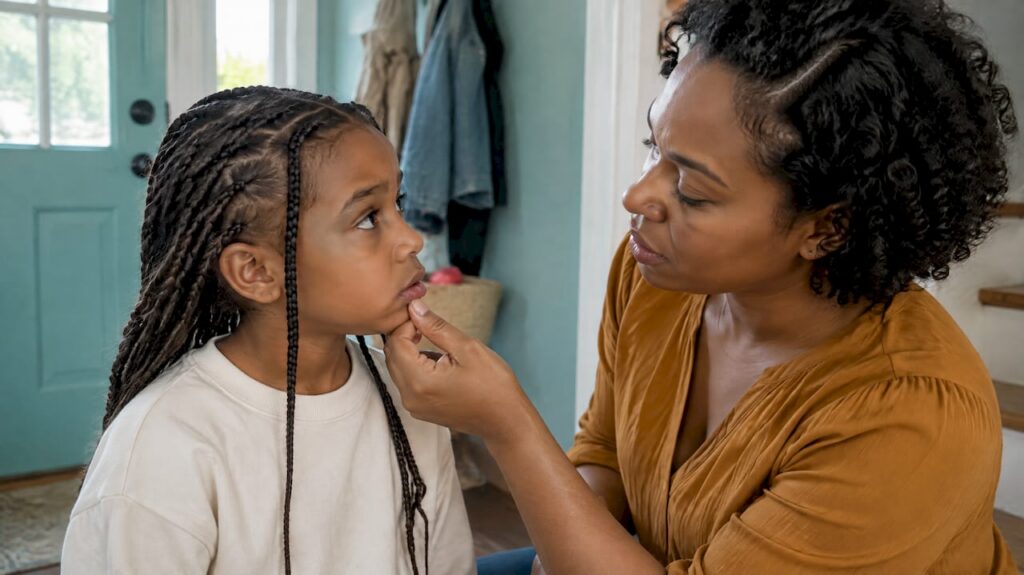
A lip bitten while numb after dental work is common, and most of these bites heal on their own. Rinse gently, keep the area cold for the first day, eat soft foods, and watch for signs of infection. Children are the most likely to do it, because they can’t feel the lip and don’t understand why it feels strange. This guide covers first aid, healing time, what is normal, and what is a reason to call.
TL;DR
- Self-inflicted lip trauma is a recognized complication of local anesthesia in children, and most injuries heal without complications.
- For the first day, apply a cold pack wrapped in a cloth for 10 to 15 minutes at a time. Rinse inside the mouth with warm salt water after meals.
- A yellowish-white, scab-like patch is part of healing. Final healing can take from one to several weeks.
- Call the dentist for new bleeding, spreading redness, warmth, pus, red streaks, fever, or a wound that is not improving.
Table of Contents
- Why a numb lip gets bitten
- What it looks like in the first hours and days
- How to treat a lip bite at home
- How long does a lip bite take to heal?
- When to call the dentist or seek urgent care
- How to prevent a lip bite next time
- Our perspective
- Looking for a family dentist in Littleton?
- FAQ
- Sources
Why a numb lip gets bitten
Local anesthetic blocks sensation in the lip, cheek and tongue for hours after the appointment. Without pain as a warning, it is easy to chew on the lip without noticing. A peer-reviewed case report notes that children may bite out of curiosity about the unfamiliar numb feeling, or inadvertently because they feel no pain.
The lower lip is the usual victim. Lower-jaw numbing also numbs the lip and tongue on that side, and that is the injury the research describes as a complication of nerve blocks in that area, particularly among children.
Adults do it too. A numb lip can get caught between teeth while eating or drinking, or chewed absentmindedly. The first-aid steps below apply to everyone.
If you want to know how long the numbness itself should last, and which symptoms are not normal, read our guide to dental numbing timelines and when to call 911.
What it looks like in the first hours and days
A bitten lip can look alarming. Typical findings include:
- Swelling that can make the lip look much larger than usual.
- Redness, bruising, or a raw spot where the teeth broke the surface.
- Within a day or so, a soft yellowish or white patch over the injury. That is a healing ulcer, not pus.
- Mild soreness that shows up as the anesthetic wears off.
The peer-reviewed case report says localized swelling, redness and pain are common benign findings after traumatic lip biting, and that localized swelling should not automatically be mistaken for pus or infection. Parents often panic when they see the white patch. It is usually the body’s normal covering over the wound.
How to treat a lip bite at home
Here is the order that works for most people.
1. Stop the bleeding
If the lip is bleeding, Cleveland Clinic advises flushing it with clean, cold water and pressing gauze or a clean cloth on it for 5 to 10 minutes. A little oozing is expected. Heavy bleeding that doesn’t stop with firm pressure needs a call to the dentist or urgent care.
2. Use cold for swelling and soreness
Put a cold pack or ice wrapped in a thin cloth on the area. Guidance differs a little by source, so use the pattern that suits the person:
- Children’s Hospital of Philadelphia recommends a cold pack every one to two hours for 10 to 15 minutes during the first 24 hours for bruises, blisters or swelling on the lips after trauma.
- Kaiser Permanente suggests 10 to 20 minutes at a time, with a thin cloth between the ice and the skin.
For a young child who won’t hold an ice pack, a cold popsicle or cold water may be easier. Whatever you use, watch the child so they aren’t chewing the ice against the numb lip.
3. Keep the inside of the mouth clean
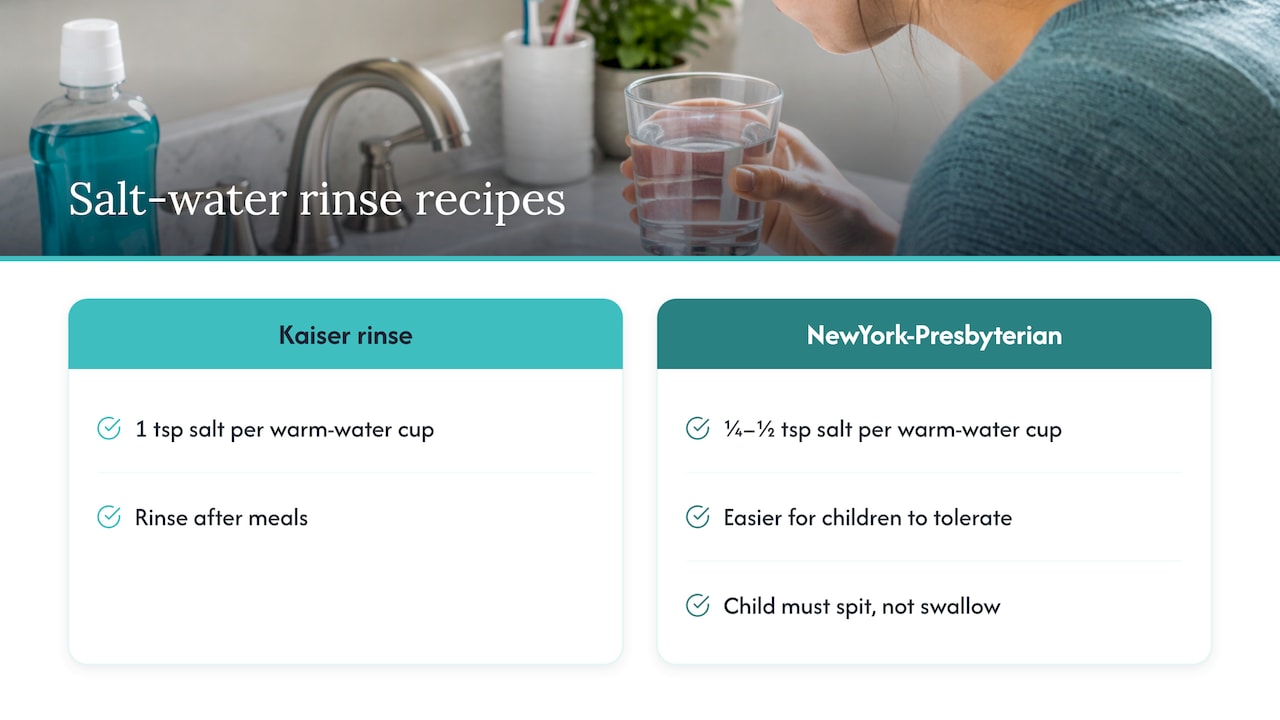
If the injury is inside the lip, Kaiser Permanente suggests rinsing with warm salt water (1 teaspoon of salt in 1 cup of warm water) after meals. NewYork-Presbyterian gives a gentler mix of 1/4 to 1/2 teaspoon in a cup of warm water. For a child, the weaker mix is easier to tolerate, and they must be old enough to spit rather than swallow.
Brush your teeth as usual, but be gentle around the sore spot. After the first 24 to 48 hours, Kaiser Permanente says to wash around the cut with clean water twice a day and to avoid hydrogen peroxide or alcohol, which can slow healing.
Some people find alcohol-based mouthwash stings a sore mouth. If that’s you, read about gentler rinses for sensitive mouths, including xylitol and saline options.
4. Choose soft, bland foods
Kaiser Permanente recommends soft foods and avoiding salty or spicy foods, citrus fruits and juices, and tomatoes while the cut heals. It also says not to use a straw until the lip has healed. Think yogurt, scrambled eggs, mashed potatoes, smoothies eaten with a spoon and lukewarm soup. Wait until the numbness is completely gone before eating anything chewy.

5. Manage pain
The peer-reviewed protocol for these injuries treats them palliatively with over-the-counter analgesics if painful. It also says that chlorhexidine may be prescribed to gently clean the ulcer, and that antibiotics by mouth or injection are not indicated unless a secondary infection develops. Ask your doctor or pharmacist which pain reliever and dose is right, especially for a child, whose dose depends on weight.
Topical numbing gels deserve extra care with children. NewYork-Presbyterian notes that the FDA warns some mouth-numbing medicines can be dangerous for children of all ages, and advises asking a doctor before using them. Don’t reach for a gel on your own.
6. Keep the lips moist and protect the skin
When the injury is on the outer lip, Cleveland Clinic suggests petroleum jelly to keep lips moist rather than antibiotic ointment. Once it has healed, CHOP recommends sunscreen of at least SPF 15 on the area to help prevent scarring.
How long does a lip bite take to heal?
Many bites settle in about two weeks. Dentists commonly describe a 10 to 14 day course for this kind of injury, with the white patch fading as the tissue closes over. The American Dental Association, as cited by Colgate, says minor mouth sores or irritations can heal within a week or two. The peer-reviewed clinical protocol adds that final healing can take several weeks in some cases and recommends follow-up with the child’s dentist.
Here is a rough timeline, based on the sources above and on how these injuries typically behave:
| Stage | What you may see | What to do |
|---|---|---|
| First hours | Numbness, then soreness as it wears off; bleeding or swelling | Gentle pressure, cold pack, no chewing until feeling returns |
| Days 1 to 3 | Swelling, redness, soft white or yellow patch forming | Cold for the first day, salt water rinses, soft foods |
| Days 4 to 14 | Soreness fading, patch shrinking | Keep the area clean, keep avoiding spicy and acidic foods |
| Beyond 2 weeks | Should be mostly closed | If it isn’t, call your dentist |
How long will the lip stay swollen?
Swelling is usually most noticeable in the first couple of days and then goes down as the wound heals. Because it can look worse before it looks better, don’t assume that more swelling on day two means something went wrong. What matters is the direction of travel: swelling that keeps growing, feels hot, or comes with fever or pus is different, and the next section covers it. If swelling is still there after a week or so, or you aren’t sure, call the dentist who did the work.
When to call the dentist or seek urgent care
Most lip bites don’t need treatment beyond home care. Kaiser Permanente advises calling a doctor or seeking immediate medical care if:
- The cut starts to bleed (small amounts of oozing are normal).
- There are signs of infection: increased pain, swelling, warmth or redness, red streaks, pus, or fever.
- The cut reopens or isn’t getting better as expected.
The case report adds that fever and generalized malaise, along with local findings, are the signs that should make you consider and evaluate a secondary infection. So a child who is feverish, unusually tired and has a worsening lip needs to be seen promptly.
Trouble breathing, swelling of the tongue or throat, or swelling that is spreading across the face is an emergency. Call 911 rather than the office.
Swelling or pain that may be tied to a tooth rather than the lip can be an abscess. Our guide to dental abscess symptoms lists what to look for. If you have had a tooth pulled and have worsening pain a day or two later, check the dry socket warning signs too.
How to prevent a lip bite next time
The American Academy of Pediatric Dentistry advises giving caregivers realistic information about how long numbness lasts and about postoperative precautions, including ways to reduce biting of the lip, cheek or tongue. That is something to ask for at the appointment. Practical steps:
- Ask how long the numbness will last and note the time the appointment ends.
- Plan the meal before you leave. Eat before the visit, and have soft, cool food ready at home for afterward. Don’t give a numb child anything to chew, including gum or hard snacks.
- Stay with your child. Keep them within arm’s reach until the feeling is back. Younger children can bite without any sign of distress.
- Explain it in plain words. “Your lip is sleeping. Don’t chew on it until it wakes up” works better than a long warning.
- Check the lip. Gently lift it every so often to look for teeth marks or chewing. Ask the dentist whether a cotton roll or other reminder suits your child.
- Distract. A movie, a puzzle or a quiet game keeps small hands and teeth busy.
Adults should skip hot drinks and chewing on the numb side until sensation returns. Hot coffee on a numb lip can burn it without warning.
Our perspective
A bitten lip is one of the most common worries parents bring to us after a child’s visit, and most of it is preventable with a few minutes of planning. We think the conversation about numbness should happen before the child leaves the chair: how long it will last, what to feed them, and what a normal healing lip looks like.
Our approach is built around individualized care plans and a supportive, family-friendly setting that reduces anxiety and helps patients feel comfortable. For us that includes telling families clearly what to expect, so a white patch on a healing lip doesn’t send anyone into a panic at 9 p.m.
We also see these visits as a chance to start a relationship. If your child bites a lip, you should be able to call the dentist who treated them and get a straight answer about whether to watch, rinse or come in. Same-day availability for urgent concerns is part of how we work.
the author
Looking for a family dentist in Littleton?
If your child needs dental work, or you want a dentist who will walk you through aftercare before you leave, our team in Littleton, CO treats patients of all ages. We offer children’s dentistry and oral surgery, general care and same-day emergency visits.

If a lip injury looks infected, reopens or isn’t improving, contact our emergency dentistry team and we will advise you on the next step.
FAQ
Is it normal for my child to bite their lip after the dentist?
Yes. The AAPD recognizes self-induced lip or cheek trauma as a complication of local anesthesia. Most of these lesions are self-limiting and heal without complications, although bleeding and infection are possible. Keep watch while the numbness lasts and follow the care steps above.
How do you treat a bitten lip after dental work?
Press on any bleeding with gauze or a clean cloth, then use a cloth-wrapped cold pack. Rinse with warm salt water after meals if the injury is inside the mouth, and eat soft foods. Ask your doctor or pharmacist about an over-the-counter pain reliever, and call the dentist if you see signs of infection.
How long does a lip bite take to heal?
Minor mouth injuries often heal within one to two weeks, and dentists commonly describe a 10 to 14 day course for a bite after numbing. In some cases, final healing takes several weeks. Follow up with the dentist if the area isn’t improving.
Should I put antibiotic ointment on a bitten lip?
Cleveland Clinic recommends petroleum jelly to keep the lip moist, rather than antibiotic ointment. The peer-reviewed protocol says oral antibiotics are not indicated unless a secondary infection develops. If you suspect infection, call the dentist or doctor.
Sources
- Use of Local Anesthesia for Pediatric Dental Patients (AAPD)
- Lip biting in pediatric dental patients following dental anesthesia (PMC)
- Clinical protocol table (PMC)
- How To Heal a Busted Lip (Cleveland Clinic)
- Lip Laceration: Care Instructions (Kaiser Permanente)
- Cuts and Wounds of the Mouth and Lips (Children’s Hospital of Philadelphia)
- Mouth and Dental Injuries (NewYork-Presbyterian)
- How to Deal with Wounds or Cuts in Your Mouth (Colgate)