
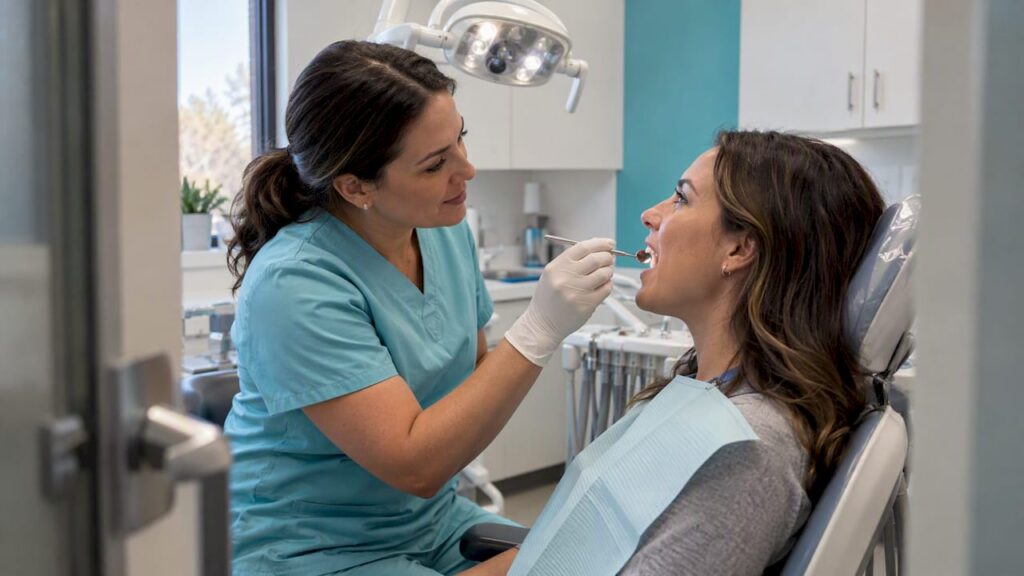
Teeth whitening is generally safe when a dentist supervises the process, though temporary tooth sensitivity and mild gum irritation are common. These effects usually fade within days of finishing treatment. If you have fillings, crowns, veneers, untreated cavities, or a history of pronounced sensitivity, book a dental exam before starting any whitening product.
TL;DR:
- Whitening treatments may cause temporary sensitivity and gum irritation, especially with higher concentrations, but these effects usually resolve within days.
- Intrinsic stains in dentin require longer or stronger peroxide exposure, while surface stains respond quickly to most whitening methods.
- Custom-fitted trays used at home or in-office treatments produce similar results, but over-the-counter options have lower concentrations and longer wear times.
- Restorations like crowns and veneers do not respond to whitening and can cause mismatched smiles if not addressed beforehand.
- Professional supervision lowers risks of enamel damage and reduces sensitivity compared to DIY approaches with high-concentration gels or abrasive substances.
Table of Contents
- How teeth whitening actually works on your enamel
- How effective are in-office, take-home, and store-bought options?
- What are the real risks and side effects?
- Who should avoid whitening or get cleared first?
- How to minimize risk and whiten as safely as possible
- What to expect before, during, and after treatment
- How a dental practice applies safe whitening in real appointments
- Quick takeaways on whitening safety
- South Littleton Family Dental: how we can help
- FAQ
- Sources
- Practitioner perspective: balancing cosmetic goals with oral health
How teeth whitening actually works on your enamel
Whitening gels rely on hydrogen peroxide or carbamide peroxide, which breaks down into hydrogen peroxide once it contacts saliva. These molecules penetrate enamel and dentin and break apart the pigmented compounds, called chromogens, that cause discoloration. The reaction lightens the tooth from the inside rather than scrubbing stains off the surface.
Not every stain responds the same way. Extrinsic stains, caused by coffee, tea, wine, or tobacco, sit on the enamel surface and lighten quickly. Intrinsic stains, caused by aging, certain medications, or trauma, sit deeper in the dentin and need longer peroxide exposure to fade.
- Extrinsic (surface) stains typically lighten fastest and respond well to most whitening methods.
- Intrinsic (deep) stains need higher concentrations or longer wear time to show noticeable change.
- Porcelain, ceramic, and composite restorations do not contain the same organic pigments as enamel, so peroxide has nothing to bleach. Crowns, veneers, and bonded fillings will not change shade no matter which product you use, according to the American Dental Association.
How effective are in-office, take-home, and store-bought options?
The method you choose affects speed, cost, and how much supervision you get, but an umbrella review of whitening techniques found that in-office and at-home bleaching produce similar color-change outcomes and comparable sensitivity risk. Light-activated systems did not improve results or reduce sensitivity compared with standard application.
- In-office treatments use stronger peroxide concentrations and deliver visible change in a single visit, usually under direct dental supervision.
- Dentist-dispensed take-home trays are custom-fitted to your teeth, use moderate concentrations, and are worn over one to two weeks with a dentist checking progress.
- Over-the-counter strips, gels, and whitening toothpaste use the lowest concentrations and work gradually over several weeks, with no clinical oversight built in.
Results from any method typically last several months or longer, depending on diet and habits. Smoking, red wine, coffee, and tea may speed up the return of surface stains, which is why many patients schedule periodic touch-up sessions rather than expecting a single treatment to last indefinitely. A custom-tray approach, similar to what ClearRetain describes when matching in-office results at home using 10% carbamide peroxide trays, tends to balance predictable fit with a gentler concentration than many in-office gels.
What are the real risks and side effects?
Transient tooth sensitivity affects many patients during the early stages of bleaching, according to the American Dental Association, but it is typically mild and resolves once treatment ends. Gum irritation is the second most common complaint, usually caused by gel leaking onto soft tissue from an ill-fitting tray or careless application.
- Mild, temporary sensitivity to cold or pressure is a frequently reported side effect across whitening methods.
- Gum irritation or whitening from gel contact usually clears within a day or two once the gel is removed.
- Chemical burns from higher-concentration gels used without protective barriers are rare but documented, often linked to improper at-home use or unsupervised application, as FDA adverse event reports describe.
- Persistent pain lasting beyond typical treatment duration, visible soft tissue issues, or worsening sensitivity warrant consultation with a dentist.
Concerns about enamel damage are mostly overstated. A 2026 systematic review examining peroxide bleaching found only small, statistically detectable reductions in enamel microhardness, changes the researchers concluded are not clinically significant when standard protocols are followed. The review’s authors found no evidence supporting stricter regulatory limits on peroxide concentration purely on safety grounds.
Who should avoid whitening or get cleared first?
Whitening only changes the color of natural, vital tooth structure, so certain situations call for a conversation with your dentist first.
- Crowns, veneers, and large composite fillings will not whiten, which can leave a visibly mismatched smile if you bleach around them without a plan.
- Active cavities or gum disease should be treated before whitening, since peroxide can irritate already-inflamed tissue or seep into decayed areas.
- Children, adolescents with developing teeth, and pregnant or breastfeeding patients are generally advised to postpone cosmetic whitening until a dentist confirms it is appropriate.
- Anyone with a history of severe sensitivity should discuss a lower-concentration or shorter-duration protocol before starting.
How to minimize risk and whiten as safely as possible
Dentist-prescribed options, whether in-office treatment or custom take-home trays, remain the safest route because a professional controls the fit, the concentration, and the protection of your gums. A network meta-analysis of at-home bleaching agents found that higher concentrations, such as 20 to 22% carbamide peroxide or 14 to 16% hydrogen peroxide, carry a greater sensitivity risk than lower concentrations like 2 to 4% hydrogen peroxide or 10 to 11% carbamide peroxide. Choosing a gentler concentration with professional guidance often delivers comparable results with less discomfort.
- Schedule a professional cleaning before whitening so plaque and calculus do not block even gel contact.
- Ask your dentist about a desensitizing toothpaste or fluoride treatment before and during whitening to blunt sensitivity.
- Keep application windows short and follow the prescribed wear schedule rather than extending time to speed up results.
- Confirm your tray fits snugly against the gumline to limit gel leakage onto soft tissue.
- Skip DIY approaches like activated charcoal or acidic lemon-and-baking-soda mixtures, which can abrade enamel without any proven whitening benefit.
- Stop treatment and seek dental advice if you experience sharp or persistent sensitivity or gum sores that do not resolve quickly.
Pro Tip: If sensitivity starts early in a multi-day regimen, skip a day rather than pushing through, since spacing out sessions rarely slows your overall results.
What to expect before, during, and after treatment
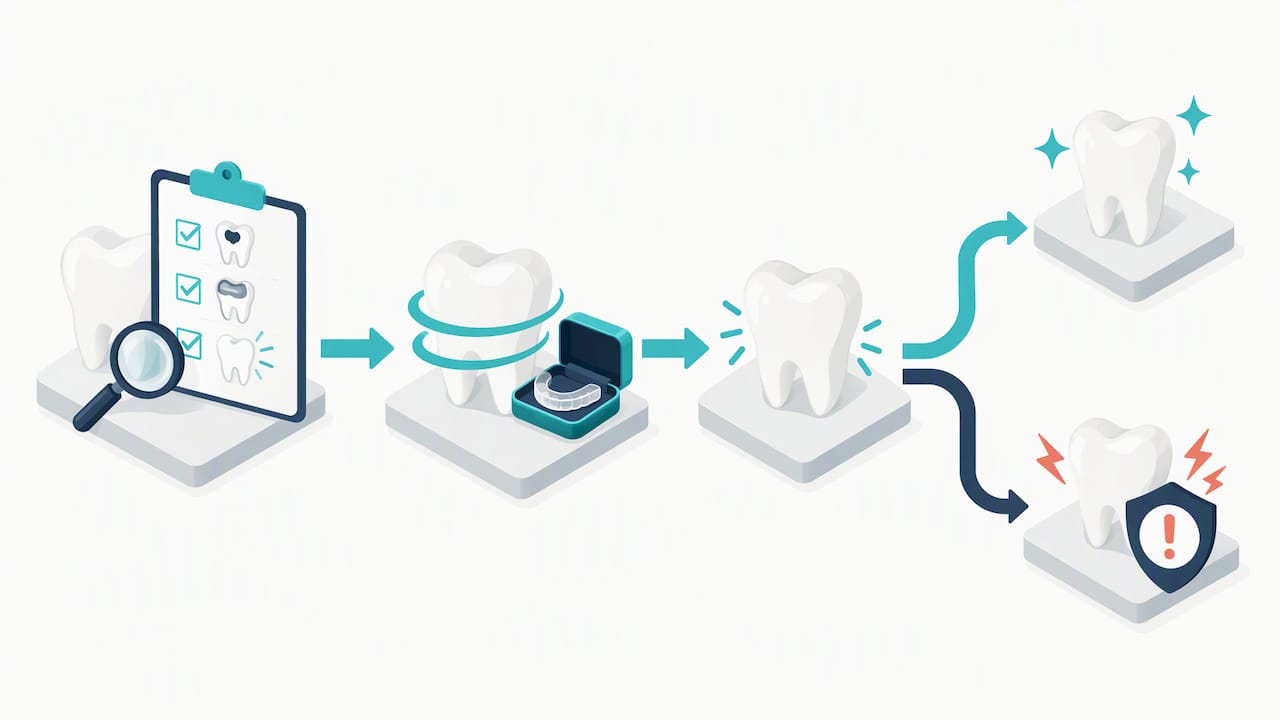
A typical whitening plan starts with an exam to check for cavities, gum health, and existing restorations, along with a review of your medical history and any medications that affect sensitivity.
- For in-office treatment, a single visit usually includes a protective barrier over your gums before the whitening gel is applied under supervision.
- For take-home trays, your dentist takes an impression, has custom trays made, and gives you a wear schedule, often nightly or twice daily for one to two weeks.
- Sensitivity often peaks early in treatment and generally fades after completion; most patients maintain results with occasional touch-up sessions rather than repeating a full course.
How a dental practice applies safe whitening in real appointments
At South Littleton Family Dental, we build every whitening plan around the same sequence the research supports: exam first, cleaning second, then a conversation about any existing restorations before choosing a method. For patients who want fast, supervised results, we offer in-office and custom take-home options through our Lumi & KoR™ teeth whitening service.
- Dental providers check for cavities, gum inflammation, and restorations during the initial exam so whitening is planned around actual dental health, not just cosmetic goals.
- Soft tissue is protected with barriers during in-office treatment, and take-home trays are custom fitted to each patient individually.
- Some dental offices provide same-day exams for new sensitivity concerns, so patients who develop discomfort during treatment do not have to wait weeks for an appointment.
Quick takeaways on whitening safety
Teeth whitening is generally safe when a dentist is involved in the plan. Expect mild, temporary sensitivity as the most likely side effect, not lasting harm. If you have restorations, cavities, or strong sensitivity concerns, see a dentist before you start, and stop if discomfort becomes sharp or persistent.
South Littleton Family Dental: how we can help
Professional whitening through Lumi & KoR™ is available, often paired with same-day exams for anyone who develops sensitivity or has questions about restorations before starting. This ensures a plan built around exam findings from the start, rather than guessing at concentrations or tray fit on your own.

- A first appointment typically includes an exam, a discussion about any crowns or fillings that will not whiten, and a recommendation between in-office or custom take-home trays.
- We can also connect you with our restorative dentistry team if whitening reveals work that should happen first, like treating a cavity or planning around an existing crown.
- If sensitivity develops mid-treatment, same-day scheduling options may be available to avoid long waits for checkups.
If you are ready to find out what a supervised whitening plan looks like for your teeth, book a visit for Lumi & KoR™ whitening and we will start with an exam.
This article is general information, not a substitute for advice from a qualified doctor. Consult a qualified healthcare professional about your own circumstances before acting on anything here.
FAQ
Do dentists recommend teeth whitening?
Dentists generally consider whitening safe and effective when it is supervised, according to the American Dental Association. The recommendation usually comes with a caveat: get an exam first, especially if you have restorations or untreated dental issues, so the plan fits your actual mouth.
What is the safest method to whiten teeth?
Dentist-prescribed options, whether in-office treatment or custom-fitted take-home trays, are considered the safest because a professional controls the concentration and protects your gums during application. Lower-concentration at-home systems under dental guidance also carry less sensitivity risk than high-concentration formulas, based on a network meta-analysis of bleaching agents.
How common is tooth sensitivity after whitening?
Transient sensitivity affects up to two-thirds of patients in the early stages of treatment, according to the American Dental Association, but it is typically mild and goes away once treatment ends. Using a desensitizing toothpaste before and during whitening can reduce discomfort.
Can teeth whitening damage enamel?
A 2026 systematic review found only small, statistically detectable reductions in enamel microhardness after peroxide bleaching, and researchers concluded these changes are not clinically significant under standard protocols. Enamel damage becomes a real concern mainly with misuse, such as unsupervised high-concentration gels or DIY abrasive mixtures.
Will whitening work on crowns or veneers?
No, whitening only affects natural tooth enamel and dentin, not porcelain, ceramic, or composite restorations. If you have visible crowns or veneers, talk with your dentist about restorative dentistry options so your whitened teeth and existing dental work stay a matched shade.
Sources
We drew on guidance from the American Dental Association, peer-reviewed systematic and umbrella reviews published between 2024 and 2026, and FDA regulatory materials covering over-the-counter oral healthcare products to ground the safety claims in this article.
- Whitening | American Dental Association
- Systematic review (2026) on peroxide bleaching and enamel microhardness
- Effect of at-home bleaching agents and concentrations on tooth sensitivity: A systematic review and network meta-analysis
- Comparison of in-office and at-home bleaching techniques: An umbrella review
Practitioner perspective: balancing cosmetic goals with oral health
A whitening plan should start with an honest look at your mouth, not your shade guide. We favor a supervision-first approach: check for decay and gum health, explain how restorations will not respond to bleaching, and set realistic expectations about how much change is possible and how long it will last. Informed consent matters here because sensitivity, while usually mild, is common enough that patients deserve to know it is coming rather than being surprised by it. We have not published clinician-specific credentials or patient case outcomes for whitening on our site yet, so we are not including those details here.
— Admin