
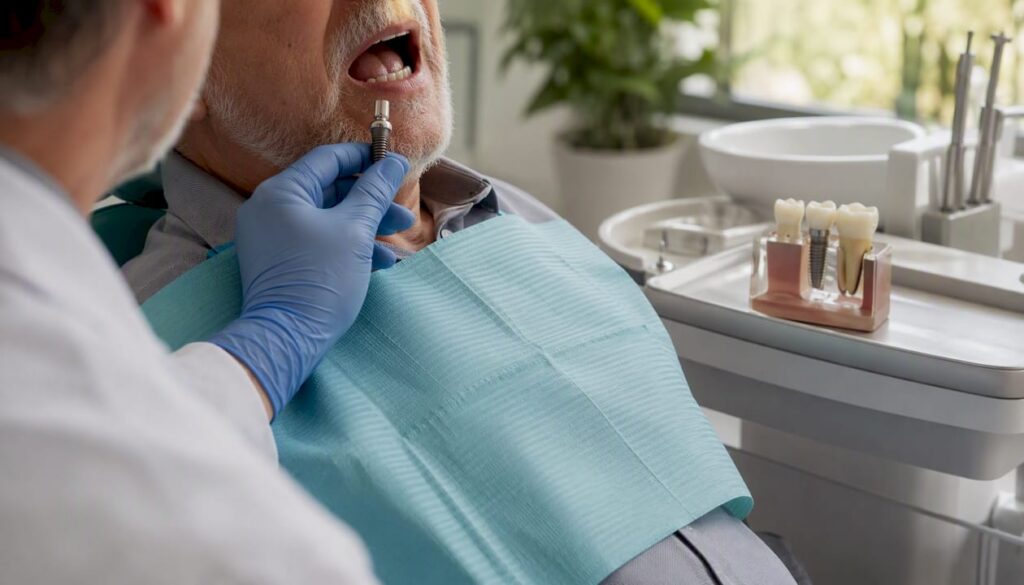
Dental implants are appropriate for most seniors. Age alone does not disqualify you. The ITI (International Team for Implantology) consensus states explicitly that being 75 or older is not a contraindication for implant therapy, and peri-implant bone loss in geriatric patients runs at rates comparable to younger adults over a 1–5 year period. A systematic review and meta-analysis of 27 studies covering 3,892 implants actually found five-year survival rates higher in patients over 75 than in those aged 65–75. What matters is not your birth year but your overall health, bone volume, oral hygiene ability, and access to follow-up care.
Before your first consultation, three things are worth doing:
- Get a medical and medication review. Certain drugs, especially bisphosphonates and denosumab used for osteoporosis, require a conversation with your prescribing physician before any oral surgery.
- Schedule a dental evaluation with imaging. A cone-beam CT (CBCT) scan tells the clinician exactly how much bone is available and whether grafting is needed.
- Plan caregiver support for the first 72 hours. Post-surgical recovery is manageable, but having someone available for transportation and basic assistance makes the process safer and less stressful.
Pro Tip: Bring a complete medication list, including supplements and over-the-counter drugs, to your very first dental appointment. This single step prevents most of the common planning delays for senior implant candidates.
Key Takeaways
Age alone does not disqualify seniors from dental implants; survival rates in patients over 75 exceed 96%, and the outcome depends on health, bone volume, and consistent maintenance.
| Point | Details |
|---|---|
| Age is not a disqualifier | ITI consensus confirms patients 75+ are appropriate candidates; five-year survival rates exceed 96% in this group. |
| Medical and medication review is required | Conditions like diabetes and antiresorptive therapy need physician coordination before any implant surgery. |
| Caregiver support affects the best option | Removable overdentures are easier for caregivers to manage than fixed restorations; plan the restoration type around real daily support. |
| Verify provider experience with seniors | Ask specifically about senior cases, medical clearance processes, and sedation options before committing to a provider. |
| Southlittletonfamilydental offers local evaluation | The Littleton, CO clinic handles evaluation, imaging, grafting, and restoration with payment plans and caregiver-inclusive consultations. |
Table of Contents
- Are you a good candidate for senior dental implants?
- What implant options work best for older adults?
- How implants help seniors: functional and quality-of-life benefits
- What to expect: the implant procedure and timeline for seniors
- Risks, complications, and senior-specific considerations
- Costs, Medicare, Medicaid, and financing options in the U.S.
- Aftercare and long-term maintenance to help implants last
- How to choose a dentist or specialist for senior implant care
- What the research actually says about implant survival in seniors
- A clinic perspective on treating senior patients
- Senior implant care at Southlittletonfamilydental in Littleton, CO
- Sources
Are you a good candidate for senior dental implants?
Candidacy for implants in older adults is not a simple yes or no. It is a layered assessment that looks at your mouth, your body, and your daily life together. The ITI recommends a multidisciplinary, holistic evaluation that includes bone and gum health, functional independence, and caregiver capacity for hygiene.
Practical candidacy checklist:
- Adequate bone volume at the implant site (or willingness to undergo bone grafting if needed)
- Controlled systemic health conditions (diabetes, cardiovascular disease)
- Ability to maintain oral hygiene independently or with caregiver assistance
- No active cancer treatment involving radiation to the head or neck
- Stable cognitive function or a reliable caregiver who can manage daily cleaning
- Non-smoker or willingness to quit, since smoking significantly raises failure risk
- Realistic expectations and commitment to follow-up appointments
Medical conditions and medications that require special planning:
- Osteoporosis and antiresorptive drugs (bisphosphonates such as alendronate, or denosumab): these do not automatically rule out implants, but the duration of therapy affects the small risk of medication-related osteonecrosis of the jaw (MRONJ). Your dentist and prescribing physician need to coordinate.
- Diabetes: well-controlled diabetes is generally compatible with implant therapy; poorly controlled blood sugar slows healing and raises infection risk.
- Cardiovascular disease: most stable cardiac conditions are manageable with appropriate pre-op clearance; anticoagulant medications require coordination with your cardiologist.
- Radiation to the head or neck: prior radiation therapy is a significant risk factor for poor healing and implant failure. A specialist evaluation is required.
- Neurocognitive impairment: mild cognitive impairment alone does not disqualify a patient, but the ability to maintain hygiene and attend follow-ups must be assessed honestly, often with caregiver input.
- Polypharmacy and hyposalivation: many seniors take medications that reduce saliva flow, which raises the risk of peri-implant infection. This is manageable but must be factored into the care plan.
Statistic to know: The ITI consensus, based on multiple prospective studies, found that peri-implant marginal bone loss in patients 75 and older is low annually after the first year of loading, similar to younger adults, which is consistent with what clinicians observe in younger adult patients.
When any of the above conditions are present, your dentist should request medical clearance from your physician before proceeding. This is not a bureaucratic hurdle; it is how complications get prevented.
Pro Tip: Caregivers attending the consultation should bring a written list of the patient’s diagnoses, current medications (with dosages), recent lab results if available, and any mobility or transportation limitations. This cuts the back-and-forth by weeks.
What implant options work best for older adults?
Not every senior needs the same solution. The right choice depends on how many teeth are missing, how much bone remains, what your daily care routine looks like, and how much surgical complexity you are comfortable with.
Single-tooth implant: A titanium post placed in the jaw with a crown on top. It looks and functions like a natural tooth and is the most straightforward option when one or a few teeth are missing and bone volume is sufficient.
Implant-supported overdenture: Two to four implants anchor a removable denture so it snaps securely in place instead of floating or requiring adhesive. This is one of the most popular choices for seniors who currently wear full dentures and want dramatically better stability without the cost or complexity of a fixed arch. Bone preservation is a real benefit here since the implants continue to stimulate the jaw.
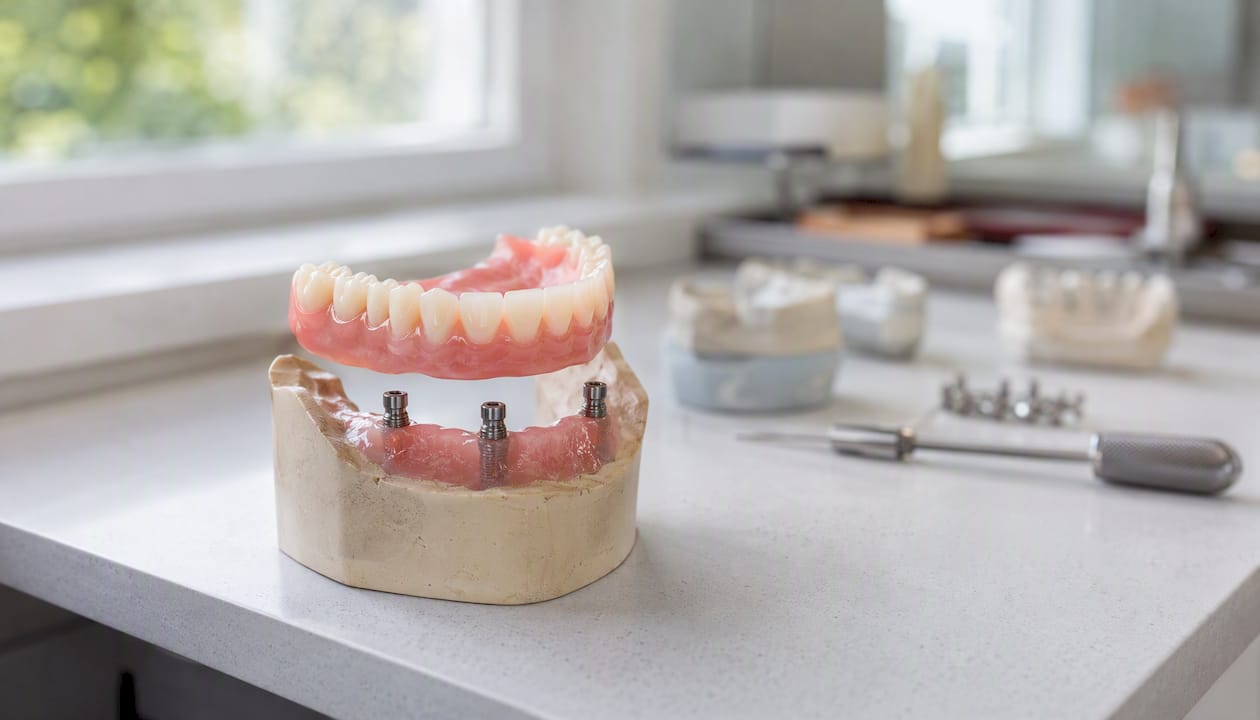
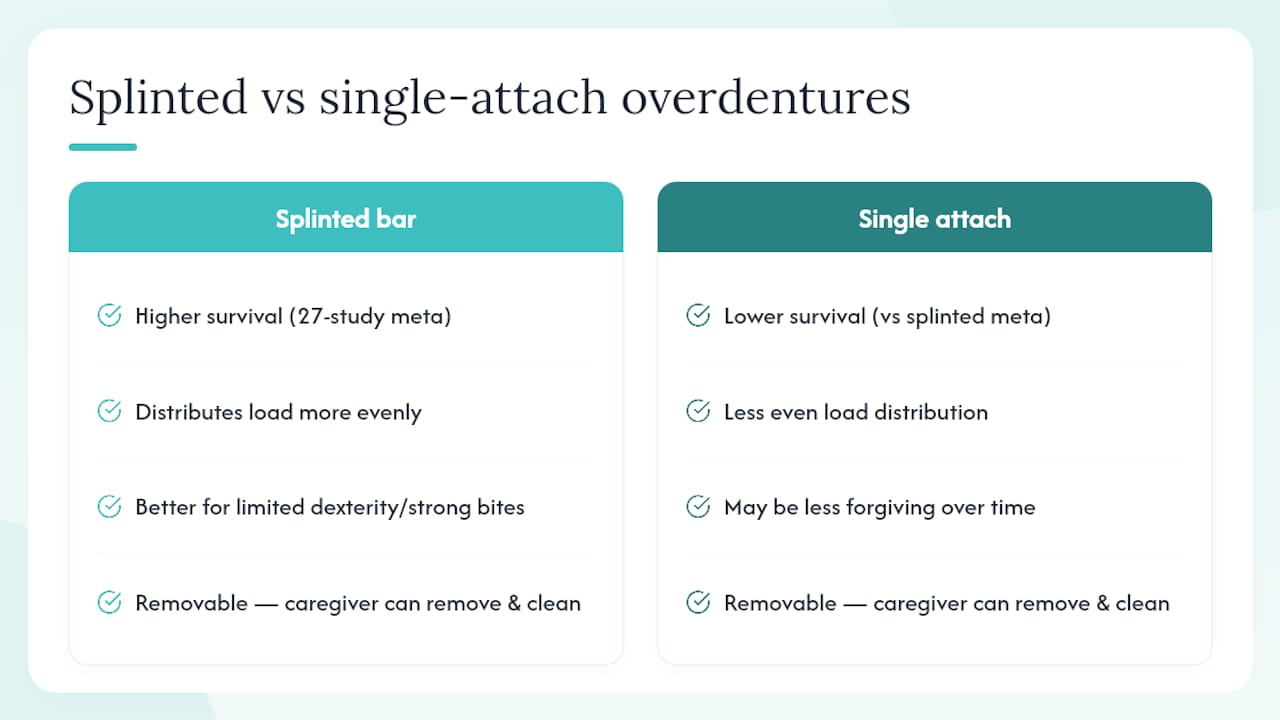
Bar-retained overdenture (splinted): A metal bar connects multiple implants before the denture clips onto it. The meta-analysis of 27 studies found that splinting implants in overdenture wearers over 65 was associated with higher survival rates than single-attachment designs. For seniors with limited dexterity or higher bite forces, the bar design distributes load more evenly and tends to be more forgiving over time.
All-on-4 / All-on-X (fixed full-arch): Four or more implants support a fixed prosthetic arch that does not come out. Chewing function is closest to natural teeth, and there are no removable parts to manage daily. The trade-off is higher surgical complexity, longer treatment time, and greater cost.
Mini dental implants: Narrower than standard implants, these require less bone volume and involve a less invasive procedure. They are often used to stabilize lower dentures when bone loss is significant and standard implants are not feasible. They carry lower load capacity, so they are not suitable for fixed full-arch restorations.
Pro Tip: If the patient will rely on a caregiver for daily cleaning, a removable overdenture is often the smarter choice over a fixed arch. A caregiver can remove, clean, and reinsert a snap-on denture far more easily than navigating fixed bridgework with interdental brushes.
How implants help seniors: functional and quality-of-life benefits
The case for implants in older adults goes well beyond cosmetics. For seniors who struggle with traditional dentures, the functional gains are often life-changing.
- Better chewing and nutrition: Loose dentures force dietary compromises. Seniors with poor-fitting dentures tend to avoid hard vegetables, lean proteins, and fibrous foods, which directly affects nutritional intake. Implant-stabilized restorations restore enough bite force to eat a varied, balanced diet.
- Bone preservation: When a tooth root is lost, the jawbone beneath it begins to resorb. Implants act as artificial roots and continue to stimulate the bone, slowing the ridge collapse that makes dentures progressively harder to fit over time. This matters especially for seniors who have been edentulous for years.
- Speech clarity: Loose dentures shift during speech. Implant-anchored restorations stay put, which eliminates the clicking and slipping that many denture wearers find embarrassing.
- Elimination of denture adhesives: Snap-on or fixed implant restorations remove the daily frustration of adhesive pastes and the anxiety of a denture moving at the wrong moment.
- Psychosocial confidence: For seniors who have withdrawn from social eating or avoided smiling, a stable, natural-looking restoration often restores participation in meals, family gatherings, and social life. For seniors who struggle with traditional dentures, implants frequently improve both nutrition and psychosocial outcomes, making implant therapy a functional as well as cosmetic choice.
- Independence: Fewer dietary restrictions and less dependence on adhesives or frequent denture adjustments translate directly into greater day-to-day independence, which is a priority for most older adults and their families.
What to expect: the implant procedure and timeline for seniors
The Mayo Clinic outlines the typical implant process as a staged sequence of evaluation, surgery, healing, and restoration. For seniors, each stage may require additional coordination, but the core steps are the same.
Step-by-step procedure overview
- Comprehensive evaluation: Medical history review, full medication list, oral examination, and CBCT imaging to assess bone volume and anatomy. If bone is insufficient, grafting is discussed at this stage.
- Treatment planning: The dentist or specialist maps out the number of implants, prosthesis type, need for extractions or grafting, sedation preferences, and a realistic timeline.
- Extractions and bone grafting (if needed): Failing teeth are removed and the socket may be grafted immediately. Grafting adds 3–6 months of healing before implant placement.
- Implant placement: Under local anesthesia or sedation, the titanium post is placed into the jawbone. The procedure itself typically takes 1–2 hours per implant site. Post-operative effects, including temporary swelling, minor bruising, and discomfort, are normal and manageable.
- Osseointegration (healing phase): The implant fuses with the bone over roughly 3–6 months. During this time, a temporary restoration may be worn. Immediate loading (placing a temporary crown the same day) is possible in select cases but is not standard for all seniors.
- Abutment and final restoration: Once integration is confirmed, the abutment is attached and the final crown, bridge, or denture prosthesis is fitted and adjusted.
- Follow-up and maintenance: Initial check-ups at 1 week, 1 month, and 3 months are typical, followed by a regular recall schedule.
Practical pre-visit checklist for seniors and caregivers
- Arrange transportation to and from the surgical appointment (you cannot drive after sedation)
- Confirm medication instructions with the dentist in advance (some blood thinners or supplements may need temporary adjustment)
- Bring a photo ID, insurance cards, and a complete medication list
- Prepare soft foods at home for the first 3–5 days post-surgery
- Plan for a caregiver to be available for the first 24–72 hours for assistance with meals, medications, and basic monitoring
Risks, complications, and senior-specific considerations
Implants carry real risks, and older adults face a few that deserve specific attention. None of them are reasons to avoid implants outright, but all of them require honest pre-op planning.
Surgical and early risks:
- Infection at the implant site, particularly in patients with diabetes or hyposalivation
- Delayed healing due to reduced bone density or compromised circulation
- Nerve or sinus involvement if imaging is inadequate or placement is imprecise
- Anesthesia-related risks for patients with cardiovascular or respiratory conditions
Long-term risks:
- Peri-implantitis: Bacterial infection around the implant that causes bone loss and, if untreated, implant failure. Seniors with limited dexterity, dry mouth, or irregular recall visits are at higher risk.
- Implant loss: Overall rates are low given the survival data cited above, but individual risk rises with uncontrolled systemic disease, smoking, or poor hygiene maintenance.
- Prosthesis wear and fracture: Fixed full-arch restorations and overdenture attachments require periodic maintenance and occasional replacement of components.
MRONJ and antiresorptive medications:
This is the risk seniors on osteoporosis medications ask about most. The taskforce consensus is clear: antiresorptive therapy does not need to be stopped before implant placement in most osteoporosis patients. The absolute risk of MRONJ is small, and it may increase with longer duration of therapy. The evidence on “drug holidays” (temporarily stopping the medication before surgery) is inconclusive, meaning stopping the drug does not reliably reduce the risk and may increase fracture risk. The right approach is a coordinated conversation between your dentist and your prescribing physician, not a unilateral decision to stop medication.
The EAO keypoints on antiresorptive drugs reinforce this: low-dose antiresorptive drugs are not an absolute contraindication, but duration of intake is the key variable to discuss with your care team.
Statistic to know: The taskforce review characterizes the absolute MRONJ risk as small, based on a systematic review of the available evidence, though the quality of that evidence is rated as very low, which is why individualized clinical judgment remains the standard.
Cognitive impairment and dexterity limitations:
Mild cognitive impairment does not automatically rule out implants, but the maintenance demands must be realistic. A patient who cannot reliably brush and use interdental tools independently needs a caregiver who will. When that support is not available, a simpler restoration or a removable option that a caregiver can clean externally may be safer long-term.
When to involve other clinicians:
If the patient has active cancer treatment, recent cardiac events, poorly controlled diabetes, or is on high-dose intravenous antiresorptive therapy, the implant dentist should communicate directly with the oncologist, cardiologist, or prescribing physician before proceeding. This is standard practice, not an unusual request.
Costs, Medicare, Medicaid, and financing options in the U.S.
Cost is one of the most common reasons seniors delay or avoid implant treatment, and the coverage picture in the U.S. is genuinely complicated.
What drives the cost:
- Number of implants placed
- Whether bone grafting or extractions are needed
- Type of prosthesis (single crown vs. full-arch fixed restoration)
- Specialist fees (oral surgeon, periodontist, or prosthodontist) vs. general dentist
- Geographic location and clinic overhead
For a detailed breakdown of what to expect at a local clinic, the dental implants cost page at Southlittletonfamilydental provides clinic-specific information on pricing and payment options.
Coverage at a glance:
| Payer | Typical implant coverage | Notes |
|---|---|---|
| Medicare (Parts A & B) | Generally none for implants | Some Medicare Advantage plans include limited dental benefits; check your specific plan |
| Medicaid | Varies widely by state | Some states cover extractions only; adult dental benefits differ significantly by state |
| Private dental insurance | Partial, if any | Many plans cap annual benefits and classify implants as cosmetic or major restorative |
| Medicare Advantage (Part C) | Varies by plan | Some plans cover a portion of implant-related procedures; verify before treatment |
Practical affordability options:
- Dental financing: CareCredit and similar medical lending products offer deferred-interest or low-interest payment plans for dental procedures.
- Clinic payment plans: Many practices, including Southlittletonfamilydental, offer in-house financing arrangements.
- Dental school clinics: Accredited dental school programs often provide implant services at significantly reduced fees under faculty supervision.
- Community health centers: Federally Qualified Health Centers (FQHCs) sometimes offer sliding-scale dental services, though implant availability varies.
- “Free implant” programs: These are almost always marketing for clinical trials, dental school research programs, or heavily subsidized financing. Read the fine print carefully before committing.
Insurance tip: Before your consultation, call your insurer and ask specifically: Does my plan cover any portion of implant placement, bone grafting, or implant-supported prosthetics? What documentation does the dentist need to submit for pre-authorization? Getting this in writing before treatment begins prevents billing surprises.
Aftercare and long-term maintenance to help implants last
Implants do not decay, but the tissue and bone around them absolutely can fail. Long-term success depends almost entirely on consistent maintenance, and for seniors, that often means building a routine that a caregiver can support.
Daily home-care checklist:
- Brush twice daily with a soft-bristle toothbrush, angling the bristles toward the gum line around each implant
- Use interdental brushes or floss specifically designed for implants (regular floss can fray and catch on abutment components)
- If your dentist recommends an antiseptic rinse, use it as directed, especially in the first weeks after placement
- Remove and clean overdentures nightly; soak in a non-abrasive denture solution and rinse before reinserting
MedlinePlus patient instructions for oral surgery provide a solid reference for home care protocols and the warning signs that require urgent attention.
Recommended recall schedule:
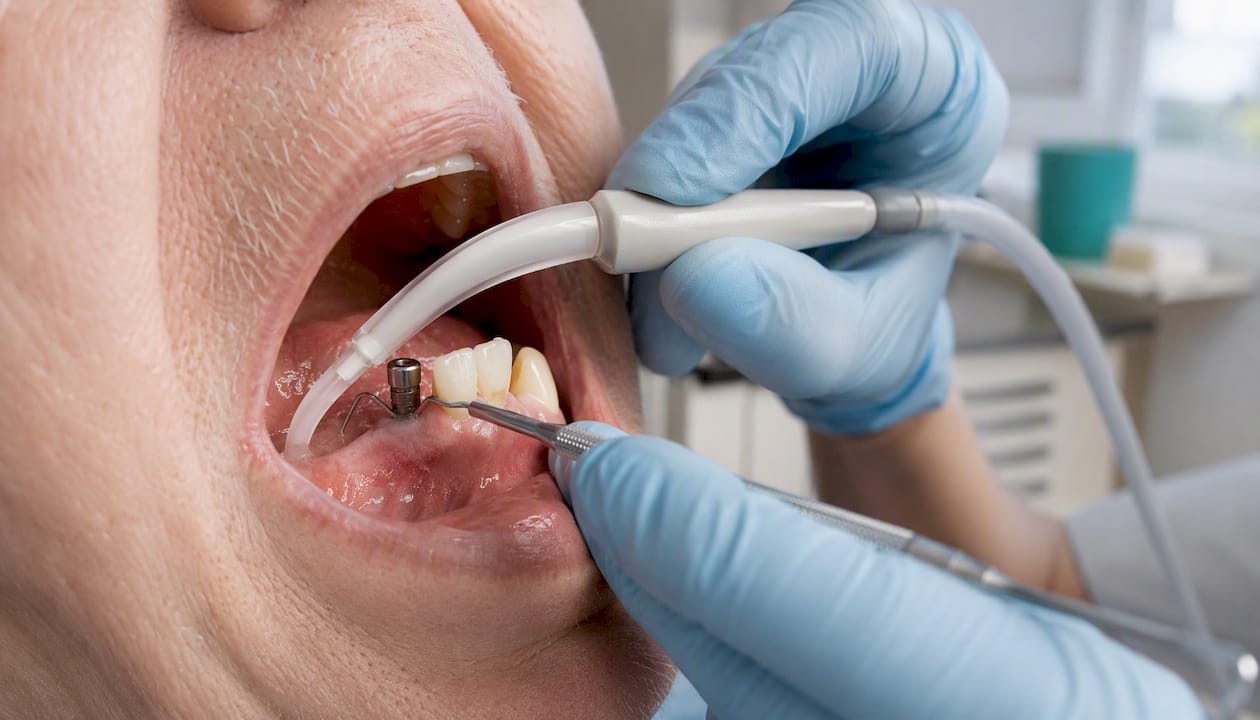
Most implant patients should be seen every 3–6 months in the first year, then at least twice yearly thereafter. At each maintenance visit, the hygienist or dentist will probe around the implant to check for peri-implant tissue health, remove biofilm from implant surfaces using non-abrasive instruments, and take periodic radiographs to monitor bone levels.
Caregiver guidance:
If the patient cannot manage daily cleaning independently, a caregiver should be trained by the dental team on the specific technique for that patient’s restoration. Overdentures are the most caregiver-friendly option since they can be removed, cleaned under running water, and reinserted. Fixed restorations require more precise technique with interdental brushes and water flossers.
When to call the clinic:
- Swelling, redness, or discharge around an implant site
- A loose crown, abutment, or overdenture attachment
- Sudden pain or pressure around an implant
- Any change in how the bite feels
Pro Tip: Set a phone reminder for twice-daily cleaning and schedule the next recall appointment before leaving the current one. For seniors managing multiple health appointments, dental recalls are the ones most likely to slip, and a missed six-month visit is where peri-implantitis quietly starts.
How to choose a dentist or specialist for senior implant care
The provider you choose matters as much as the procedure itself. Senior implant care requires a clinician who understands systemic health interactions, communicates with other providers, and makes the logistics accessible for older patients and their families.
Questions to ask at the consultation:
- How many implant cases have you treated in patients over 65 or 70?
- How do you coordinate with a patient’s physician when medical conditions are present?
- What sedation options do you offer, and how are they managed for patients with cardiac or respiratory conditions?
- Who handles complications or emergencies after hours?
- What does your follow-up schedule look like for the first year?
- Can you provide a written treatment plan with itemized costs before I commit?
Red flags that suggest the provider may not be a good fit:
- Vague or dismissive answers about medical risk management
- No process for obtaining medical clearance when conditions like diabetes or antiresorptive therapy are present
- No caregiver accommodations (no space for a companion in the consultation, no written instructions for caregivers)
- Pressure to commit to a full treatment plan at the first visit before imaging is reviewed
- No clear explanation of what happens if the implant fails
Credentials and accessibility:
Dental implants can be placed by general dentists with advanced training, oral surgeons, periodontists, or prosthodontists. For straightforward cases in healthy seniors, an experienced general dentist is often appropriate. For complex cases involving significant bone loss, systemic disease, or full-arch reconstruction, a specialist referral is worth requesting. Verify credentials through the American Board of Oral and Maxillofacial Surgery, the American Academy of Periodontology, or the American College of Prosthodontists.
Check that the clinic is physically accessible: step-free entry, accessible restrooms, and parking close to the entrance matter more than most people anticipate when planning multiple visits over a 6–12 month treatment course.
Pro Tip: Ask specifically whether the clinic uses CBCT (cone-beam CT) imaging in-house. Clinics with advanced imaging technology on-site can complete the pre-surgical planning in fewer visits, which reduces the logistical burden for seniors managing multiple appointments.
What the research actually says about implant survival in seniors
The evidence base for senior dental implants has grown substantially, and the headline finding is more reassuring than most patients expect.
Key findings from the research:
The systematic review and meta-analysis published on PubMed analyzed 27 studies covering 3,892 implants and found that patients over 75 had a five-year implant survival rate higher than in those aged 65–75. Splinted (bar-retained) overdentures in patients over 65 were associated with higher survival than single-attachment designs across the studies reviewed.
The ITI consensus statement draws on multiple prospective studies and concludes that advanced age (75+) is not a contraindication, with annual peri-implant marginal bone loss is low after the first year of loading, consistent with younger adult populations.
Clinical reports in the literature, including cases documented in Decisions in Dentistry, show that patients in their 80s and 90s can successfully receive implants when treatment is individualized and minimally invasive surgical approaches are used.
What the research does not yet tell us:
Most geriatric implant studies follow patients for 1–5 years. Long-term data beyond 10 years in patients 75 and older is limited, and many studies have small sample sizes. The survival rates above are encouraging, but they come with the caveat that the evidence quality for some subgroups, particularly the very old with multiple comorbidities, remains low. Individualized clinical judgment is still the standard, not a formula.
Statistic to note: The WebMD overview of dental implants for seniors reinforces that post-operative effects like temporary swelling and discomfort are typical and manageable, and that routine follow-up is what ensures proper osseointegration.
A clinic perspective on treating senior patients
At Southlittletonfamilydental, the senior patients who come in for implant evaluations often arrive with the same concern: “Am I too old for this?” The answer, almost always, is no. What actually determines the path forward is a thorough look at the whole picture, not just the mouth.
The most common recommendation for seniors who have been wearing full dentures for years is an implant-retained overdenture. It is less surgically demanding than a fixed full arch, dramatically more stable than a conventional denture, and far easier for a caregiver to assist with than fixed bridgework. For patients with a single missing tooth and adequate bone, a single implant and crown is often the most straightforward and cost-effective route.
When medical complexity is present, the clinic coordinates directly with the patient’s physician before proceeding. That coordination is not optional. A patient on long-term bisphosphonate therapy, for example, needs a documented conversation between the dental team and the prescribing doctor before any surgical work begins.
Caregivers are welcome at every consultation. Written instructions go home with both the patient and the caregiver after every appointment. The goal is that no one leaves uncertain about what comes next.
Senior implant care at Southlittletonfamilydental in Littleton, CO
Seniors in the Littleton area have a local option that handles the full implant process under one roof, without the referral shuffle that adds months to treatment timelines.
Southlittletonfamilydental offers implant evaluations, in-house CBCT imaging, bone grafting, restorative work, and sedation options for patients who need it. Same-day emergency care is available for implant-related complications. For seniors who are new to the practice, the new patient special is a practical starting point: it lowers the cost of the initial exam and gives the care team a complete picture of your oral health before any implant planning begins.
Payment plans and financing options are available, and the team will walk you through what your insurance covers and what to expect out of pocket before any treatment is scheduled. Accessibility matters here: the clinic is designed to accommodate patients with mobility considerations, and caregivers are included in the consultation process as a matter of course.
To schedule a senior implant evaluation, visit the general dentistry page or call the office directly. Bring your medication list, any recent dental imaging, and your insurance card. The first conversation is just that: a conversation.
Sources
The sources below were used throughout this guide. Bringing them to a consultation gives you a basis for an informed conversation with any provider.
- Effect of Advanced Age and/or Systemic Medical Conditions on Dental Implant Survival – Consensus Statements – ITI
- Implant Survival in Patient Populations With a Mean Age of 65-75 Years Compared to Older Cohorts: A Systematic Review and Meta-Analysis
- Antiresorptive Therapy to Reduce Fracture Risk and Effects on Dental Implant Outcomes in Patients With Osteoporosis: A Systematic Review and Osteonecrosis of the Jaw Taskforce Consensus Statement – PubMed
- Dental implant surgery – Mayo Clinic
- MedlinePlus — Patient instructions for oral surgery procedures
- Dental implants for seniors – WebMD
This article is general information, not a substitute for advice from a qualified doctor. Consult a qualified healthcare professional about your own circumstances before acting on anything here.