

Rinse with warm salt water, hold a cold compress against your cheek, and take an over-the-counter pain reliever like ibuprofen or acetaminophen. Diluted clove oil on a cotton swab can also dull the ache. These steps calm the pain temporarily. They do not fix the cavity, crack, or infection causing it, so plan to see a dentist soon, and go in right away if you notice swelling, fever, or pus.
TL;DR:
- Saltwater rinses soothe irritated gums but cannot treat infections or repair decay, so see a dentist urgently if swelling or fever develops.
- Applying a cold compress externally and taking NSAIDs like ibuprofen combined with acetaminophen provides effective temporary pain relief.
- Home remedies such as clove oil, garlic, or oil pulling have limited evidence, and pain reduction does not mean the underlying issue is resolved.
- If pain persists beyond 48 hours or worsens, especially with swelling, pus, or difficulty swallowing, seek emergency dental care immediately.
- Elevating your head during sleep can reduce pain intensity at night, but definitive treatment requires professional dental diagnosis and intervention.
Table of Contents
- Practical home remedies you can try right away
- Using over-the-counter pain medicine safely until you’re seen
- When toothache pain means you need urgent care
- Small habits that lower your odds of another toothache
- How an emergency dental visit actually goes
- Why raising your head matters more than people think
- Foods and drinks that make toothache pain worse
- What’s actually causing your tooth to hurt
- What the research actually supports, and what gets oversold
- If home remedies don’t help, here’s your next step
- Sources
- FAQ
Practical home remedies you can try right away
Start with what is already in your kitchen or medicine cabinet. Each of these works differently, and knowing how to use them correctly matters as much as knowing which to reach for.
A warm saltwater rinse is the most commonly recommended first step. Mix a small amount of salt into a cup of warm water, swish it gently around the painful area for about 30 seconds, then spit it out. According to MedlinePlus, saltwater can soothe irritated gums and loosen trapped food, but it will not clear an infection or repair decay. You can repeat this every few hours.
A cold compress works on the outside of your face rather than in your mouth. Wrap ice in a thin towel and hold it against your cheek near the sore tooth for 15 to 20 minutes, then take it off for the same amount of time before reapplying. This numbs the area and limits swelling, though people with cold sensitivity or circulation problems should ease off if it causes new discomfort.
Clove oil contains eugenol, a compound with a long history in dental pain relief. If you are using concentrated clove oil, dilute it with a carrier oil first, then apply a small amount to a cotton ball and press it against the tooth rather than swallowing it. A review of herbal extracts in orofacial pain found that clove and similar plant compounds may ease pain, but the studies used inconsistent preparations, so there is no standard home dose. Undiluted oil left on the gum too long can burn soft tissue.
Topical benzocaine gels offer short-term numbing when dabbed in a pea-size amount directly on the sore spot. Skip these in young children, since benzocaine carries specific pediatric warnings.
A diluted hydrogen peroxide rinse (mixed with equal parts water) can rinse away debris around an irritated tooth, but never swallow it and keep the contact brief.
Garlic, vanilla extract, and oil pulling often show up in home remedy lists. Garlic has mild antibacterial properties, vanilla extract contains a small amount of alcohol that may numb tissue briefly, and oil pulling involves swishing coconut or sesame oil in the mouth. None of these have strong evidence behind them, and garlic in particular can irritate the gums or leave a lingering taste.
Pro Tip: Keep a clean cotton swab and a small bottle of diluted clove oil in your medicine cabinet so you’re not improvising at 2 a.m.
Tonight, in order:
- Rinse with warm salt water for 30 seconds, then spit.
- Apply a cold compress to the outside of your cheek for 15 to 20 minutes.
- Take an appropriate dose of ibuprofen or acetaminophen within recommended limits.
- Dab diluted clove oil on a cotton ball and hold it against the tooth if pain continues.
- Gently floss around the tooth in case trapped food is the real culprit.
Using over-the-counter pain medicine safely until you’re seen
For most adults, ADA guidance points to NSAIDs like ibuprofen or naproxen as the first choice for toothache, since dental pain is usually driven by inflammation that NSAIDs target directly. Acetaminophen can be added or used alone if NSAIDs are off the table for you.
- Ibuprofen can be taken in doses appropriate to label instructions.
- Acetaminophen: follow package dosing closely and check every other medicine you take that day for hidden acetaminophen, since combination cold or sinus products often include it.
Combining an NSAID with acetaminophen, staggered on a schedule, as recommended by healthcare guidance, is the strategy the ADA’s living guideline treats as the most effective temporary approach for toothache in adults, more so than either drug alone.
Avoid NSAIDs if you have certain medical conditions such as stomach ulcers or kidney disease, or if taking blood thinners, and ask a pharmacist first if you’re unsure. Children need dosing based on age and weight; some medications like codeine or tramadol are generally not recommended for children’s acute pain. Opioids are rarely necessary for toothache and are reserved for specific situations a dentist will identify, not a first resort at home.
When toothache pain means you need urgent care
Home remedies buy you time. They do not treat an infection, and a tooth abscess can keep spreading even if the pain seems to ease. MedlinePlus warns against placing aspirin directly on the gum or tooth, since it can burn the tissue rather than help it.
Get seen urgently if you notice any of these:
- Facial or gum swelling, especially if it is spreading.
- Fever or a general feeling of being unwell alongside the toothache.
- A pimple-like bump on the gum, or visible pus.
- Pain that has been constant and throbbing for more than 48 hours.
- Difficulty breathing, swallowing, or opening your mouth fully, which means you should go to an emergency room or call 911 immediately.
For anything short of breathing or swallowing trouble, call your dentist first and describe the duration, any swelling, and whether you have a fever.
Small habits that lower your odds of another toothache
Most toothaches trace back to decay, gum disease, or a cracked tooth that built up over time, so day-to-day habits matter.
- Brush twice a day with fluoride toothpaste and floss daily to clear food caught between teeth, a common cause of sudden sharp pain.
- Limit sugary snacks and drinks, especially sipped slowly over a long period, which feeds the bacteria behind cavities.
- Skip smoking, particularly in the days after any extraction, since it raises the risk of complications.
- Book a dental check if you notice a chipped tooth, bleeding gums, or sensitivity that lingers, rather than waiting for it to turn into pain.
If you’ve recently had a tooth pulled, avoid straws and vigorous rinsing for the first day or two to protect the healing socket.
How an emergency dental visit actually goes
When you call about sudden tooth pain, staff will typically ask how long it’s lasted, whether you have swelling or fever, and where exactly it hurts. That helps the team decide how urgent your visit is before you even arrive.
At the office, expect a focused exam and x-rays to find the cause, whether that’s deep decay, a cracked tooth, or an abscess. Depending on what they find, treatment might mean a temporary filling, antibiotics, or a referral for root canal therapy or extraction. South Littleton Family Dental offers same-day emergency exams, including a $49 emergency exam, so patients in real pain don’t have to wait days for a diagnosis.
Why raising your head matters more than people think
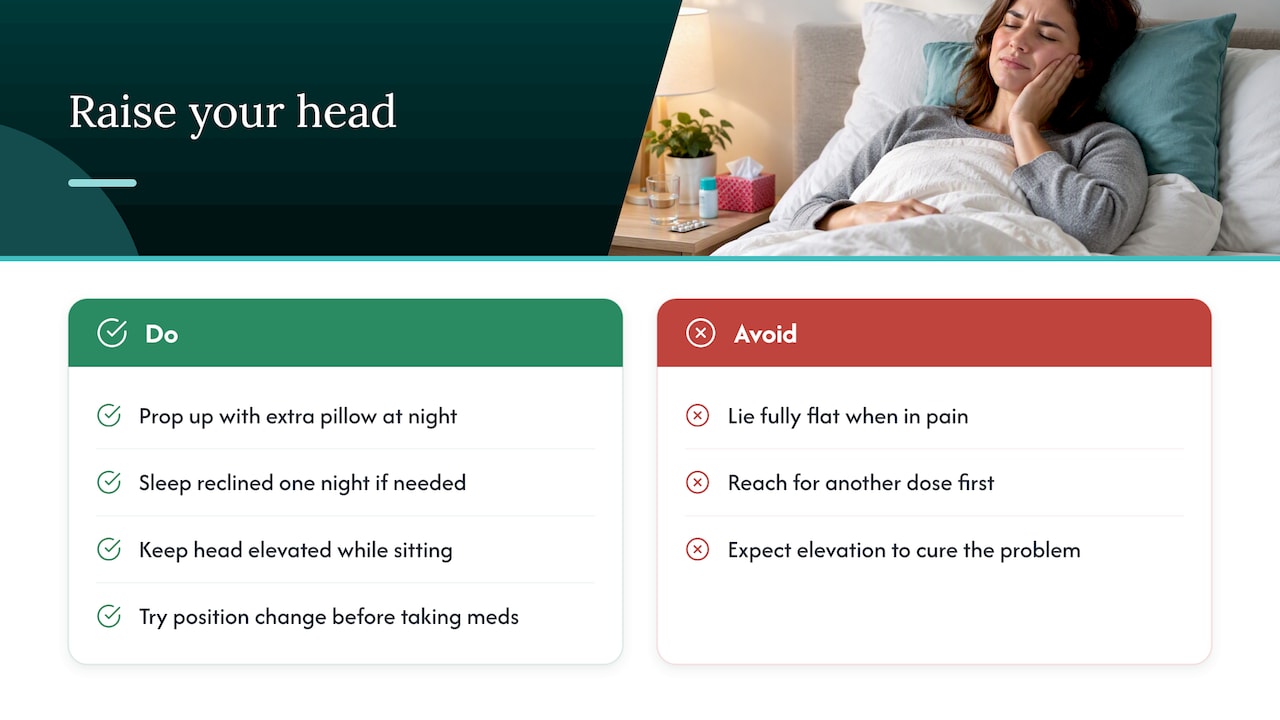
Lying flat increases blood flow to your head, and that extra pressure can make a toothache throb harder, especially at night. Propping yourself up with an extra pillow, or sleeping in a reclined chair for a night, keeps blood from pooling around the inflamed area and can take the edge off the pulsing pain that often gets worse after you lie down.
This is one of the simplest fixes available and costs nothing, yet it’s often overlooked compared to rinses and medication. If you wake up repeatedly from throbbing pain, try adjusting your sleep position before reaching for another dose of medicine. Keep your head elevated for sitting as well, if the pain flares up during the day while you’re reclining on a couch.
This won’t resolve the underlying cause any more than a cold compress will, but combined with the other measures here, it can mean the difference between a rough night and one where you actually get some sleep before your dental visit.
Foods and drinks that make toothache pain worse
An already inflamed or exposed tooth reacts strongly to temperature and sugar, so what you eat and drink can either calm things down or set off another wave of pain.
Very hot foods and drinks, like coffee or soup, can aggravate an already sensitive nerve, and very cold items like ice water or ice cream often trigger a sharp jolt of pain if the enamel is cracked or decay has reached the inner tooth. Sugary foods and drinks feed the bacteria that caused the problem in the first place and can intensify the ache, especially if sugar lingers in contact with the tooth.
Stick to lukewarm foods that require little chewing, like mashed potatoes, yogurt, or soft scrambled eggs, and chew on the opposite side of your mouth if one tooth is the clear source of pain. Avoid chewing gum, hard candy, or crunchy snacks like chips or nuts until the pain has been evaluated, since they can also force debris deeper into a cavity or crack.
What’s actually causing your tooth to hurt
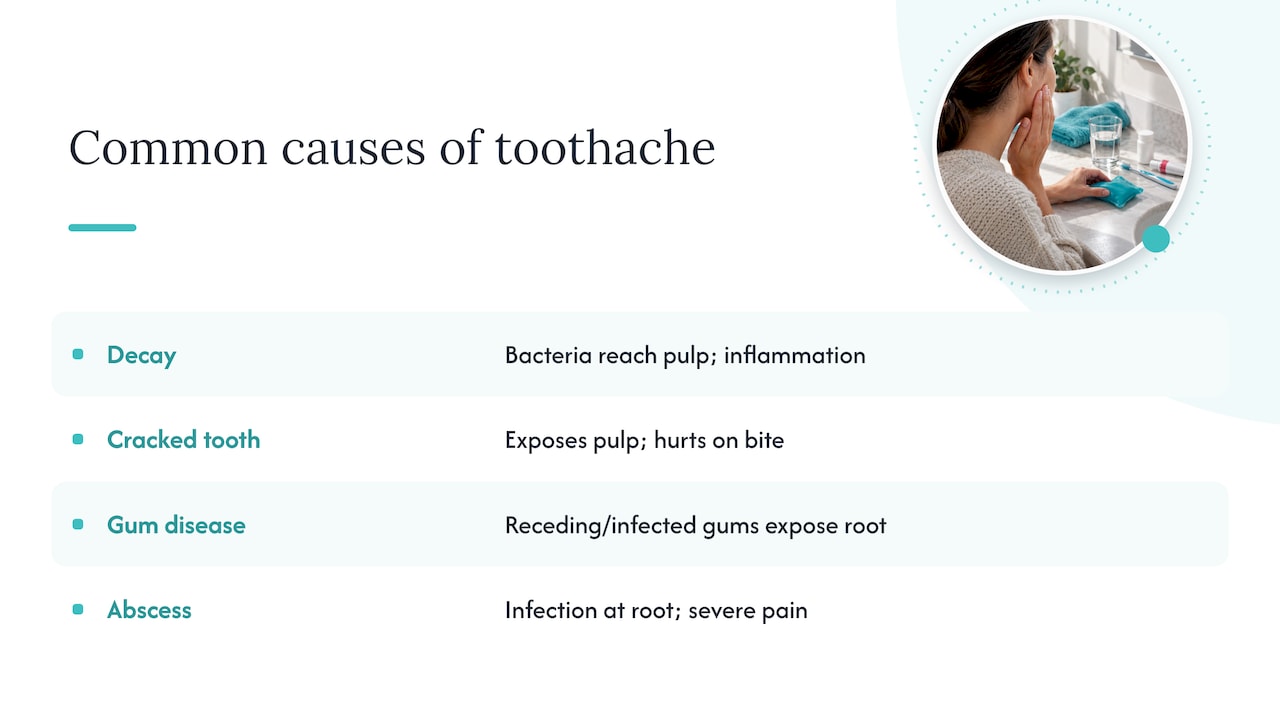
Toothache almost always comes down to irritation or damage to the nerve inside the tooth, called the pulp. Decay that has worked through the enamel and dentin is the most common trigger, since bacteria reach the nerve and cause inflammation. A cracked tooth can expose the same nerve to temperature changes and pressure, which is why it often hurts only when you bite down a certain way.
Gum disease is another frequent cause, since receding or infected gums expose the tooth root, which lacks the protective enamel layer and is far more sensitive. An abscess, a pocket of infection at the root, causes some of the most severe and persistent pain, often with swelling or a bad taste.
Understanding which of these is likely behind your pain helps explain why remedies behave the way they do. A saltwater rinse can calm irritated gum tissue, but it cannot reach bacteria sitting inside a cavity or an abscess, which is why the pain tends to return once the remedy wears off.
What the research actually supports, and what gets oversold
The evidence here is more modest than most home remedy articles let on. NSAIDs combined with acetaminophen have solid backing as temporary pain control, but clove oil, garlic, and oil pulling sit in a much shakier category: plausible, mildly supported in small studies, but far from proven relief you can dose reliably. Treating them as interchangeable with medication oversells what a cotton ball soaked in essential oil can actually do.
The bigger blind spot in most toothache advice is the word “temporary.” Pain dropping after a rinse or a pill gets mistaken for the problem resolving, when an abscess can keep spreading quietly even as the ache fades. If you take one thing from this article, it should be that comfort is not the same as healing. Use the remedies here to get through the next few hours, then treat scheduling a dental visit as the actual priority, not an optional next step once you feel better.
— Admin
If home remedies don’t help, here’s your next step
Rinses, cold compresses, and clove oil can quiet a toothache for a night, but they don’t fix decay, a crack, or an abscess. That takes an actual diagnosis and, depending on what’s found, a filling, root canal therapy, or an extraction.

If the pain isn’t letting up, call South Littleton Family Dental for a same-day exam rather than waiting it out another night.
- Have ready: how long the pain has lasted, whether you have swelling or fever, and which tooth hurts.
- Mention your insurance or ask about payment options when you call.
- Expect an exam and x-rays to pinpoint the cause before any treatment starts.
Pain control starts the moment you’re in the chair, and the team will walk you through next steps, whether that’s a root canal or an extraction, before anything happens. Reach out through the emergency dentistry page to get on the schedule.
Sources
This article draws on MedlinePlus’s patient guidance on toothache and abscess care, the ADA’s living guideline on analgesic choices, and a systematic review of herbal extracts for orofacial pain. A partner resource on facial swelling from a tooth infection was also used for red-flag guidance.
This article is general information, not a substitute for advice from a qualified doctor. Consult a qualified healthcare professional about your own circumstances before acting on anything here.
- Toothaches: MedlinePlus Medical Encyclopedia
- Herbal extracts in orofacial pain: a systematic review and direct and indirect meta-analysis
- ADA living guideline — adult/adolescent pain management for toothaches
FAQ
What is the 3-3-3 rule for toothache?
There’s no established clinical guideline called the “3-3-3 rule” for toothache; it’s not a term used by the ADA or MedlinePlus. If you’ve seen it online, treat it as informal advice rather than a verified method, and rely on the saltwater rinse, cold compress, and OTC pain reliever steps covered above instead.
What is the best pain killer for tooth pain?
NSAIDs like ibuprofen, alone or combined with acetaminophen, are the ADA’s recommended first-line choice for temporary toothache relief in adults. Stay within the maximum daily dose listed on each label and check for acetaminophen hidden in other medicines you’re taking.
How do you stop a tooth nerve pain?
A warm saltwater rinse, a cold compress on the cheek, and an appropriate dose of an NSAID or acetaminophen are the most reliable combination for easing nerve-related tooth pain at home. These only calm the pain temporarily, since the nerve irritation itself usually needs a dentist to resolve.
What can I do to stop toothaches at night?
Prop your head up with an extra pillow before bed, since lying flat increases blood flow to the area and can make throbbing worse. Pair that with a dose of pain reliever timed before bed and avoid eating anything hot, cold, or sugary right before you lie down.