
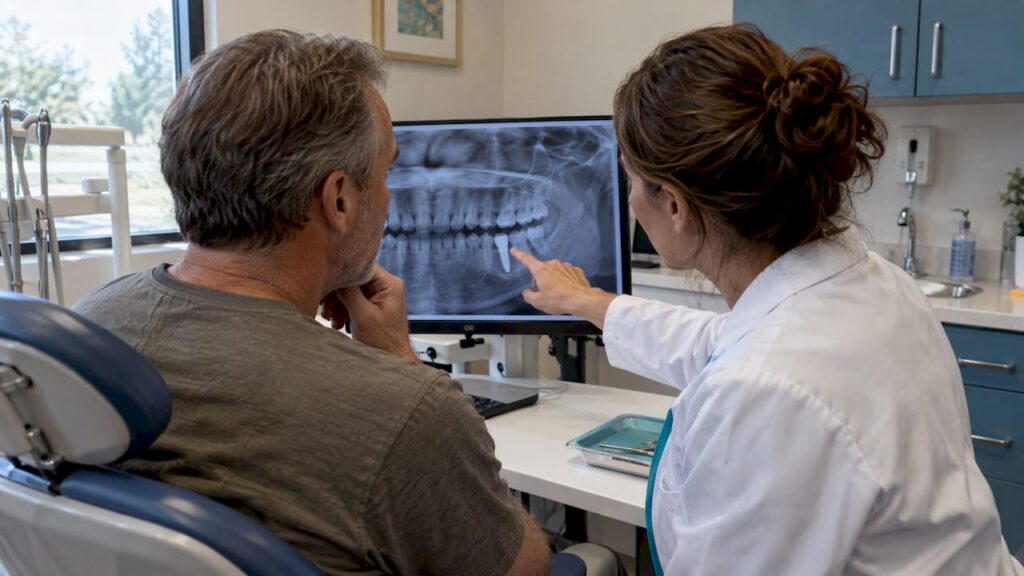
If your implant feels loose, hurts more than it did last week, or you notice pus, new swelling, or bleeding when you brush near it, that’s not normal healing. These are signals your dental provider needs to see you promptly, and the FDA flags persistent pain, looseness, and visible implant problems as reasons to call your dentist right away.
TL;DR:
- Early implant failure typically occurs within the first few months due to inadequate stability or bone healing, while late failure results from gum disease or mechanical overload.
- Signs of implant problems include persistent pain, implant mobility, bleeding with probing, pus, biting changes, and visible gum recession or exposed threads.
- Infection, poor osseointegration, and mechanical stress are the main causes of failure, with peri-implantitis being the most common biological factor in late failures.
- Regular professional maintenance and prompt attention to symptoms can prevent or address problems early, significantly increasing the chance of implant preservation.
- Urgent symptoms like pain, swelling, or looseness should prompt same-day dental evaluation to prevent advanced bone loss or infection.
Table of Contents
- What implant failure actually means
- Key warning signs to watch for
- Why implants fail: causes and risk factors
- What your dentist checks to diagnose the problem
- Treatment options and what to expect
- Preventing problems before they start
- Our perspective on catching implant problems early
- Getting help from South Littleton Family Dental
- FAQ
- Sources
What implant failure actually means
“Implant failure” sounds dramatic, but clinically it has a specific meaning: the titanium post has lost its bond with the jawbone, become mobile, or shown bone loss on an X-ray that goes beyond the small amount expected in the first year. It is not the same as mild post-surgical soreness or temporary gum tenderness after a cleaning.
Dentists generally split failure into two categories based on timing. Early failure happens within the first few months after placement, usually before the bone has fully fused to the implant surface, a process called osseointegration. It often traces back to how the implant healed rather than how it was used. Late failure shows up months or years after the implant has been loaded and functioning normally, and it tends to involve the surrounding gum and bone breaking down over time rather than a surgical problem.
The distinction matters because it changes what your dentist looks for and how fast treatment needs to move. A scoping review of implant failure literature found that early failures are commonly tied to inadequate primary stability and impaired bone healing, while late failures are more often driven by plaque-related gum disease around the implant or by mechanical stress from the bite. Catching either type early matters because the earlier a problem is identified, the more likely it can be managed with cleaning and medication rather than surgery or implant removal. A dentist who sees you at the first sign of trouble has far more options than one who sees you after months of unaddressed inflammation.
Key warning signs to watch for
Most implant problems announce themselves through a small, specific set of symptoms. Pay attention to the location, timing, and whether a symptom is getting worse rather than better.
- Persistent or worsening pain: Discomfort that continues or intensifies weeks after placement, rather than fading, often points to infection or a mechanical issue rather than normal healing.
- Looseness or mobility: If the crown or the implant itself seems to move or shift when you bite down, that is different from a loose abutment screw, which your dentist can usually tighten quickly. True implant mobility is a more serious sign.
- Redness, swelling, or bleeding on brushing: Gum tissue around a healthy implant should not bleed easily. Bleeding when you brush gently or when a dentist probes the area is one of the earliest indicators of peri-implant disease.
- Pus, a bad taste, or localized bad breath: Discharge or a persistent foul taste near one specific implant usually signals an active infection.
- Changes in biting or chewing: Sensitivity, difficulty chewing on that side, or a bite that suddenly feels “off” can indicate the implant or restoration has shifted.
- Visible gum recession or exposed threads: If you can see metal threads that used to be covered by gum tissue, bone and soft tissue loss has already occurred.
- Fever or spreading facial swelling: These point to a more serious, spreading infection and call for urgent, same-day dental care rather than a routine appointment.
Bleeding on probing is one of the clearest early signals clinicians rely on, according to a peer-reviewed review of peri-implant disease, because peri-implantitis can progress without pain, meaning the absence of discomfort does not guarantee the implant is healthy.
Why implants fail: causes and risk factors
Most implant problems trace back to one of three mechanisms: infection, poor integration with the bone, or physical stress the implant was not designed to handle.
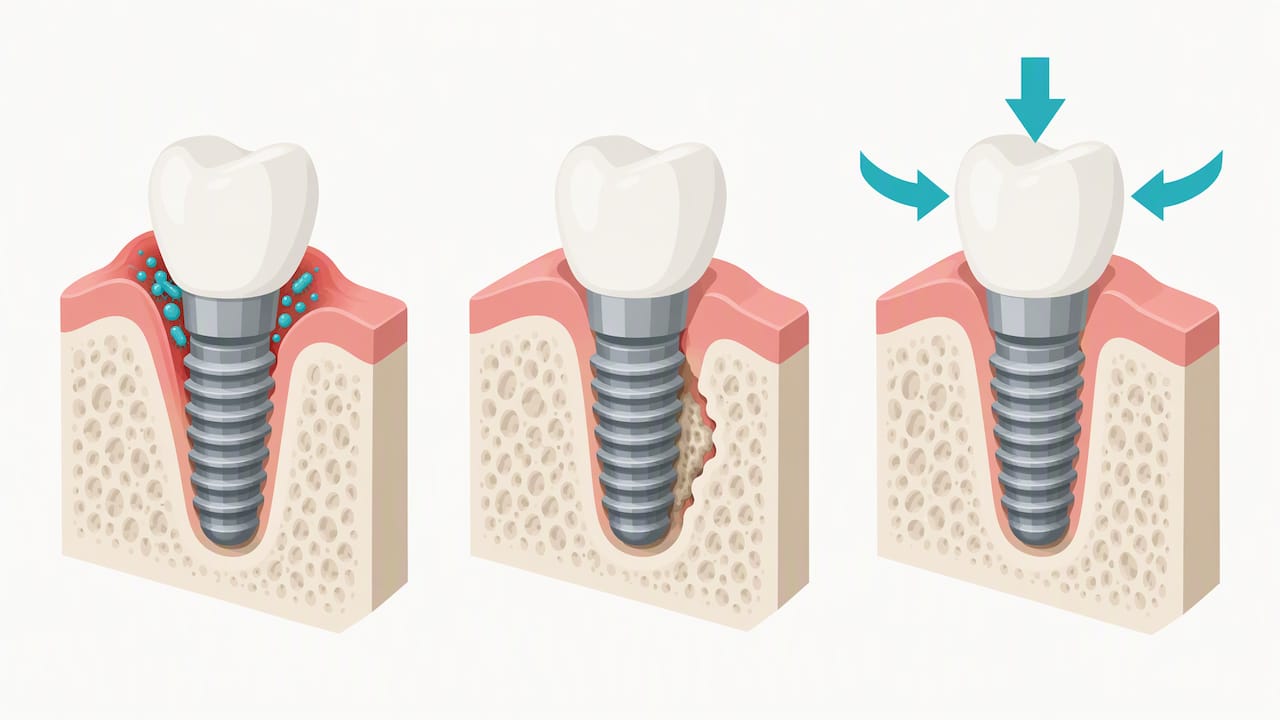
Peri-implantitis, a plaque-driven inflammatory disease similar to gum disease but affecting the tissue around an implant, is the most frequently cited cause of late-stage failure. It starts as mucositis, inflammation confined to the soft tissue, and progresses to bone loss if plaque and bacteria are not controlled. The implant failure scoping review identifies it as the most common biological cause, alongside systemic health factors and mechanical overload.
Several other factors raise the risk of either early or late failure:
- Poor osseointegration: Surgical trauma, low bone density, or loading the implant too soon after placement can prevent a solid bond from forming.
- Mechanical overload: Ill-fitting crowns, teeth grinding, and screws that loosen under repeated stress can destabilize an otherwise healthy implant.
- Smoking and uncontrolled diabetes: Both impair healing and blood flow to the gum tissue, raising failure risk substantially.
- History of periodontitis: Patients who have had gum disease around natural teeth face a higher risk of peri-implantitis.
- Residual cement and poor home care: Cement left under the gumline during restoration, combined with inconsistent brushing and flossing, is a common and preventable contributor.
What your dentist checks to diagnose the problem
Diagnosing implant trouble is a hands-on process. Your dentist will visually inspect the gum tissue, gently probe around the implant to check for bleeding or pus, and test for any mobility in the implant itself, not just the crown. Standardized intra-oral X-rays compare current bone levels to earlier images when available, and a change of 0.5 millimeters is enough to signal meaningful bone loss over time, according to the peri-implant disease review. CBCT scans are not used routinely but may help in more complex cases.
When no baseline X-ray exists for comparison, clinicians use fixed thresholds to make the call:
| Diagnostic marker | Threshold used when baseline is unavailable |
|---|---|
| Probing depth | 0.5 millimeters or greater |
| Bone loss | 3 millimeters or greater |
| Bleeding or suppuration on probing | Present |
These numbers help distinguish mucositis, which involves inflammation and bleeding without bone loss, from peri-implantitis, which includes bone loss alongside those same soft-tissue signs, as outlined in a consensus report on peri-implant disease diagnosis.
Treatment options and what to expect
Treatment depends heavily on how early the problem is caught. Mucositis, the earliest stage, typically responds to non-surgical cleaning and a tighter home-care routine, often without any further intervention needed.
- Non-surgical therapy: Mechanical cleaning around the implant surface paired with better daily hygiene is the first-line approach for mucositis and early peri-implantitis.
- Adjunctive treatments: Antiseptic rinses or localized antibiotics may support healing when infection is present.
- Surgical therapy: Established peri-implantitis with significant bone loss often requires surgical access to clean the implant surface, sometimes paired with bone grafting to rebuild lost structure.
- Explantation: When an implant has lost too much support to be saved, removal followed by healing and possible bone grafting before a new implant can be considered.
A consensus report on peri-implant maintenance notes that non-surgical therapy usually reduces bleeding and can shrink pocket depth by a millimeter or more, but advanced cases often need surgery to fully resolve. Prognosis improves significantly the earlier treatment starts, and patient follow-through on home care and recall visits is one of the strongest predictors of whether an implant survives long term.
Pro Tip: If a dentist tells you your implant has “mucositis” rather than “peri-implantitis,” that distinction usually means you still have a strong chance of keeping it with cleaning alone.
Preventing problems before they start
Most implant failures are preventable with consistent care and routine monitoring, not expensive intervention.
- Brush and floss around the implant daily, using an interdental brush or water flosser to reach areas a regular brush misses.
- Control modifiable risk factors, including smoking cessation and keeping diabetes well managed, both of which directly affect healing and gum health.
- Review medications with your dentist, since some drugs affect bone metabolism or healing.
- Keep professional maintenance visits on schedule, typically every three to six months depending on your personal risk level, as recommended in consensus guidance on peri-implant maintenance.
- Know the difference between urgent and routine: new pain, swelling, or looseness warrants a same-day call, while mild tenderness after a cleaning can usually wait for your next scheduled visit.
Pro Tip: Mark your maintenance visits on a calendar the same way you would a car’s oil change. Implants need that same rhythm of regular checks to catch small problems before they become big ones.
Our perspective on catching implant problems early
Patients often wait to see if a symptom “goes away on its own.” With implants, that wait can turn a simple cleaning into a surgical repair. Some dental practices use advanced imaging and same-day emergency scheduling specifically so that pain, looseness, or swelling gets assessed within the same window it appears, not weeks later. An urgent visit typically includes a visual exam, gentle probing, and an X-ray comparison to see whether bone levels have shifted. Catching a change at the mucositis stage, before bone loss sets in, is almost always simpler and less invasive than addressing it after the fact.
— Admin
Getting help from South Littleton Family Dental
Worrying about an implant that feels off shouldn’t mean waiting days for an appointment. Some dental practices offer same-day emergency visits for this kind of concern, so a loose, painful, or swollen implant gets looked at before it progresses.

If you’re dealing with any of the warning signs above, here’s what helps at your visit:
- Bring your implant history: the approximate placement date and any prior X-rays if you have them.
- Describe the timeline: when the symptom started and whether it’s improving or worsening.
- Note any recent dental work: a new crown, cleaning, or adjustment can be relevant to diagnosis.
Our emergency dentistry team can assess the implant the same day, and if restoration or bone grafting is needed, our dental implants service covers everything from diagnostics through treatment. If you’re unsure whether your symptoms warrant a visit, contact your local dental office and describe what you’re noticing to determine if it’s urgent.
This article is general information, not a substitute for advice from a qualified doctor. Consult a qualified healthcare professional about your own circumstances before acting on anything here.
FAQ
Is it possible for a dental implant to fail after 3 years?
Yes. Late failure, often caused by peri-implantitis or mechanical stress on the restoration, can develop years after an implant has been functioning normally. This is why ongoing maintenance visits matter even long after the initial healing period.
What are the early signs of tooth implant rejection?
The earliest signs are usually bleeding when brushing or probing, mild swelling, and tenderness around the implant rather than pain throughout the mouth. Bleeding on probing is considered one of the most reliable early indicators, since peri-implant disease can progress without causing noticeable pain, according to a review of peri-implant disease.
Can your body reject dental implants years later?
Implants don’t fail through immune rejection the way organ transplants can. Late failure is almost always tied to plaque-driven peri-implantitis, bone loss, or mechanical stress rather than the body rejecting the titanium itself.
Can your gums reject implants?
Gum tissue can become inflamed and recede around an implant, a condition called peri-implant mucositis that can progress to peri-implantitis if untreated, but this reflects infection and tissue breakdown rather than true rejection. Catching the inflammation early, before bone loss occurs, gives the best chance of reversing it with cleaning and improved home care.
Sources
- Dental Implants: What You Should Know | FDA
- Scoping review of implant failure literature (1983–2025)