
Most dental crowns last between 10 and 15 years, and many go much longer when the material is well-matched to the tooth and the patient keeps up with care. The ADA and clinical practice guidelines published in JADA both frame crown lifespan as a range shaped by material choice, the health of the tooth underneath, and how consistently a patient maintains it, not a fixed number. At South Littleton Family Dental, we treat that longevity range as an indicative starting point rather than a guarantee.
TL;DR:
- Gold and all-metal crowns can last over 40 years with proper maintenance, but their longevity depends heavily on oral hygiene and decay prevention.
- Zirconia crowns show a 5-year survival rate in the low to mid-90% range, with design choices influencing their resistance to chipping and overall durability.
- The main causes of crown failure involve decay at the margin, gum disease, and mechanical stress from habits like grinding or hard biting.
- Regular dental checkups every six months and avoiding harmful behaviors such as chewing ice or neglecting oral hygiene significantly extend crown lifespan.
- Severe symptoms like loss of a crown, pain, or swelling require immediate dental attention, while minor issues can often be managed in routine visits.
Table of Contents
- What Determines How Long Each Crown Material Lasts?
- What Makes a Crown Fail Before Its Time?
- When Does a Crown Need Repair or Replacement?
- How Can You Extend the Life of a Crown?
- How Does Our Team Support Crown Longevity Day to Day?
- A Crown Is Only as Good as What Supports It
- How We Help You Get the Most Out of a Crown
- FAQ
- Sources
What Determines How Long Each Crown Material Lasts?
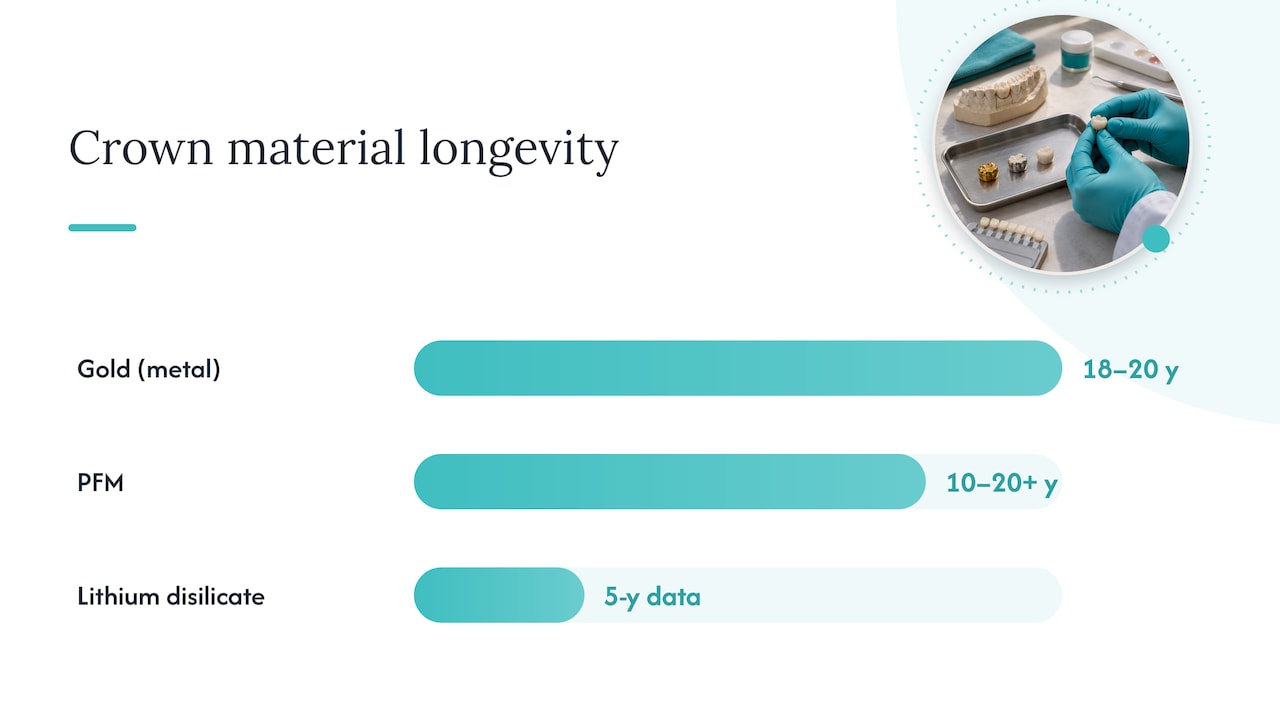
The material a dentist chooses changes both how long a crown tends to survive and how it tends to fail. Gold and other all-metal crowns have the longest track record in dentistry. Some studies and ADA resources point to average longevity around 18 to 20 years, with case reports of individual gold crowns surviving well beyond 40 years. Metal rarely chips or fractures; when it fails, it’s usually because decay developed at the margin or the cement bond gave way.
Porcelain-fused-to-metal (PFM) crowns bridge strength and esthetics, and they commonly fall in the 10 to 20-plus year range in the literature. Their weak point is the porcelain layer bonded over the metal substructure, which can chip or crack at the edges where it meets the gum line, especially under heavy biting forces.
Lithium disilicate crowns, often sold under the brand E.max, are a newer all-ceramic option built for a single tooth. Reports on monolithic lithium disilicate restorations show favorable 5-year survival with low chipping rates in several controlled studies, making them a strong esthetic choice for front teeth and premolars, though long-term data beyond that window remains limited.
Zirconia has become the default choice for many back teeth because of its strength. Systematic reviews report 5-year cumulative survival rates generally in the low to mid-90% range for tooth-supported zirconia crowns, with chipping as the most frequent technical complication. Design matters as much as the material itself here: a separate systematic review found that monolithic zirconia crowns show higher survival and fewer chipping complications than porcelain-veneered zirconia at the 5-year mark. Veneered zirconia layers porcelain over a zirconia core for a more natural look, but that extra layer is the part most likely to chip.
In short:
- Gold/metal crowns tend to outlast every other material but are visibly metallic.
- PFM crowns balance strength and appearance but risk porcelain chipping at the margins.
- Lithium disilicate performs well esthetically with low chipping in short-to-mid-term studies.
- Monolithic zirconia generally outperforms veneered zirconia on survival and chipping rates.
What Makes a Crown Fail Before Its Time?
A crown doesn’t fail in isolation. It fails because of what’s happening to the tooth, the bite, or the patient’s daily habits underneath it.
Biologically, the biggest threat is secondary caries, new decay that sneaks in at the margin where the crown meets the natural tooth. Gum disease around the restoration is a close second, since it can undermine the support structure the crown depends on. ADA-reported data lists recurrent decay, periodontitis, and loss of retention among the most common complications tied to crown and fixed restoration failure.
Mechanically, grinding or clenching (bruxism), chewing ice or hard candy, and an uneven bite all put repeated stress on a crown that it wasn’t designed to absorb indefinitely. The type of cement used and how precisely the crown was fitted at placement also affect how long it holds.
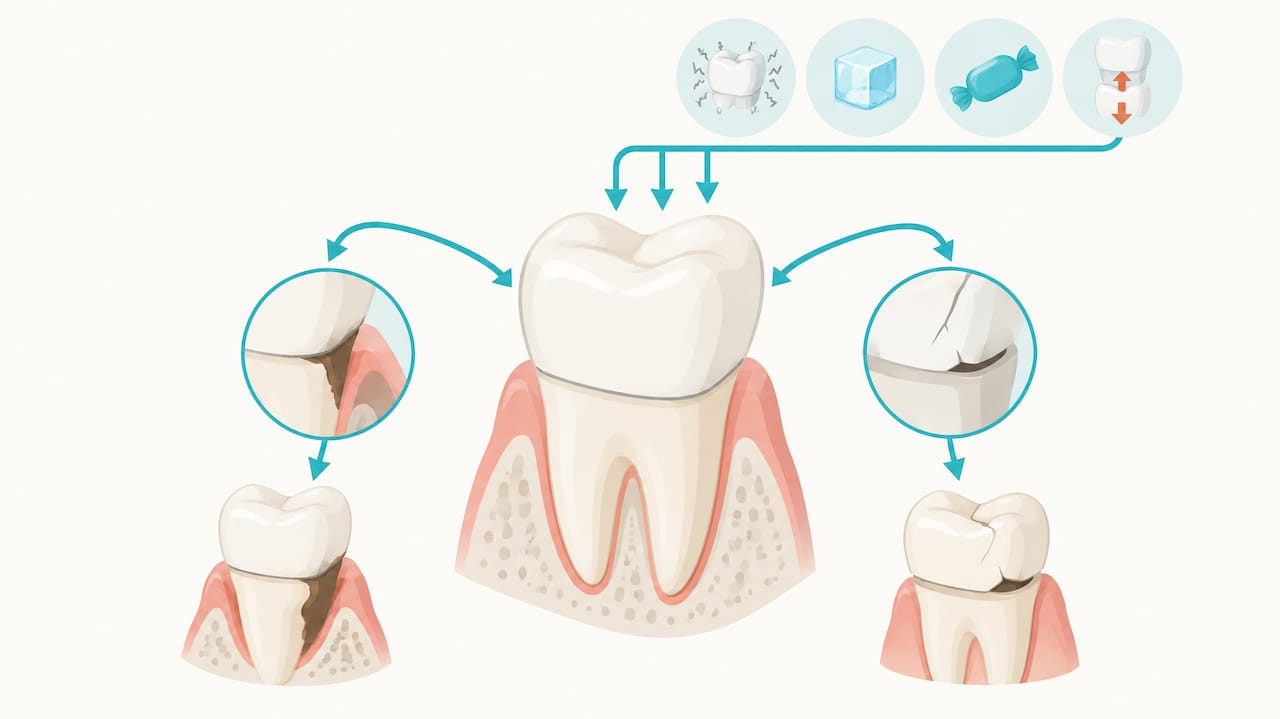
On the clinical side, how much healthy tooth structure remained before the crown went on matters enormously: a tooth prepared down to a thin shell of structure is more vulnerable to fracture or eventual root canal therapy than one with ample structure left.
Patient habits round out the picture:
- Oral hygiene around the crown margin prevents the decay that undermines it.
- Smoking is linked to higher rates of gum disease, which weakens the crown’s foundation.
- Diet and systemic health, including conditions that affect bone or healing, influence how well the supporting tissues hold up over time.
Pro Tip: If you grind your teeth at night, ask about a custom occlusal guard before your next crown goes on, not after it chips.
When Does a Crown Need Repair or Replacement?
Some symptoms mean you should call a dentist today. Others mean you should mention it at your next routine visit.
- Call immediately if the crown falls out, you have severe pain, you notice swelling, or you develop a fever: these point to infection or exposed tooth structure that needs same-day attention.
- Schedule a visit soon for persistent sensitivity to hot or cold, new food trapping near the crown, a visible crack or chip, or rough edges you can feel with your tongue.
- Mention it at your next exam if you notice a subtle change in how your teeth meet when you bite down, even without pain.
Age alone isn’t the deciding factor. A 12-year-old crown with a tight margin and no decay can be perfectly fine, while a 3-year-old crown with a failing seal may need replacement sooner. Condition and risk drive the decision, not the calendar.
If a crown comes loose or falls out, preserve it, avoid store-bought dental adhesives, and call your dentist rather than trying to reseat it yourself.
How Can You Extend the Life of a Crown?
Daily habits do more for crown longevity than any single product. Brush twice a day with fluoride toothpaste, pay extra attention to the margin where the crown meets the gum, and use floss or an interdental brush to clear plaque from that junction. Avoid using your teeth to open packages or crack nuts.
Professional care matters just as much. Clinical practice guidelines from the American College of Prosthodontists recommend a recall exam at least every six months for most patients with fixed restorations, with shorter intervals for anyone at higher risk of decay or gum disease. That recall schedule is where small problems, a slightly open margin, early gum inflammation, get caught before they become a failed crown.
If grinding or clenching is part of your profile, an occlusal guard is often the single most protective addition to a crown’s maintenance plan, since it absorbs the forces that would otherwise land directly on the restoration. Diet habits worth dropping for the same reason include chewing ice, hard candy, and anything that puts sudden point pressure on a crowned tooth.
Five-year cumulative survival for zirconia restorations generally falls in the low to mid-90% range, a number that reflects how much maintenance, not just material, shapes the outcome.
At your checkup, your dentist is checking:
- Margin integrity, looking for gaps where decay could start.
- Retention, confirming the crown hasn’t loosened.
- Occlusion, checking whether your bite is distributing force evenly.
- Tooth vitality, especially for crowns placed over a tooth that never had a root canal.
For context on how crown longevity compares with other common restorations, our breakdown of how long fillings last shows a similar pattern: material and maintenance outweigh a single headline number.
How Does Our Team Support Crown Longevity Day to Day?
We walk every patient through temporary crown care in the two to three weeks between prep and final placement, since that window is where loose temporaries or shifted bite contacts most often cause trouble. If a permanent crown ever comes loose or falls out, our action plan for a crown that’s fallen off gives you the first 24 to 48 hours of steps to take before you can get in. Same-day emergency exams mean a cracked or loose crown gets assessed quickly rather than left to worsen, and our new patient cleaning package makes it easier to keep the recall visits that catch problems early.
A Crown Is Only as Good as What Supports It
A crown’s real lifespan is never just about the material: it’s the sum of the restoration, the tooth underneath it, and the habits a patient keeps up for years afterward. The single best insurance against an early replacement is catching small problems, a loose margin, early gum irritation, a chip, before they turn into a failed crown.
— Admin
How We Help You Get the Most Out of a Crown
We build every crown plan around your specific tooth, bite, and risk factors rather than defaulting to one material for everyone, and that same tailored approach carries into restorative dentistry for bridges, fillings, and other repairs down the road.

If a crown ever cracks, loosens, or falls out unexpectedly, our emergency dentistry option gets you a same-day exam instead of a multi-day wait, and routine general dentistry visits keep the margins and bite checks on schedule. Call our Littleton office or book online to get a crown evaluated or planned around your timeline.
This article is general information, not a substitute for advice from a qualified doctor. Consult a qualified healthcare professional about your own circumstances before acting on anything here.
FAQ
Can dental crowns last 40 years?
Some crowns, particularly gold and all-metal designs, have been documented lasting well beyond 40 years in individual case follow-ups. That outcome depends heavily on consistent maintenance and a stable, decay-free margin rather than the material alone.
Can a tooth rot under a crown?
Yes, decay can develop at the margin where the crown meets the natural tooth, a complication known as secondary caries and one of the most commonly reported reasons crowns eventually fail. Good brushing and flossing specifically along that margin, plus regular recall exams, are the main defenses.
Can a tooth under a crown last a lifetime?
A crowned tooth can function for decades when the underlying tooth stays healthy, the gums stay disease-free, and the patient follows a consistent hygiene and recall routine. There’s no guaranteed outcome, since biological and mechanical risks can still affect it over time.
Is $2,000 a lot for a dental crown?
Crown pricing varies widely by material, location, and whether a root canal or additional procedures are needed, so there’s no single “normal” figure to compare against. We don’t list a flat crown price publicly; we provide a cost estimate after an exam, since the right material and preparation depend on your specific tooth.
Sources
- Clinical practice guidelines for recall and maintenance of patients with tooth-borne and implant-borne dental restorations – JADA
- Long-term clinical performance and complications of zirconia-based restorations: summary of systematic reviews – PubMed
- All-ceramic single crowns supported by ceramic implants: 5-year results – PMC