
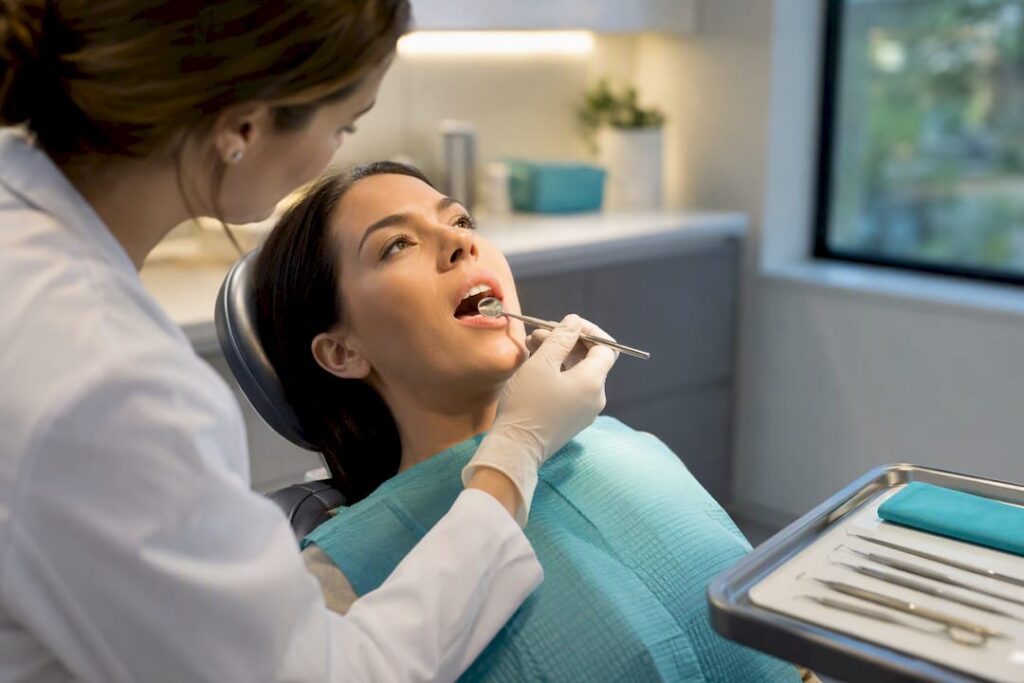
Sensitive teeth are usually a sign of dentin hypersensitivity, a sharp, short pain triggered when exposed dentin lets hot, cold, sweet or acidic stimuli reach the nerve inside the tooth. Common causes include worn enamel, exposed tooth roots, cavities, cracked teeth, whitening products, acidic diets and aggressive brushing. Start with a desensitizing toothpaste and cut out obvious triggers, then book a dental exam if the pain does not ease within a few weeks.
TL;DR:
- Most tooth sensitivity stems from multiple overlapping causes, including enamel erosion, gum recession, cracks, decay, or chemical exposure, requiring targeted treatment.
- In-office treatments like fluoride varnish, laser therapy, and sealants provide faster relief, especially when home remedies fail after two to four weeks.
- Preventive habits such as avoiding acidic foods, using soft brushes, and managing grinding can significantly reduce the risk of sensitivity recurrence.
- A dental exam is essential if pain persists beyond a few weeks, or if there are signs of infection, trauma, or structural damage, to rule out more serious issues.
- Sensitivity caused by temporary surface exposure often responds to desensitizing toothpaste, but underlying structural problems need professional intervention.
Table of Contents
- What’s Actually Causing Your Tooth Sensitivity
- How Dentists Figure Out What’s Really Wrong
- From Toothpaste to the Dental Chair: What Treats Sensitivity
- Everyday Habits That Keep Sensitivity From Coming Back
- When Sensitivity Needs Same-Day Attention
- What to Expect During an Exam and Treatment Visit
- An honest look at sensitivity treatment
- Getting a Same-Day Answer for Sudden Sensitivity
- Where This Information Comes From
- Sources
- FAQ
What’s Actually Causing Your Tooth Sensitivity
Dentin sensitivity happens when the hard enamel or cementum covering a tooth is thin, cracked or gone, exposing the porous dentin underneath. Dentin contains thousands of microscopic tubules that lead straight to the nerve, so once they’re open, everyday triggers become painful in seconds. The dentin hypersensitivity review describes the condition as multifactorial, meaning several mechanisms often overlap in the same mouth.
The most common paths to exposed dentin include:
- Enamel erosion and attrition: thinning from acid exposure or years of chewing wears enamel down until dentin shows through.
- Abrasion and gum recession: overly hard brushing scrapes away enamel and gum tissue, exposing the root surface, which has no enamel at all.
- Structural damage: cracked teeth and failing or worn fillings create direct channels for stimuli to reach the nerve.
- Tooth decay and gum disease: cavities break down enamel and dentin chemically, while periodontal disease exposes root surfaces as gums pull away from the tooth.
- Chemical exposure: frequent acidic foods and drinks, gastric reflux, bulimia-related vomiting, and certain occupational acid exposures soften and dissolve enamel over time, a pattern documented in a narrative review of dentin hypersensitivity.
- Recent dental work or bleaching: whitening treatments and newly placed fillings or crowns can trigger temporary sensitivity as the tooth adjusts.
- Bruxism: nighttime grinding wears down enamel unevenly and can crack teeth along the way.
Because so many of these causes produce a similar symptom, the trigger matters less than the mechanism behind it. A tooth that hurts only with cold air points toward simple dentin exposure, while pain that lingers after the stimulus is gone often signals something closer to the nerve, like deep decay or a cracked tooth.
How Dentists Figure Out What’s Really Wrong
Sensitivity is what clinicians call a diagnosis of exclusion. Before a dentist labels your discomfort as ordinary dentin hypersensitivity, they need to rule out the conditions that mimic it, including cavities, cracked teeth and pulp disease, according to the PMC review on dentin hypersensitivity. Skipping that step risks mistaking a treatable cavity for something you’d otherwise manage with toothpaste alone.
A typical evaluation moves through a few standard steps:
- Visual and tactile exam: the dentist checks for visible decay, cracks, worn areas or receding gums.
- Cold or air stimulation: a quick blast of cold air or water helps pinpoint which tooth and surface reacts.
- Bite testing: biting on a stick or cotton roll can reveal a crack that doesn’t show up otherwise.
- Radiographs: x-rays catch decay between teeth or below the gumline that isn’t visible on exam.
- Pulp testing: when nerve involvement is suspected, testing confirms whether the tooth is still healthy or heading toward root canal territory.
Many practices also photograph and map sensitive spots so they can track whether a site is getting worse, staying stable or healing on its own, a documentation habit noted in the same narrative review. That record matters if your symptoms change between visits.
From Toothpaste to the Dental Chair: What Treats Sensitivity
Most cases respond to a stepwise approach: try home care first, then move to in-office treatment if the pain doesn’t budge. At home, desensitizing toothpastes built around potassium nitrate, stannous fluoride or arginine work by calming the nerve or physically blocking the exposed tubules.
A few habits make home care more effective:
- Switch to a soft-bristled brush and a nonabrasive, desensitizing toothpaste.
- Skip whitening products and acidic foods while symptoms are active.
- Add a fluoride rinse to help strengthen exposed dentin.
- Give any single product two to four weeks of consistent use before judging it.
Pro Tip: Apply desensitizing toothpaste directly to the sensitive spot with a fingertip before bed, rather than just brushing with it, for more concentrated contact time overnight.
If there’s no real improvement after that window, or if you notice a visible crack, deep decay or gum recession, it’s time to escalate. In-office options include fluoride varnish, glutaraldehyde with HEMA, glass ionomer sealants, adhesive coatings, silver diamine fluoride and laser therapy, all of which work by sealing or occluding the open dentinal tubules. The American Dental Association notes that silver diamine fluoride is cleared for this kind of use because it forms a protective layer over exposed dentin. When the underlying issue is structural or related to decay, restorative work such as fillings or crowns, or gum grafting for recession, addresses the cause rather than just the symptom.
A systematic review of randomized trials found that in-office agents like glutaraldehyde with HEMA, glass ionomer and laser tend to bring faster relief, while potassium nitrate, arginine and adhesive systems support control over the medium and long term. The two approaches work best together rather than as a choice between them.
Everyday Habits That Keep Sensitivity From Coming Back
Prevention comes down to protecting the enamel and dentin you have left. A few consistent changes go a long way:
- Rethink acidic exposure: cut back on soda, citrus and wine, use a straw when you do have them, and rinse with plain water afterward instead of brushing right away.
- Wait before brushing: give your mouth 30 to 60 minutes after anything acidic before brushing, since enamel is temporarily softened right after acid exposure.
- Brush gently: use a soft-bristled brush, light pressure and a nonabrasive toothpaste with smooth, controlled strokes rather than aggressive scrubbing.
- Address grinding: an occlusal guard protects enamel from nighttime bruxism, which otherwise wears teeth down unevenly.
- Manage medical contributors: reflux and eating-disorder-related erosion need medical management alongside dental care, and whitening should be used sparingly rather than continuously.
- Fix structural exposure: recession or worn restorations sometimes need gum grafting or replacement work to stop ongoing exposure rather than just easing the pain.
When Sensitivity Needs Same-Day Attention
Most sensitivity is manageable, but a few signs mean it’s not a wait-and-see situation.
- Severe or persistent pain that doesn’t fade between meals.
- Swelling, fever, or a visible abscess near a tooth.
- Sensitivity that started right after an injury or trauma.
- A visible crack or a filling that’s come loose.
For anything milder, give a desensitizing toothpaste two to four weeks of steady use. If nothing changes, a dental visit typically includes an exam, x-rays and either a targeted in-office treatment or, when needed, an emergency procedure through emergency dentistry services.
What to Expect During an Exam and Treatment Visit
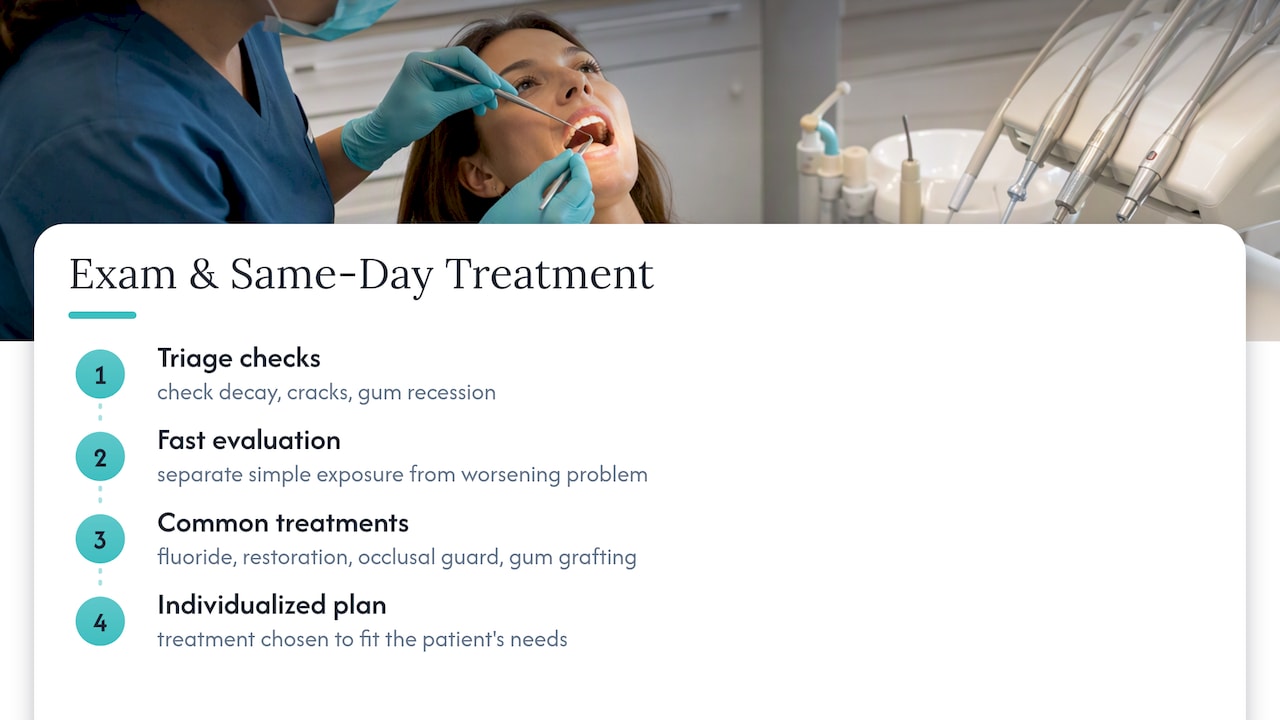
A same-day exam for sudden sensitivity typically starts with the same triage steps outlined above: checking for decay, cracks or recession before anything else. Fast evaluation matters because it separates simple dentin exposure from a problem that’s actively getting worse. Depending on what’s found, common next steps include fluoride application, a restoration, an occlusal guard for grinding, or gum grafting for recession, all built around an individualized plan rather than a one-size approach.
An honest look at sensitivity treatment
Desensitizing toothpaste gets marketed as a fix, but it’s really a bridge. It calms nerves and blocks tubules well enough to buy time, yet it does nothing for a cracked tooth, a cavity or a receding gumline sitting underneath the pain. The mistake most people make isn’t trying home care first, it’s treating two months of no improvement as a reason to switch toothpaste brands instead of a reason to get an exam. Sensitivity that behaves predictably and fades with basic care is usually fine to manage yourself. Sensitivity that lingers, spreads or changes character is your body telling you the diagnosis of exclusion hasn’t happened yet.
— Admin
Getting a Same-Day Answer for Sudden Sensitivity
Sensitivity that won’t quit doesn’t have to wait for a routine cleaning slot. South Littleton Family Dental offers a same-day exam for sudden tooth sensitivity so the cause gets identified quickly instead of guessed at over weeks of trial and error. Depending on what’s found, care can move straight into fluoride treatment, a restoration or a referral for more involved work.

If a cracked tooth, deep decay or an abscess is behind the pain, the practice’s emergency dentistry services are built for exactly that. For routine sensitivity checks and preventive fluoride care, general dentistry appointments cover the exam and cleaning side of the same problem. Book an exam to find out what’s actually going on before the discomfort settles in for good.
Where This Information Comes From
- Dentin hypersensitivity review (PMC): clinical overview of causes and the diagnosis-of-exclusion approach.
- Prevalence and meta-analysis of dentin hypersensitivity: pooled prevalence data across multiple studies.
- Systematic review of dentin hypersensitivity treatments: randomized trial evidence on in-office and at-home agents.
- American Dental Association: Silver Diamine Fluoride: professional guidance on SDF use.
This article is general information, not a substitute for advice from a qualified doctor. Consult a qualified healthcare professional about your own circumstances before acting on anything here.
Sources
- Dentin hypersensitivity review (PMC)
- American Dental Association — Silver Diamine Fluoride
- Prevalence of dentin hypersensitivity: systematic review and meta-analysis
- Comparative treatments for dentin hypersensitivity (systematic review)
FAQ
What is dentin hypersensitivity exactly?
Dentin hypersensitivity is sharp, short-lived tooth pain triggered by cold, heat, sweets or acidic foods reaching exposed dentin. It happens when enamel or gum tissue wears away or recedes enough to expose the tubules that lead to the tooth’s nerve, as described in the dentin hypersensitivity review.
How common is tooth sensitivity?
A meta-analysis estimates dentin hypersensitivity affects about 11.5% of people, though individual study estimates vary widely depending on population and methods. It’s common enough to be a frequent reason people schedule a dental visit.
How long should sensitivity last after a filling?
Mild sensitivity to hot and cold after a filling is normal and usually settles within a few days to a couple of weeks as the tooth adjusts. Pain that lingers beyond that, worsens, or occurs without any stimulus is worth having checked, since it may point to a bite issue or deeper nerve involvement.
Can whitening products cause permanent sensitivity?
Whitening-related sensitivity is typically temporary and fades once bleaching stops, but overuse without dental guidance can prolong discomfort. Pausing whitening and switching to a desensitizing toothpaste is a reasonable first step before deciding whether to continue.
When should I see a dentist instead of just using toothpaste?
See a dentist if sensitivity persists beyond two to four weeks of consistent desensitizing toothpaste use, or immediately if there’s swelling, fever, a visible crack or pain after an injury. An exam, including x-rays when needed, helps rule out cavities or cracked teeth before treating it as simple sensitivity.