
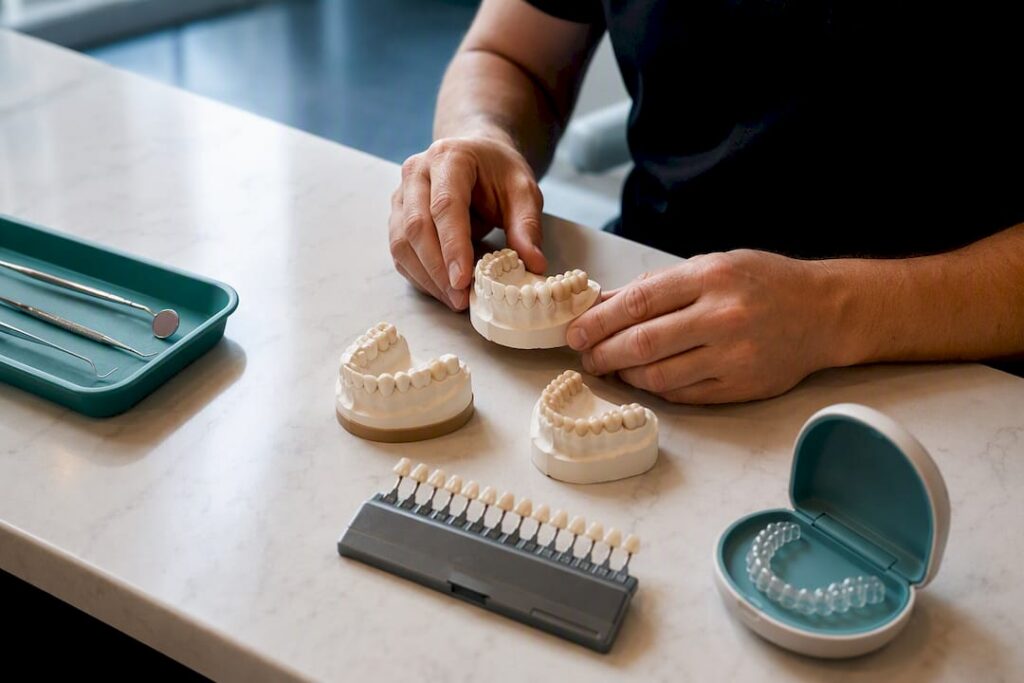
Most smile makeovers combine two or three treatments rather than relying on one fix. Whitening and bonding solve color and minor chips; veneers and crowns reshape or protect compromised teeth; implants replace what’s missing; orthodontics fixes alignment; gum contouring balances the frame around it all. The order these happen in usually matters as much as which ones you pick.
TL;DR:
- Whitening should be done first to set a natural shade for all subsequent restorations, as veneers and crowns cannot be lightened later.
- Bonding is best for small chips and gaps, but veneers provide longer-lasting, more uniform results when multiple teeth require reshaping or color correction.
- Implants require a healing period of three to six months, and most cosmetic work should wait until the implant crown is ready for accurate shade matching.
- Orthodontic treatment typically precedes cosmetic procedures to ensure teeth are properly aligned before applying veneers or crowns.
- A staged treatment plan that stabilizes, moves, whitens, restores, and refines ensures better results and longer-lasting outcomes, with costs spread across multiple visits.
Table of Contents
- What Are Your Smile Makeover Options?
- Professional Teeth Whitening: In-Office, Take-Home, and Over-the-Counter
- Dental Bonding for Chips, Gaps, and Minor Reshaping
- Porcelain and Composite Veneers: Reshaping the Smile Line
- Crowns and Bridges: When Structure Needs Repair Too
- Dental Implants for Missing Teeth
- Orthodontic Options: Why Alignment Often Comes First
- Gum Contouring: The Finishing Step Most People Skip
- The Treatment Stack: A Practical Sequencing Roadmap
- What Drives the Cost of a Smile Makeover
- How to Choose the Right Cosmetic Dentist
- What Staged, Affordable Care Looks Like in Practice
- Non-Dental Options That Change How Your Smile Looks
- A Conservative Approach to Smile Makeovers
- Ready to Plan Your Smile Makeover? Here’s the Next Step
- Sources
What Are Your Smile Makeover Options?
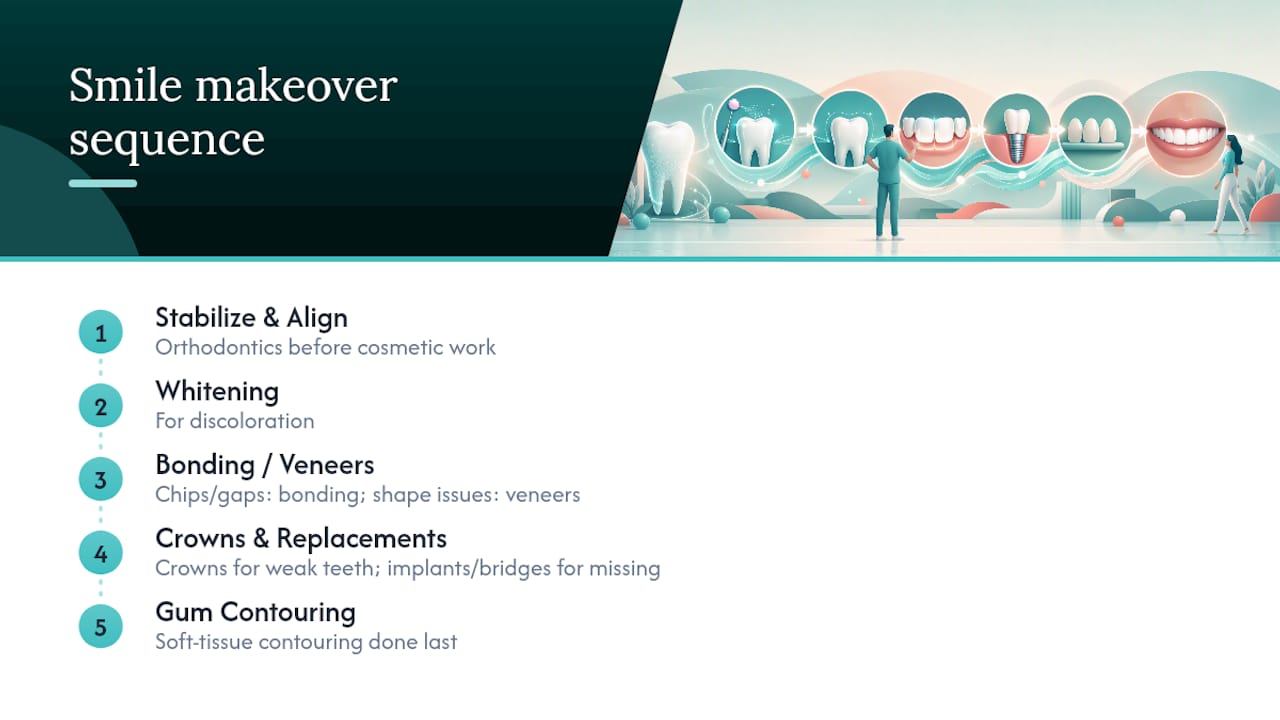
Sorting through smile makeover options gets easier once you group them by the problem they solve. Discoloration responds to whitening. Chips and small gaps respond to bonding. Shape, color, and proportion issues across multiple teeth call for veneers. Structurally weak teeth need crowns. Missing teeth need implants or bridges. Crooked teeth need orthodontics before anything cosmetic goes on top. Gummy smiles or uneven gum lines get resolved with soft-tissue contouring, usually last.
None of these exist in isolation. A dentist planning a full makeover thinks about the stack: which procedure has to happen first so the next one doesn’t get undone. That sequencing logic runs through the rest of this guide.
Professional Teeth Whitening: In-Office, Take-Home, and Over-the-Counter
Professional whitening splits into two tracks: in-office power bleaching, which uses higher-concentration peroxide gel activated under supervision, and dentist-supplied take-home trays with a lower, safer concentration you wear over one to two weeks. Both outperform over-the-counter strips and pastes, which use the weakest peroxide levels and take longer to show results, according to the American Dental Association.
Whitening only works on natural enamel. Veneers, crowns, and composite bonding won’t lighten, the ADA notes, which is why whitening almost always happens before, not after, restorative work.
- Sensitivity and mild gum irritation are the most common side effects
- A pre-treatment exam catches cavities, cracks, or gum disease that whitening would aggravate
- Results fade gradually; most people need periodic touch-ups
Whitening as shade anchor: dentists often whiten natural teeth first, then match porcelain restorations to that new, brighter shade rather than the other way around.
Dental Bonding for Chips, Gaps, and Minor Reshaping
Bonding uses tooth-colored composite resin, sculpted directly onto the tooth and hardened with a curing light. It’s the fastest, least invasive fix on this list, usually finished in a single visit with little to no enamel removed.
- Best suited to small chips, minor gaps, and slight reshaping of one or two teeth
- Requires no lab work, which keeps cost and turnaround low
- Lasts several years before it needs replacement or repair
- More prone to staining and chipping than porcelain over time
Bonding is often the right call for a single imperfect tooth. Once you’re trying to change the shape or color of several teeth at once, veneers usually deliver a more even, longer-lasting result.
Porcelain and Composite Veneers: Reshaping the Smile Line
Veneers are thin shells bonded to the front of teeth to change color, shape, length, or spacing all at once. Porcelain veneers, often made from lithium disilicate or layered ceramic, resist staining and typically last 10 to 15 years or longer with good care, while composite veneers cost less but wear faster, closer to bonding’s lifespan.
Preparing teeth for porcelain veneers is not reversible. A small layer of enamel is removed to make room for the shell, so many dentists offer a trial smile or mock-up before committing to the final design.
- Porcelain: longer lasting, more resistant to stains, higher lab cost
- Composite: cheaper, faster to apply, but shorter lifespan and more upkeep
- Lab quality matters as much as the dentist’s chairside skill, since the ceramist shapes the final restoration
- A night guard protects veneers from grinding-related chips or fractures
You can browse the porcelain veneer options most practices offer to get a sense of material choices before your consultation.
Pro Tip: Ask to see photos of the ceramist’s or lab’s previous work, not just the dentist’s. The lab does the physical fabrication, and its craftsmanship shows up in how natural the final veneers look.
Crowns and Bridges: When Structure Needs Repair Too
Crowns come into play when a tooth has lost too much structure for a veneer to fix, whether from deep decay, a root canal, or a fracture. Unlike a veneer, a crown wraps the entire tooth, restoring both strength and appearance in one piece.
- Crowns are indicated for structurally compromised teeth, not just cosmetic changes
- Bridges span a gap using crowns on the neighboring teeth to anchor a false tooth in between
- All-ceramic crowns look the most natural; metal-fused options offer more strength for back teeth
- A well-made crown or bridge can last a decade or more with routine care
Restorative dentistry work like this often gets folded into a cosmetic plan precisely because a damaged front tooth can’t be whitened or veneered into looking healthy.
Dental Implants for Missing Teeth
An implant replaces a missing tooth with a titanium post placed in the jawbone, topped eventually with a crown. The post needs time to fuse with bone, a process called osseointegration that typically takes three to six months before the final crown goes on.
That timeline changes how a makeover gets staged. Whitening and other cosmetic work usually wait until the implant site is settled and the final crown’s shade can be matched to the rest of the smile.
- Candidacy depends on bone density and gum health, checked with 3D imaging
- Implants are generally preferred over bridges when neighboring teeth are healthy and shouldn’t be altered
- Dentures remain an option for multiple missing teeth or full-arch cases
- Checking implant candidacy early avoids surprises mid-treatment plan
Orthodontic Options: Why Alignment Often Comes First
Clear aligners work well for mild to moderate crowding or spacing and appeal to adults who don’t want visible brackets. Traditional braces handle more complex bite issues and severe misalignment that aligners can’t fully correct.
Either route typically runs 6 to 18 months, followed by a retainer to hold the new position. Moving teeth into proper alignment before adding veneers or crowns protects that restorative work. Putting porcelain on crooked teeth just makes a crooked smile look shinier.
- Clear aligners suit adults with mild misalignment and cosmetic priorities
- Braces suit more significant bite corrections
- Retention after treatment is not optional if you want the results to hold
- Minor spacing issues can sometimes be resolved with bonding or veneers instead of orthodontics, skipping the wait
Gum Contouring: The Finishing Step Most People Skip
A smile with perfectly aligned, white teeth can still look off if the gum line is uneven or if too much gum shows when you smile. Gingival recontouring reshapes the gum tissue; crown lengthening exposes more tooth structure when teeth look short.
- Both procedures adjust tooth-to-gum proportion, not the teeth themselves
- Healing typically takes one to two weeks before tissue settles into its final shape
- Usually scheduled after orthodontics and before final restorations, so crowns or veneers fit the finished gum line
- Often the last step because it defines the frame the rest of the smile sits inside
The Treatment Stack: A Practical Sequencing Roadmap
Combining procedures without a plan is how makeovers go sideways, whether that means a veneer shade that doesn’t match unwhitened neighboring teeth or a crown placed before orthodontics finishes moving a tooth. A staged sequence keeps each step protecting the next.
- Stabilize oral health first: treat cavities, gum disease, and any active infection.
- Move or replace teeth that need repositioning or replacement: orthodontics or implants, since both take months and affect everything built afterward.
- Whiten natural teeth to set the color baseline for any restorations.
- Restore with bonding, veneers, or crowns, matched to the newly whitened shade.
- Refine soft tissue last, once the bite and tooth shapes are final.
- Maintain with a night guard, checkups, and periodic touch-ups.
A simple stack, like whitening plus bonding on a chipped front tooth, might wrap up in a few weeks. A bigger stack, like aligners followed by six veneers, often runs six months to a year. Staging this way also spreads the cost over multiple visits instead of one large bill.
What Drives the Cost of a Smile Makeover
Price swings widely based on how many teeth are involved, the materials used, lab fees, and the dentist’s experience level. A single bonded tooth costs far less than a full set of porcelain veneers, and lab costs for lithium disilicate or zirconia restorations add up fast across multiple teeth.
Most cosmetic procedures are elective, so dental insurance typically covers little or none of the bill, though restorative work tied to health issues, like a crown after a root canal, sometimes qualifies.
- Ask for a written, itemized cost breakdown before starting
- In-office payment plans and third-party financing are common ways to spread payments
- Staging treatments over several visits, rather than all at once, eases the financial load
- Promotional offers on cleanings and exams can make the stabilization phase more affordable before cosmetic work begins
How to Choose the Right Cosmetic Dentist
Cosmetic dentistry isn’t a formally recognized ADA specialty, so credentials alone don’t tell the whole story. Success tracks more closely with a dentist’s post-graduate training and case volume in the specific procedure you need than with general marketing claims.
- Ask how many cases similar to yours the dentist has completed, not just how many years they’ve practiced
- Request to see real before-and-after photos, ideally patients with a similar starting point to yours
- Confirm they use digital smile design and intraoral scanning, which improve fit and let you preview results before committing
- Ask who fabricates the restorations and whether you can see examples of that lab’s work
Red flags include a dentist who skips a bite assessment, offers no trial smile or mock-up before permanent work, or won’t provide a written cost breakdown.
Pro Tip: If a consultation feels rushed or the dentist can’t explain why they’re sequencing your treatment a certain way, that’s worth a second opinion before you commit to anything irreversible.
What Staged, Affordable Care Looks Like in Practice
A patient-centered approach means stabilizing first, previewing results before anything permanent happens, and being upfront about pricing at every stage. Same-day emergency care and affordable entry points, like a $99 cleaning package, make that first stabilization step accessible instead of a barrier. Bring reference photos of smiles you like to your consultation. Specific examples give a dentist far more to work with than vague descriptions of “whiter” or “straighter.”
Non-Dental Options That Change How Your Smile Looks
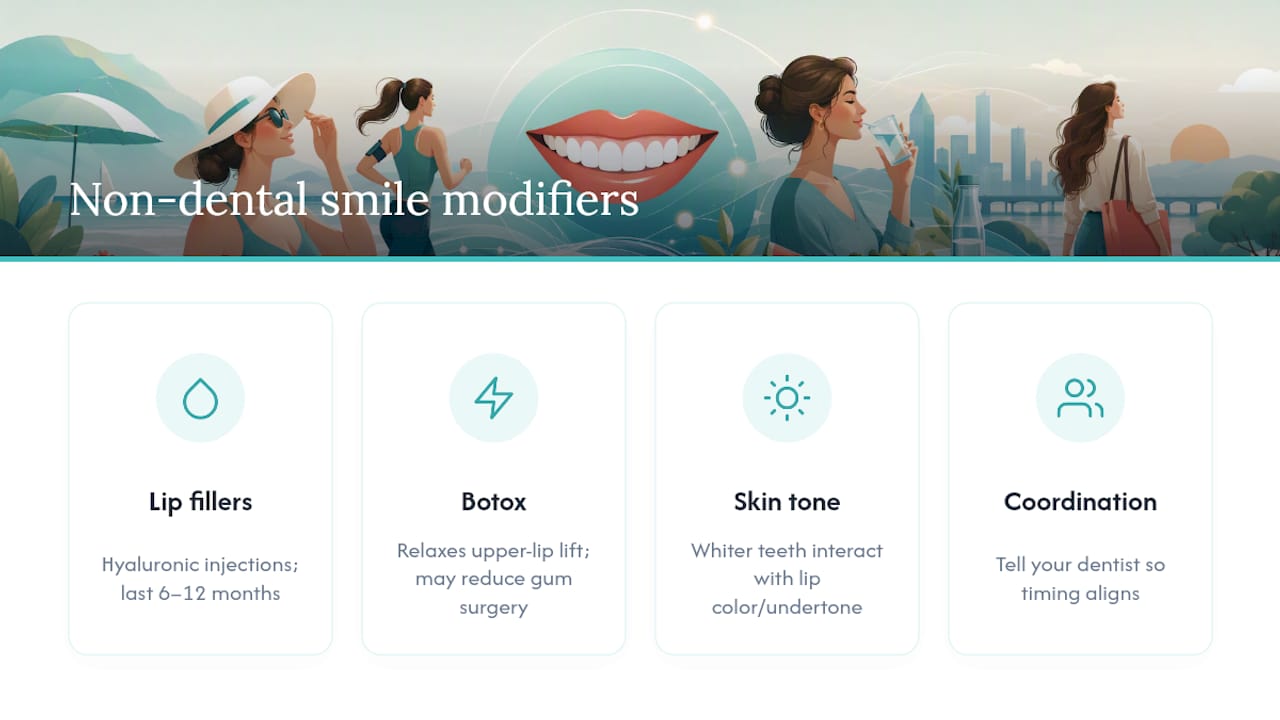
Not everything that shapes how a smile reads is inside the mouth. Lip fillers, typically hyaluronic acid injections placed by a dermatologist, injector, or oral surgeon, change how much tooth shows when you smile and how your lips frame your teeth. Thinner upper lips can hide teeth that are actually in great shape, while fuller, well-proportioned lips can make even modest dental work look more dramatic.
This matters for planning because fillers are temporary, usually lasting 6 to 12 months, and they interact visually with whatever dental work you’re doing. Someone getting veneers to widen a narrow smile might find that lip filler changes how much of those veneers show at rest versus mid-smile. Getting the lip work done, or at least discussed, before finalizing veneer shape and length helps avoid a mismatch between the two.
Other non-dental factors worth knowing about: Botox around the mouth can soften a gummy smile by relaxing the muscle that lifts the upper lip too high, sometimes reducing the need for surgical gum contouring. Skin tone and teeth whitening also interact, since whiter teeth can look more dramatic against certain lip colors and skin undertones.
None of this replaces dental treatment, and a dentist generally isn’t the provider for fillers or Botox. But if you’re building out a full smile makeover, it’s worth mentioning to your dentist that you’re considering these treatments elsewhere, so the timing lines up rather than working against the dental plan.
A Conservative Approach to Smile Makeovers
The best outcomes come from preserving as much natural tooth structure as possible and planning every treatment around how the bite actually functions, not just how a tooth looks in a photo. Realistic, natural results hold up longer than dramatic ones. Ask your dentist directly about maintenance and risk before you commit to anything permanent.
— Admin
Ready to Plan Your Smile Makeover? Here’s the Next Step
A smile makeover works best when the person planning it can move between whitening, bonding, veneers, crowns, and implants under one coherent sequence, not a patchwork of separate providers. South Littleton Family Dental in Littleton, CO handles that full stack in-house, including Lumi and KoR teeth whitening systems, porcelain veneers, implants, and coordination with orthodontic treatment when alignment needs to happen first.

Getting started doesn’t require jumping straight into cosmetic work. The $99 cleaning and exam gives you a baseline oral health check, the same stabilization step every staged makeover starts with, and same-day appointments are available for anything urgent. Flexible payment plans help spread out larger treatment stacks like veneers or implants. If you’re ready to talk through which options fit your smile, schedule a consultation and bring photos of what you’re hoping to achieve.
This article is general information, not a substitute for advice from a qualified doctor. Consult a qualified healthcare professional about your own circumstances before acting on anything here.
Sources
- Whitening | American Dental Association
- How to Choose a Cosmetic Dentist: 10 Essential Questions | Dr Loren Grossman
- Smile makeover guide: treatments, benefits & expert tips | Ethos Modern Dental
- How to Choose a Cosmetic Dentist | Veneers Authority