

Short answer: Original Medicare generally does not cover routine dental care. A few narrow medical exceptions exist, and many Medicare Advantage plans add dental as an extra benefit that varies plan by plan. If you’re weighing your options, check your plan’s Evidence of Coverage and talk with your medical and dental teams about documentation if you believe a procedure qualifies as medically necessary.
TL;DR:
- Medicare generally does not cover routine dental care such as cleanings, fillings, extractions, dentures, or implants unless linked to specific medical treatments.
- Coverage for dental procedures connected to medical conditions requires documentation proving the dental work is necessary for treatments like transplants or cancer therapy, with associated costs still applying.
- Many Medicare Advantage plans include limited preventive dental benefits, but coverage for restorative work varies widely and should be checked carefully before enrollment.
- Alternatives for dental coverage include standalone insurance, Medicaid for dual-eligibles, and community or charity programs offering reduced-cost services.
- Confirm coverage details with your plan’s documentation, coordinate with your healthcare providers for necessary documentation, and get cost estimates before proceeding with treatment.
Table of Contents
- Does Medicare Cover Dental Under Original Medicare?
- When Does Medicare Pay for Dental Work Tied to Medical Treatment?
- How Does Medicare Advantage Dental Coverage Work?
- What Are the Alternatives if Medicare Doesn’t Cover Your Dental Needs?
- How Do You Confirm and Get Medicare to Cover a Dental Service?
- What Will Dental Care Actually Cost You?
- Why Dental Access Matters for Medicare Patients
- How South Littleton Family Dental Helps Medicare Patients in Littleton, CO
- Sources
Does Medicare Cover Dental Under Original Medicare?
No, not for routine care. Original Medicare excludes dental services under a statutory rule that treats most dental work as outside its scope, regardless of how much you need it. That exclusion has been on the books for decades, and it catches a lot of people off guard when they turn 65 expecting Medicare to work like an employer dental plan.
Here’s what Parts A and B typically won’t pay for:
- Routine cleanings and checkups
- Fillings and cavity treatment
- Extractions, including wisdom teeth
- Dentures, bridges, and crowns
- Dental implants
- Root canals and periodontal treatment
There’s one narrow carve-out worth knowing. If you’re already admitted to a hospital for something unrelated and a dentist provides emergency or complicated dental work during that stay, Part A may help cover the hospital costs tied to the admission itself. The dental procedure isn’t the trigger. The hospitalization is.
When Does Medicare Pay for Dental Work Tied to Medical Treatment?
Medicare pays for dental care in specific cases where the dental work is “inextricably linked” to a covered medical procedure. That phrase comes straight from CMS rulemaking finalized between 2023 and 2025, and it means the dental service has to be a necessary step in treating a medical condition Medicare already covers.
Real examples where this applies:
- Oral exams and treatment before an organ transplant
- Dental clearance and extractions before heart valve replacement
- Tooth extraction before chemotherapy for certain cancers
- Dental care connected to dialysis for beneficiaries with end-stage renal disease
- Treatment for oral complications from head and neck cancer therapy
Getting Medicare to actually pay requires coordination. Your physician typically needs to document why the dental service is medically necessary, the dentist usually needs to be Medicare-enrolled, and claims often require an ICD-10 diagnosis code along with a KX modifier confirming the documentation is on file. Skip any of that and the claim gets denied even when the clinical case is solid.
Statistic Callout: KFF’s analysis of the 2023–2025 rule changes concludes they add welcome clarity but expand coverage only modestly, benefiting a limited slice of beneficiaries rather than the broader Medicare population.
When these exceptions apply, cost sharing still kicks in. Part B services typically carry the standard deductible plus 20% coinsurance; Part A inpatient dental work follows the hospital deductible structure.
How Does Medicare Advantage Dental Coverage Work?
Medicare Advantage often fills the gap Original Medicare leaves open. A large share of MA plans now bundle in dental as a supplemental benefit, but the design of that benefit swings wildly between insurers and even between plans from the same insurer.
Some MA dental benefits are preventive only, covering cleanings, exams, and X-rays with no help for anything more involved. Others are comprehensive, extending into fillings, extractions, dentures, and even dental implant insurance coverage for restorative work. The difference between those two tiers can mean thousands of dollars out of your pocket over a year.
Before picking a plan, compare these variables directly:
- Annual dental benefit caps, which commonly run $1,000 to $3,000 depending on the plan
- Coinsurance percentages for restorative work like crowns or dentures
- Waiting periods before major services become eligible
- Network restrictions on which dentists you can see
- Prior authorization requirements for procedures like implants or root canals
Pro Tip: Pull the plan’s actual Evidence of Coverage document, not the marketing brochure, before you enroll. Two plans from the same insurer can list identical premiums but wildly different dental caps once you read the fine print.
If you already know you’ll need restorative work like a bridge or a partial denture, a preventive-only plan with a low annual cap will barely dent the bill. Match the benefit design to what your mouth actually needs, not what sounds good on a plan summary page.
What Are the Alternatives if Medicare Doesn’t Cover Your Dental Needs?
Original Medicare’s gap doesn’t mean you’re stuck paying full price everywhere. A few realistic paths exist, and most beneficiaries end up combining more than one.
- Standalone dental insurance. These plans typically cover preventive care right away but impose waiting periods of six to twelve months before major services like crowns or implants kick in, plus annual maximums often in the $1,000 to $1,500 range. They tend to make financial sense if you expect ongoing restorative work rather than just a yearly cleaning.
- Medicaid for dual-eligibles. Adult dental coverage under Medicaid varies enormously by state, from broad benefits to emergency-only coverage. If you qualify for both Medicare and Medicaid, check your state’s specific adult dental rules or ask about a Dual Eligible Special Needs Plan (D-SNP) that may bundle dental in.
- Community and discount options. Dental schools often provide supervised student care at reduced rates, federally qualified community health centers use sliding-scale fees based on income, and some charitable programs offer free or low-cost care for seniors on fixed incomes.
How Do You Confirm and Get Medicare to Cover a Dental Service?
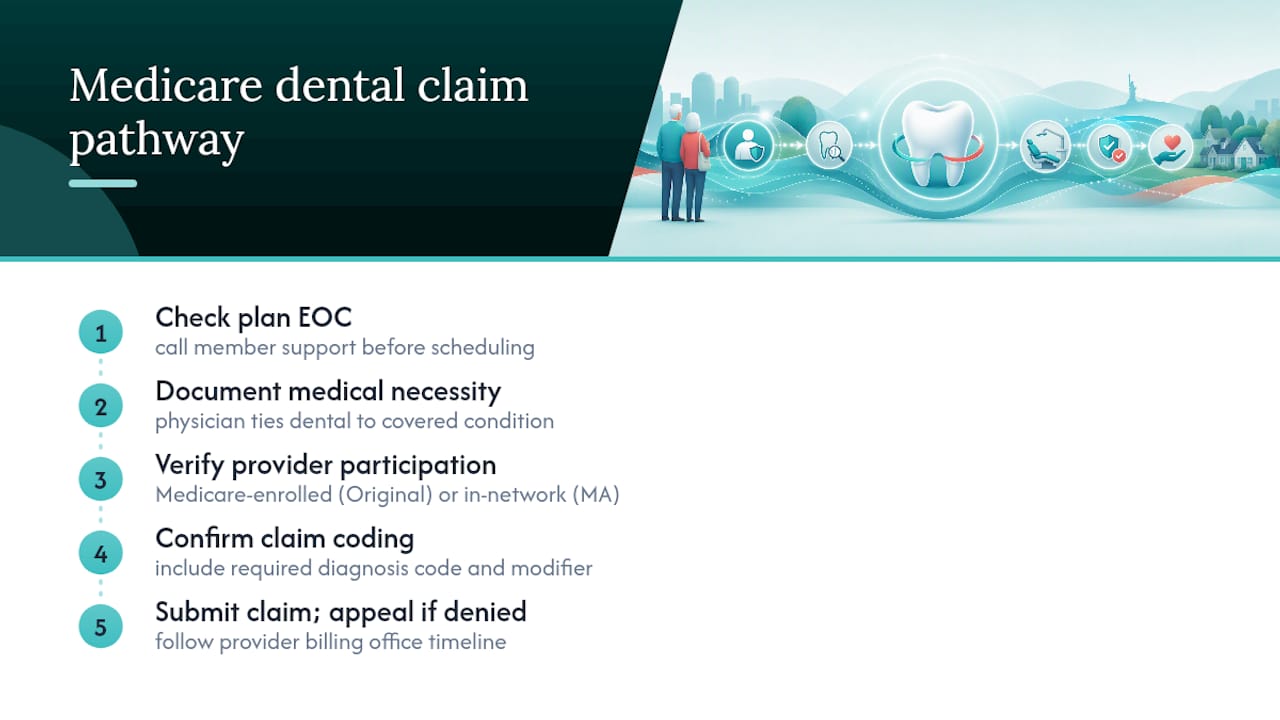
Start with your plan’s Evidence of Coverage document and call member support directly to confirm which dental services and providers are covered before you schedule anything. Skipping this step is how people end up with surprise bills for procedures they assumed were included.
Next, if you believe a dental service is medically necessary, ask your physician to document that connection clearly, tying the dental work to a covered medical condition or procedure. Your dentist and doctor need to coordinate, since Medicare wants a documented clinical link, not just a dentist’s opinion.
Finally, verify your dentist is Medicare-enrolled (for Original Medicare claims) or in-network (for Medicare Advantage), and confirm the claim will include the required diagnosis code and modifier. If a claim gets denied, you have appeal rights. Ask your provider’s billing office to walk you through the timeline.
Pro Tip: Keep a folder, physical or digital, with your EOC, your physician’s referral notes, and any prior authorization letters. Bringing that folder to appointments cuts down on delays when a claim needs supporting documentation.
What Will Dental Care Actually Cost You?
Cost depends entirely on which coverage path applies. If a service qualifies under Medicare’s medical necessity exception, you’ll typically face the Part B deductible applicable for the year, plus 20% coinsurance on the approved amount. Inpatient dental work tied to a hospital stay falls under the Part A deductible, set at $1,736 for 2026.
Outside those exceptions, you’re paying retail. A few reference points worth knowing:
- Medicare Advantage comprehensive dental plans typically cap annual benefits between $1,000 and $3,000
- Restorative coinsurance on MA plans often runs 20% to 50% depending on the procedure
- Without any coverage, fillings, extractions, and dentures commonly range from a few hundred to a few thousand dollars depending on complexity
Ask any dentist’s office for a written cost estimate before treatment. It’s a normal request, and a reputable practice will give you one without hesitation.
Why Dental Access Matters for Medicare Patients
Untreated dental problems don’t stay in the mouth. Infections spread, nutrition suffers, and seniors on fixed incomes often delay care until a small cavity becomes an emergency extraction. That’s the pattern we see most often, and it’s preventable with the right coordination between your medical and dental providers.
When a patient’s dental issue genuinely connects to a covered medical condition, getting the documentation right the first time saves weeks of back and forth with a plan. Bring your Evidence of Coverage and your physician’s notes to your appointment. It speeds everything up.
— Admin
How South Littleton Family Dental Helps Medicare Patients in Littleton, CO
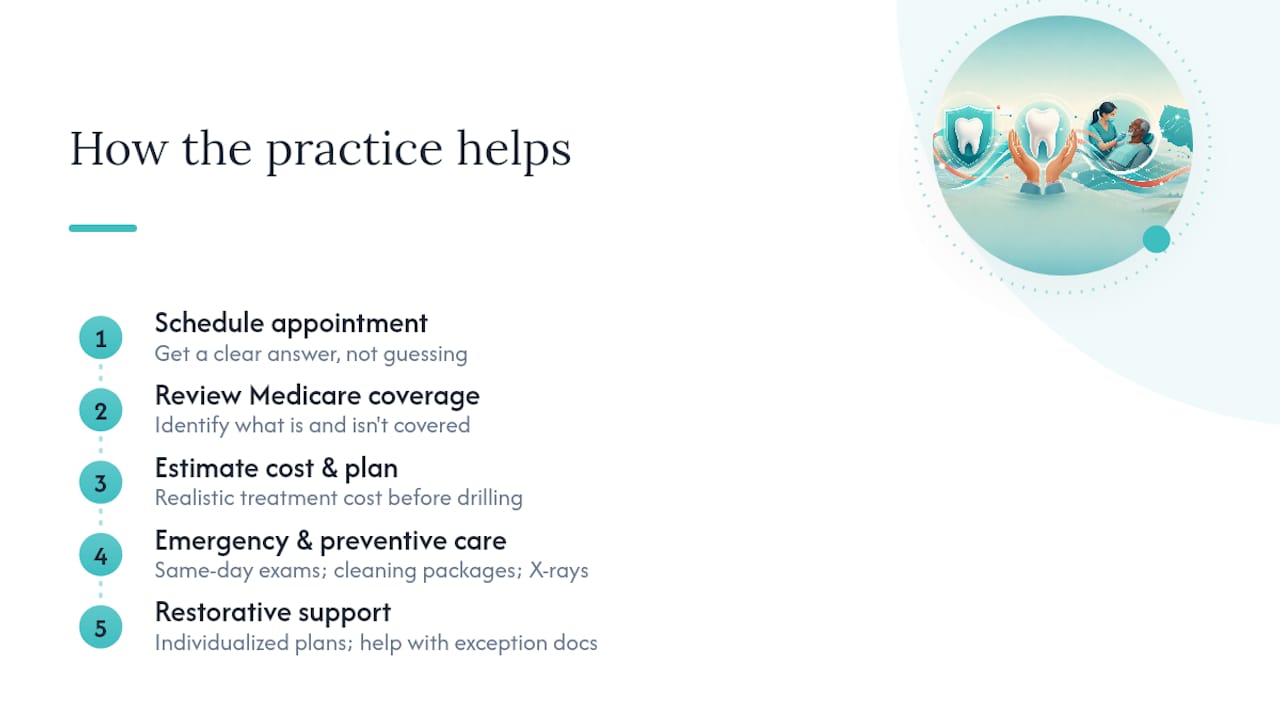
If you’re navigating Medicare’s dental gaps, you don’t have to sort it out with a spreadsheet and a stack of plan documents alone. Southlittletonfamilydental works directly with patients in Littleton, CO to figure out what’s covered, what isn’t, and what a realistic treatment plan actually costs before any drilling starts.

The practice offers same-day emergency exams and cleaning packages to help patients manage costs. For anyone facing restorative work, whether it’s a dental implant, bridge, or denture, the team builds individualized care plans and helps patients understand what documentation might support a Medicare exception, if one applies to their situation. General services like cleanings, exams, and X-rays are also available for patients who just need reliable, affordable preventive care.
If you’re dealing with dental pain right now or want help figuring out your coverage options, schedule an appointment with South Littleton Family Dental and get a clear answer instead of guessing.
This article is general information, not a substitute for advice from a qualified doctor. Consult a qualified healthcare professional about your own circumstances before acting on anything here.
Sources
- Dental service coverage
- Medicare Dental Coverage / CMS
- Coverage of Dental Services in Traditional Medicare | KFF