
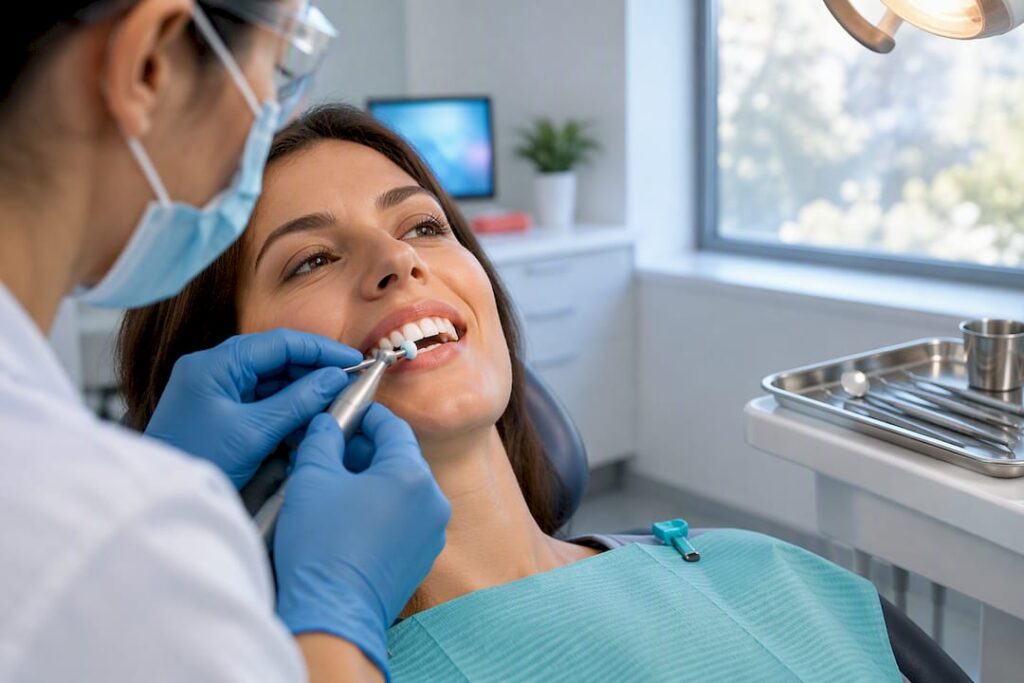
Rinse your mouth with warm water, control any bleeding with gentle pressure, and save the broken piece if you can find it. Skip chewing on that side until a dentist looks at it. Seek same-day care for exposed pulp, heavy bleeding, severe pain, or a fully knocked-out tooth; otherwise book a routine visit within a few days. From there, a dentist will choose among smoothing the edge, bonding, reattaching the fragment, a veneer, a crown, or root canal therapy depending on how deep the damage goes.
TL;DR:
- Reattaching a fragment improves aesthetic results and restores tooth strength when the piece is found and kept hydrated in milk or saliva.
- Small chips affecting only enamel are typically smoothed or bonded in a single visit, but larger or deep damages may require crowns or root canal therapy.
- Immediate first aid involves rinsing with warm water, controlling bleeding, and protecting sharp edges with dental wax or gum before seeking emergency care.
- Imaging and pulp testing are essential to determine if nerve damage exists, guiding whether a repair or root canal treatment is necessary.
- Costs vary depending on repair type, with smoothing being cheapest, bonding moderate, and crowns or root canals usually the most expensive options.
Table of Contents
- Symptoms and causes of a chipped tooth
- Immediate first aid and emergency care
- Diagnosis: what a dentist will check and tests they may use
- Professional treatment options and when each is used
- Cost, insurance, and what to expect to pay
- Prevention and follow-up care after repair
- How South Littleton Family Dental treats chipped-tooth emergencies and repairs
- Conservative repair versus long-term restoration
- Book a same-day exam for your chipped tooth
- Sources
- FAQ
Symptoms and causes of a chipped tooth
A chip is a small break in the enamel or the outer edge of a tooth, while a crack runs through the tooth structure without necessarily removing a piece. The distinction matters because a crack can extend below the gumline where you cannot see it, and narrative reviews of cracked teeth note that treatment often shifts toward crowns once a crack reaches subgingival areas or removes a large amount of structure.
Watch for these signs after any injury to a tooth:
- A rough or sharp edge you can feel with your tongue
- Sensitivity to cold, heat, or sweet foods
- Sharp pain when biting down
- Bleeding from the gum near the tooth
- A pink or reddish tint at the fracture site, which can point to nerve involvement
Common causes include sports impacts, falls, biting down on ice or hard candy, and chronic teeth grinding. Teeth with large existing fillings or old restorations are more prone to chipping because the remaining natural structure is thinner and weaker.
Immediate first aid and emergency care
What you do in the first hour affects how well a dentist can repair the tooth, especially if a fragment needs to be reattached later. The ADA’s dental emergency guidance recommends this sequence:
- Rinse your mouth with warm water to clear debris and blood.
- Apply gentle pressure with clean gauze if the gum is bleeding.
- Hold a cold compress against the cheek near the injury to limit swelling.
- Cover any sharp edge with sugar-free gum or dental wax so it does not cut your tongue or cheek.
- Take acetaminophen or ibuprofen as directed on the label for pain, avoiding aspirin if there is any bleeding.
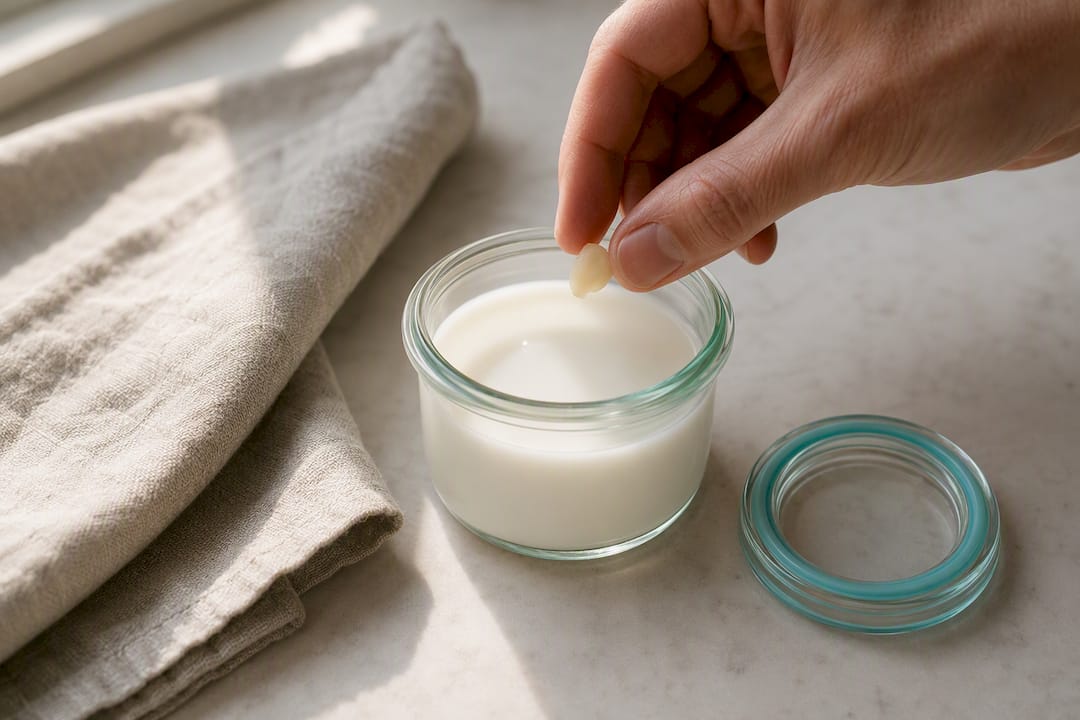
- If you found the broken piece, place it in milk, saline, or your own saliva rather than letting it dry out.
Fragment hydration is not a minor detail. The StatPearls review of tooth fractures notes that soaking a fragment in water or saline for about 20 minutes before reattachment helps restore hydration and improves how well it bonds back into place.
Pro Tip: Keep the fragment in a small container of milk rather than tissue or a dry napkin. Milk keeps the tissue and enamel structure viable far longer than air exposure.
Get same-day care if you notice exposed pink tissue at the fracture, bleeding that will not stop, pain that is severe or worsening, or if the entire tooth was knocked out.
Diagnosis: what a dentist will check and tests they may use
A dentist starts with a visual exam, checking the size and depth of the chip, testing whether a saved fragment still fits the fracture line, and probing the surrounding enamel for hidden cracks. This clinical exam usually decides whether the fix is same-day or needs a second visit.
- X-rays help rule out root fracture or damage to the bone and periapical tissue around the root tip.
- CBCT imaging may be used for complex cases where a standard X-ray does not show enough detail.
- Pulp testing, using cold or electric stimulation, checks whether the nerve inside the tooth is still healthy.
- Persistent pain, a pink tint at the fracture, or a positive pulp test pointing to inflammation can signal that root canal therapy will be needed before any permanent restoration goes on.
Imaging is often done at the first visit, while pulp status is sometimes rechecked at a follow-up appointment since early trauma does not always show damage right away.
Professional treatment options and when each is used
The right fix depends almost entirely on how much tooth structure is gone and whether the nerve is involved.
- Smoothing (enameloplasty): A quick, conservative option for tiny chips that only affect the enamel surface. It removes sharp edges in one short visit but does not add back missing structure.
- Direct composite bonding: The most common fix for small to moderate chips. It is completed in a single visit and is cost-effective, though bonded edges can wear or stain over time and may need touch-ups.
- Fragment reattachment: Feasible when the original piece was found and kept hydrated. Review evidence on fragment reattachment shows it restores a meaningful portion of the tooth’s original strength and often looks more natural than freehand composite, though it will not fully match the fracture resistance of an intact tooth.
- Veneers: Used for visible front teeth with cosmetic concerns, especially when a patient wants a more uniform look across several teeth rather than a single patched repair.
- Crowns: Chosen when a large portion of the tooth is missing or when the remaining structure needs full coverage for protection, including after root canal therapy.
- Root canal therapy: Becomes necessary when the chip has exposed or damaged the nerve. A crown or other final restoration typically follows once the canal treatment is complete.
Marginal enamel fractures, the kind limited to the biting edge, respond well to additive composite work in most cases. A review of marginal enamel fracture management found that indirect restorations like veneers are reserved for cases with specific aesthetic or structural needs rather than used as a default.
Durability depends heavily on your bite and habits. A bonded tooth in a person who grinds their teeth at night will wear faster than the same repair in someone who does not, and larger restorations generally carry more risk of chipping again at the margins.
Cost, insurance, and what to expect to pay
Costs vary widely because the fix depends on the size of the chip and which material or procedure it needs. Smoothing tends to be the least expensive option since it takes minutes and removes no structure. Bonding costs more because it rebuilds missing tooth material, and indirect restorations like veneers or crowns cost more still because they involve a lab-made piece custom fit to your tooth. Root canal therapy followed by a crown is typically the most expensive path, reflecting the extra visit and materials involved.
- Dental insurance often covers a portion of emergency exams and restorative work, though coverage depends on your specific plan and whether the provider is in-network.
- Out-of-network visits usually mean a higher out-of-pocket share even when the procedure itself is covered.
- Dental school clinics, payment plans, and emergency exam specials can lower the upfront cost for patients without insurance.
- Getting a diagnosis before choosing a treatment avoids paying for a fix that turns out to be the wrong scope, such as a bonding repair on a tooth that actually needs root canal therapy.
Ask your dentist for a written treatment plan before starting so you know which procedure, and which price, you’re actually agreeing to.
Prevention and follow-up care after repair
Repaired teeth need monitoring because early trauma does not always reveal problems right away. The StatPearls guidance on tooth fractures recommends clinical and radiographic follow-up at around 2 months and again at 1 year to check for nerve damage that can develop after the initial injury.
- Wear a custom night guard if grinding is contributing to repeated chips.
- Use a sports mouthguard for any contact activity.
- Avoid biting ice, hard candy, or pens, especially near a bonded or reattached edge.
- Floss gently around the margins of a bonding or veneer rather than snapping the floss through, which can lift the edge.
Pro Tip: New sensitivity, a color change at the repair site, or a feeling of looseness are all reasons to call your dentist rather than waiting for your next checkup.
How South Littleton Family Dental treats chipped-tooth emergencies and repairs
South Littleton Family Dental offers a same-day emergency exam for chipped and broken teeth, starting with the same triage priorities covered above: pain control, bleeding, and checking whether the fragment can be saved.
- Same-day visits often include smoothing a rough edge or placing a temporary bonding or temporary crown while a permanent plan is worked out.
- If you bring in a hydrated fragment, the team evaluates whether reattachment is realistic before moving to composite alternatives.
- Special offers and emergency exams can make it easier to get a diagnosis quickly without guessing at cost first.
- Every recommendation follows a clinical exam and imaging, since the right fix depends on what those actually show, not on the size of the chip alone.
Conservative repair versus long-term restoration
Composite bonding and fragment reattachment preserve more of your natural tooth and are the right first choice whenever the remaining structure supports them. Crowns and other indirect restorations earn their place when structural loss is too large to bond reliably or after root canal therapy leaves a tooth needing full coverage. Age, bite pattern, and prior restorations all shift where that line falls for a given patient.
— Admin
Book a same-day exam for your chipped tooth
You do not need to guess whether your chip needs a five-minute smoothing or a crown. South Littleton Family Dental’s emergency dentistry team can see you the same day, check the fragment if you saved one, and give you a real plan before you leave the chair.

Bring your insurance card and the broken piece if you have it, kept in milk or saliva. Book online or call the office, and if the exam points to bonding, a crown, or root canal therapy, the restorative dentistry team can walk you through the next steps and timeline.
- Same-day emergency exams are available for chipped, cracked, or broken teeth.
- Bring the fragment if you found one, stored in milk or saliva.
- Have your insurance information ready so cost estimates are accurate from the first visit.
Sources
This article draws on clinical guidance from StatPearls, peer-reviewed dental research, and the ADA’s MouthHealthy resource. For guidance specific to your injury, talk with a licensed dentist. Practical patient guides from Starboard Dental and Towne Dental cover similar at-home steps.
This article is general information, not a substitute for advice from a qualified doctor. Consult a qualified healthcare professional about your own circumstances before acting on anything here.
- Tooth Fracture – StatPearls – NCBI Bookshelf
FAQ
How much does it cost to fix a chipped tooth?
Cost depends on which repair the tooth needs: smoothing is the least expensive, bonding costs more because it rebuilds structure, and veneers, crowns, or root canal therapy followed by a crown cost the most. Ask for a written estimate after your exam, since the price follows directly from the diagnosis rather than the size of the chip alone.
Can a chipped tooth be repaired?
Yes, most chipped teeth can be repaired through smoothing, bonding, fragment reattachment, a veneer, or a crown, depending on how much structure is missing. Fragment reattachment can restore a meaningful portion of the tooth’s original strength when the original piece is available and kept hydrated.
Is it okay to leave a slightly chipped tooth?
A very small chip limited to enamel is sometimes left alone if it is not sharp, sensitive, or catching on your tongue, but it should still be checked at a routine dental visit. Leaving a chip untreated risks further breakage, sensitivity, or infection if it reaches deeper layers of the tooth over time.
Can you fix a chipped tooth without going to the dentist?
You can manage a chipped tooth at home temporarily by rinsing with warm water, applying a cold compress, and covering a sharp edge with dental wax or sugar-free gum, following ADA emergency guidance. These steps are stopgaps, not fixes, since a lasting repair such as bonding, a crown, or reattachment requires a dentist’s exam and tools.