
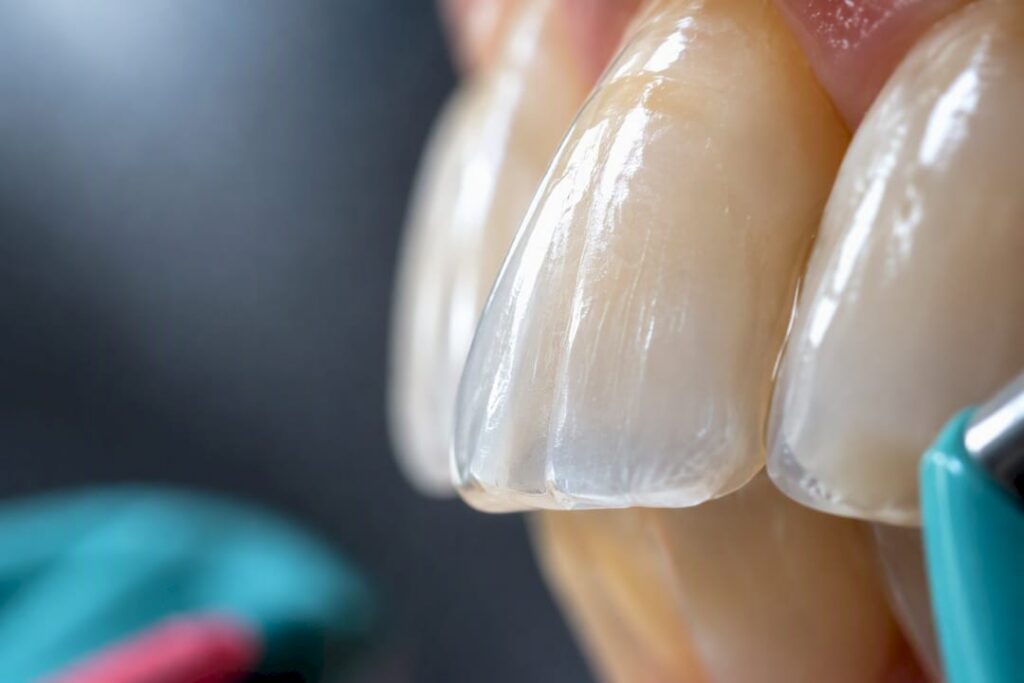
Enamel loss cannot regrow, but early mineral loss can often be rehardened with remineralization, and progression can be stopped. Advanced loss may need restorative dental treatment. Start now with three steps: cut back on frequent acidic exposures, adopt an evidence-based fluoride routine, and get a dental exam if you notice sensitivity, glossiness, or thinning edges.
TL;DR:
- Fluoride treatments up to 1,150 ppm are effective in promoting enamel remineralization and can add a small benefit when combined with fluoride mouthwash.
- Calcium-phosphate agents like CPP-ACP and nano-hydroxyapatite enhance remineralization but do not regenerate enamel tissue once it is fully lost.
- Restorative options such as composite build-ups, veneers, or crowns become necessary only after significant enamel or dentin loss, sensitivity, or bite changes occur.
- Avoid brushing immediately after acidic meals and limit acidic drinks to mealtimes to reduce erosion risk, while pairing meals with calcium-rich foods for buffering.
- Addressing underlying causes like reflux or dry mouth is key to preventing further erosion and typically involves medical treatment or prescription review.
Table of Contents
- What enamel erosion actually is and why it matters
- Causes and risk factors: identify what may be driving your erosion
- Signs, diagnosis, and when to see a dentist
- Conservative repair and remineralization: what works and the evidence
- When restorative dentistry is needed and the available options
- Prevention: a prioritized daily routine to stop progression
- How South Littleton Family Dental approaches enamel erosion care
- How South Littleton Family Dental can help with erosion repair
- Sources
- FAQ
What enamel erosion actually is and why it matters
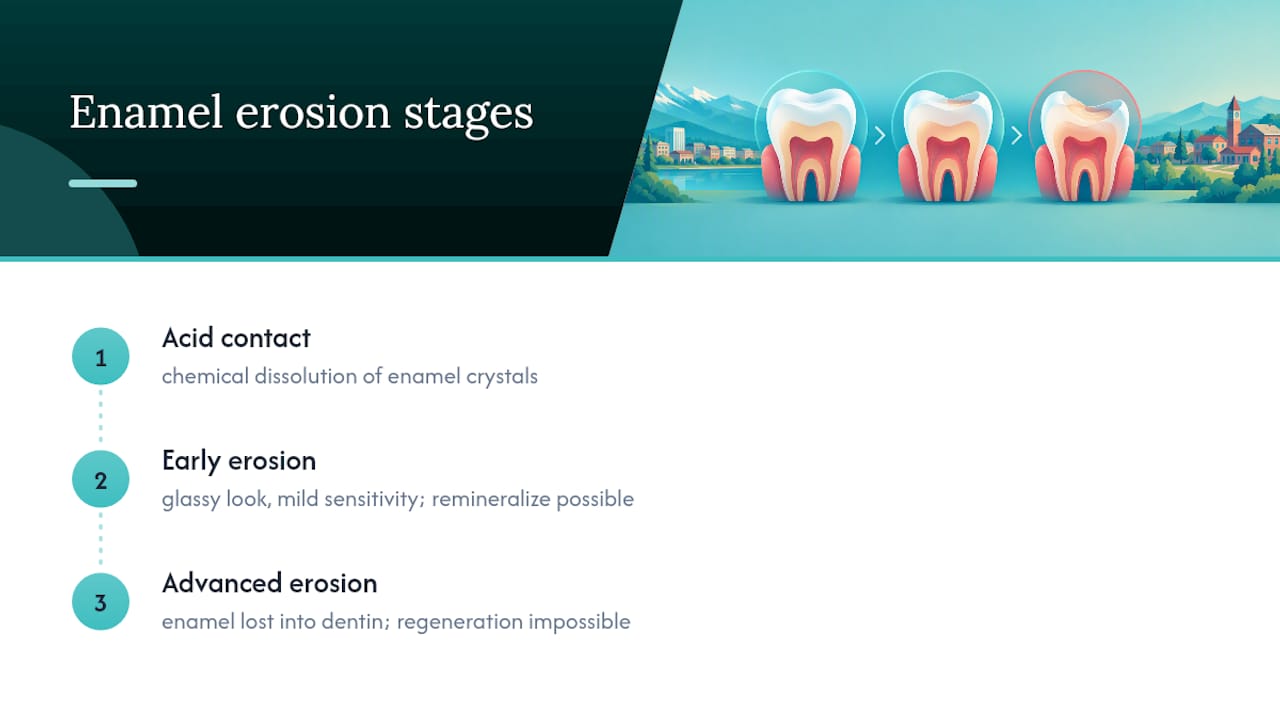
Enamel erosion is chemical dissolution caused by acid contact, distinct from cavities (which involve bacteria) and from abrasion (physical wear from brushing or grinding). Once acid softens the mineral crystal structure, enamel can be rehardened if the damage is caught early, but there are no living cells inside mature enamel capable of rebuilding lost tissue. That’s the core distinction between remineralization and regeneration: one restores hardness to what’s still there, the other would mean growing new enamel, which does not happen naturally.
Early signs include a glassy or glossy look on the tooth surface, mild sensitivity to cold or sweet foods, and slight rounding of the edges. These signs matter because they mark the window where conservative treatment still works. Once erosion cuts through enamel into the softer dentin underneath, the tooth becomes more sensitive and more visually affected, and the repair conversation shifts from prevention to restoration.
Causes and risk factors: identify what may be driving your erosion
Most erosion traces back to a pattern of acid exposure rather than a single event. Extrinsic acids come from diet and habits: soda, citrus, wine, sports drinks, and vinegar-based foods, especially when sipped frequently rather than consumed in one sitting. Intrinsic acids come from inside the body, most often gastroesophageal reflux disease, frequent vomiting, or eating disorders, and these tend to affect the back surfaces of upper front teeth first. Reduced saliva, whether from dehydration, aging, or medication side effects, removes one of the mouth’s natural buffers against acid and speeds up erosion.
- Frequent sipping of acidic drinks throughout the day gives enamel less recovery time between exposures.
- Reflux or vomiting exposes teeth to stomach acid that is far stronger than most dietary acids.
- Dry mouth from medications such as antihistamines or antidepressants reduces the saliva that neutralizes acid and redeposits minerals.
- Brushing immediately after an acidic meal scrubs away enamel that is still in a softened state.
If dry mouth from medication seems to be part of the picture, it’s worth reviewing your prescriptions and understanding what’s driving reduced saliva with your dentist.
Signs, diagnosis, and when to see a dentist
You can spot some warning signs yourself: a glossy sheen with no visible pits, cupped or dished areas on chewing surfaces, increasing translucency near the biting edge, and sensitivity that flares with cold air or sweets. A dentist confirms erosion through a broader assessment: a detailed history of diet and medical conditions, comparison photos taken over time, sometimes a salivary flow or pH test, and a check of how your bite and jaw relationship (vertical dimension) have changed as tooth structure wears down.
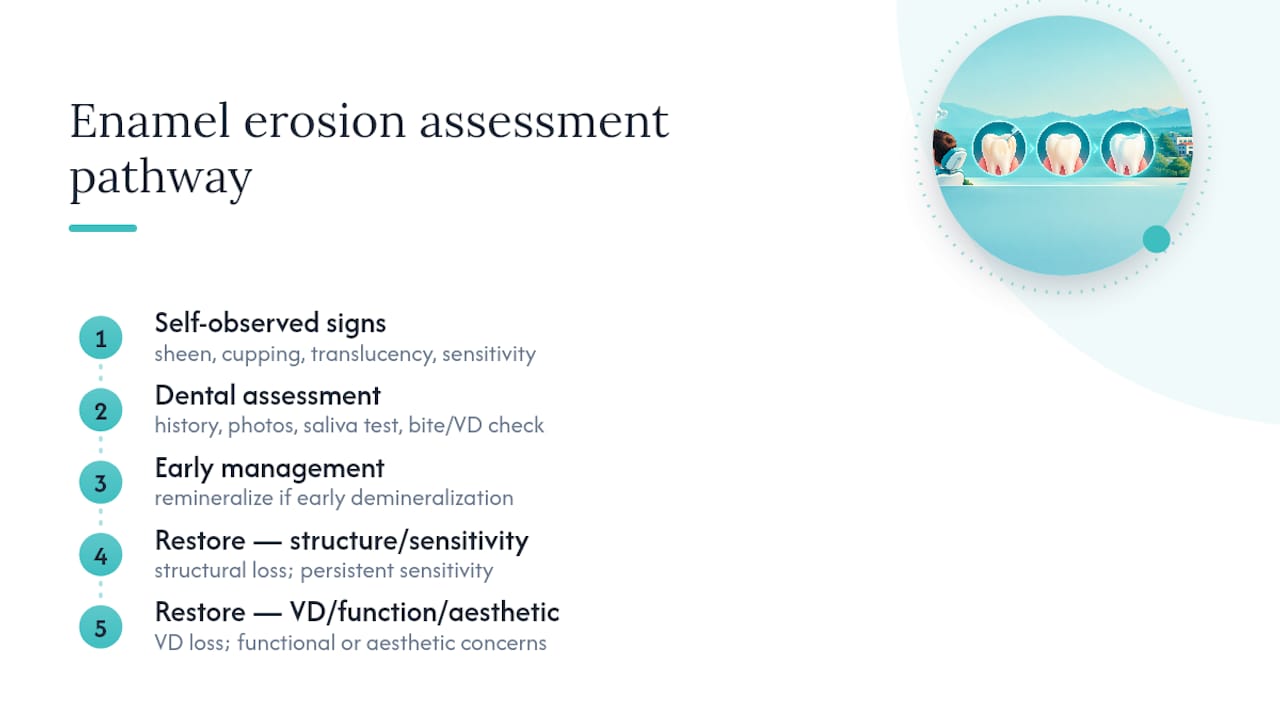
Clinical guidance on erosive tooth wear notes that early demineralization can often be remineralized, but restorative treatment becomes appropriate once structural integrity is compromised, sensitivity becomes persistent, vertical dimension is lost, or the patient has functional or aesthetic concerns that need addressing. Those four thresholds are the practical line between “watch and remineralize” and “restore now.”
Conservative repair and remineralization: what works and the evidence
This is where most early-to-moderate erosion gets managed, and the evidence for it is solid. Fluoride remains the backbone of remineralization: it helps form fluorapatite, a more acid-resistant version of the tooth’s mineral structure, and slows further demineralization.
A network meta-analysis of daily-use fluoride treatments found a clear dose-response relationship, with fluoride toothpaste up to about 1,150 ppm NaF promoting measurable enamel remineralization, and rinsing with fluoride mouthwash after brushing adding a modest 2.4% additional benefit in pooled in-situ studies. That’s a small but real edge if you’re already brushing with fluoride toothpaste.
Beyond fluoride, calcium-phosphate agents add another layer of support:
- CPP-ACP (casein phosphopeptide-amorphous calcium phosphate) supplies calcium and phosphate ions that combine with fluoride for stronger remineralization than fluoride alone.
- Functionalized tricalcium phosphate (fTCP) works on a similar principle and shows comparable benefits in lab and in-situ research.
- Nano-hydroxyapatite toothpastes and rinses form a protective mineral layer on the tooth surface and offer a fluoride-free option for people who prefer to avoid fluoride.
A narrative review of erosion management found that combining these calcium-phosphate agents with fluoride often outperforms fluoride alone, though true regeneration of enamel tissue is still experimental and not yet a clinical reality.
Pro Tip: Look for the ADA Seal of Acceptance on toothpaste and gum, chew sugar-free xylitol gum after meals to boost saliva flow, and rinse with plain water rather than reaching for the toothbrush right after anything acidic.
Remineralization rehardens enamel that has softened but hasn’t been fully lost, and it slows how fast erosion progresses. It does not rebuild enamel back to its original thickness once that tissue is gone.
When restorative dentistry is needed and the available options
Restoration becomes the right call once you’ve crossed one of the thresholds mentioned earlier: real loss of enamel or dentin, sensitivity that won’t settle down, a bite that’s changed because teeth have worn shorter, or a smile you’re unhappy with. The options generally scale with how much structure is missing.
- Direct composite build-ups or palatal composite veneers are the most conservative route, adding tooth-colored material directly to worn surfaces without removing healthy tissue, and clinical reports on adhesive rehabilitation describe reasonable medium-term results for early-to-moderate lesions.
- Porcelain veneers suit patients focused on the front teeth’s appearance, bonding well to remaining enamel when enough is intact, which is one reason dentists try to preserve as much natural enamel as possible during earlier stages of care.
- Crowns and full-mouth rehabilitation come into play when erosion has affected the bite itself, chewing function, or multiple teeth at once, often requiring a staged plan built around restoring proper vertical dimension.
Ask your dentist which category your case falls into and whether a conservative option can be tried before committing to something more extensive.
Prevention: a prioritized daily routine to stop progression
Preventing further erosion matters as much as repairing what’s already happened, since remineralization only works if you stop feeding the acid cycle. Start with the basics and build from there.
- Brush twice daily with a fluoride toothpaste in the 1,000 to 1,500 ppm range, using a soft-bristle brush and light pressure.
- Wait 30 to 60 minutes after any acidic food or drink before brushing, since enamel is still soft during that window.
- Limit acidic drinks to mealtimes, use a straw when you do have them, and rinse with water or milk afterward rather than swishing the drink around your mouth.
- Pair acidic meals with calcium-rich foods like cheese or yogurt, which help buffer the acid.
The ADA’s guidance on dietary acids also recommends sugar-free gum with the ADA Seal to stimulate saliva production after meals.
Pro Tip: If reflux is part of your erosion pattern, treating it medically does more for your enamel long term than any toothpaste will. If dry mouth from medication is a factor, that’s worth flagging to whoever prescribed it.
How South Littleton Family Dental approaches enamel erosion care
South Littleton Family Dental treats enamel erosion as a staged process rather than a one-visit fix. That typically starts with identifying the underlying cause, whether dietary, medical, or medication-related, before moving to conservative in-office measures like topical fluoride varnish and remineralizing agents. Restorative steps are only introduced when monitoring shows they’re actually needed, which keeps treatment proportional to the problem. The approach centers on personalized, compassionate care with availability for urgent cases, reflecting a focus on reducing anxiety and tailoring plans to each patient’s needs.
— Admin
How South Littleton Family Dental can help with erosion repair
Whether your enamel just needs a remineralizing boost or you’re looking at composite build-ups, veneers, or crowns to restore worn teeth, South Littleton Family Dental in Littleton, CO offers assessment, fluoride treatments, and a full range of restorative dentistry options under one roof. Same-day emergency exams are available for sudden sensitivity or structural concerns. Schedule an exam through General Dentistry to find out where your enamel stands and what it actually needs.
Sources
For readers who want the underlying research, the network meta-analysis on fluoride remineralization breaks down the dose-response evidence behind toothpaste strength. The narrative review of erosion management covers calcium-phosphate agents and emerging biomimetic approaches. Clinical guidance on GERD-related erosive wear lays out restorative thresholds, and the ADA’s MouthHealthy page covers day-to-day prevention. For product timing questions around whitening and enamel safety, ClearRetain’s guidance is a useful consumer resource.
This article is general information, not a substitute for advice from a qualified doctor. Consult a qualified healthcare professional about your own circumstances before acting on anything here.
- Dental approach to erosive tooth wear in gastroesophageal reflux disease
FAQ
When is it too late to restore enamel?
Enamel itself can’t be restored once it’s structurally gone, since there are no cells left to rebuild it. At that point the tooth needs a restorative solution like composite bonding, a veneer, or a crown rather than remineralization alone.
What vitamin deficiency causes enamel erosion?
Enamel erosion is primarily a chemical process driven by acid exposure rather than a vitamin deficiency, so there isn’t a single nutrient shortfall that causes it. Conditions like reflux, dry mouth, and frequent acidic drinks are the drivers worth addressing first.
Is there a way to cover up eroding enamel on my front teeth?
Yes, porcelain veneers or direct composite bonding can both mask erosion on front teeth once enough sound enamel remains for a strong bond. Which option fits depends on how much structure is left and what your dentist finds during an exam.
How much does it cost to fix enamel erosion?
Cost depends entirely on how advanced the erosion is and which treatment path fits, from remineralizing toothpaste at home to composite bonding, veneers, or crowns. A dentist can give you a specific figure only after an exam, since pricing varies by case and provider.