
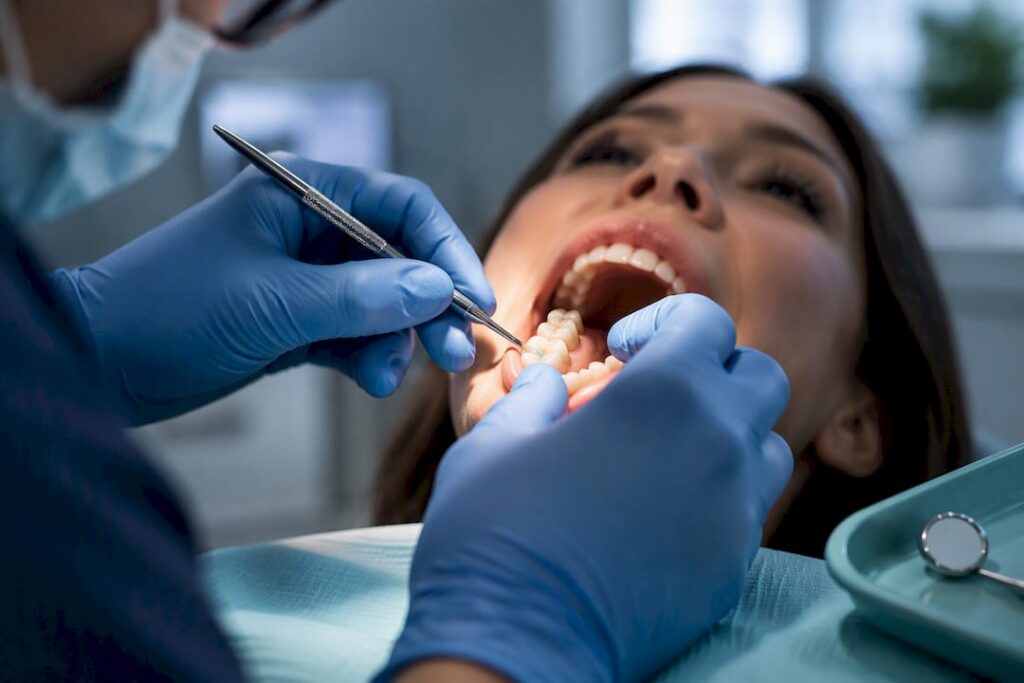
Yes, adults can get dental sealants on sound permanent molars, and they are most useful for adults with deep grooves or elevated cavity risk. Sealants work best on cavity-free back teeth, especially for people with a history of cavities, dry mouth, or limited access to routine care. They typically last for several years and need to be checked at regular dental visits.
TL;DR:
- Sealants are most effective for adults with deep, cavity-free grooves on otherwise healthy molars, especially if they have recent decay history or high cavity risk.
- The application process typically takes a few minutes during routine visits, with no anesthesia needed, and sealants can last around five years if properly maintained.
- Sealants cannot be placed over existing fillings, crowns, or active decay, and their retention depends heavily on material choice and application conditions.
- Many insurance plans have limited or no coverage for adult sealants, so verifying coverage beforehand is essential and costs vary by practice and region.
- Regular check-ups every six months are recommended to monitor sealant condition, with repairs or reapplication as needed to prevent bacterial entrapment and decay.
Table of Contents
- What dental sealants are and how they work
- Who among adults should consider sealants
- What happens during a sealant appointment
- Evidence and guidelines behind sealant effectiveness
- When sealants are not the right fit
- How much sealants cost and what insurance covers
- How long sealants last and when to have them checked
- How South Littleton Family Dental approaches adult sealants
- Ready to find out if sealants make sense for you
- Sources
- FAQ
What dental sealants are and how they work
A dental sealant is a thin protective coating painted onto the chewing surfaces of molars and premolars, the teeth with the deepest pits and grooves where food and bacteria tend to collect. Once applied, the coating hardens into a smooth barrier that keeps debris and bacteria out of those grooves, making the tooth surface easier to clean and less prone to decay.
Two materials dominate current practice:
- Resin-based sealants bond well to dry enamel and generally offer strong retention over time.
- Glass ionomer sealants release fluoride and tolerate moisture better, which matters for teeth that are hard to keep dry during application.
The mechanism is mechanical rather than chemical: the material physically seals off the pits and fissures so bacteria and food particles cannot settle in and start the acid attacks that lead to cavities. This is why sealants target back teeth specifically, since front teeth have smoother surfaces that clean more easily on their own.
Who among adults should consider sealants
Not every adult needs sealants, but some stand to gain more than others. If your molars still have deep, cavity-free grooves, or you’ve had a filling on a back tooth recently, sealants are worth discussing with your dentist.
- Adults with deep pits and fissures on otherwise healthy molars, where brushing alone struggles to reach.
- Adults with a recent history of cavities on back teeth, since past decay often signals ongoing risk in similar spots.
- Younger adults, roughly ages 20 to 34, a group the CDC reports has more untreated cavities in back teeth than other adult groups, which may mean added benefit from sealing sound grooves before decay starts.
- Adults with dry mouth, frequent snacking habits, or inconsistent access to dental care, all of which raise cavity risk independent of age.
Teeth that already have fillings, crowns, or visible decay are not candidates, since sealants only work on sound or very early noncavitated enamel.
Pro Tip: Ask your dentist for a caries risk assessment at your next cleaning. It’s a quick way to find out whether your specific molars are good sealant candidates.
What happens during a sealant appointment
Placing a sealant is quick, painless, and usually folded into a routine cleaning visit rather than scheduled as its own appointment. No anesthesia is needed, and you can eat and go about your day right after.
- The dentist or hygienist cleans the tooth surface to remove plaque and debris.
- The tooth is isolated and dried, often with cotton rolls or a suction device, to keep saliva away.
- An etching gel is applied briefly to roughen the enamel so the sealant bonds well.
- The tooth is rinsed and dried again before the sealant material goes on.
- The sealant is painted into the grooves and, for resin-based material, cured with a curing light.
- The dentist checks your bite to make sure the sealant doesn’t sit too high.
According to the Cleveland Clinic, the whole process is simple, non-invasive, and takes just a few minutes per tooth, with no downtime afterward.
Evidence and guidelines behind sealant effectiveness
Most of the research behind sealants comes from studies on children, but the underlying mechanism doesn’t change with age; a sealed tooth surface resists decay the same way whether the patient is 12 or 42. A meta-evaluation of fissure sealant reviews found moderate evidence that resin-based sealants reduce occlusal cavities on permanent molars and are cost-effective compared with leaving teeth unsealed.
That line comes from the ADA/JADA clinical practice guideline on pit-and-fissure sealants, which strongly supports sealant use in children and adolescents but is candid about a gap: it identifies no direct adult trial evidence, leaning instead on clinical judgment for adult patients at elevated risk.
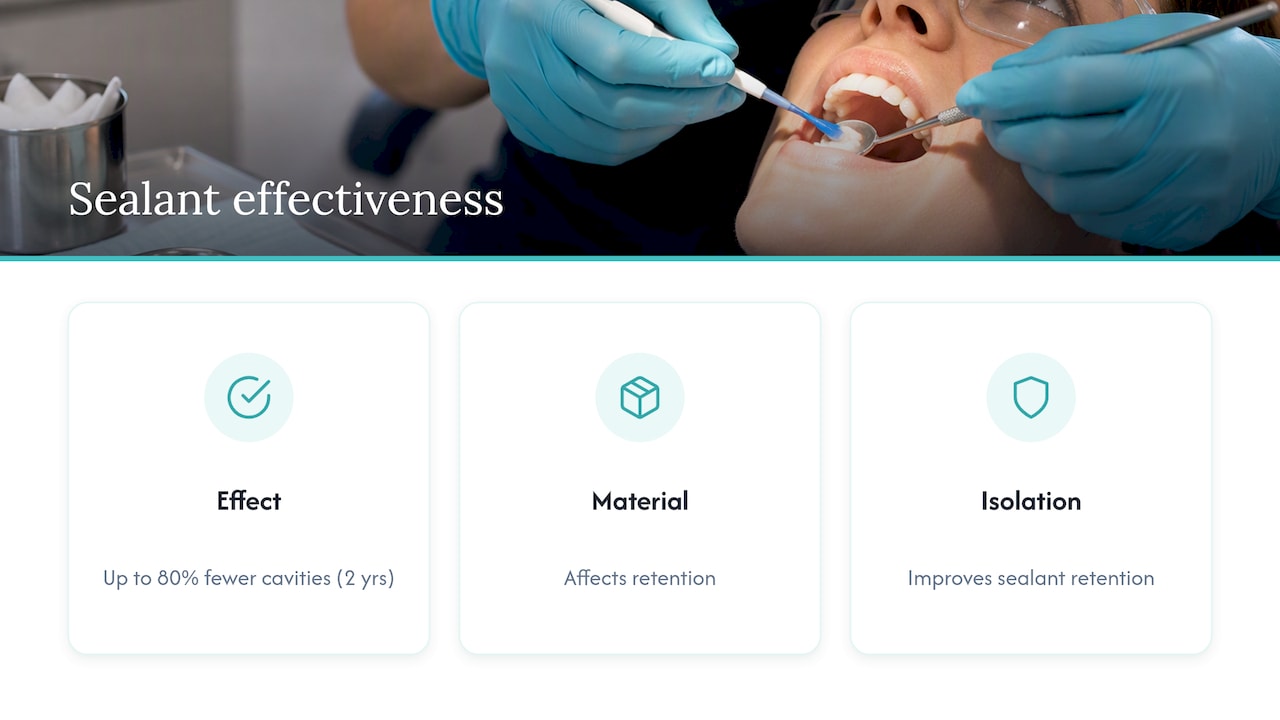
Dental sealants prevent up to 80% of cavities in back teeth over two years, a population-level benefit that underscores why sealing vulnerable grooves early, at any age, pays off. Retention varies by material and by how well the tooth was isolated during placement, which is part of why the guideline flags material choice as a factor worth discussing with your dentist.
When sealants are not the right fit
Sealants only work on sound enamel or very early, noncavitated lesions, and understanding the limits keeps expectations realistic.
- They cannot be placed over fillings, crowns, or teeth with active decay, since there’s no sound enamel surface left to bond to.
- A sealant can chip or wear down over time, and a cracked or leaking sealant can trap bacteria underneath instead of blocking it out.
- Glass ionomer sealants are sometimes chosen over resin when a tooth is hard to keep dry, such as one that’s partially erupted, even though resin generally retains better under ideal, dry conditions.
- Sealants are one part of a broader prevention plan, not a replacement for brushing, flossing, fluoride, or regular exams.
If a tooth already has a compromised filling or crown, your dentist will likely walk you through when it makes sense to replace an old filling rather than seal around it.
How much sealants cost and what insurance covers
Adult dental coverage varies widely, partly because adult dental benefits are not required under the Affordable Care Act the way pediatric dental benefits are, according to MouthHealthy. That means whether your plan covers adult sealants depends entirely on your specific policy.
- Call your insurer before your visit and ask specifically whether sealants are covered for adults, not just children.
- Ask your dentist’s office for a preauthorization, the relevant procedure codes, and a written estimate, since sealants are typically billed per tooth and costs vary by practice and region.
- Check FSA or HSA eligibility, since these pre-tax accounts can often be used for preventive dental procedures like sealants, and timing matters if your plan year has a spending deadline.
- Ask about older-adult coverage nuances if you’re on Medicare, since original Medicare generally does not cover routine dental work; a closer look at Medicare dental coverage can clarify what, if anything, applies.
How long sealants last and when to have them checked
A sealant typically holds up for about five years, though the exact lifespan depends on the material used, how hard you bite and grind, and habits like nail-biting or ice-chewing.
- Have sealants checked at every routine cleaning, generally every six months, so your dentist can catch wear early.
- Report any roughness, sharp edges, or discomfort on a sealed tooth between visits rather than waiting for your next cleaning.
- If a sealant chips or starts leaking, a dentist can often repair or reapply it, catching the problem before bacteria get trapped underneath and cause new decay.
Routine inspection matters because a failed sealant left unchecked can do more harm than no sealant at all, since it can hide early decay from a casual glance.
How South Littleton Family Dental approaches adult sealants
We treat sealant decisions the same way we treat any preventive step: as part of an individualized care plan rather than a one-size answer. Using current diagnostic technology, the practice assesses each patient’s specific caries risk before recommending preventive or restorative options. Scheduling often allows a sealant discussion during a routine visit or an urgent exam. Ask about a caries risk assessment next time you’re in the chair.
— Admin
Ready to find out if sealants make sense for you

If you’re curious whether your molars are good candidates for sealants, the clearest next step is a routine exam where a dentist can look at your specific grooves and history rather than guess from a checklist. Bring your insurance information, any recent dental records you have, and a short list of questions, including whether your FSA or HSA can cover the visit.
- Schedule an exam through our general dentistry page to get a direct answer on sealant candidacy.
- Bring questions about cost, coverage, and timing so your dentist can walk you through the options during the same visit.
- Ask about restorative options, covered on our restorative dentistry page, if a tooth turns out to need more than a sealant.
This article is general information, not a substitute for advice from a qualified doctor. Consult a qualified healthcare professional about your own circumstances before acting on anything here.
Sources
- Sealants | Cleveland Clinic
- Sealants | MouthHealthy (American Dental Association)
- Dental Sealant Facts | CDC
- Meta-evaluation on fissure sealants (PubMed)
- Pit-and-Fissure Sealants Clinical Practice Guideline (JADA/ADA)
FAQ
How much do sealants cost for adults?
There’s no single price, since adult dental coverage varies by plan and sealants are often billed per tooth. Ask your dentist’s office for a written estimate and check with your insurer, since adult dental benefits aren’t required under the ACA the way pediatric coverage is.
Can sealants be done on adult teeth?
Yes, sealants can be placed on adult molars and premolars as long as the tooth surface is sound or has only very early, noncavitated decay. They cannot be placed over existing fillings, crowns, or active cavities.
Why can’t adults get dental sealants sometimes?
The most common reason is that the tooth already has a filling, crown, or active decay, since sealants only bond to healthy enamel. Insurance coverage gaps also stop some adults from getting sealants even when the tooth itself is a good candidate.
Do dentists still place sealants on adult patients?
Yes, sealants remain a standard preventive option for adults with cavity-free molars and elevated cavity risk, not just for children. The ADA/JADA guideline notes limited direct adult trial data but supports clinical judgment for extrapolating benefits to at-risk adults.