
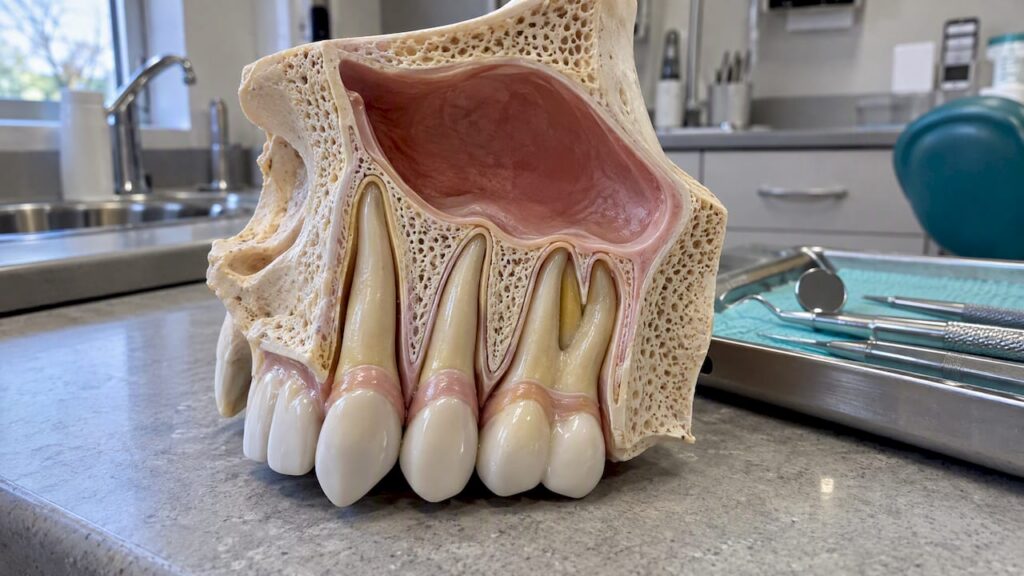
Sinus pressure can absolutely cause upper tooth pain, and the fastest way to tell is simple: if several upper teeth ache together and the pain gets worse when you bend forward, sinus pressure is the likely culprit. Most sinus-related tooth pain eases with self-care within a week or two, but pain in a single tooth or pain that lingers calls for a dental exam. Guidance from the Merck Manual and the AAE helps separate the two, and our dental team sees both patterns regularly.
TL;DR:
- Pain triggered by hot, cold, or biting, lingering sensitivity, gum swelling, decay, or one distinctly tender tooth points toward a dental cause.
- Steam inhalation for 10 minutes two or three times daily, saline rinses, warm cheek compresses, and hydration can ease sinus pressure.
- People with uncontrolled high blood pressure or certain heart conditions should avoid oral decongestants unless a clinician or pharmacist confirms they are safe.
- Seek dental care that day for severe single tooth pain, swelling, a draining gum bump, looseness, or fever, rather than waiting for symptoms to pass.
- An infected tooth can cause one sided sinus symptoms, and antibiotics alone often fail unless the tooth receives treatment; recurring symptoms or a foul smell warrant ENT care.
Table of Contents
- Why sinus pressure can feel like a toothache
- Sinus tooth pain vs true dental pain: key differences
- Simple self-checks you can do safely at home
- At-home relief: effective remedies and OTC options
- When to see a dentist, when to see an ENT, and urgent red flags
- Odontogenic sinusitis: when a tooth problem causes sinus symptoms
- How our team approaches sinus-related tooth pain
- Get a same-day exam if your tooth pain won’t let up
- FAQ
- Sources
Why sinus pressure can feel like a toothache
Your maxillary sinuses sit directly above the roots of your upper premolars and molars, in some people separated by only a thin layer of bone. When the sinus lining swells from inflammation or fills with fluid, that pressure presses on the nerves serving those tooth roots, and your brain reads it as tooth pain rather than sinus pain.
Viral colds, seasonal allergies, and bacterial sinusitis are the usual triggers. Less often, a dental infection itself inflames the sinus lining, a pattern called odontogenic sinusitis, which we cover in detail further down.
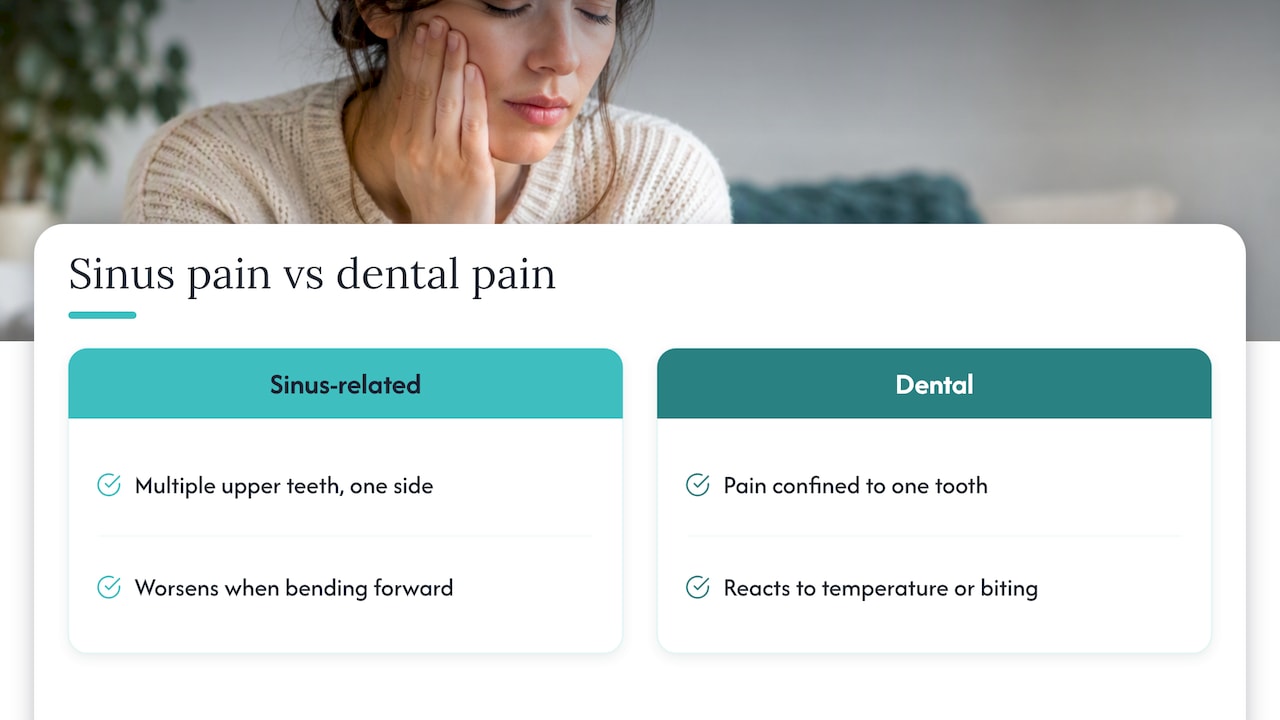
Sinus-related tooth pain typically involves multiple upper teeth on one side and worsens with head movement such as bending forward, while true dental pain usually stays confined to a single tooth and reacts to temperature or biting, according to the Merck Manual. That positional clue is often the quickest way to sort one from the other.
Sinus tooth pain vs true dental pain: key differences
The pattern of your pain tells you most of what you need to know before you even open your mouth for a look.
- Sinus pain usually spreads across several upper back teeth and feels worse when you bend over or lie down; dental pain tends to stay in one tooth and spikes with hot, cold, or biting pressure.
- Sinus-related discomfort often comes with nasal congestion, thick or colored discharge, or a dull pressure across the cheeks and forehead.
- Dental pain is more likely to come with visible swelling of the gum, a cracked or darkened tooth, a bad taste from drainage, or sensitivity that lingers after the trigger is gone.
- A tooth that is tender when you tap it gently, or one with obvious decay, is pointing you toward a dental cause rather than a sinus one.
If you are unsure after checking these patterns, a same-day exam can settle it quickly rather than leaving you guessing for days.
Simple self-checks you can do safely at home
Before calling anyone, a few low-risk checks at home can point you in the right direction.
- Bend forward at the waist for a few seconds. Pain that sharpens across several upper teeth suggests sinus pressure, while pain in one tooth that stays the same suggests a dental cause.
- Sip room-temperature water, then something cold. Sharp pain in a single tooth that lingers after the cold is gone points to a dental nerve problem rather than sinus pressure.
- Gently tap each upper tooth with a clean fingertip. One tooth that is distinctly more tender than its neighbors is a red flag for a dental source.
Pro Tip: If any check causes severe pain, swelling, or you notice a fever, stop testing and call a dentist instead of waiting to see how self-checks turn out.
At-home relief: effective remedies and OTC options
When sinus pressure looks like the likely cause, a few straightforward steps often bring real relief within a day or two.
- Steam inhalation for 10 minutes, two or three times a day, helps thin mucus and ease pressure.
- Saline nasal irrigation once or twice daily can flush irritants and reduce swelling in the sinus lining.
- A warm compress over the cheeks, paired with staying well hydrated and sleeping with your head slightly elevated, reduces the pooling that drives pressure pain.
Over-the-counter options can help too. A nasal steroid spray reduces inflammation over several days of consistent use, oral decongestants shrink swollen tissue short term, and standard pain relievers like ibuprofen or acetaminophen manage discomfort. Decongestants should generally be avoided by people with uncontrolled high blood pressure or certain heart conditions, so check the label or ask a pharmacist first. Most acute sinusitis is viral and resolves without antibiotics, with saline rinses and topical steroids serving as the main tools for relief according to ENT Health. Keep in mind that pain relievers can mask a dental infection temporarily. If one tooth stays sore after your sinus symptoms clear, that is a sign to get it checked rather than keep treating it as sinus pain. Our toothache relief guide walks through these same steps with added dental-specific tips.
When to see a dentist, when to see an ENT, and urgent red flags
Timing matters almost as much as the symptoms themselves.
- If your pain is improving within about one to two weeks alongside cold or allergy symptoms, continued self-care is reasonable.
- If pain in one tooth is severe, or comes with swelling, a draining bump on the gum, looseness, or fever, seek same-day dental care rather than waiting it out.
- If sinus symptoms keep returning on one side only, come with a persistent foul smell, or don’t improve after dental treatment, an ENT evaluation is the next step.
Odontogenic sinusitis: when a tooth problem causes sinus symptoms
Odontogenic sinusitis, sometimes called maxillary sinusitis of endodontic origin, happens when infection from a tooth root spreads into the neighboring sinus. It is frequently missed because it often affects only one side and may come with little or no classic tooth pain, since an infected tooth can drain quietly into the sinus space, as noted in the PMC review on odontogenic sinusitis.
- Diagnosis typically involves a dental exam plus periapical X-rays or a CBCT scan, with sinus CT or nasal endoscopy from an ENT when needed.
- Antibiotics alone often fail to resolve it if the infected tooth itself isn’t treated, since the bacterial source remains in place, per the AAE.
- A root canal or extraction is often the treatment that actually resolves the sinus symptoms, sometimes alongside ENT-led sinus care when infection has spread further.
How our team approaches sinus-related tooth pain
When a patient isn’t sure whether sinus pressure or a dental problem is behind their pain, we offer a same-day emergency exam designed to find out quickly. We check for the positional and single-tooth clues described above, take imaging when a tooth is the likely source, and coordinate with an ENT when the picture points to odontogenic sinusitis. The goal is a clear answer, not more guessing.
— Admin
Get a same-day exam if your tooth pain won’t let up
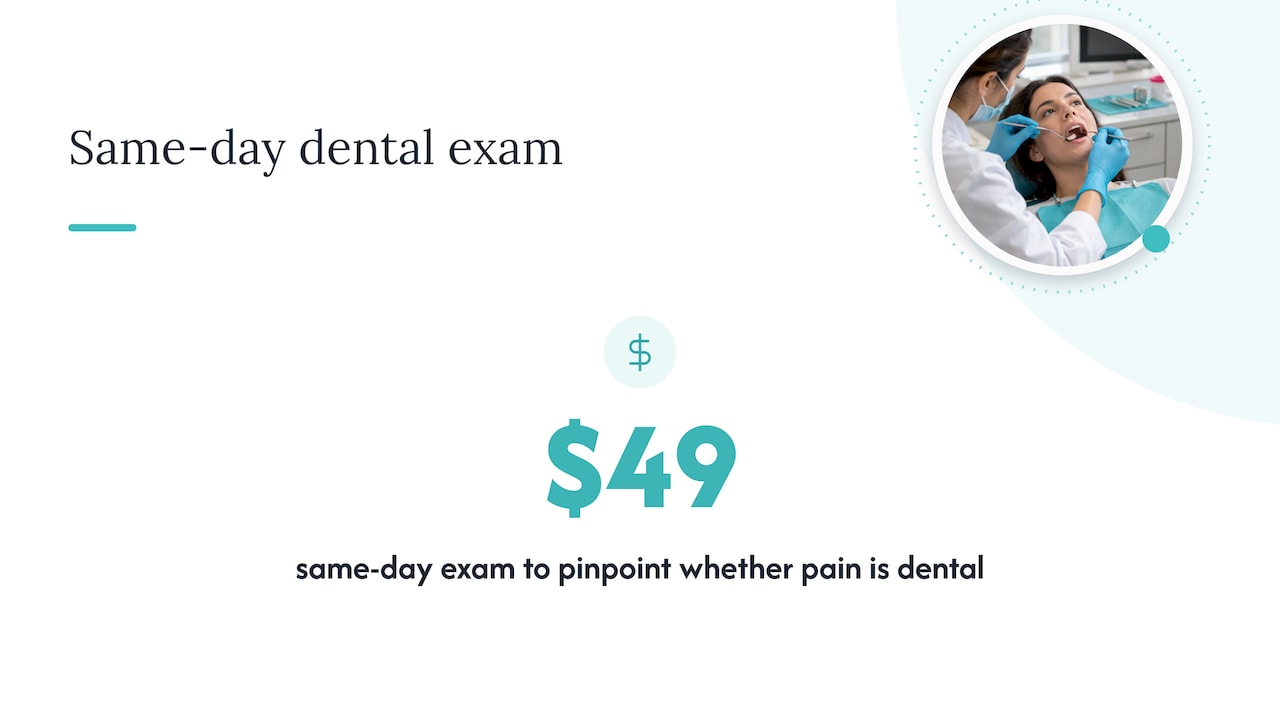
If one upper tooth keeps hurting after your sinus symptoms fade, or the pain is sharp enough to disrupt your day, waiting rarely helps. Our emergency dentistry team offers a $49 same-day exam to pinpoint whether a dental issue, like one that needs root canal therapy or a tooth extraction, is the real source. Imaging is used on-site to help confirm the diagnosis before recommending treatment.

Book your emergency exam and get a clear answer today.
This article is general information, not a substitute for advice from a qualified doctor. Consult a qualified healthcare professional about your own circumstances before acting on anything here.
FAQ
How do you relieve sinus pressure on your teeth?
Steam inhalation, saline nasal irrigation, a warm compress on the cheeks, and staying hydrated typically ease sinus pressure within a day or two. A nasal steroid spray or short-term decongestant can speed relief, and standard pain relievers manage discomfort in the meantime.
What could be causing pain in my maxillary sinuses without congestion?
Pain in the maxillary sinus area without congestion can point to a dental source, particularly odontogenic sinusitis, where an infected tooth irritates the sinus lining without typical cold symptoms, according to the PMC review. A dental exam with imaging is the most reliable way to confirm or rule this out.
What is the best way to relieve sinus pressure?
Saline nasal irrigation combined with steam inhalation and adequate hydration addresses most uncomplicated sinus pressure, since most acute sinusitis is viral and resolves without antibiotics per ENT Health. A nasal steroid spray adds relief for pressure that persists beyond a few days.
What are the symptoms of sinus pain?
Sinus pain usually shows up as pressure across the cheeks, forehead, or upper teeth, often worse when bending forward, along with nasal congestion or colored discharge. Many people who assume they have a sinus headache actually have migraine or tension-type headache, since true sinusitis is more reliably marked by congestion and discharge than by facial pain alone, per ENT Health.
Can a sinus infection really cause tooth pain, or is it always dental?
A sinus infection can cause real tooth pain through pressure on nearby tooth roots, and this is common with colds, allergies, or bacterial sinusitis. Less often, the reverse is true: a dental infection causes the sinus problem, which is why persistent or one-sided pain deserves a dental check.
Sources
- Toothache and Infection – Merck Manual Professional Edition
- AAE position statement – Maxillary sinusitis of endodontic origin
- Odontogenic sinusitis review (PMC)