
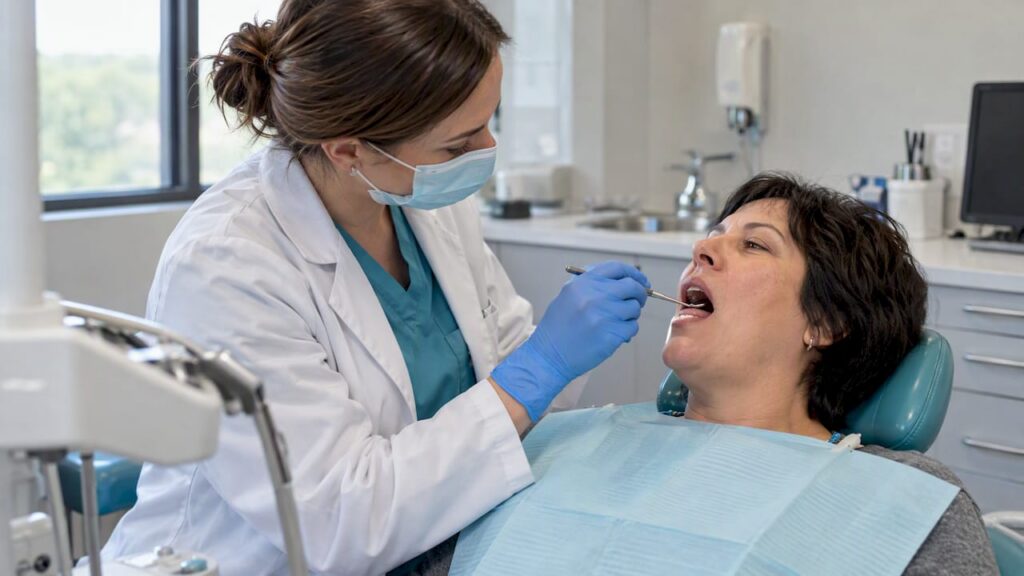
Most bad breath starts in your mouth, not your stomach. Bacteria break down food debris, dead cells and plaque on your tongue, between your teeth and along your gums, and they release foul-smelling sulfur compounds. A 2022 systematic review found that 80 to 90 percent of halitosis comes from factors inside the mouth. That is why a dental exam is usually the fastest way to find out what is going on.
Below, we walk through the causes in the order they are most likely to apply to you, what each one feels like, and which ones need a dentist rather than a new mouthwash.
TL;DR
- Persistent bad breath is most often caused by a coated tongue, plaque, cavities or gum disease, not by the stomach.
- Dry mouth, tobacco, medications and diabetes make odor worse, and they are easy to overlook.
- Food, coffee, alcohol and fasting cause temporary odor that clears on its own.
- Mints and cosmetic rinses only mask the smell. Treating the source is what fixes it.
- Bad breath with severe pain, facial swelling, fever or pus needs urgent care. Trouble breathing or swallowing is a 911 situation.
Table of Contents
- Why breath smells in the first place
- The most common causes
- Dry mouth: the hidden amplifier
- Food, drinks and habits
- Causes outside the mouth
- Bad breath in kids versus adults
- Mouthwash: what it can and cannot do
- What a dentist does about bad breath
- Our perspective
- Daily habits that keep odor down
- When bad breath is urgent
- Get your breath checked in Littleton
- FAQ
- Sources
Why breath smells in the first place
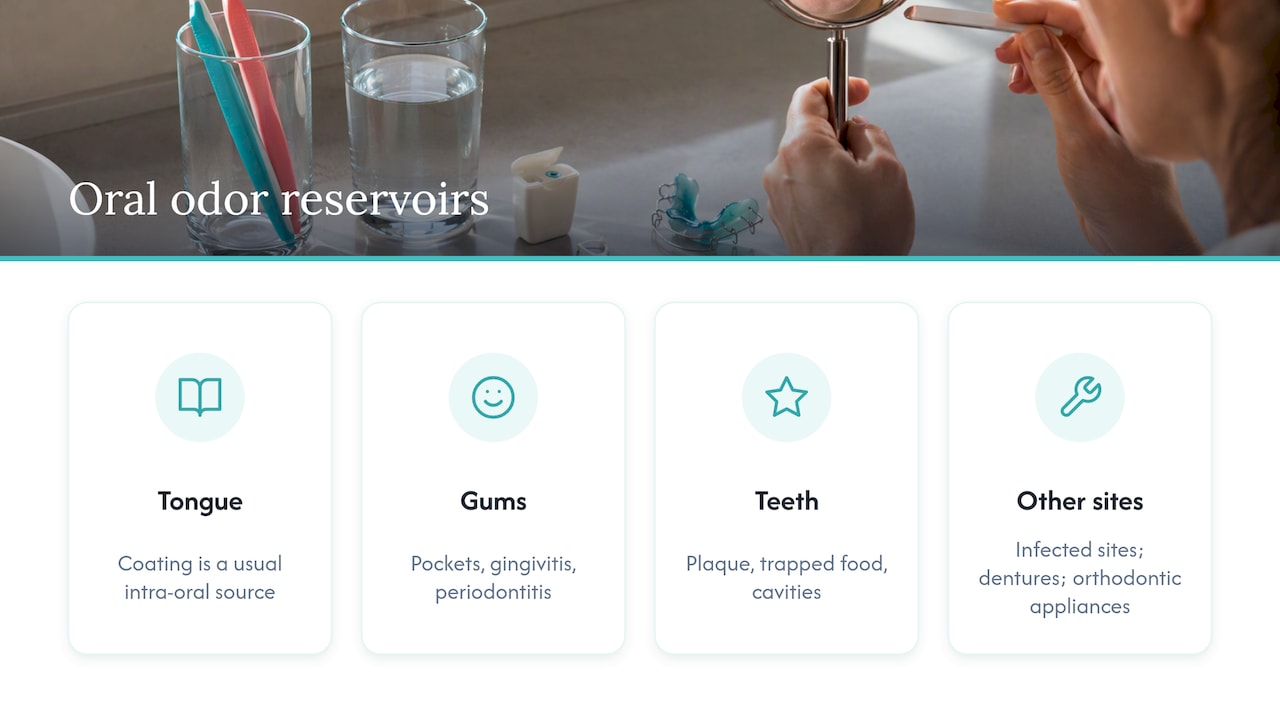
Your mouth is home to hundreds of kinds of bacteria. Most are harmless. The ones that thrive without oxygen, on the back of the tongue and in gum pockets, feed on proteins and release volatile sulfur compounds, including hydrogen sulfide. The same systematic review lists tongue coating, plaque and trapped food, cavities, gingivitis or periodontitis, infected or nonhealing extraction sites, ill-fitting dentures and orthodontic appliances as the usual intra-oral sources.
So the question is rarely “why is my breath bad?” in general. It is “which reservoir of bacteria is producing this?” Each cause below is one of those reservoirs, or something that lets them grow.
The most common causes
A coated tongue and plaque
The tongue’s rough surface traps debris and bacteria, and it is the single most common source. If you brush your teeth but skip your tongue, odor often returns within hours. Plaque left between teeth does the same thing. The American Dental Association (ADA) advice published in JADA is to clean your tongue, brush and clean between your teeth, because the goal is to remove the bacterial reservoirs rather than create a pleasant taste.
Gum disease
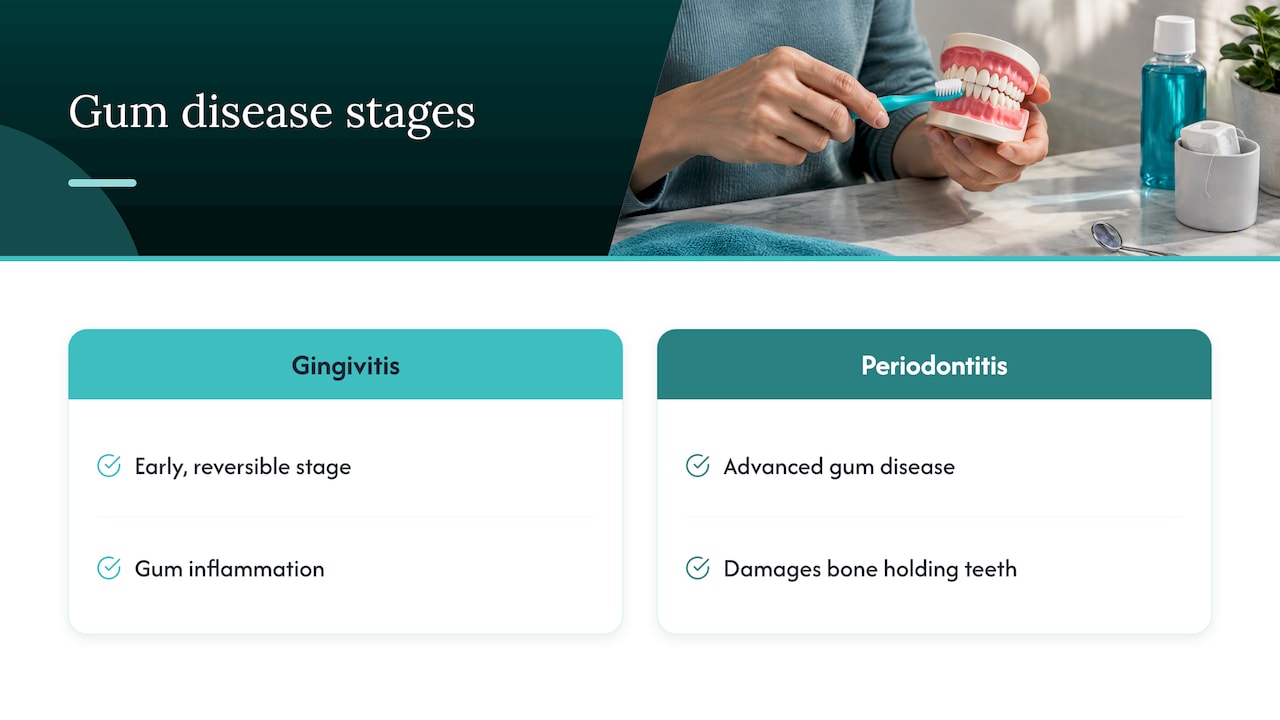
If your gums bleed when you brush, look swollen or red, or have pulled back from your teeth, bacteria are living in pockets below the gumline where a toothbrush cannot reach. This is the usual answer when people ask whether bad breath can come from the gums. It can, and often does. Gingivitis is the early, reversible stage. Periodontitis is the advanced stage that damages the bone holding teeth in place.
The CDC lists smoking, diabetes and poor oral hygiene among the risk factors for gum disease, along with medication side effects, stress, genetics, hormonal changes and some systemic conditions. Gum disease is also quiet. Many people have no pain, only a taste or smell they cannot get rid of.
Warning signs that call for an exam rather than more mouthwash: bleeding, swelling, receding gums, loose teeth, pus or a persistent odor.
Cavities, broken fillings and infected teeth
Decay creates pockets where food and bacteria collect. A cracked tooth, a failing crown or a leaky filling can do the same. When decay reaches the nerve, an abscess can form, and the smell can be accompanied by a bad taste when it drains. If you notice throbbing pain, a pimple-like bump on the gum or swelling, read our guide to dental abscess symptoms. An abscess does not clear up on its own, and breath fresheners cannot reach it.
Dentures, appliances and healing extraction sites
Dentures, partials, retainers and braces all hold plaque against the tissue. Dentures that are not cleaned daily or that fit poorly can harbor bacteria and yeast. Extraction sites that heal slowly or become infected can also smell. If an odor started after a tooth was pulled, and you also have increasing pain or a bad taste, call your dentist rather than waiting.
Wisdom teeth that have partly erupted
A wisdom tooth that is only partly through the gum can trap food under a flap of tissue. That can lead to infection, swelling and a foul taste. Our page on pericoronitis symptoms explains what to watch for.
Dry mouth: the hidden amplifier
Saliva is your natural rinse. It moisturizes tissue, limits bacterial growth and supplies minerals that help protect teeth. When saliva drops, odor climbs. The CDC’s older adult oral health material notes that more than 400 commonly used medications can cause dry mouth, including antihistamines, diuretics and antidepressants.
Other triggers include dehydration, breathing through your mouth, caffeine, alcohol, tobacco, Sjögren syndrome, diabetes, Parkinson’s disease, chemotherapy and head-and-neck radiation. Morning breath is the everyday version: saliva slows during sleep.
If you take several medications and notice constant dryness, do not stop anything on your own. Ask the prescribing clinician and your dentist about alternatives, hydration, sugar-free gum and saliva substitutes. Our post on why dry mouth starts and what to bring to your dentist has a practical checklist.
Food, drinks and habits
Some causes are temporary. Garlic, onions, fish, coffee and alcohol are the usual suspects. According to JADA, some foods are absorbed into the bloodstream and exhaled through the lungs, which is why brushing does not fully remove the smell. Coffee and alcohol can also dry the mouth and make things worse.
Smoking and other tobacco use leave their own odor, dry the mouth and raise your risk of gum disease. Skipping meals or fasting can bring on a sour smell too. If the odor tracks with a meal and fades within a day, it is probably just food.
Causes outside the mouth
These are less common, but they are real. They include sinus or throat infections, tonsillitis and tonsil stones, respiratory disease, reflux, diabetes, and liver or kidney disease, as JADA’s overview notes.
- Sinus and nasal problems. Post-nasal drip and infection feed bacteria at the back of the tongue. Sinus pressure can also feel like tooth pain; our three-step sinus tooth pain check helps you tell the difference.
- Tonsil stones. Small, chalky lumps in the tonsil folds can smell strongly.
- Reflux. Stomach acid rising into the throat can leave a sour smell. If you also have heartburn, a chronic cough or other digestive symptoms, this guide to digestive red flags explains which ones are worth raising with a physician.
- Diabetes. The CDC explains that diabetes can increase harmful oral bacteria, cavities, gum disease, dry mouth and bleeding, and can delay healing. Persistent odor is a reason to review both your dental and medical care.
The order matters. Because most halitosis is oral, it makes sense to rule out the mouth first, and then, if the odor persists after dental causes are treated, see your physician or an ENT specialist.
Bad breath in kids versus adults
The cause is not always the same at every age.
| Common causes in children | Common causes in adults | |
|---|---|---|
| Mouth | Plaque, cavities | Gum disease, untreated infection, dentures |
| Nose and throat | Mouth breathing, nasal obstruction, tonsil or throat problems | Sinus problems, tonsil stones, reflux |
| Other | Foreign material in the nose | Tobacco, dry mouth, medications, diabetes |
The CDC-linked guidance in our research adds one warning for parents: a child with a sudden foul odor from one nostril, fever, facial swelling or pain needs prompt medical or dental assessment. A small object lodged in a nostril is a classic cause of one-sided odor in young children.
Mouthwash: what it can and cannot do
Mouthwash is an add-on, not a replacement for brushing and cleaning between teeth. The ADA separates rinses into two groups. Cosmetic rinses mainly give temporary freshness. Therapeutic rinses contain ingredients intended to reduce plaque, gingivitis or odor. A label that says “fresh breath” does not mean bacteria or sulfur compounds have been reduced, so check what the product is for and look for the ADA Seal.
Prescription chlorhexidine is a different tool altogether. It can reduce odor but may stain teeth in some formulations, so it should be used with dental guidance. If a rinse covers the smell for twenty minutes and then it comes back, the source is still there.
What a dentist does about bad breath
A visit is less mysterious than people expect. Here is what typically happens:
- A history. When did the odor start? Is there dry mouth, bleeding, pain, reflux, sinus symptoms, tobacco use or a recent extraction?
- An exam. The dentist looks at teeth, gums, tongue, soft tissue, fillings, crowns and dentures, and checks for throat-related clues. Clinicians may judge odor by smell. Specialized sulfide testing is used only in selected cases and is not needed for every patient.
- Treatment of the source. A professional cleaning, deeper gum therapy, replacing a leaky restoration, treating decay, or addressing an infected tooth.
- Referral if needed. If symptoms persist after oral causes are handled, the next step is your physician or an ENT.
Bring a list of your medications and supplements. It often explains more than people expect.
Our perspective
When someone tells us their breath is a problem, we start with the mouth, because that is where the odds are. In our experience, the most helpful thing is a calm exam and a plain answer: here is the source, here is what we will do, and here is what you can do at home.
We also try not to treat odor as a hygiene failure. Plenty of people brush diligently and still struggle, because of dry mouth from medications, gum pockets they cannot reach, or a tooth with hidden decay. Many patients arrive embarrassed or anxious, so we explain findings clearly and tailor a plan to the person instead of handing everyone the same advice. For some that is a cleaning and a tongue-care routine. For others it is restoring a tooth, treating gum disease, or coordinating with a physician.
One thing we would ask you not to do is cover it up for months. Odor is often an early sign of something that is cheaper and easier to treat now than later.
— Admin
Daily habits that keep odor down
These match the guidance from the ADA and CDC on routine care:
- Brush twice a day with fluoride toothpaste.
- Clean between your teeth daily with floss or another interdental cleaner.
- Clean your tongue, gently, from back to front.
- Drink water through the day, and avoid tobacco.
- Clean dentures and appliances every day, and take dentures out at night as your dentist advises.
- See your dentist for regular exams and cleanings.
When bad breath is urgent
Bad breath alone is not an emergency. Bad breath with any of the following is, and the CDC’s adult oral health guidance is clear that breath fresheners cannot treat the source:
- Severe toothache
- Swelling of the face or jaw
- Fever
- Pus
- Uncontrolled bleeding
- A condition that is getting worse quickly
If you have trouble swallowing or breathing, call 911 or go to an emergency room. Do not wait for a dental appointment. A dental abscess may need drainage, root canal therapy, an extraction, or, in selected cases, antibiotics. The right choice depends on an exam and your medical history.
Get your breath checked in Littleton
If your breath has stayed bad for more than a couple of weeks, start with a general dentistry exam and cleaning at South Littleton Family Dental. We look at your gums, teeth, tongue and restorations, talk through your medications and habits, and build a plan around what we find. If a tooth or gum problem is the source, we also offer restorative care. If you have swelling, severe pain or fever, call us about same-day emergency dentistry.
FAQ
Why does my breath smell bad even though I brush every day?
Brushing teeth alone misses the tongue, the spaces between teeth and the pockets under the gumline. Dry mouth, gum disease and hidden decay can also cause odor despite good effort. A dental exam can pinpoint which one applies to you.
Can bad breath come from my stomach?
Sometimes, but not often. Reflux and some digestive or systemic conditions can contribute. Since 80 to 90 percent of cases are oral, it makes sense to see a dentist first, then a physician if the odor remains.
How can I tell if gum disease is causing my bad breath?
Look for bleeding when you brush or floss, red or swollen gums, gums pulling back, loose teeth or pus. A persistent bad taste is another clue. Only an exam, including measuring the pockets around your teeth, can confirm it.
Does mouthwash fix bad breath?
Only temporarily, in most cases. Cosmetic rinses cover odor for a short time. Therapeutic rinses can help as a supplement, but they do not replace brushing, cleaning between teeth and treating the underlying problem.
Can medications cause bad breath?
Yes, mainly by causing dry mouth. The CDC notes that more than 400 common medications can do this. Do not stop a prescription on your own. Talk to your prescriber and your dentist about options.
Sources
- Aetiology and associations of halitosis: a systematic review (PubMed, 2022)
- Controlling bad breath (JADA, 2021)
- Clinical assessment of halitosis (JADA abstract)
- Mouthrinse (Mouthwash) (American Dental Association)
- About Periodontal (Gum) Disease (CDC)
- Oral Health and Older Adults (CDC)
- Diabetes and Oral Health (CDC)
- Oral Health Tips for Adults (CDC)