
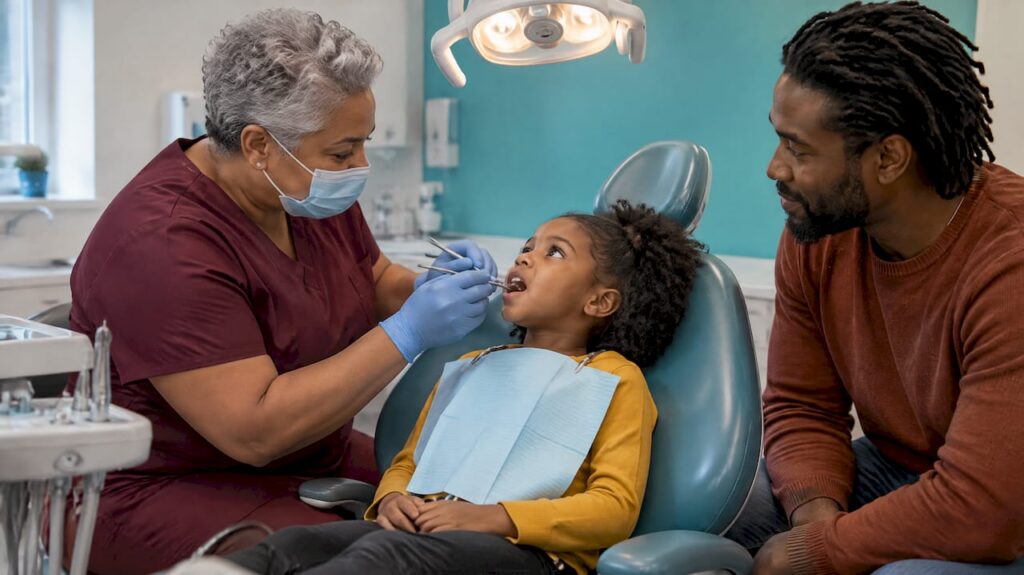
At a first dental visit you fill out paperwork, review your health history with the team, get a full exam of your teeth, gums and mouth, often have X-rays, and leave with a plan for what comes next. You can expect to be in the office for about an hour. Nothing happens without it being explained first, and you can ask to pause at any point.
This guide walks through the visit in order, for adults and for children. It also covers what to bring, whether you’ll get a cleaning, and how to tell the team you’re nervous.
TL;DR
- Arrive 10 to 15 minutes early with your insurance card, photo ID, a list of your medications and any questions you have.
- Expect a health history review, a head, neck and mouth exam, and possibly X-rays. A cleaning is not guaranteed at the first visit.
- Children should see a dentist when the first tooth appears and no later than the first birthday.
- If you’re anxious, say so when you book. The team can slow down and explain each step.
- You leave with a diagnosis and a care plan you can review before you agree to anything.
Table of Contents
- Before you go: how to prepare
- What happens at the visit
- How long does the first visit take?
- What parents should expect at a child’s first visit
- If you’re nervous, say so
- Questions worth asking
- What happens after the visit
- Perspective: how we approach a first visit
- Book your first visit with us
- FAQ
- Sources
Before you go: how to prepare
Most of the preparation is paperwork and a short list. The Illinois Department of Public Health advises arriving 15 minutes early to fill out forms, and having your insurance information, photo ID and a current medication list on hand.
What to bring
- Insurance card and photo ID. If you’re paying out of pocket, bring a payment method. Together by St. Jude lists a debit or credit card, cash or a health savings account card.
- A list of medications and supplements. Include the dose if you know it. Blood thinners, diabetes medicines and heart medications matter to your dentist.
- Past dental records or X-rays, if you have them. Ask your previous office to send them ahead. The American Dental Association’s practice guidance says the team should ask whether recent radiographs are available before taking new ones.
- Your questions. Write them down. Things like “Why does this tooth hurt when I drink something cold?” are easy to forget once you’re in the chair.
- Comfort items, such as headphones or sunglasses. Oral Health Kansas suggests these along with comfortable clothing.
Forms ahead of time
If the office offers forms online, fill them out at home. You’ll have your medical history, allergies and medication names at hand, and you won’t be rushing in the waiting room. Our forms and financial options page is where new patients can find what they need.
What to do the morning of
Brush and floss the way you normally do. There’s no need to scrub harder to impress anyone. A normal routine also shows the dentist an honest picture of your mouth. Skip a heavy or strongly flavored meal right before you go, or brush if you’ve just eaten.
For a child, give a light meal beforehand, then have them brush and clean between their teeth. The ADA’s MouthHealthy site recommends saving snacks until after the appointment.
What happens at the visit
Here is the usual order. Every office runs a little differently, but these steps are common.
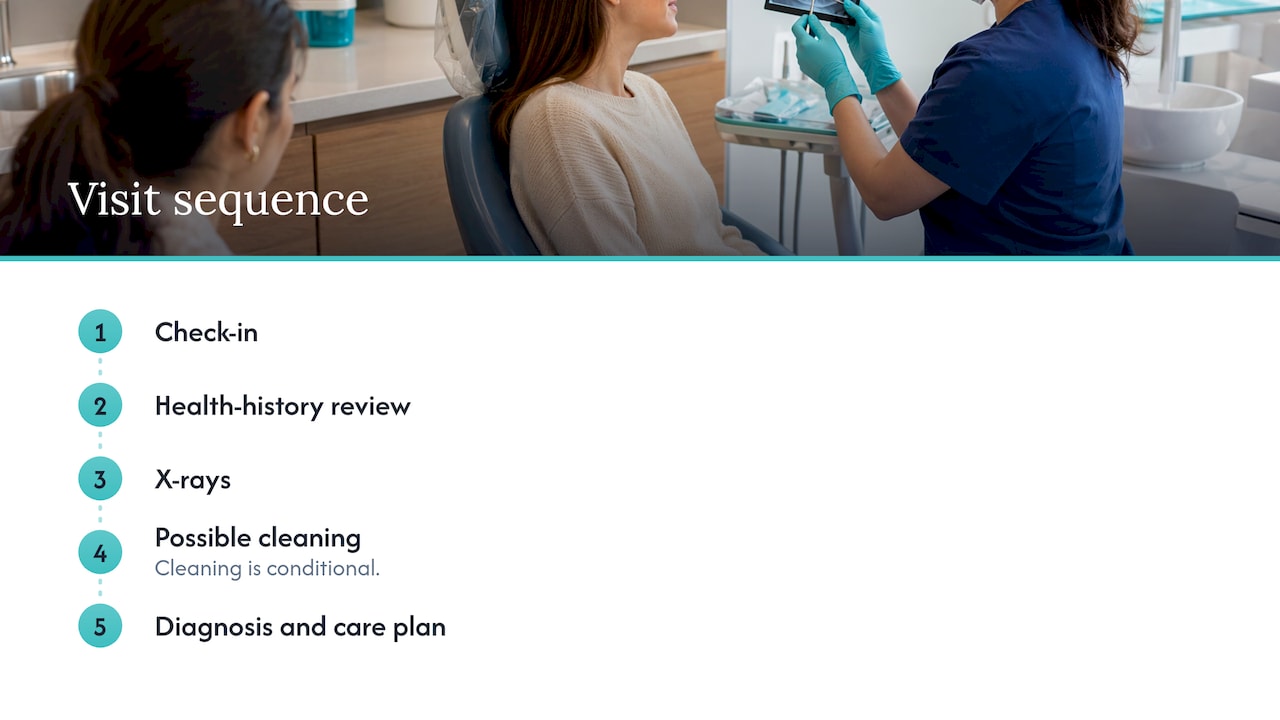
1. Check-in and paperwork
The front desk confirms your insurance, scans your ID and collects any forms you haven’t finished. This is a good moment to mention anything you want the team to know, including nerves. We cover that below.
2. Health history and a conversation
A team member reviews your medical and dental history. Expect questions about conditions, medications, allergies, past dental problems and what brought you in. The Illinois Department of Public Health stresses that honest and complete answers matter because your safety depends on a trusting relationship with your provider. It also lists a blood pressure check as part of the visit.
The ADA advises team members to explain what will be done and why, and to use as little technical language as possible. If a word doesn’t make sense, ask.
3. The exam
The dentist looks at your head and neck, teeth, gums, the soft tissues of your mouth and your skin. The same state guidance describes this as a thorough exam of those areas. In practice this means:
- Checking each tooth for decay, cracks or worn spots
- Looking at your gums for redness, swelling or bleeding
- Checking your bite and jaw movement
- Looking at your tongue, cheeks and throat for anything unusual
An oral cancer screening is part of preventive care at our office. It is quick and painless: a visual and hands-on check of your mouth and neck.
4. X-rays
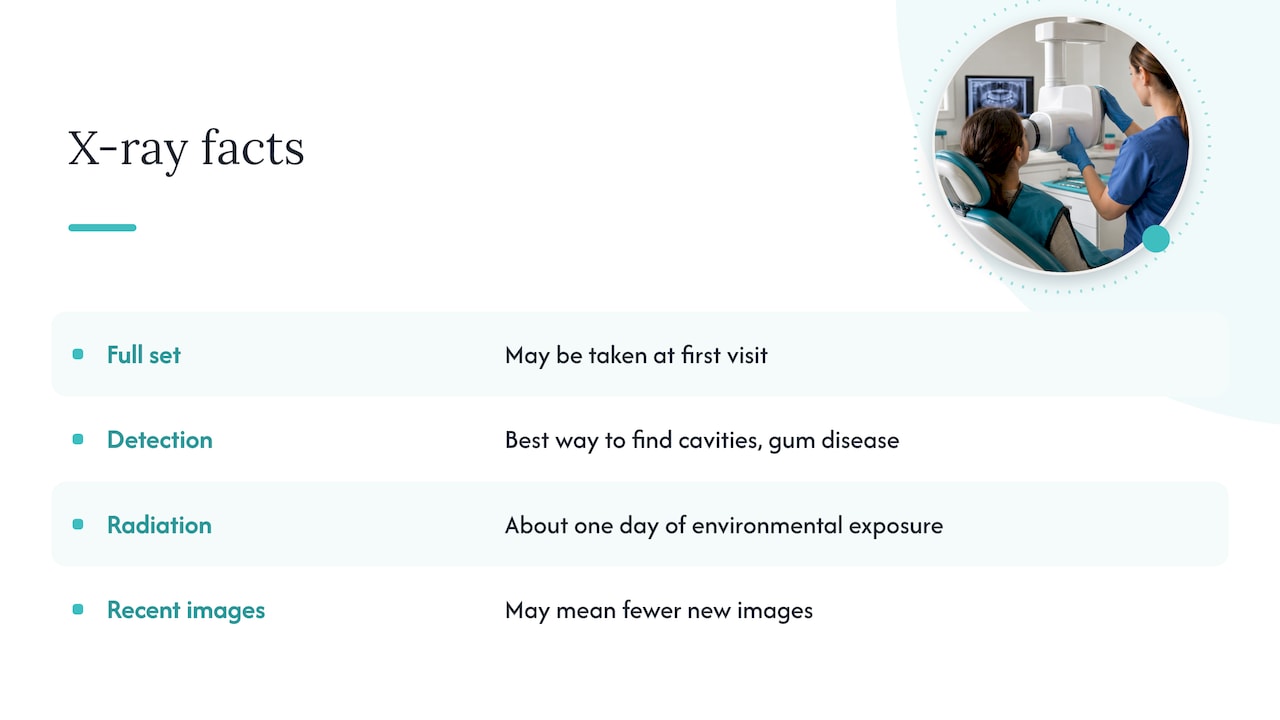
A full set of X-rays may be taken at a first visit, according to the Illinois Department of Public Health. The same page says X-rays are the best way to find cavities between teeth and gum disease, and that the radiation from dental X-rays is very low, about what you pick up from the environment in a day.
If you have recent images from another office, bring them or ask for them to be sent. That can mean fewer new images. If you’d like to know more about how we think about imaging, we explain X-ray safety and digital sensors and how often X-rays are needed on our site.
5. Cleaning: maybe, maybe not
People often ask whether the dentist cleans your teeth at the first visit. Sometimes yes, sometimes no. The state guidance says not to expect a cleaning if it has been several years since your last visit. A mouth that hasn’t been seen in a long time may need a closer look first, and sometimes a deeper cleaning scheduled separately. That is a sequencing decision, not a problem.
6. Diagnosis and your plan
At the end, the dentist explains what they found. The Illinois guidance says to expect a diagnosis and a plan of care that is usually developed and reviewed with you. A good plan sorts findings by urgency, so you can see what needs attention now and what can be watched.
How long does the first visit take?
Plan on roughly an hour for an adult, with extra time for paperwork if you arrive without forms done. Visits run longer when full X-rays, a cleaning and a detailed treatment discussion all happen together, and shorter for a quick look. If you have a tight schedule, ask the front desk when you book how much time to set aside. Children’s first visits are usually shorter, since there is less to examine and a young child’s attention is limited.
What parents should expect at a child’s first visit
When to go
The American Academy of Pediatric Dentistry’s guidebook recommends taking your child when the first tooth appears, usually around 6 months, and no later than the first birthday. The ADA gives the same timing: a first checkup after the first tooth or by age 1.
What the dentist does
According to MouthHealthy, the dentist checks that teeth, jaw, bite and gums are developing properly, looks for injuries, cavities or other issues, and may do a gentle cleaning depending on your child’s age and number of teeth. Expect to talk about eating and drinking habits and your daily routine at home too.
For babies and toddlers, the first visit is mostly about getting comfortable and learning what to do at home. Often the child sits on your lap for the exam.
How to prepare your child
- Describe the visit in simple, positive words: the dentist will count and look at their teeth.
- Skip words like “hurt” or “shot,” even in reassurance.
- Book a time when your child is usually well rested.
- Bring a comfort item and let your child watch you at your own checkup if you can.
The AAPD guidebook also notes that in one study children who had a first visit by their first birthday were less likely to need fillings or other restorative work later. Our children’s dentistry page is the place to start for families.
If you’re nervous, say so
Dental anxiety is common, and dental teams plan for it. Three things help most.
- Tell the team when you book. Mentioning it to the receptionist can lead to the office setting up a calmer visit before you arrive.
- Write it down if speaking is hard. A short note handed to the hygienist or dentist works well.
- Ask for the Tell-Show-Do approach. The dentist explains, shows the instrument, then does the step. You know what’s coming.
Agree on a signal, like raising your hand, that means stop. If a strong gag reflex is your worry, read what actually helps at the dentist. If you want to know what’s available beyond talking and pacing, our guide to dental anxiety and sedation options explains each one.
Also tell the team about any pain. If a tooth is hurting, swelling, or was knocked or broken, that changes the visit from routine to urgent, and the dentist will address it first. You can read about emergency dentistry at our office.
Questions worth asking
The state guidance suggests asking what the office does to prevent the spread of infection and expecting an answer you understand. A few more worth bringing:
- What did you find, and what is most urgent?
- Which findings can wait and be monitored?
- What will each recommended treatment involve, step by step?
- What will my insurance cover, and what will I pay?
- How often should I come back?
What happens after the visit
If the dentist finds a problem, you’ll get a written plan and time to ask questions. Some treatments come with written aftercare. The ADA notes that written post-procedure instructions may be given after certain treatments, and that patients who’ve had extensive work often appreciate a follow-up call from the dentist.
Common next steps include:
- A cleaning visit if one wasn’t done.
- Fillings or crowns for decay or damaged teeth, covered in restorative dentistry.
- Root canal, extraction or implant planning when a tooth can’t be saved or is missing.
- Cosmetic options such as whitening or veneers, if you’re interested.
- Regular checkups on the schedule your dentist recommends for you.
You can say no, ask for a second visit to think, or ask to start with the most urgent item first.
Perspective: how we approach a first visit
At South Littleton Family Dental, we treat the first visit as a conversation before it is a procedure. Many people come to us after years away from the dentist, or with a child who has never been, and the thing they most want is to understand where they stand without being judged.
That is why we focus on individualized care plans. We explain what we see in plain language and set priorities with you, so you aren’t handed a long list and no direction. Our approach pairs advanced technology with a family-friendly setting, so adults, children and seniors can all be seen with the same care.
We also keep same-day availability for emergencies, because a toothache doesn’t wait for an open week on the calendar. If you’re nervous, tell us when you call. We’d rather slow down and make you comfortable than rush through.
the author
Book your first visit with us
We welcome new patients of all ages in Littleton, CO. Our practice offers general dentistry for exams, cleanings, X-rays and preventive care, along with fillings, crowns and other restorative work. New patients can see our $99 new patient special, and we offer a $49 emergency exam. Check those pages for current terms.

If you’re in pain today, go straight to emergency dentistry and call us.
FAQ
Do dentists clean your teeth at the first visit?
Sometimes. Many first visits include a cleaning when the exam allows it, but not always. If it has been several years since your last visit, the Illinois Department of Public Health says not to expect one. Your dentist may schedule it separately after the exam.
What shouldn’t you do before a dentist appointment?
Don’t skip brushing and flossing, and don’t eat a heavy meal right before. Don’t hide medications or health conditions on your forms. Honest answers keep your treatment safe. You also don’t need to overhaul your routine in advance.
Will I need X-rays at my first visit?
Probably, unless you have recent ones from another office. A complete set may be taken at a first visit, and X-rays are the best way to find cavities between teeth and gum disease. Bring recent images if you have them.
When should my child have a first dental visit?
When the first tooth comes in, usually around 6 months, and no later than the first birthday, according to the AAPD guidebook. Early visits focus on checking development, answering your questions and getting your child used to the office.
What if I’m too nervous to go?
Tell the office when you book. Ask for a slower pace and for each step to be explained first. Many people find handing over a short written note easier than saying it aloud.
Sources
- What to Expect During a Dental Visit, Illinois Department of Public Health
- Meeting the Doctor, American Dental Association
- Post Treatment, American Dental Association
- Your baby’s first dental visit, MouthHealthy
- Healthy Smiles Guidebook, AAPD
- ADA Give Kids a Smile activity pages
- How to Make a Dentist Appointment, Together by St. Jude
- Preparing for a Successful Dental Appointment, Oral Health Kansas