
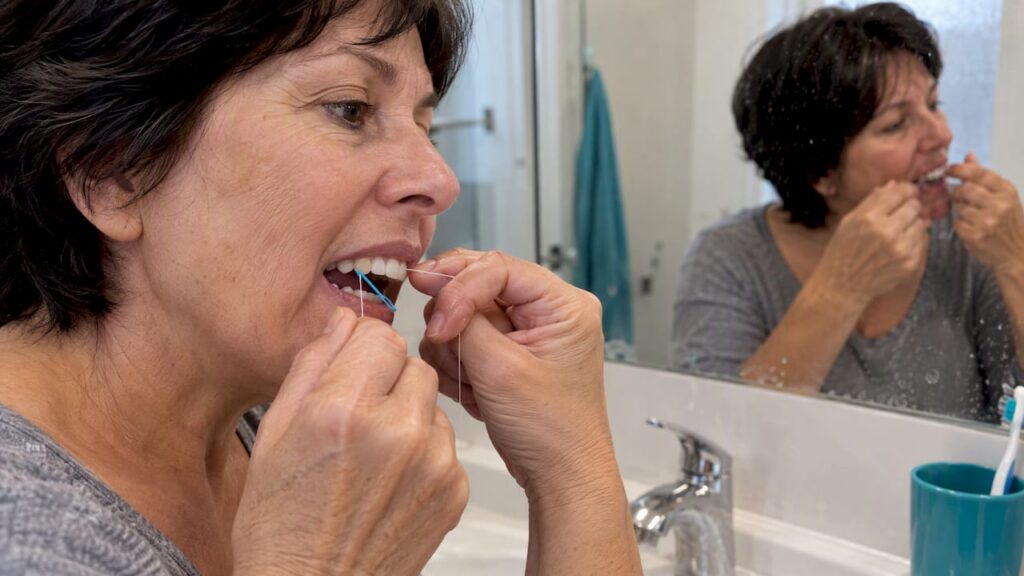
The core regimen for a dental bridge is simple: brush twice a day, clean under and around it once a day with a floss threader, Superfloss, interdental brush, or water flosser, and keep regular professional recall visits. Skipping the daily interdental step lets plaque collect at the margins, which raises the risk of secondary caries and gum inflammation that can eventually threaten the restoration itself.
TL;DR:
- Use a floss threader or Superfloss beneath pontics, an interdental brush for wider gaps, and water flossing as a complement when contacts are tight.
- Thread floss under the pontic, clean each abutment gently, and pull the strand sideways rather than upward to avoid stressing the cement seal.
- Plan lifelong professional maintenance, with six months as a typical recall interval and shorter visits if gum disease, smoking, inflammation, or cleaning difficulties raise risk.
- Call promptly for bleeding or swelling, persistent odor, new sensitivity, bite changes, or clicking; a loose bridge, sudden pain, or infection signs need emergency care.
Table of Contents
- Which interdental tools work for bridges and when to pick each
- A short, repeatable daily routine: what to do and when
- How to clean under the pontic and keep margins plaque-free
- What to expect at professional maintenance visits and recommended recall timing
- Warning signs and when to call your dentist
- Practice perspective: how dental teams teach bridge care
- South Littleton Family Dental: restorative and maintenance services for bridge patients
- FAQ
- Sources
Which interdental tools work for bridges and when to pick each
A bridge has a false tooth, called a pontic, suspended between two crowned abutments. Regular floss cannot pass between the pontic and the gum because there is no natural contact point there, so you need a tool built for the job. The American Dental Association treats interdental cleaning once a day as a companion habit to brushing, not an optional extra, and accepts several tool choices depending on your bridge and your hands.
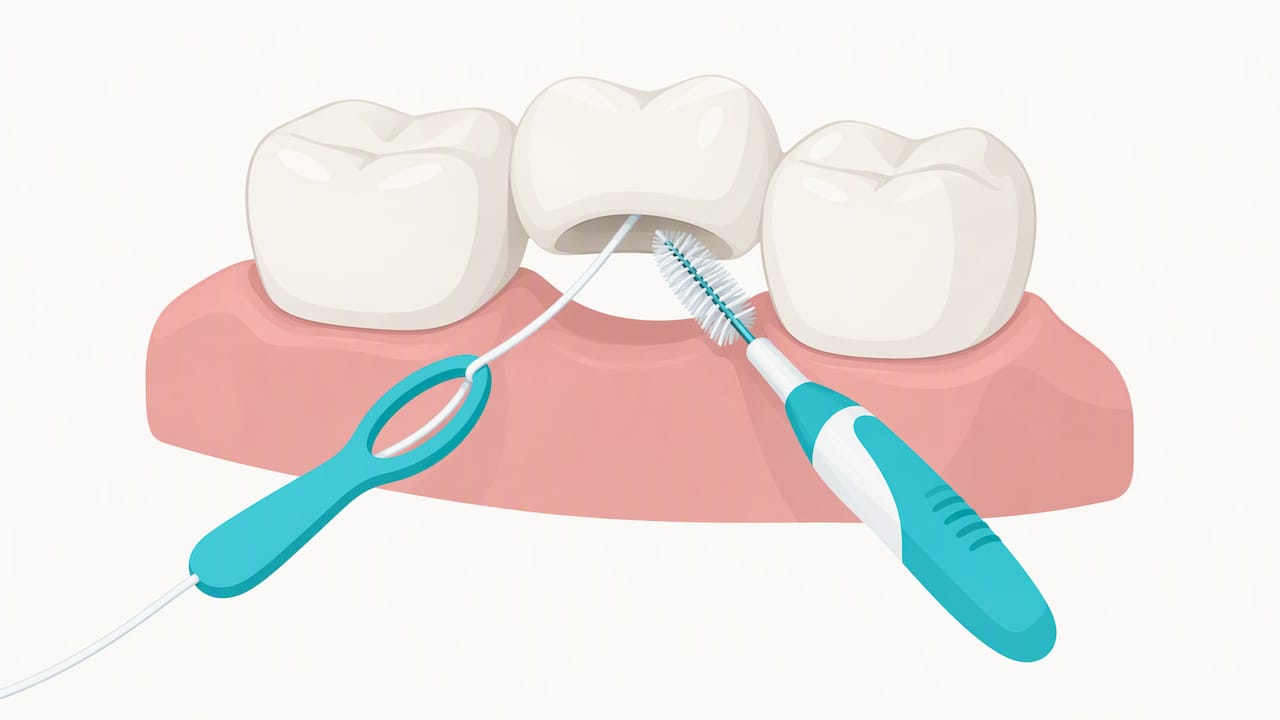
- A floss threader paired with regular floss or Superfloss lets you guide the strand under the pontic and along each abutment.
- Interdental brushes, sized to the gap, clean wider spaces more thoroughly than floss alone and reach around abutment margins.
- A water flosser directs a pressurized stream under the pontic and along the gumline, which helps people with limited hand dexterity or stiff joints.
- A soft-bristled toothbrush, manual or powered, with fluoride toothpaste handles the twice-daily brushing that removes surface plaque.
Floss threaders take practice but cost little and travel well. Interdental brushes clean fast but need the right size, too small and they miss plaque, too large and they force their way in. Water flossers are gentle and fast but work best as a complement to a brush-type tool rather than a full replacement when contacts are tight.
Pro Tip: Keep a spare floss threader or interdental brush head in your bag or desk drawer so a forgotten morning routine doesn’t turn into a skipped day.
A short, repeatable daily routine: what to do and when
Consistency matters more than the exact order. Some people clean between their teeth first and then brush away the loosened debris; others brush first and finish with interdental cleaning. Either sequence works as long as you do both, every day, without rushing.
- Brush with fluoride toothpaste, morning and night, angling the brush at the gumline around each abutment.
- Clean under the pontic and around the abutments once daily, ideally at night when plaque has had all day to build up.
- Rinse with water or an antiseptic mouthwash if your dentist has recommended one for your specific risk profile.
- Do a quick visual check in the mirror for food trapped near the bridge before bed.
A simple kit keeps this routine portable: a toothbrush and travel-size fluoride paste, a few lengths of floss threader or Superfloss, an interdental brush in the size your dentist recommended, a water flosser tip if you use one, and any rinse your clinician advised. Packing these together means a weekend away or a long work day never becomes an excuse to skip a day.
How to clean under the pontic and keep margins plaque-free
The technique matters as much as the tool. Done carelessly, flossing or brushing around a bridge can irritate gum tissue or put unnecessary stress on the cement holding the crowns in place.
- With a floss threader, thread the floss under the pontic, then slide it along the side of each abutment using a gentle back-and-forth motion. Pull the floss out sideways rather than straight up, since pulling upward can stress the cement seal that holds the crown.
- With a water flosser, start on the lowest pressure setting and aim the tip at the gumline and the pontic-to-abutment junction, moving slowly along the length of the bridge. The ADA notes that water flossers suit people who struggle with manual flossing, and they work well as a complement to mechanical cleaning when space is tight. A partner resource on water flosser use around implants offers additional technique pointers worth reviewing if your bridge is implant-supported.
- With an interdental brush, choose a size that slides in without resistance and never force a brush that feels too tight, since that can scratch the gum or damage the margin.
Pro Tip: If a tool meets resistance under the pontic, switch to a smaller size or a water flosser rather than pushing harder.
What to expect at professional maintenance visits and recommended recall timing
Home care handles daily plaque, but it cannot replace what a dental team checks during a recall visit. Clinical practice guidelines from the American College of Prosthodontists call for lifelong maintenance of fixed restorations, with a risk-based recall regimen and shorter intervals for patients at higher risk.
At a typical visit, your dental team will:
- Examine the margins around each crown for microleakage, overhangs, or early signs of decay.
- Remove tartar with instruments suited to the restorative material so the crown surface isn’t scratched.
- Take radiographs when there’s reason to check bone levels or hidden decay under the bridge.
- Record probing measurements as a baseline, especially important for implant-supported bridges, where ongoing professional recall is tied directly to long-term success.
Your dentist may shorten the interval between visits if you have a history of gum disease, smoke, show early signs of inflammation, or have difficulty keeping up with daily interdental cleaning on your own.
Warning signs and when to call your dentist
Most day-to-day irritation around a bridge settles with a thorough cleaning, but a few signs call for a prompt visit rather than a wait-and-see approach.
- Bleeding or swelling around the bridge warrants prompt assessment by a dental professional.
- A persistent bad taste or odor near the restoration, which can point to trapped food or early decay at a margin.
- New sensitivity, a change in your bite, or a clicking sound when you chew.
- Any looseness or movement of the bridge itself.
For mild irritation, gentle cleaning and a warm saltwater rinse can ease discomfort while you wait for your appointment, and softer foods give the area a break. Never try to re-cement a loose bridge yourself or force it back into place, since that can damage the abutments underneath. A loose bridge, sudden pain, or any sign of infection warrants immediate emergency care.
Practice perspective: how dental teams teach bridge care
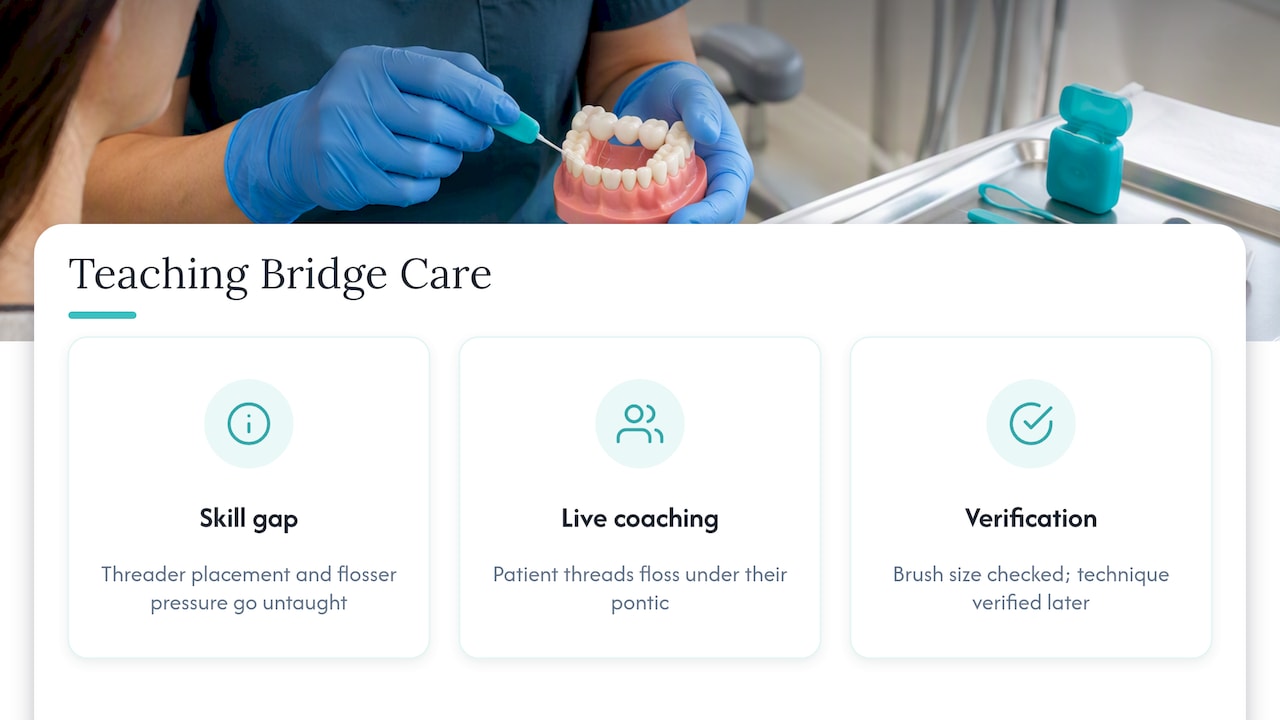
Patients rarely struggle with daily bridge care because they lack motivation. They struggle because nobody ever showed them exactly where the floss threader needs to go or how much pressure a water flosser tip needs near a crown margin. That gap between knowing you should clean under a bridge and actually doing it correctly is where most restorations run into trouble.
In our experience, hands-on coaching at a recall visit, including watching a patient thread floss under their own pontic and checking their interdental brush size, makes a bigger difference than another pamphlet. Bridges can serve well for many years when the daily routine stays consistent and recall visits happen on schedule. The technique, taught once and verified later, tends to stick.
— Admin
South Littleton Family Dental: restorative and maintenance services for bridge patients
A bridge only lasts as long as the care behind it, and that care works best as a partnership between what you do at home and what a dental team checks in the chair. We provide restorative dentistry for patients with bridges and crowns, along with the routine exams and cleanings that catch margin problems before they become bigger repairs.

- We assess bridge margins, abutment health, and bite alignment during restorative evaluations.
- We offer professional cleanings and exams designed around your recall schedule and risk factors.
- We handle adjustments or repairs when a bridge needs attention beyond daily home care.
If your bridge feels different when you bite down, schedule a restorative dentistry evaluation or book a general dentistry cleaning with our team in Littleton.
This article is general information, not a substitute for advice from a qualified doctor. Consult a qualified healthcare professional about your own circumstances before acting on anything here.
FAQ
How often should I floss under a dental bridge?
Clean under your bridge once a day, in addition to brushing twice a day, using a floss threader, Superfloss, interdental brush, or water flosser. The ADA recommends interdental cleaning once daily as a companion to regular brushing for anyone with a fixed restoration.
What is the best tool for cleaning under a bridge?
There’s no single best tool: a floss threader with Superfloss works well for most pontics, interdental brushes suit wider gaps, and a water flosser helps if you have limited dexterity. Many patients use a combination, guided by what their dental team recommends for their specific bridge.
How often do I need a checkup if I have a bridge?
A baseline recall of about every six months is standard for patients with fixed bridges, though your dentist may recommend shorter intervals based on your individual risk factors such as gum disease history or smoking. These visits let your dental team check the margins and remove buildup you can’t reach at home.
Why does plaque under a bridge matter so much?
Plaque trapped at the margins of a bridge can lead to secondary caries and gum inflammation around the abutment teeth, which over time threatens the restoration itself. Daily interdental cleaning is the main defense against this buildup.
Can a water flosser fully replace floss for a bridge?
A water flosser is a solid option for people who struggle with manual flossing, but it works best as a complement to a floss threader or interdental brush rather than a complete substitute when contacts are tight. Your dental team can tell you which combination suits your bridge design.
Sources
- Clinical practice guidelines for recall and maintenance of patients with tooth-borne and implant-borne dental restorations – The Journal of the American Dental Association
- Secondary caries in fixed dental prostheses: Long‐term clinical evaluation – PMC
- Maintenance of Full-Arch Implant Restorations
- Clinical practice guidelines for recall and maintenance of patients with tooth-borne and implant-borne dental restorations – PubMed
- Water Flossers and Water Flossing | MouthHealthy – Oral Health Information from the ADA