
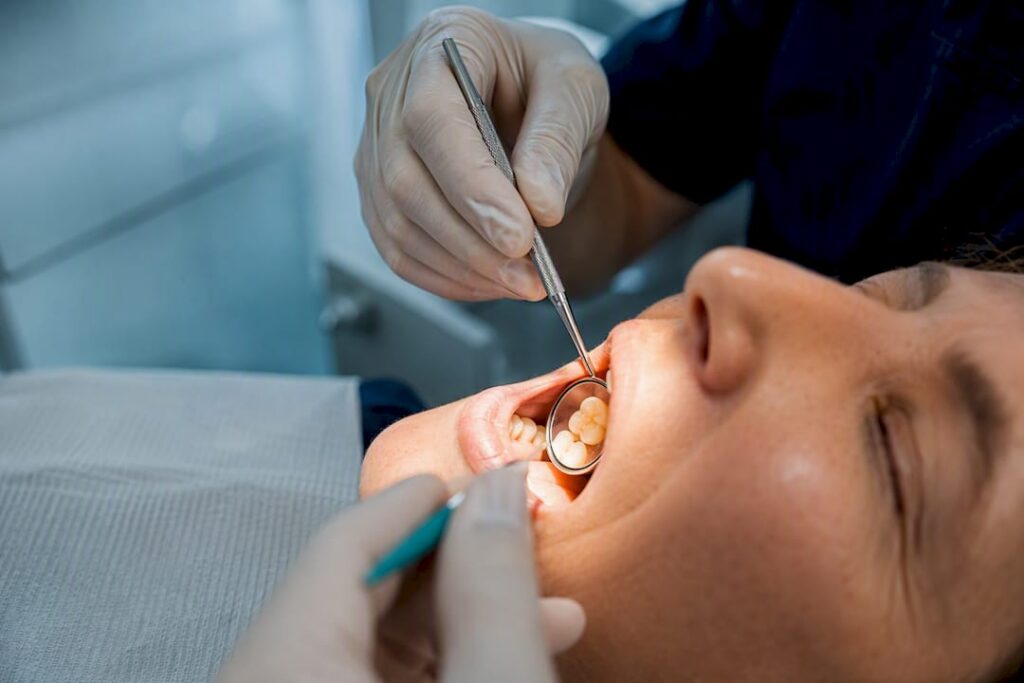
A recently cracked tooth can be a genuine dental emergency, so call a dentist right away if you have severe pain, facial swelling, uncontrolled bleeding, or a fever. While you arrange care, rinse with warm water, avoid chewing on that side, and take an over-the-counter pain reliever. Some cracks don’t hurt at all, but they still need a dentist’s eyes on them before they get worse.
TL;DR:
- Cracked teeth with severe symptoms like swelling, fever, or uncontrolled bleeding require urgent emergency care and immediate stabilization to prevent life-threatening complications.
- Moistening a broken fragment in milk or saliva and protecting sharp edges with wax can preserve the tooth for possible reattachment if treated quickly.
- Dentists often use multiple tests, including bite and fiber-optic light, to accurately diagnose cracks, as x-rays frequently miss hairline fractures.
- Treatment options vary from monitoring and bonding to crowns, root canals, or extraction, depending on the depth and extent of the crack.
- Untreated cracks can lead to bacterial infections, abscesses, and increased risk of tooth loss, emphasizing early diagnosis and intervention.
Table of Contents
- Immediate Care: What to Do Right After a Cracked Tooth Emergency
- Symptoms That Signal a True Cracked Tooth Emergency
- Should You Go to the ER or Call a Dentist?
- How Dentists Diagnose a Cracked Tooth
- Cracked Tooth Treatment Options Explained
- What Happens During Your Emergency Dental Visit
- What Happens if a Cracked Tooth Goes Untreated
- Protecting a Cracked Tooth After Treatment
- Not All Cracked Teeth Are the Same: Types and What They Mean
- Warning Signs You Shouldn’t Wait On
- Why Early Evaluation Changes the Outcome
- Get Same-Day Emergency Care at South Littleton Family Dental
- Sources
- FAQ
Immediate Care: What to Do Right After a Cracked Tooth Emergency
The first ten minutes matter. Grab clean gauze, rinse your mouth, and work through these steps in order rather than trying everything at once.
- Rinse with warm water to clear debris and get a clear look at the damage.
- Control bleeding by biting down gently on clean gauze for about 10 minutes, per Cleveland Clinic guidance on fractured teeth.
- Apply a cold compress to the outside of your face, not directly on the tooth or gums, to keep swelling down. Never put ice straight on the skin for more than short intervals.
- Cover sharp edges with orthodontic wax or sugar-free gum so the fragment stops cutting your tongue or cheek.
- Avoid chewing on the affected side and skip anything hard, sticky, or extreme in temperature.
- Take acetaminophen or ibuprofen at labeled doses for pain. Skip ibuprofen if you have kidney issues, a bleeding disorder, or take blood thinners, and check with a pharmacist if you’re unsure.
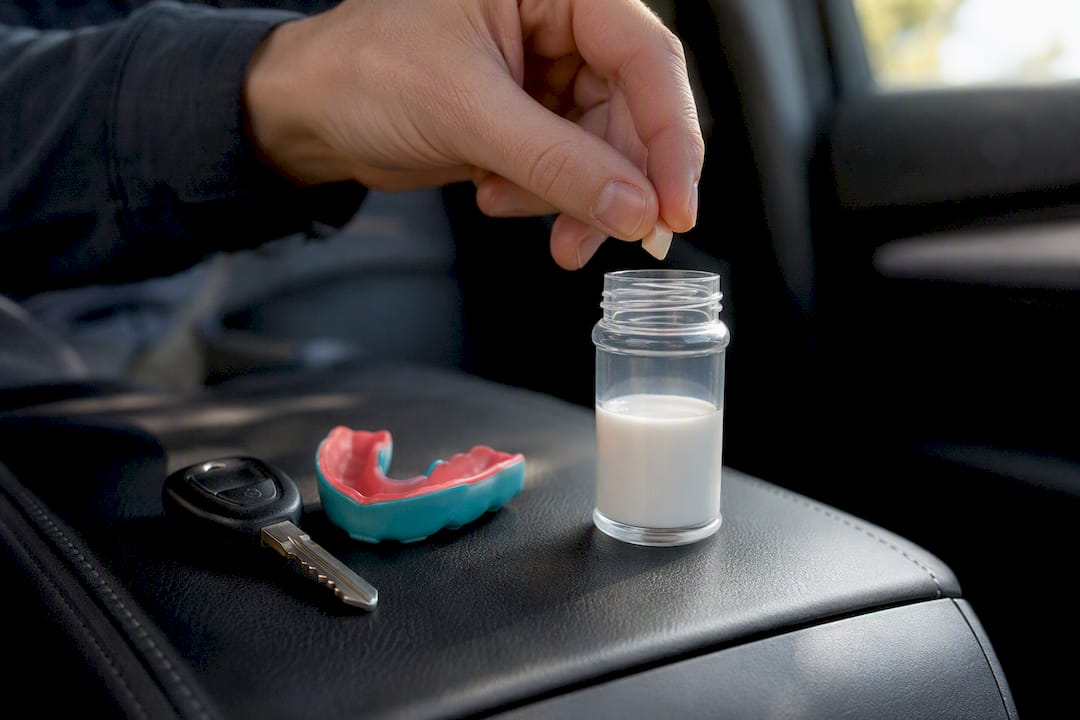
If a chunk of the tooth broke off entirely, keep the fragment moist by storing it in milk or your own saliva rather than letting it dry out. Dentists can sometimes reattach a fragment that arrives quickly and intact, according to NHS guidance on chipped and broken teeth. Wrap it loosely rather than jamming it in a tissue, where it can get lost or crushed.
Pro Tip: Keep a travel-size container of milk in your bag or car during any activity with a real risk of dental trauma, like contact sports. It buys you time to reach emergency dental care without the fragment drying out.
Symptoms That Signal a True Cracked Tooth Emergency
Not every crack announces itself the same way, and that inconsistency is exactly what makes cracked teeth tricky to judge on your own.
Sharp pain when you bite down, followed by a jolt of pain when you release, is the classic sign. Sensitivity to hot, cold, or sweet foods that lingers after the stimulus is gone often points to a crack reaching the nerve. You might also notice localized gum swelling near one tooth rather than general mouth discomfort. According to Delta Dental, cracked tooth pain tends to be intermittent, which sets it apart from the constant, throbbing ache typical of a cavity or abscess.
Some red flags mean you need same-day care or an ER visit, not a wait-and-see approach:
- Facial swelling severe enough to affect breathing or swallowing
- Fever alongside tooth pain
- Swelling that’s visibly spreading toward your eye, neck, or throat
- Bleeding you can’t stop after 15 to 20 minutes of steady pressure
Here’s the part people miss: a painless hairline crack, sometimes called a craze line, can still let bacteria seep toward the pulp over weeks or months. It won’t hurt today. It can absolutely turn into an infection later. That’s why “it doesn’t hurt” isn’t the same as “it’s fine.”
Should You Go to the ER or Call a Dentist?
Emergency rooms and dental clinics solve different problems, and confusing the two costs you time.
An ER can manage a severe infection, control fever, address airway risk from spreading swelling, and give you IV antibiotics or stronger pain control. What an ER generally cannot do is fix the tooth itself. Cleveland Clinic notes that emergency departments stabilize patients and refer them onward. They don’t place crowns, perform root canals, or splint a cracked tooth.
A dentist handles everything restorative: diagnostic testing, temporary stabilization like splinting or banding, and definitive fixes such as crowns or root canals, plus the follow-up care that actually saves the tooth.
Use this rule of thumb:
- Trouble breathing, swallowing, high fever, or spreading facial swelling → go to the ER now.
- Pain, sensitivity, or a visible crack without those danger signs → call your dentist for a same-day or urgent appointment.
How Dentists Diagnose a Cracked Tooth
Diagnosing a crack is harder than it sounds, which is why a dentist runs through several tests rather than relying on a single look.
The exam usually starts with magnification and strong illumination so the dentist can spot fracture lines invisible to the naked eye, along with periodontal probing to check whether the crack has reached below the gumline. From there, a bite test, often using a small device called a Tooth Slooth, has you bite on individual cusps to isolate exactly which part of the tooth hurts. Fiber-optic transillumination shines a light through the tooth, since a crack interrupts the light path and shows up as a visible line.
Here’s the frustrating part: standard X-rays often miss hairline cracks entirely, because the fracture usually runs parallel to the direction the X-ray beam captures. Diagnosing cracked tooth syndrome is notoriously difficult for exactly this reason, according to a clinical review published on StatPearls, which is why dentists lean so heavily on physical tests instead of imaging alone. When a crack still can’t be confirmed, a dentist may order a CBCT scan or remove an old filling to look directly at the tooth structure underneath.
- Clinical exam with magnification, illumination, and probing
- Bite test / Tooth Slooth to pinpoint the painful cusp
- Fiber-optic transillumination to trace the fracture line
- CBCT imaging or restoration removal when the picture still isn’t clear
Cracked Tooth Treatment Options Explained
Treatment depends almost entirely on how deep the crack runs and whether it has reached the pulp, the living tissue at the tooth’s core.
- Smoothing and monitoring. For a shallow craze line with no symptoms, a dentist may simply smooth the surface and check it again at your next cleaning.
- Composite splinting. Bonding material across the crack can stop the two halves from flexing independently, which often relieves the sharp bite pain within days.
- Orthodontic banding. A metal band cemented around the tooth acts as a cast, holding the fracture together as a temporary or semi-permanent fix while the dentist evaluates how the tooth responds.
- Crown placement. Covering the cusps with a crown is the most common definitive fix, since it protects the tooth from the biting forces that caused the crack in the first place.
- Root canal therapy. When the crack has reached the pulp and caused inflammation or infection, a root canal removes the damaged tissue before the tooth gets crowned.
- Extraction. If the crack extends below the gumline and splits the root, the tooth usually can’t be saved and removal is the safer option.
A narrative review of cracked tooth treatment found that teeth with normal pulp or reversible inflammation often have survival rates after crowning that rival teeth that never cracked at all. Extraction isn’t automatic just because a tooth cracked. Many vital, restorable cracks respond well to conservative treatment.
Pro Tip: If your dentist recommends an orthodontic band or temporary crown before committing to a permanent restoration, that’s not indecision. It’s a diagnostic test disguised as treatment, letting the tooth “prove” whether it will heal before anyone drills further.
What Happens During Your Emergency Dental Visit
Most emergency visits follow a predictable rhythm, which helps if you’re anxious about what’s coming.
You’ll typically start with a phone call where staff ask about your symptoms to gauge urgency, followed by a same-day exam and X-rays once you arrive. From there, the dentist controls pain, applies temporary stabilization like bonding or a band, or moves straight to definitive treatment if the diagnosis is clear and time allows. Full stabilization almost always happens the same day. A definitive crown or root canal might follow within days to a few weeks, depending on how the tooth responds and whether a lab needs to fabricate a custom crown.
Costs vary widely depending on your region, your insurance, and the treatment your tooth actually needs, but here’s a rough sense of what patients typically encounter:
- Emergency exam with X-rays: often in the range of $50 to $200 out of pocket
- Temporary stabilization (bonding or banding): typically $100 to $300
- Root canal: commonly several hundred to over a thousand dollars depending on the tooth
- Crown: often $800 to $1,500 or more before insurance
Treat these as ballpark figures, not quotes. Your dentist’s office can give you an exact number once they’ve seen the crack.
What Happens if a Cracked Tooth Goes Untreated
Ignoring a cracked tooth doesn’t make it heal. It gives bacteria a straight path into tissue that isn’t built to fight them off.
Once a crack reaches the pulp, bacteria can trigger an infection that spreads into the surrounding bone, forming an abscess. That infection doesn’t necessarily stay contained. Left long enough, it can migrate into the jaw, the soft tissue of the face and neck, or in rare severe cases become a broader medical emergency requiring hospitalization. Untreated cracks also tend to worsen mechanically. A stable crack under constant biting pressure often propagates deeper over weeks or months, moving a tooth from “restorable with a crown” to “needs a root canal” to, eventually, “needs extraction.”
There’s also a quieter cost: tooth loss changes how you chew, which shifts pressure onto neighboring teeth and can accelerate wear or cracking in those teeth too. One untreated crack can set off a slow chain reaction across your bite. Gum recession and bone loss around the site of a long-term infection can complicate future replacement options like implants, making early treatment cheaper and simpler than delayed treatment nearly every time.
None of this requires the crack to hurt constantly. Intermittent pain, or none at all, doesn’t mean the underlying damage has stopped.
Protecting a Cracked Tooth After Treatment
Once your tooth is stabilized or restored, the goal shifts to keeping it that way.
Avoid chewing ice, hard candy, popcorn kernels, and anything else that puts sudden concentrated force on one spot. If you grind your teeth at night, a custom night guard is one of the more effective tools for taking pressure off a repaired tooth, since grinding is one of the most common reasons cracks form and reform. Stick to your follow-up appointments even if the tooth feels fine. A crack that seemed fully resolved can still be quietly progressing under a crown or filling.
Keep up with routine cleanings and exams so a dentist can check the restoration’s margins and catch any new sensitivity early. If you play contact sports, wear a mouthguard every time, not just for games. Most dental trauma happens during practice, not competition. And if you notice new sensitivity, a change in how your teeth meet when you bite, or any looseness around the treated tooth, call your dentist rather than waiting for your next scheduled visit.
Not All Cracked Teeth Are the Same: Types and What They Mean
The word “crack” covers a wide range of severity, and the type largely determines how urgently you need care.
Craze lines are shallow cracks limited to the enamel surface. They’re extremely common in adults, usually painless, and rarely need treatment beyond monitoring. They’re cosmetic more than urgent.
Fractured cusp describes a break in one of the pointed edges of a tooth, often around an existing filling. This usually doesn’t involve the pulp and tends to cause mild discomfort. A crown or composite restoration typically resolves it without a root canal.
Cracked tooth syndrome refers to a crack that extends from the chewing surface toward the root without yet splitting the tooth into pieces. This is the classic case behind sharp bite pain and temperature sensitivity, and it’s the type most likely to need stabilization plus a crown to prevent the crack from spreading further.
Split tooth is a crack that has progressed all the way through the tooth, dividing it into distinct segments. At this stage, the tooth can often only be partially saved, if at all, and extraction becomes far more likely.
Vertical root fracture starts at the root rather than the crown and often shows minimal symptoms until infection sets in, sometimes only discovered on an X-ray after the damage is advanced.
Knowing which category you might be in doesn’t replace a dentist’s exam, but it explains why two people with “a cracked tooth” can get completely different treatment plans.
Warning Signs You Shouldn’t Wait On
Pain and swelling get the attention, but some of the most important warning signs are quieter and easier to dismiss.
A change in how your teeth meet when you bite down, even a subtle one, can mean a fragment has shifted or a crack has widened enough to alter the tooth’s position. Tooth mobility, where the affected tooth feels slightly loose compared to its neighbors, often signals the crack has reached the root or supporting bone. Both deserve a same-day call, not a wait-and-see approach, even without significant pain.
Persistent bad taste or odor localized to one area of your mouth can indicate a slow leak of infection, even before visible swelling appears. Gum tissue that looks different around one specific tooth, whether that’s a small bump, a color change, or a spot that bleeds easily when you brush, points to the same thing. Pain that starts intermittent and becomes constant is another shift worth acting on immediately, since it often means the pulp has gone from irritated to infected.
None of these require obvious trauma to matter. A tooth can crack from something as ordinary as biting a popcorn kernel or grinding at night, and the first sign you notice might be a bite that suddenly feels “off” rather than pain at all.
Why Early Evaluation Changes the Outcome
The biggest misconception about cracked teeth is that pain level tells you how serious the damage is. It doesn’t. A crack can be silent and still be heading toward the pulp, while a genuinely minor craze line can feel alarming simply because it’s new. Waiting for pain to “confirm” a problem is how a restorable crack turns into an extraction. Early stabilization, even something as simple as a temporary band, can preserve pulp vitality long enough to let conservative treatment work. The evidence backs a measured approach too: clinical reviews show a lot of vital cracked teeth do well with restorative treatment rather than automatic root canals or extraction, so a same-day exam is about getting an accurate read on your specific crack, not assuming the worst.
— Admin
Get Same-Day Emergency Care at South Littleton Family Dental
A cracked tooth doesn’t wait for a convenient appointment slot, and neither should you. South Littleton Family Dental offers same-day emergency dental care in Littleton, CO, built specifically for situations like this: sharp bite pain, a broken fragment, or swelling that started overnight.

When you call, our team walks you through what to bring (the broken fragment stored in milk if you have it) and gets you into a same-day exam with X-rays to see exactly what’s happening under the surface. From there, we can stabilize the tooth with bonding or a temporary band, move directly into a root canal or crown if that’s what the tooth needs, or handle an extraction when a tooth is truly unrestorable. New patients dealing with a dental emergency can take advantage of a $49 emergency exam, and our restorative dentistry options cover everything from same-day bonding to custom crowns. Call the dental office today to schedule a same-day appointment before the crack worsens.
This article is general information, not a substitute for advice from a qualified doctor. Consult a qualified healthcare professional about your own circumstances before acting on anything here.
Sources
- Cleveland Clinic: Fractured tooth (cracked tooth)
- StatPearls: Cracked tooth syndrome
- Treatment of cracked teeth: A comprehensive narrative review
- Delta Dental: Cracked tooth — symptoms & diagnosis
FAQ
How Urgent Is a Cracked Tooth?
It depends on the symptoms. Severe pain, facial swelling, fever, or uncontrolled bleeding call for same-day or emergency care, while a painless hairline crack still needs a dental exam soon, just not necessarily today.
Can the ER Do Anything About a Cracked Tooth?
An ER can manage infection, fever, airway risk, and severe pain with medication, but it can’t splint, crown, or otherwise repair the tooth itself. You’ll still need a dentist for the actual fix.
Can I Ignore a Cracked Tooth if It Doesn’t Hurt?
No. A painless crack, like a craze line, can still let bacteria reach the pulp over time, so it’s worth a dental exam even without pain.
What Should I Do if Half My Tooth Broke Off?
Rinse gently, keep the broken piece moist in milk or saliva, cover any sharp edges with wax, and get to a dentist the same day. South Littleton Family Dental’s emergency dentistry team can often see broken-tooth cases same day to assess whether the fragment can be reattached or the tooth needs a crown.