
Gentle flossing with a knotted or C-shaped technique, followed by a warm salt-water rinse, is the safest first move for a popcorn kernel in gums. Skip toothpicks, fingernails, or anything sharp. The hull will not dissolve on its own, so if pain, swelling, pus, or a fever shows up, or the piece won’t budge after a day or two, call a dentist rather than keep digging at it.
TL;DR:
- If gentle flossing and saltwater rinses do not remove the popcorn hull within 24 to 48 hours, visiting a dentist becomes necessary to prevent infection.
- Reaching for sharp objects like toothpicks or fingernails can worsen the problem by driving the hull deeper or causing soft tissue injury, so they should be avoided entirely.
- Signs of worsening infection include increasing pain, swelling, pus, fever, or persistent bleeding, requiring prompt professional evaluation.
- A dentist will likely perform a targeted removal with proper instruments, and treatments like drainage or antibiotics are only necessary if an abscess has formed.
- Regular prevention includes chewing slowly, flossing immediately after eating popcorn, and choosing brands with fewer unpopped kernels to minimize the risk of getting a hull stuck.
Table of Contents
- How to Get a Popcorn Kernel Out of Your Gums Safely
- What Not to Do When a Hull Is Stuck
- When a Popcorn Kernel Means It’s Time to See a Dentist
- Aftercare and Prevention for Popcorn-Related Gum Issues
- What Actually Happens at a Dental Visit for a Stuck Kernel
- Why Most Popcorn-Gum Advice Gets the Urgency Backwards
- Get Same-Day Relief for a Stuck Popcorn Kernel
- Sources
- FAQ
How to Get a Popcorn Kernel Out of Your Gums Safely
The hull that’s bothering you almost certainly isn’t the whole kernel. It’s the tough outer shell that splits off during popping and wedges itself under the gumline, right in the pocket dentists call the gingival sulcus. That’s why it feels sharp and stays put no matter how much you swish water around. It has to be worked out mechanically, and there’s a right order to try things in.
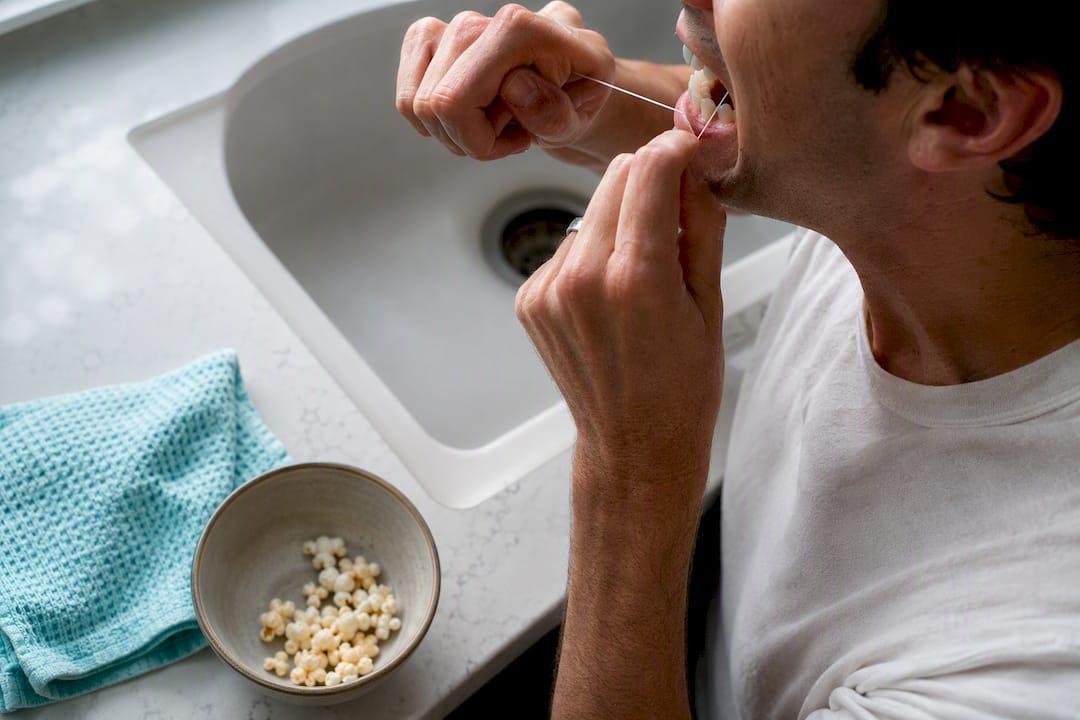
- Floss first, with a specific technique. Tie a small overhand knot in a fresh piece of floss, or shape the floss into a tight “C” around the tooth next to the irritated spot. Slide it below the gumline slowly, then move it up and down in short, gentle strokes rather than sawing side to side. The American Dental Association’s flossing guidance specifically recommends the C-shape motion because it dislodges debris without cutting into the gum tissue. Give it three or four careful passes. If the hull hasn’t moved, stop and try something else rather than forcing it.
- Brush at an angle. Use a soft-bristled brush tilted about 45 degrees toward the gumline, and use short, light strokes right over the spot. This can nudge a loosened hull the rest of the way out after flossing has broken it free.
- Rinse with warm salt water. Mix half a teaspoon to a full teaspoon of salt into eight ounces of warm water and swish for 15 to 30 seconds. Repeat every few hours. Saline rinses reduce local swelling and soften the tissue enough to loosen debris, which is why Colgate’s oral health guidance lists it as a first-line step alongside flossing.
- Try a water flosser on low pressure, aimed along the gumline rather than straight at the tooth. It works well as a follow-up after manual flossing, but skip it if the area is already swollen or bleeding.
If two or three careful rounds of this don’t clear it, stop. Repeated poking raises the odds of a deeper impaction or tissue injury.
Pro Tip: Do your flossing and rinsing routine right after eating popcorn, not the next morning. Hulls are far easier to remove within the first hour than after they’ve had all day to settle deeper into the sulcus.
What Not to Do When a Hull Is Stuck
Reaching for a toothpick feels like the obvious fix, but it’s the move most likely to make things worse. A sharp, rigid point can drive the hull deeper into the gum tissue instead of out, and Colgate’s dental guidance specifically warns against it for that reason.
- Toothpicks and pins apply concentrated pressure in one spot, which tends to puncture soft tissue rather than lift the hull free.
- Fingernails carry bacteria under the nail bed straight into an already irritated gum pocket.
- Snapped or sawed floss can lacerate the gumline or shred, leaving fibers behind that add to the irritation.
- Biting down on unpopped kernels to “crack them loose” risks a cracked tooth, a separate and often more expensive problem than the hull itself.
Mechanical trauma from any of these can turn a shallow, easily flossed-out hull into a deeper periodontal pocket that needs professional scaling to clear.
When a Popcorn Kernel Means It’s Time to See a Dentist
A hull that’s merely annoying is one thing. A hull that’s setting off an infection is another, and the two look different within a day or two.
Watch for these red flags:
- Pain that’s getting worse instead of easing after a rinse and floss
- Visible swelling of the gum, cheek, or jaw
- Pus or a bad taste draining from the area
- Fever or a general run-down feeling
- Difficulty swallowing or breathing (this needs emergency care immediately, not a next-day appointment)
- Bleeding that won’t stop after gentle cleaning
If symptoms persist or worsen after a day or two of at-home care, it’s time to call a dentist. Waiting longer than that lets a simple impaction develop into something harder to treat.
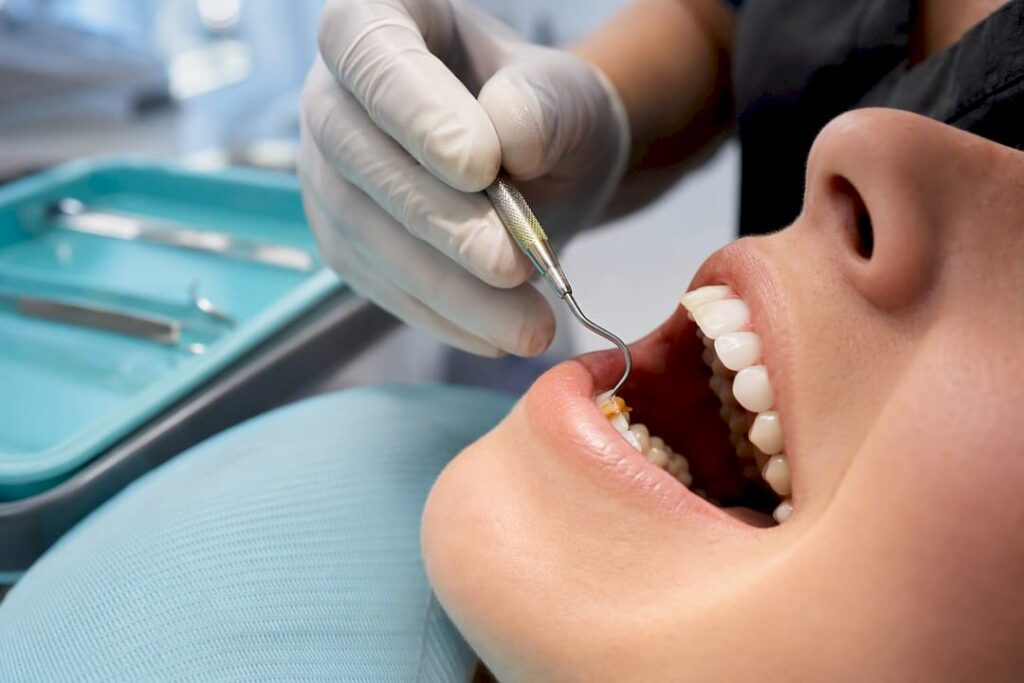
Left untreated, a trapped hull can trigger a periodontal abscess, a localized pocket of infection that forms when a foreign object blocks the gum pocket. Clinical guidance is consistent on this point: drainage and removal of the object are the actual fix. Antibiotics by themselves, without physically clearing the source, frequently fail to resolve it. A dentist will typically do a targeted retrieval of the hull, probe and scale the area to clear any lingering debris, drain the site if an abscess has formed, and take an X-ray if there’s any question about how deep it sits. Antibiotics or pain medication get prescribed only when the infection calls for them.
Aftercare and Prevention for Popcorn-Related Gum Issues
Once the hull is out, the gum still needs a day or two to calm down. Brush gently around the site, keep up the warm salt rinses three or four times a day, and hold off on crunchy or abrasive foods (chips, nuts, more popcorn) for 24 to 48 hours. An over-the-counter pain reliever like ibuprofen handles any lingering soreness fine.
Watch the difference between normal healing and a problem that needs follow-up:
- Normal: mild tenderness that fades day by day, slight pink tinge when rinsing the first day
- Not normal: swelling that grows, throbbing pain, or pus. Any of these means a follow-up visit, not more waiting
Prevention here is mostly about habits you can build without thinking twice:
- Chew slowly and check for unpopped kernels before your next handful
- Toss unpopped kernels rather than risking a bite
- Floss the same night you eat popcorn, not the next time you remember
- Pick brands or batches with a lower rate of unpopped kernels when you have the choice
Pro Tip: Keep a spare floss pick in your bag or car during movie season. Most people skip the post-popcorn floss simply because they don’t have floss on hand, not because they forgot.
What Actually Happens at a Dental Visit for a Stuck Kernel
A dentist’s process for a stubborn hull is quick and far less invasive than most patients expect. The visit typically includes an exam of the gumline to locate the exact spot, targeted retrieval with proper instruments rather than guesswork, drainage if an abscess has already formed, and antibiotics only when there’s active infection. Follow-up is usually brief since the underlying tissue heals fast once the cause is gone.
Some dental practices handle this exact situation regularly, and same-day care matters when a hull has been in for more than a day or symptoms are climbing. A few practical points worth knowing before you call:
- Some dental offices offer same-day emergency exams for cases like a lodged hull or early abscess signs
- An emergency dental exam is priced at $49, which keeps urgent evaluation affordable rather than something people put off
- If the situation has already progressed to a deeper infection, the practice can move straight into treatment planning, including tooth extraction or root canal therapy in the rare cases where infection reaches the pulp
Why Most Popcorn-Gum Advice Gets the Urgency Backwards
Most advice on this topic either overstates the danger of a stuck hull or underplays it, and both mistakes cause real harm. Telling someone to “just leave it, saliva will wash it out eventually” ignores the basic fact that a hull embedded in the sulcus does not dissolve. It sits there provoking the tissue until someone removes it or an abscess forms around it. On the other end, panic advice that pushes people toward digging with a pin or a fingernail causes more injuries than the kernel ever would on its own.
The advice that actually holds up is boring: floss correctly, rinse with salt water, and give it 24 to 48 hours to see whether it clears or gets worse. What gets underrated is how much that short waiting window matters. It’s not about ignoring the problem. It’s a defined checkpoint that tells you whether this is a five-minute fix or something a dentist needs to see. Readers who treat every red flag, swelling, fever, pus, as an immediate signal instead of a vague “maybe I should worry” tend to get treated faster and with less damage done by the time they’re seen.
— Admin
Get Same-Day Relief for a Stuck Popcorn Kernel
If flossing and salt rinses haven’t cleared the hull after a day or two, waiting any longer only gives an infection more time to take hold. South Littleton Family Dental offers same-day exams for exactly this kind of situation, so you’re not stuck choosing between an urgent care visit and sitting on a growing problem until next week.

The practice runs a $49 emergency exam for cases like a lodged popcorn hull, early abscess signs, or gum pain that isn’t settling down. If removal has already turned into something bigger, like a deeper infection or a cracked tooth from biting down on an unpopped kernel, the same visit can move into a full treatment plan without starting over somewhere else. Call or book an emergency exam and X-ray at the Littleton, CO office today, and get the hull out properly instead of guessing at home for another night.
This article is general information, not a substitute for advice from a qualified doctor. Consult a qualified healthcare professional about your own circumstances before acting on anything here.
Sources
- Periodontal Abscess – StatPearls (NCBI Bookshelf)
- Is popcorn bad for your teeth? — Colgate
- Flossing — MouthHealthy (ADA)
FAQ
Will a popcorn kernel eventually come out of my gum on its own?
No. Hulls do not reliably dissolve in saliva and tend to stay lodged until they’re physically removed through flossing, brushing, or professional retrieval.
How long can a popcorn hull stay stuck in my gums before it’s a problem?
If gentle home removal hasn’t worked within 24 to 48 hours, or symptoms like pain and swelling are getting worse, that’s the point to see a dentist rather than keep waiting.
Will a gum abscess from a stuck kernel eventually pop on its own?
It might drain on its own, but that doesn’t mean the underlying cause is gone. Clinical guidance is clear that the foreign object still needs to be removed, or the infection tends to come back.
Is it safe to use a toothpick to get a popcorn kernel out of my gums?
No. Toothpicks and fingernails are more likely to push the hull deeper or injure the gum than to remove it safely, according to Colgate’s dental guidance.
What’s the difference between a stuck hull and a cracked tooth from popcorn?
A stuck hull causes localized gum irritation you can usually floss out, while a cracked tooth from biting an unpopped kernel is a structural problem that needs a dentist regardless of how the gum feels.