
If you’re reading this two days after a tooth extraction with pain that’s getting worse instead of better, you may be dealing with dry socket (alveolar osteitis). The single most important step: call your dentist today. Don’t wait to see if it improves on its own. Harvard Health notes that dry socket is self-limiting but often severely painful, and professional care brings relief far faster than home management alone.
Immediate steps while you wait for your appointment:
-
Take an over-the-counter non-opioid analgesic. Ibuprofen (if you can tolerate NSAIDs) or acetaminophen, or both together at recommended doses, can take the edge off until you’re seen.
-
Keep the area clean without disturbing it. A gentle salt-water rinse helps, but use the drip method described below.
-
Watch for red flags that require emergency care: uncontrolled pain that OTC medications can’t touch, spreading facial swelling, fever above 100.4°F, or any difficulty swallowing or breathing. Those signs mean go now, not tomorrow.
Pro Tip: Mix 1 teaspoon of table salt into 8 ounces of warm water. Tilt your head to let the rinse flow over the socket by gravity. Let it drain out rather than spitting forcefully. Forceful spitting can dislodge what little healing tissue remains.
Key Takeaways
Dry socket treatment works best when you act within the first day or two of worsening pain: call your dentist, use the ibuprofen-plus-acetaminophen combination while you wait, and avoid any suction or tobacco until the socket is fully healed.
| Point | Details |
|---|---|
| Call your dentist promptly | Worsening pain on days 1–3 post-extraction is the key signal; same-day care shortens recovery. |
| Use the right analgesic combo | Alternating ibuprofen and acetaminophen provides effective pain control and is preferred over opioids for most patients. |
| Healing timeline with treatment | Most patients heal within 7–10 days after professional dressing and irrigation begin. |
| Avoid suction and tobacco | Straws, smoking, and forceful spitting are the most common causes of clot loss and delayed healing. |
| Southlittletonfamilydental | Offers $49 emergency exams and same-day dry socket care in Littleton, CO, with follow-up dressing changes included. |
Table of Contents
-
Signs of dry socket and the risk factors that raise your odds
-
Recovery timeline and how to prevent dry socket after future extractions
-
A note from Southlittletonfamilydental on getting care quickly
-
Southlittletonfamilydental can see you today for dry socket pain
What dry socket actually is and why it hurts so much
Dry socket occurs when the blood clot that normally forms over an extraction site is lost or fails to develop, leaving the underlying bone and nerve endings directly exposed to air, food, and bacteria. That exposure is the reason the pain is so intense and so different from ordinary post-extraction soreness.
Under normal circumstances, the clot acts as a biological bandage. It protects the bone, anchors the early healing tissue, and gives the socket a scaffold for new cells to grow across. When the clot dissolves or is dislodged, those nerve endings sit open to every temperature change and bacterial irritant in your mouth. The pain tends to radiate outward because the nerve pathways from the jaw connect to the ear, temple, eye, and neck.
Routine post-op soreness peaks in the first 24 hours and then gradually fades. Dry socket does the opposite: it gets worse around day two or three. That worsening trajectory is the clearest signal that something beyond normal healing is happening. A tooth infection, by contrast, usually comes with visible swelling, pus, and fever rather than the characteristic exposed-bone appearance and radiating nerve pain of dry socket.
Signs of dry socket and the risk factors that raise your odds
Recognizing the symptoms
According to the Mayo Clinic, dry socket typically begins 1–3 days after extraction with severe throbbing pain that can radiate to the ear, eye, temple, or neck. The full symptom picture:
-
Intense, throbbing pain starting 1–3 days after the extraction, noticeably worse than the first day
-
Pain that radiates to the ear, temple, eye, or neck on the same side
-
A bad taste or foul odor from the socket
-
A visibly empty socket with grayish-white exposed bone when you look in a mirror
-
Possible mild fever, though high fever points more toward infection
Without treatment, symptoms can persist for several weeks. With proper in-office care, most patients feel meaningful relief within days.
Who is most at risk
Some patients are significantly more likely to develop dry socket after an extraction. The evidence-backed risk factors include:
-
Smoking or tobacco use. Nicotine constricts blood vessels and reduces clot stability. The suction from inhaling also physically pulls at the clot.
-
Traumatic or complicated extractions. Impacted wisdom teeth that require surgical removal carry a higher rate of dry socket than simple single-rooted extractions.
-
Poor oral hygiene or preexisting infection. Bacteria already present in the mouth can interfere with normal clot formation.
-
Oral contraceptives. Estrogen-containing birth control can affect clotting factors and increase risk.
-
Prior history of dry socket. If it happened once, the same socket environment may make it more likely again.
When the clot fails, the exposed alveolar bone triggers an inflammatory response that sends pain signals along the inferior alveolar nerve. That nerve branches toward the ear and temple, which is why the pain feels like it’s spreading well beyond the extraction site.
How dentists diagnose dry socket
The diagnosis is almost entirely clinical. No lab test or imaging is required in most cases, though an X-ray may be ordered to rule out other causes of pain.
Here is what typically happens during the exam:
-
Visual inspection. The dentist looks directly at the socket. An absent or partially dissolved clot, visible gray-white bone, and foul odor are the defining signs.
-
Gentle probing. Light probing of the socket confirms exposed bone and helps assess the depth and extent of the problem. This step is deliberately gentle because aggressive probing worsens pain and can disturb healing tissue.
-
Pain history review. The clinician asks when the pain started, whether it is getting worse, and whether OTC analgesics have helped. Onset on day two or three with escalating severity is a strong diagnostic indicator.
-
Ruling out retained root fragments. A small piece of root left in the socket can cause similar pain. An X-ray distinguishes this from dry socket and guides the treatment approach.
-
Ruling out deep infection. Spreading swelling, lymph node tenderness, and fever suggest infection rather than, or in addition to, dry socket. If infection is suspected, the treatment plan changes.
Professional guidance from NCBI Bookshelf is clear on one point: clinicians avoid aggressive curettage of the socket floor. Scraping the bone does not accelerate healing and reliably makes the pain worse. The goal at this stage is gentle assessment, not surgical intervention.
In-office dry socket treatment options
Standard dry socket treatment follows a logical sequence: clean the socket gently, reduce pain immediately, and protect the site while it heals. Cleveland Clinic confirms that with proper in-office care, most patients heal within 7–10 days.
The core treatment steps
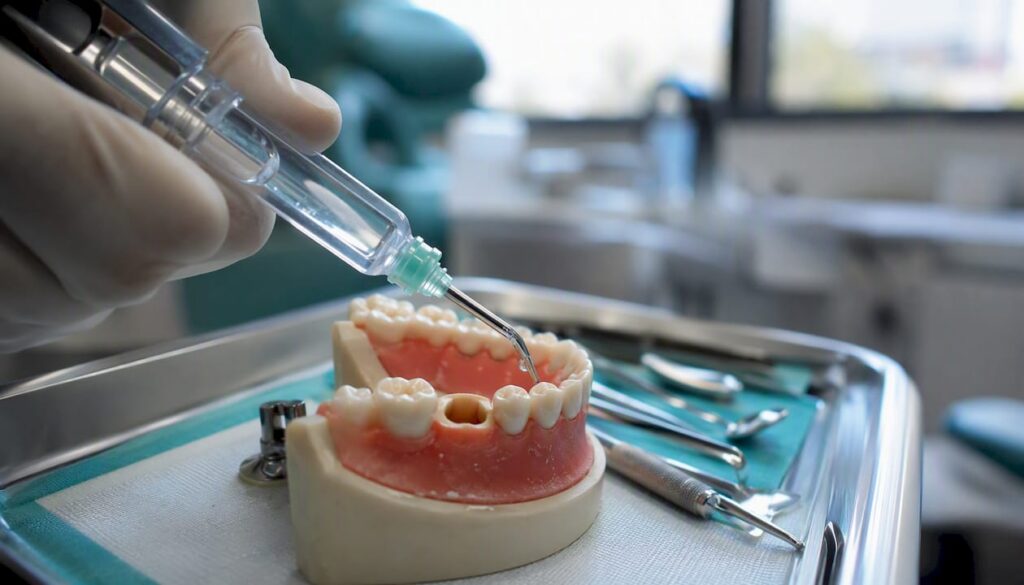
Irrigation. The dentist flushes the socket with saline or a dilute antiseptic solution to remove food debris and bacteria. This is done with a gentle syringe, not forceful pressure. The NCBI Bookshelf guidance specifically supports gentle saline irrigation over aggressive cleaning, noting it reduces pain and supports re-epithelialization without disturbing the socket floor.
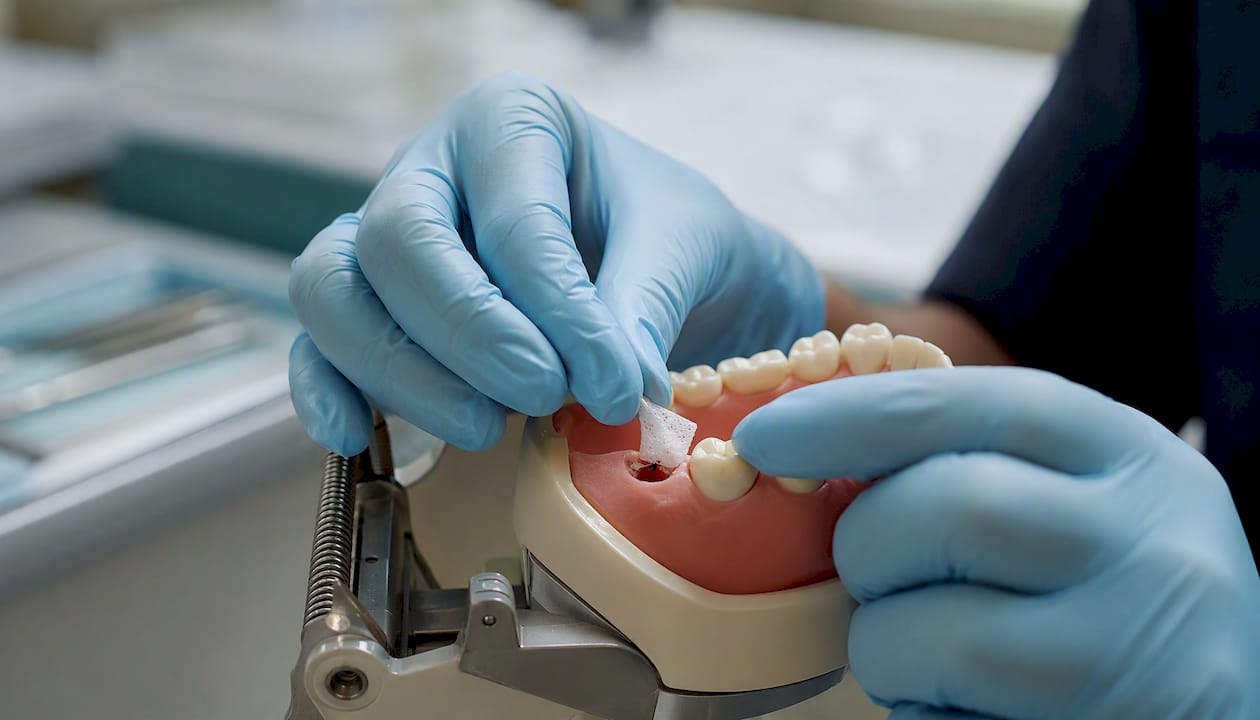
Medicated dressing placement. After irrigation, a medicated dressing is packed into the socket. These dressings typically contain eugenol (a natural anesthetic derived from clove oil) combined with iodoform or other antiseptic agents. The eugenol provides near-immediate pain relief by numbing the exposed nerve endings. A PMC clinical review describes the treatment goal as optimizing the socket environment so epithelial cells can migrate across the exposed bone. The dressing materials are chosen to wash out gradually over several days rather than requiring removal.
Topical or local anesthetic. For patients in severe pain, a topical anesthetic may be applied before irrigation, and a local anesthetic injection may be used to make dressing placement comfortable.
Scheduled dressing changes. Dressings are typically changed every 24–72 hours until pain resolves. Most patients need two to four visits.
Pain management
| Approach | What it involves | When it’s used |
|---|---|---|
| NSAID + acetaminophen combination | Ibuprofen plus acetaminophen at recommended doses at staggered intervals | First-line for most patients; evidence supports this over opioids for many |
| Topical anesthetic gel | Applied directly to the socket or dressing | Immediate relief during and after the office visit |
| Systemic opioids | Prescription opioids (e.g., hydrocodone) | Reserved for cases where NSAIDs are contraindicated or pain is uncontrolled |
| Antibiotics | Oral antibiotic course | Used when infection is suspected or the patient is immunocompromised |
Research from the University of Rochester Medical Center found that OTC pain relievers can outperform opioids for post-extraction pain in many patients. MedlinePlus confirms that antibiotics are reserved for suspected infection rather than used routinely for dry socket.
Pro Tip: Stagger your ibuprofen and acetaminophen rather than taking them at the same time. Taking ibuprofen, then acetaminophen three hours later, then ibuprofen three hours after that keeps a more consistent level of pain control throughout the day. Always follow the dosing instructions on the label and check with your dentist or pharmacist first.
What to expect at your dental visit for dry socket
Knowing what happens during the appointment makes it far less stressful. Here is the typical flow:
-
Triage and intake. The front desk will ask about your pain level, when it started, and what medications you’ve taken. Be specific: say “day three post-extraction, pain is 8/10, ibuprofen gave partial relief.”
-
Topical anesthetic application. Before any probing or irrigation, a topical gel is applied to the gum tissue around the socket to reduce sensitivity.
-
Local anesthetic injection (if needed). For severe cases, a local block is given so the irrigation and dressing placement are painless.
-
Irrigation. The socket is gently flushed with saline.
-
Medicated dressing placement. The dressing is packed carefully into the socket. Most patients feel relief within minutes to hours.
-
Post-procedure instructions. You’ll receive specific guidance on rinsing, eating, and when to return.
What to bring to your appointment:
-
Photo ID and insurance card
-
A list of all current medications, including any blood thinners or anticoagulants
-
A record of what pain medications you’ve taken and when
-
Someone to drive you if strong analgesics are likely to be prescribed
Follow-up visits for dressing changes are typically scheduled every one to three days. Each visit is short, usually 15–30 minutes. Pain should decrease noticeably after the first dressing and continue improving with each change.
Pro Tip: Eat a small, soft meal before your appointment. Arriving hungry makes pain feel more intense, and you may not be able to eat comfortably for a few hours after the dressing is placed.
How to care for the extraction site at home
Home care between office visits directly affects how quickly you heal. The goal is to keep the area clean without disturbing the dressing or any fragile new tissue.
Daily rinse routine
Use the salt-water recipe from the opening section: 1 teaspoon of table salt dissolved in 8 ounces of warm water. Rinse gently two to three times a day, particularly after meals. Always use the drip-not-spit method. For more detailed post-op guidance, a step-by-step extraction aftercare checklist can help you stay on track between visits.
What to avoid
-
Straws. The suction can pull the dressing out of the socket.
-
Smoking or vaping. Nicotine slows healing and the suction worsens the problem.
-
Forceful spitting or rinsing.
-
Vigorous exercise for the first 48–72 hours after each dressing change. Elevated blood pressure can increase bleeding and discomfort.
-
Touching the socket with your tongue or fingers.
What to eat
Stick to soft foods: yogurt, mashed potatoes, scrambled eggs, smoothies (no straw), soup (not scalding hot). Avoid anything crunchy, hard, or small-seeded that could lodge in the socket.
Pain control at home
Alternate ibuprofen and acetaminophen as described above. Use cold packs on the outside of your jaw for the first 24 hours (20 minutes on, 20 minutes off) to reduce inflammation. After the first day, warm compresses can help with muscle soreness from the jaw being held open during the procedure.
If your dentist provides a curved irrigating syringe for home use, fill it with the salt-water solution and gently flush the socket once daily, directing the tip just inside the opening without pressing against the walls. Never attempt to pack the socket yourself with gauze, cotton, or any over-the-counter substance. Home packing introduces bacteria and can make the pain significantly worse.
Recovery timeline and how to prevent dry socket after future extractions
What to expect, week by week
Dry socket follows a fairly predictable course once treatment begins. Pain onset is typically 1–3 days after extraction. After the first in-office dressing, most patients notice meaningful improvement within 24–48 hours. Cleveland Clinic’s guidance puts full mucosal healing at commonly 7–10 days after treatment begins, though the bone underneath takes longer to fully remodel.
Without treatment, symptoms can drag on for several weeks. That gap between “treated” and “untreated” timelines is the clearest argument for calling your dentist promptly rather than hoping it resolves on its own.
Prevention checklist for future extractions
Following your dentist’s post-extraction instructions carefully is the single most effective prevention strategy. Beyond that:
-
Avoid all tobacco for at least 48–72 hours after extraction, and ideally longer.
-
Do not use straws for at least a week.
-
Do not rinse vigorously on the day of extraction. Gentle rinsing can begin the following day.
-
Ask your dentist about a pre- or post-operative chlorhexidine rinse if you have a history of dry socket or poor oral hygiene.
-
If you take oral contraceptives, discuss timing with your dentist. Some clinicians prefer to schedule elective extractions during the low-estrogen phase of the cycle when possible.
-
Disclose any preexisting infection in the area before extraction so your dentist can treat it first or prescribe prophylactic antibiotics if appropriate.
For patients at high risk, some clinicians place a medicated packing material in the socket at the time of extraction as a preventive measure. This is a case-by-case clinical decision, not a routine step.
When to call your dentist or go to the emergency room
Most dry socket cases are managed in a dental office, not an emergency room. But certain signs mean you should not wait for a regular appointment.
Call your dentist immediately or go to an emergency dental office if:
-
Pain is not controlled by the maximum recommended doses of ibuprofen and acetaminophen together
-
Swelling is spreading to your cheek, neck, or under your jaw
-
You develop a fever above 100.4°F
-
You notice pus or a foul discharge from the socket
-
You have difficulty swallowing, opening your mouth, or breathing
Go to an emergency department if:
-
You cannot reach a dentist and have spreading swelling with fever
-
You have any signs of airway compromise (difficulty breathing or swallowing)
-
You are unable to tolerate any liquids due to pain or swelling
When you call your dental office, tell them: the date of your extraction, your current pain level on a 1–10 scale, whether you have a fever, what medications you’ve taken, and whether swelling is spreading. That information helps the team triage you correctly and have the right materials ready.
Pro Tip: Save your oral surgeon’s or dentist’s after-hours number in your phone before you leave the extraction appointment. Most practices have an on-call line for exactly this situation, and reaching them at 9 PM is far better than waiting until morning with uncontrolled pain.
Common myths and the mistakes that make dry socket worse
A few widely shared home remedies actively delay healing. Here is what to stop doing:
-
Don’t dig at the socket. Using a toothpick, cotton swab, or your finger to probe or “clean” the socket exposes more bone and introduces bacteria. It will make the pain worse, not better.
-
Don’t pack it yourself. Over-the-counter clove oil on a cotton ball sounds reasonable because eugenol (clove oil’s active compound) is what dentists use in medicated dressings. The problem is concentration and sterility. Undiluted clove oil can chemically burn the gum tissue, and unsterile cotton introduces bacteria directly to exposed bone.
-
Don’t use a straw “just once.” A single strong pull is enough to dislodge a dressing or disrupt fragile healing tissue. It is not worth it.
-
Don’t smoke “just one.” Nicotine and the suction mechanics of smoking are two separate problems. Both apply even to a single cigarette.
-
Don’t skip the follow-up. Feeling slightly better after the first dressing does not mean the socket is healed. Stopping dressing changes early is one of the most common reasons pain returns.
The Mayo Clinic’s prevention guidance is consistent: avoid suction, avoid tobacco, and follow post-op instructions. Those three rules cover the majority of avoidable dry socket cases and apply equally to preventing recurrence.
A note from Southlittletonfamilydental on getting care quickly
Dry socket is one of the most painful things a patient can experience after a routine dental procedure, and the frustrating part is that it often hits hardest on a weekend or late in the evening. What we see consistently in our practice is that patients who come in early, within the first day or two of worsening pain, respond faster and need fewer dressing changes than those who wait several days hoping it will turn around.
Same-day emergency visits at Southlittletonfamilydental are designed for exactly this situation. We can irrigate the socket, place a medicated dressing, and get you comfortable in a single appointment. Our approach to pain management leans on the NSAID-plus-acetaminophen protocol supported by current clinical evidence, and we reserve opioid prescriptions for cases where that combination genuinely isn’t enough. Follow-up dressing changes are scheduled around your availability, and we walk every patient through the home-care steps before they leave so there’s no guessing about what to do between visits.
Southlittletonfamilydental can see you today for dry socket pain
Severe post-extraction pain that is getting worse on day two or three is not something to manage alone with home remedies. Southlittletonfamilydental offers same-day emergency dental care in Littleton, CO, with a $49 emergency exam for new patients, so cost is not a reason to delay getting seen.
At your visit, the team will irrigate the socket, place a medicated dressing for immediate relief, and give you a clear follow-up schedule. You’ll leave with specific home-care instructions and a direct line for questions between appointments. For patients who need ongoing care after the socket heals, Southlittletonfamilydental also handles socket preservation and bone grafting for patients planning implants down the road.
Call the office or book online at Southlittletonfamilydental to get seen today.
Sources
The clinical guidance in this article draws on the following authoritative sources. Each is worth reading if you want more detail on a specific aspect of dry socket.
-
Dry Socket Etiology, Diagnosis, and Clinical Treatment Techniques – PMC
-
Postextraction alveolitis (dry socket) – NCBI Bookshelf (MSD Manual / professional guidance)
For advice specific to your health history, always follow up with your dentist or oral surgeon. These sources provide general clinical guidance, not a substitute for personalized professional care.