
Wisdom tooth pain usually comes from a back molar that is erupting, only partly through the gum, or trapped against the bone or the tooth in front of it. A dull ache that comes and goes for a day or two can be a tooth shifting. Pain that is constant, throbbing, or paired with swelling, fever or trouble opening your mouth means something more is going on, and it needs a dentist rather than another night of waiting it out.
This guide explains what causes the pain, what you can safely do at home, which warning signs should send you to a dentist the same day, and what treatment looks like once you get there.
TL;DR
- Wisdom tooth pain most often comes from an erupting or impacted third molar, or from an inflamed flap of gum over it (pericoronitis).
- Warm salt water rinses, careful cleaning and an over-the-counter anti-inflammatory such as ibuprofen can calm mild pain short term. They do not fix the cause.
- See a dentist if pain lasts longer than a day or two, or comes with fever, earache, swelling or pain on opening wide.
- Trouble breathing or swallowing, or swelling that spreads, is an emergency: go to an emergency room.
- Repeated flare-ups usually end with removal of the tooth, because medication only masks the problem.
Table of Contents
- Why wisdom teeth hurt
- Is it normal pain or a problem?
- What helps at home, and what does not
- When wisdom tooth pain is an emergency
- What a dentist will do
- When removal makes sense
- Recovery after extraction
- Our perspective on wisdom tooth pain
- Get seen in Littleton
- FAQ
- Sources
Why wisdom teeth hurt
Wisdom teeth are the third molars, and they arrive last, typically in the late teens or twenties. Many mouths simply do not have room for them. A tooth that cannot break through the gum, or emerges only partly, is called impacted, and MedlinePlus notes this happens most often with the wisdom teeth.
The pain behind them tends to fall into a few patterns.
A tooth that is erupting
As a molar pushes through the gum, you may feel pressure at the very back of your jaw, tenderness when you chew, and a sore patch of gum. This kind of pain is usually dull, mild and temporary. Eruption pain on its own does not need treatment beyond gentle care.
Pericoronitis: an inflamed gum flap
When a wisdom tooth is only partly through, a flap of gum can cover part of the crown. Food and bacteria collect under it, and the tissue becomes inflamed. A 2021 review of pericoronitis management describes the classic signs of inflammation: pain, redness, swelling, heat and loss of function, with pain that begins locally in the soft tissue around the erupting tooth.
If you searched for pericoronitis symptoms, here is what to look for:
- A sore, red, swollen gum behind your last molar
- Throbbing pain that may spread toward the ear, throat or jaw
- Bad breath or a bad taste, sometimes from pus under the flap
- Difficulty opening your mouth fully
- Swelling in the cheek or glands under the jaw, and sometimes fever
We go deeper on this in our guide to pericoronitis symptoms, jaw lock and urgent care.
An impacted tooth pressing on its neighbor
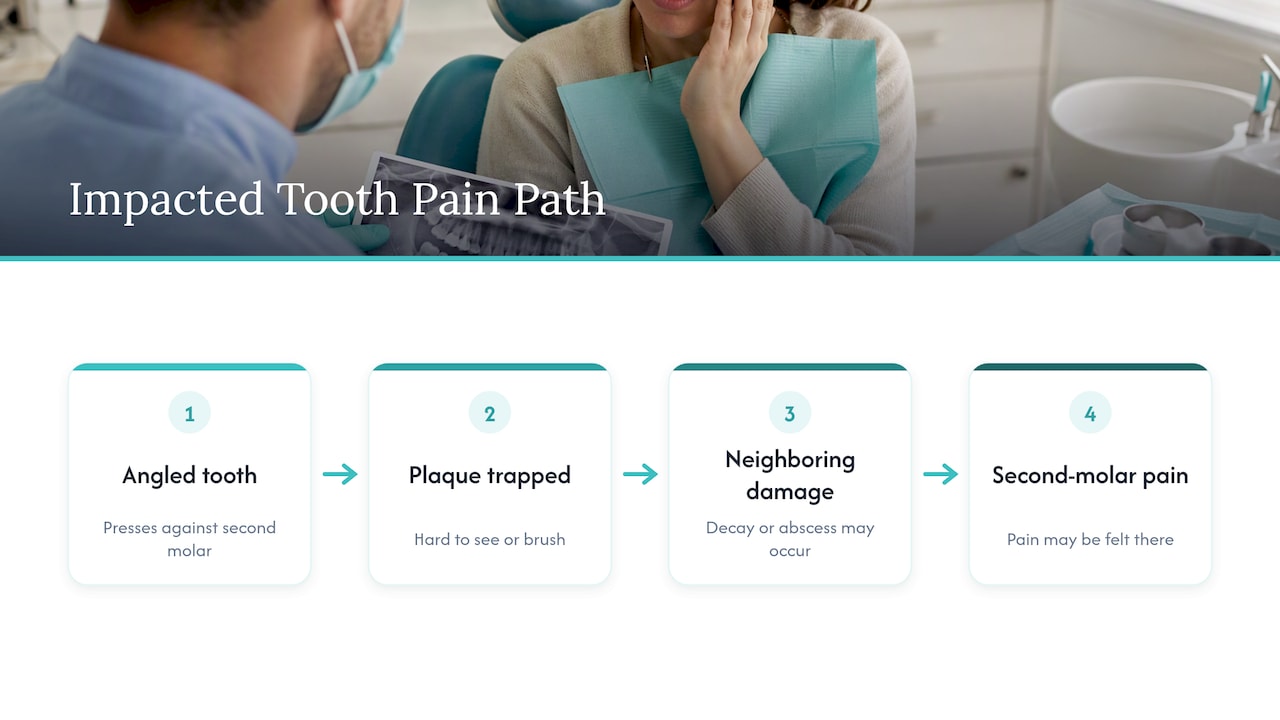
A wisdom tooth angled into the second molar can trap plaque and cause decay in the tooth next to it, often where you cannot see or brush. That is why some people feel pain in the second molar, not the wisdom tooth itself. The PMC review on erupting wisdom teeth points to damage to the adjacent second molar, such as decay or abscess, as one reason clinicians increasingly favor early removal of a repeatedly problematic wisdom tooth.
Decay, infection or a nerve problem
Wisdom teeth are hard to reach with a brush, so cavities are common. A cavity that reaches the nerve can cause sharp, lingering pain and may need a root canal or removal. Pain that radiates or feels electric can also involve nerves running near the molar, and upper wisdom teeth sit close to the sinus, which is why sinus pressure can mimic tooth pain.
Is it normal pain or a problem?
Use this as a rough sorting guide. It is not a diagnosis, and only an exam and an X-ray can tell what your tooth is doing.
| What you notice | What it often means | What to do |
|---|---|---|
| Mild, dull pressure at the back of the jaw that comes and goes | Tooth erupting or shifting | Gentle cleaning, salt water rinses; mention it at your next visit |
| Sore, red gum over a partly erupted tooth, bad taste | Early pericoronitis | Book a dentist visit within a day or two |
| Constant or throbbing pain, pain lasting more than 1 to 2 days | Infection, decay or impaction | Call a dentist now |
| Fever, earache, pain when opening wide | Spreading infection | Same-day dental care |
| Facial swelling, trouble swallowing or breathing | Dangerous spreading infection | Emergency room immediately |
MedlinePlus advises seeing a dentist if toothache comes with fever, earache or pain when you open your mouth wide, or if it lasts longer than a day or two, because these can point to an abscess or other infection.
What helps at home, and what does not
Home care can make a flare-up bearable while you wait for an appointment. It should not replace the appointment.
What to try
- Rinse with warm salt water after meals and before bed. It loosens debris under the gum flap and soothes irritated tissue. It helps symptoms but does not cure pericoronitis.
- Keep the area clean. Brush gently around the back molar with a soft brush. A small-tipped brush or gentle irrigation can reach the pocket where food hides.
- Use a cold compress on the outside of the cheek for 15 to 20 minutes at a time if the area is swollen or throbbing.
- Eat soft foods and chew on the opposite side so you do not keep bruising the sore gum.
Choosing a pain reliever
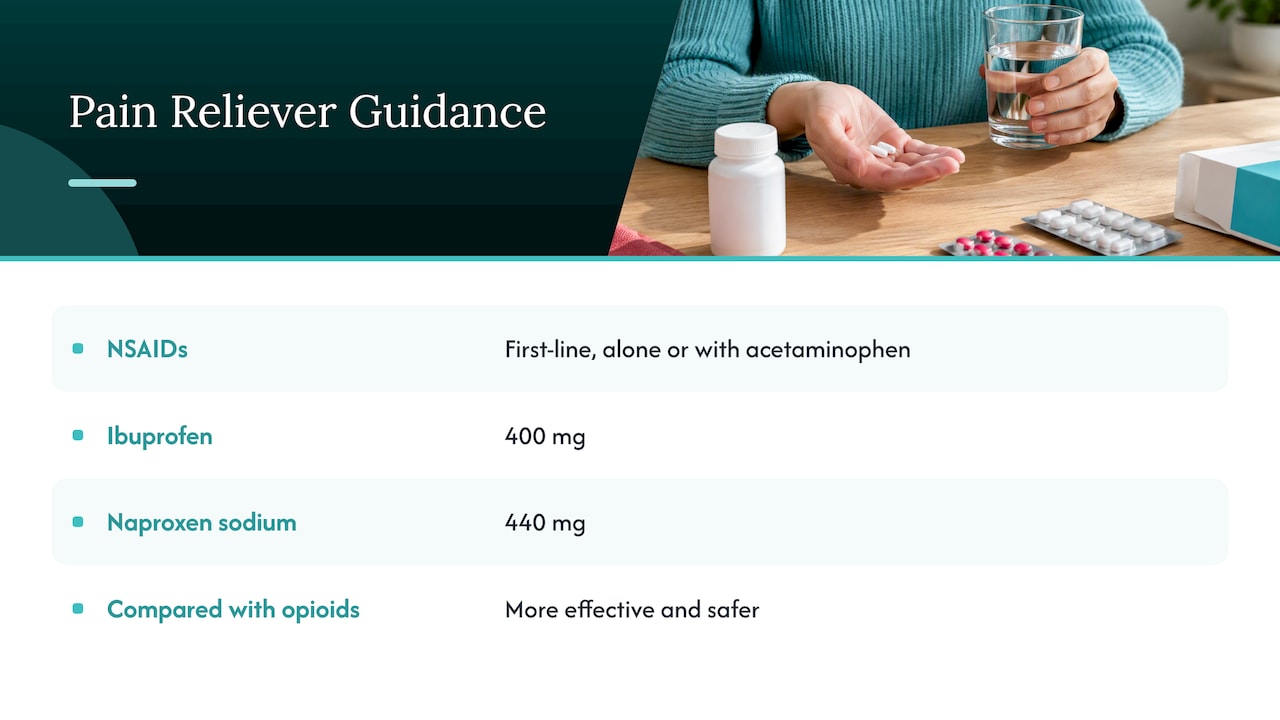
The American Dental Association’s 2024 guideline on acute dental pain recommends NSAIDs, such as 400 mg of ibuprofen or 440 mg of naproxen sodium, alone or combined with acetaminophen, as first-line therapy for adolescents and adults. It found them more effective and safer than opioids, based on a body of randomized trials. Follow the label dose, take pills with water, and check with your dentist or pharmacist first if you have stomach ulcers, kidney disease, take blood thinners, or are pregnant.
The same guideline stresses reviewing your medical history and current medications before choosing a drug. Keeping a written medication list for your family makes that conversation quicker and helps you avoid doubling up on the same ingredient.
What to avoid
- Never place a tablet against the gum. The PMC review notes that holding analgesic tablets next to the sore gum can burn and damage the tissue. Swallow pills.
- Do not expect antibiotics to be the fix. Research on pericoronitis shows it is mainly treated with local care such as hygiene, irrigation and possibly extraction. Antibiotics are kept for severe cases with fever, trismus (restricted jaw opening) or spreading infection. Taking leftover antibiotics on your own is not a safe plan.
- Do not ignore it because it eased. Pain that fades after a few days can return, often worse, because the cause is still there.
When wisdom tooth pain is an emergency
Most wisdom tooth pain is urgent but not life-threatening. Some is not. The PMC review describes acute spreading infections that make breathing or swallowing difficult, or press on the airway, as true medical emergencies needing immediate referral to an oral and maxillofacial surgeon rather than a routine appointment.
Go to an emergency room or call 911 if you have:
- Difficulty breathing or swallowing
- Swelling that spreads to the neck, under the jaw or toward the eye
- A jaw that will barely open, combined with fever and feeling very unwell
Call a dentist the same day if you have a fever, a bad taste with a swollen gum, pain that keeps you awake, or a visible pimple-like bump on the gum. Our dental abscess symptoms guide lists the signs of a deeper infection.
What a dentist will do
Expect a short, focused visit when you come in with pain.
- Questions. When the pain started, what makes it better or worse, and any fever or swelling.
- Exam and X-ray. A dentist checks the gum, the tooth, the neighboring molar and your bite, and takes an image to see how the tooth sits in the bone.
- Cleaning and irrigation. If a gum flap is inflamed, the area is cleaned out and flushed to remove trapped debris. Often this brings quick relief.
- A plan. Depending on findings, this might be monitoring, treating a cavity, a root canal for a damaged nerve, or removing the tooth.
Antibiotics are used only when there are signs of spread, such as fever or swelling beyond the gum, in line with the ADA’s guidance on antibiotics for dental pain and swelling, which covers urgent management of tooth-related pain and swelling.
When removal makes sense
Not every wisdom tooth has to come out. A tooth that is fully erupted, healthy and easy to clean can stay. The case for removal gets stronger when you have repeated infections, decay you cannot treat, damage to the next tooth, or an impacted tooth that keeps causing pain. A systematic review of extraction indications for symptomatic impacted third molars looked at the evidence on when removal is justified, and the PMC review above notes that relying on painkillers or antibiotics alone is palliative at best for chronic recurrent pericoronitis.
If you have had three flare-ups in a year and each time you have rinsed, medicated and hoped, the pattern is the answer. Taking the tooth out ends the cycle.
Recovery after extraction
After a tooth is removed, the socket typically takes 1 to 2 weeks to heal, though the surrounding bone and tissue can take longer. Some soreness is expected. The ADA-based guidance emphasizes that the goal is manageable discomfort with non-opioid medication, not zero pain.
A few habits protect the blood clot that fills the socket:
- Skip straws, smoking and vigorous spitting for the first days.
- Stick to soft, cool foods at first.
- Rinse gently with salt water once your dentist says it is fine.
- Keep taking the pain reliever your dentist recommended on schedule rather than waiting for the pain to peak.
Watch for signs that need a call: persistent fever, pus, heavy bleeding, or pain that gets worse around day two or three, which can signal a lost clot. We explain those signals in our dry socket warning signs guide. MedlinePlus lists the same warning signs of fever, pus, excess bleeding and loss of the clot.
If an extraction is followed by an implant or bridge, preserving the bone matters. Ask about bone grafting and socket preservation at the time of removal, since it is easier to plan that before the socket heals.
Our perspective on wisdom tooth pain
Most people who call us about a wisdom tooth have already waited longer than they wanted to. Some are afraid of the dentist, some are worried about cost, and some hope the pain will just stop. We understand all three, and we would rather see you early than late.
Our approach is built on three things. First, same-day availability for emergencies, so a swollen, aching tooth does not turn into a weekend in the emergency room. Second, an individualized plan: your age, health, medications and how anxious you are about treatment all shape what we recommend. Third, clear explanations. We show you the X-ray, tell you what is causing the pain, and lay out the options, including the option to watch a tooth that is not causing harm.
We lean toward definitive care over repeated stopgaps. A rinse and an ibuprofen can get you through a bad night, but if the tooth is the problem, the tooth is the problem. When removal is the right call, we aim to make it as comfortable as we can and to explain every step of aftercare before you leave.
— Admin
Get seen in Littleton
If you are in South Littleton, CO with a painful wisdom tooth, our same-day emergency dentistry is meant for exactly this. We offer exams, X-rays, tooth extractions, root canal therapy and oral surgery for the whole family, with care plans tailored to each patient. You can also see the full list on our home page and call to book.
FAQ
How long does wisdom tooth pain last?
Pain from a tooth that is simply erupting can come and go over days to weeks. Pain that lasts more than a day or two, or that returns repeatedly, points to a problem such as infection or impaction and should be examined. Waiting rarely makes it better.
Can wisdom tooth pain go away on its own?
Mild eruption pain can settle by itself. Pain caused by pericoronitis or an impacted tooth often eases for a while and then flares again, because the cause remains. A dentist can tell you which kind you have.
What is the best pain reliever for wisdom tooth pain?
The ADA’s 2024 guideline recommends an NSAID such as ibuprofen or naproxen, alone or with acetaminophen, over opioids for acute dental pain. Whether that is safe for you depends on your health history and other medications, so check with your dentist or pharmacist if you are unsure.
Do I need antibiotics for a painful wisdom tooth?
Usually not. Pericoronitis is mainly treated with cleaning, irrigation and sometimes removal of the tooth. Antibiotics are reserved for cases with fever, limited jaw opening or spreading infection.
When should I go to the emergency room instead of the dentist?
Go straight to the emergency room if you have trouble breathing or swallowing, or if swelling is spreading to your neck or around your eye. For fever, a swollen gum or severe pain without those signs, call a dentist for same-day care.
Sources
- Impacted tooth, MedlinePlus
- Toothaches, MedlinePlus
- Tooth extraction, MedlinePlus
- Problems with erupting wisdom teeth: signs, symptoms, and management, PMC
- A Review of Evidence-Based Recommendations for Pericoronitis Management, PMC
- Indications of the extraction of symptomatic impacted third molars, PMC
- Clinical practice guideline for pharmacologic management of acute dental pain, JADA
- Dental infection antibiotics guidelines for pain and swelling, American Dental Association