
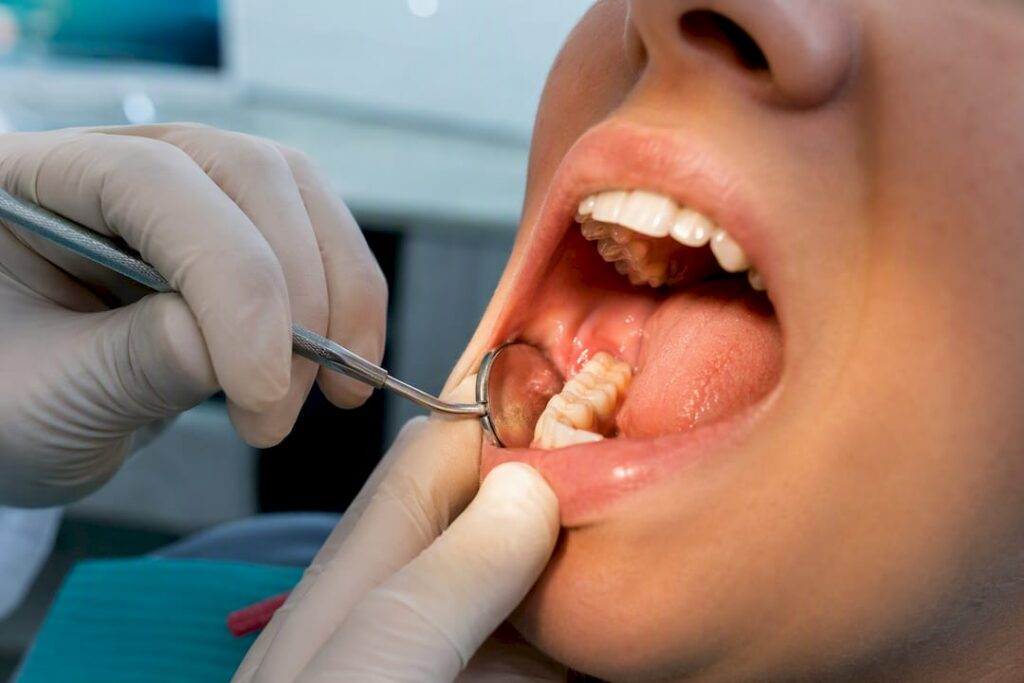
Pericoronitis is inflammation of the gum tissue around a partially erupted tooth, frequently a lower wisdom tooth. The classic symptoms are localized pain, a swollen or tender gum flap, pus, and a foul taste or bad breath. If you also have spreading facial swelling, trouble breathing or swallowing, a high fever, or you can barely open your mouth, that’s not a wait-and-see situation. Get to a dentist or emergency room the same day.
TL;DR:
- Most cases of pericoronitis involve the gum flap covering a partially erupted wisdom tooth, often leading to bacterial buildup and inflammation.
- Acute pericoronitis causes sharp pain, swelling, pus, fever, and difficulty opening the jaw, requiring prompt emergency care if symptoms worsen or spread.
- Diagnostic assessment is primarily clinical, with imaging reserved for persistent or severe cases to evaluate tooth positioning and rule out other infections.
- Short-term relief involves professional cleaning, saltwater rinses, and NSAIDs, but definitive treatment often requires removal of the gum flap or tooth extraction.
- Early emergency intervention, including same-day exams and X-rays, reduces pain duration and prevents infection spread in severe flare-up cases.
Table of Contents
- What Is Pericoronitis, and Why Does It Flare Up?
- What Symptoms Should You Watch For?
- How Fast Can Symptoms Get Worse, and What Are the Red Flags?
- What Causes Pericoronitis in the First Place?
- How Do Dentists Diagnose Pericoronitis?
- How Is Pericoronitis Treated, and What Actually Relieves the Pain?
- Why Chasing Temporary Fixes Usually Backfires
- Same-Day Relief When a Wisdom Tooth Flares Up
- Sources
- FAQ
What Is Pericoronitis, and Why Does It Flare Up?
The gum flap covering a tooth that hasn’t fully broken through the surface is called the operculum, and it’s the root of almost every pericoronitis case. Lower third molars, better known as wisdom teeth, get stuck under this flap more than any other tooth because they’re the last to erupt and often don’t have room to come in straight.
Dentists split pericoronitis into two patterns. Acute pericoronitis hits fast and hard, with sharp localized pain and swelling that can spike within a day or two. Chronic pericoronitis is the slow burn: a dull, recurring ache and bad breath that flares occasionally, then quiets down. Most cases get diagnosed by a straightforward look and feel exam. Imaging enters the picture only when symptoms stick around or look severe enough to warrant a closer look at how the tooth is positioned.
What Symptoms Should You Watch For?
Pericoronitis symptoms fall into two buckets depending on whether you’re dealing with an acute flare or a chronic, low-grade version. Knowing which one you have shapes how fast you need to act.
Acute pericoronitis symptoms usually include:
- Sharp, throbbing pain around the back molar area, often worse when biting down
- Visible swelling of the gum tissue, sometimes extending to the cheek
- Pus or cloudy discharge from around the gum flap
- Fever
- Trismus, meaning you physically can’t open your jaw all the way
- Dysphagia, or pain and difficulty swallowing
- Swollen, tender lymph nodes under the jaw
- A persistent bad taste or noticeable bad breath
Chronic pericoronitis symptoms tend to be milder:
- An intermittent, dull ache that comes and goes over weeks or months
- Ongoing bad breath or a lingering bad taste, even between flare-ups
- Occasional mild gum swelling that never fully resolves
One pattern trips people up: the pain rarely stays put. It often radiates toward the ear, the jaw joint, or the throat, and it gets noticeably worse with chewing because pressure on the inflamed flap is exactly what irritates it. The medical literature on pericoronitis also notes that symptoms fluctuate. A gum that looks calm on Monday can be swollen and draining pus by Wednesday, especially after a stretch of poor sleep, stress, or a cold that lowers your resistance.
Quick gut check: if the pain is confined to one spot, worsens with chewing, and comes with a bad taste, that’s a strong signal for pericoronitis rather than a cavity or sinus issue.
How Fast Can Symptoms Get Worse, and What Are the Red Flags?
Pericoronitis usually starts as a small, localized problem, but it doesn’t always stay that way. Bacteria trapped under the operculum can push into surrounding tissue, and once that happens, trismus and dysphagia are your body telling you the infection has moved beyond the gum flap into deeper structures. That’s a meaningfully different situation than a sore spot you can rinse and monitor.
Here’s how to tell when it’s time to stop treating this at home:
- Facial swelling that’s spreading rather than staying confined to one area near the tooth
- Any difficulty breathing or swallowing, even mild
- A high fever that doesn’t respond to over-the-counter medication
- Jaw stiffness that’s getting worse by the hour, not better
- A change in your voice, which can signal the airway is being affected
Advanced signs like these can indicate the infection has spread toward deep neck spaces, and that requires prompt intervention, not a few more days of ibuprofen.
Pro Tip: Don’t poke or squeeze the gum flap trying to “pop” the swelling. That pressure can push bacteria deeper. Warm saltwater rinses, done gently, are the safer stopgap while you get to a dentist.

What Causes Pericoronitis in the First Place?
The mechanics are simple: food and plaque get trapped underneath the operculum, and because that flap makes the area nearly impossible to brush or floss properly, bacteria set up shop and inflammation follows.
A few factors raise your odds of dealing with this:
- Tooth angle and position. Teeth that erupt at an angle rather than straight up, sometimes described using radiographic classification systems like Pell and Gregory, trap more debris and see more pericoronitis.
- Age. Most cases show up in the late teens and twenties, right when wisdom teeth are trying to erupt.
- Oral hygiene habits. Inconsistent brushing and flossing around the back molars gives bacteria more time to build up.
Some cases resolve entirely once the tooth finishes erupting into a normal, cleanable position. Others don’t, usually because the tooth is angled in a way that means it’s never going to erupt properly, no matter how much time passes.
How Do Dentists Diagnose Pericoronitis?
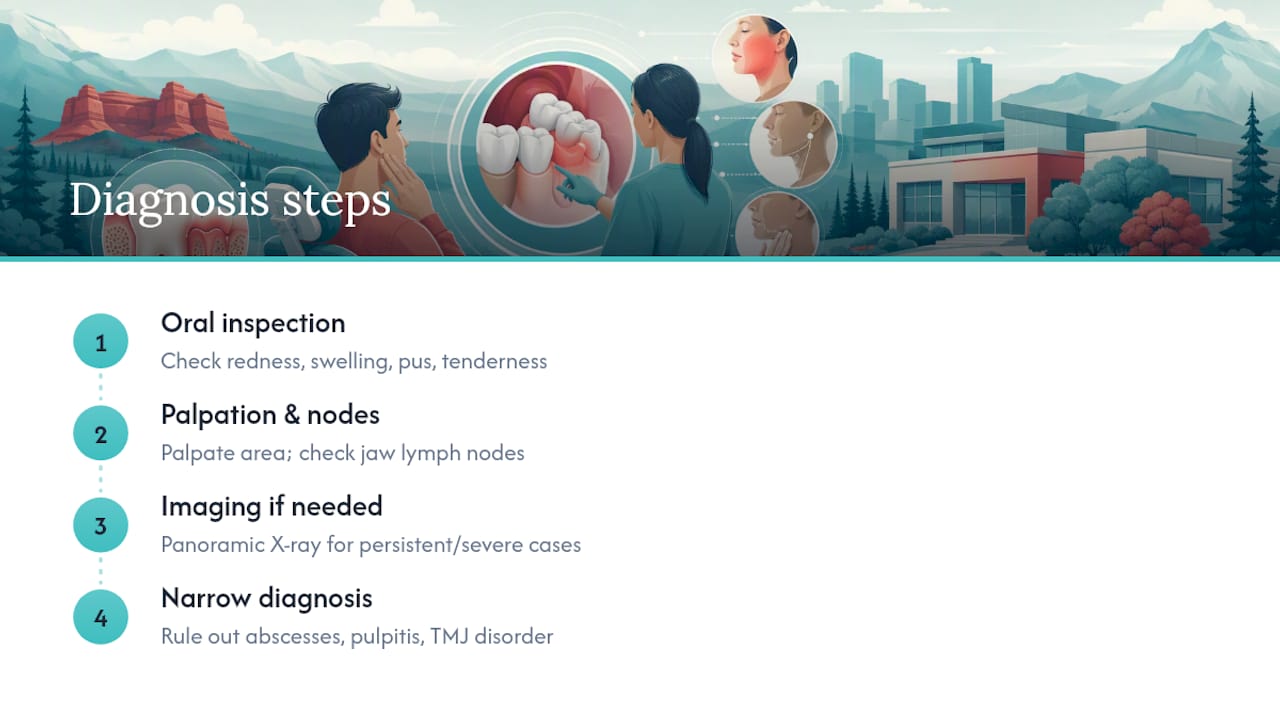
Diagnosis starts with a direct look inside the mouth. Dentists check for redness, swelling, pus, and tenderness around the gum flap, and they’ll usually palpate the area and check the lymph nodes on one side of the jaw for swelling. Most cases are diagnosed this way without any imaging at all.
An X-ray, typically a panoramic image, gets ordered when symptoms are persistent, severe, or when the dentist needs to see exactly how the tooth sits relative to the jawbone and neighboring teeth before planning treatment. Tools like digital imaging make this step quick and low-dose.
Part of the exam is ruling out other things that mimic pericoronitis: a periapical abscess from a dying nerve, simple pulpitis, a periodontal abscess, a peritonsillar abscess, or even a TMJ disorder. Each has a slightly different pain pattern, and the dentist’s job is narrowing it down before deciding on treatment.
How Is Pericoronitis Treated, and What Actually Relieves the Pain?
Short-term relief and long-term resolution are two different things, and mixing them up is how people end up cycling through repeat flare-ups.
For pain relief and short-term control, dentists typically start with:
- Professional irrigation and cleaning under the gum flap to physically remove trapped debris
- Warm saltwater rinses at home, several times a day
- NSAIDs like ibuprofen to manage pain and reduce inflammation
Antibiotics are generally reserved for cases with evidence of spreading infection or systemic signs such as fever or swollen lymph nodes. Routine antibiotic prescribing for every mild case is something clinicians increasingly try to avoid, partly because there’s no single agreed standard of care for acute pericoronitis, and overuse contributes to resistance without fixing the underlying anatomical problem.
The definitive fix is one of two procedures: an operculectomy, which removes the offending gum flap, or extraction of the tooth itself when it’s clear it will never erupt into a position you can keep clean. Warm rinses and NSAIDs help in the short term, but lasting resolution usually means one of these procedures, sometimes with a referral to oral surgery for more complex extractions.
Pro Tip: If you’re heading to an emergency dental visit, expect an exam, possibly an X-ray, and a plan. That might mean antibiotics if there’s spread, or scheduling the definitive procedure within days rather than weeks.
Why Chasing Temporary Fixes Usually Backfires
Recurrent pericoronitis is rarely a mystery once you understand the anatomy. If the tooth’s position doesn’t allow it to erupt into a spot you can actually clean, the flap keeps trapping debris no matter how many rounds of rinsing or antibiotics you throw at it. Clinical guidance increasingly points toward definitive evaluation rather than repeat treatment of the same symptom.
There’s also a bigger pattern worth naming: repeated antibiotic-only management for a problem that’s fundamentally mechanical, not infectious in origin, is a quiet contributor to antibiotic overuse. Same-day emergency evaluation, done early, tends to shorten how long you’re in pain and lowers the odds of the infection spreading before anyone intervenes.
— Admin
Same-Day Relief When a Wisdom Tooth Flares Up
If you’re dealing with the kind of pain that radiates to your ear or a jaw you can barely open, you don’t have days to wait for a routine appointment. Some dental practices offer same-day emergency dental care in Littleton, CO, built specifically for situations like a sudden pericoronitis flare, not just for scheduled cleanings.

The visit includes an emergency exam and X-ray so the dentist can see exactly how your wisdom tooth is positioned before recommending next steps, whether that’s an extraction or a referral for oral surgery. Southlittletonfamilydental’s emergency dentistry service is designed around getting you seen and treated the same day the pain starts, not weeks later. If swelling, pus, or jaw stiffness has you searching for answers right now, consider contacting a dental office offering emergency dentistry services to get on the schedule promptly.
This article is general information, not a substitute for advice from a qualified doctor. Consult a qualified healthcare professional about your own circumstances before acting on anything here.
Sources
- Pericoronitis: Symptoms, Causes & Treatment
- StatPearls / Pericoronitis
- Pericoronitis review (PMC article)
FAQ
Does Pericoronitis Go Away on Its Own?
Mild, chronic pericoronitis can settle down temporarily once the trapped debris clears or the tooth shifts position slightly, but it typically comes back. Lasting resolution generally requires either the tooth fully erupting into a cleanable position or a dental procedure like an operculectomy or extraction.
What Is the Fastest Way to Relieve Pericoronitis Pain?
Warm saltwater rinses and NSAIDs like ibuprofen offer the fastest short-term relief you can manage at home. For real symptom control, professional irrigation and cleaning of the area at a dental visit works faster and more thoroughly than home care alone.
Is Pericoronitis a Dental Emergency?
It can be, depending on the symptoms. Spreading facial swelling, difficulty breathing or swallowing, a high fever, or a jaw you suddenly can’t open are signs that warrant immediate care, and Southlittletonfamilydental’s same-day emergency exam is built for exactly this kind of flare.
Why Does My Wisdom Tooth Hurt Under the Gum?
That pain usually comes from the operculum, the flap of gum tissue covering a wisdom tooth that hasn’t fully erupted, trapping food and bacteria underneath it. The result is localized inflammation that often radiates toward the ear or jaw and worsens when you chew.