
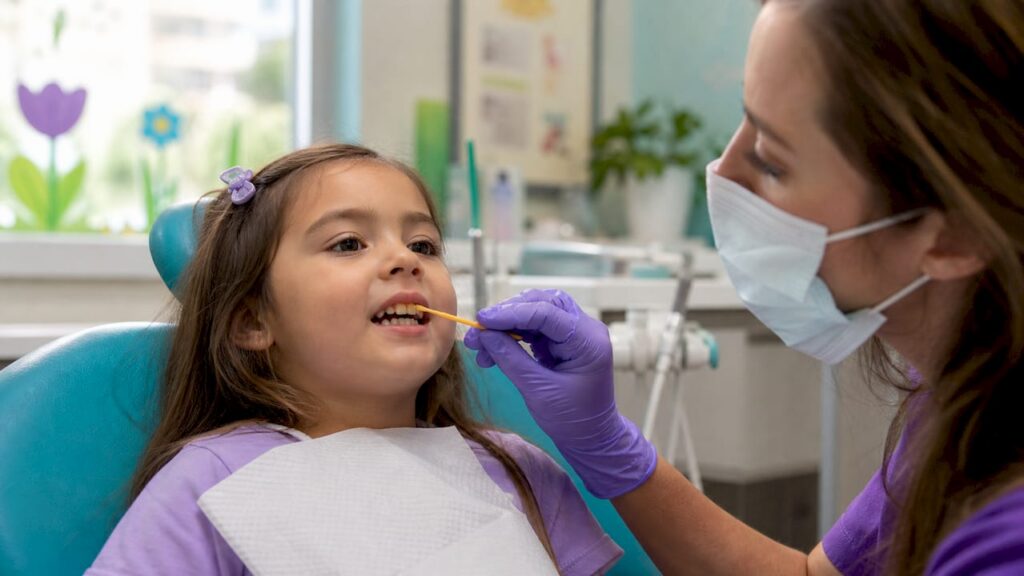
After fluoride varnish, you can eat and drink immediately, but stick to soft foods and cool or room-temperature drinks, skip brushing and flossing for at least 4–6 hours (or until the next morning for young children), and avoid hot beverages, crunchy or sticky foods, and alcohol-based mouthwash for several hours. The varnish sets fast on contact with saliva and will wear off naturally within several hours. According to Healthychildren, parents can feed their child right away — the key is choosing the right foods and giving the varnish time to work.
Quick aftercare checklist:
- Eat now: soft foods like yogurt, mashed potatoes, or a soft sandwich are fine immediately
- Drink now: room-temperature water or milk; avoid hot coffee, tea, or soup for at least 4 hours
- Wait to brush: hold off brushing and flossing for 4–6 hours; for toddlers and young children, wait until the next morning
- Skip alcohol mouthwash: avoid it for several hours — it speeds up varnish removal
- Varnish on lips or skin: wipe it off gently with a damp cloth; it is not harmful
- Call the office if: you notice hives, swelling, or difficulty breathing after application
Pro Tip: If the appointment runs late in the afternoon, skip the brushing window entirely and just wait until bedtime or the next morning. Trying to time a 4-hour window at 5 PM usually means brushing right before bed anyway.
Key Takeaways
Proper fluoride varnish aftercare protects contact time between fluoride and enamel, and following the timing rules for eating, brushing, and rinsing is what makes the treatment effective.
| Point | Details |
|---|---|
| Eat immediately, choose wisely | Soft foods and cool drinks are fine right away; avoid hot beverages and crunchy or sticky foods. |
| Wait 4–6 hours to brush | Hold off brushing and flossing until the varnish has had time to work; young children should wait until morning. |
| Skip alcohol mouthwash | Alcohol-based rinses accelerate varnish removal; avoid them for several hours after application. |
| Know when to call | Hives, facial swelling, or breathing difficulty require immediate emergency care; other concerns go to your dental office. |
| Southlittletonfamilydental | Offers fluoride varnish as part of routine preventive care in Littleton, CO, with a new patient special to get started. |
Table of Contents
- What can you eat and drink after fluoride varnish?
- When can you brush and floss after fluoride varnish?
- What does the varnish look and feel like?
- When should you call the dentist after fluoride varnish?
- Why aftercare matters and how often varnish should be applied
- A note from the clinic on what parents ask us most
- Ready to schedule your child’s next preventive visit?
- Sources
What can you eat and drink after fluoride varnish?
You can eat and drink right away — no waiting required. The catch is texture and temperature. Soft, non-abrasive foods let the varnish stay in contact with enamel longer, while crunchy or sticky foods can physically pull it off before it has done its job.
Safe choices right after the appointment:
- Yogurt, applesauce, pudding
- Mashed vegetables or mashed potatoes
- Soft bread or a plain sandwich
- Room-temperature water, milk, or a smoothie
- Scrambled eggs or soft-cooked oatmeal
Skip these for the first several hours:
- Hot coffee, tea, or soup (heat softens the varnish faster)
- Popcorn, chips, hard candy, or pretzels
- Sticky candy, gummy snacks, or caramel
- Alcohol-containing beverages, which can dissolve the varnish coating
For infants and toddlers, CHOC’s patient handout advises eating only soft food for at least two hours and avoiding hot drinks for several hours after application. If your child normally uses a bottle, try offering a cup instead right after the appointment, and avoid prolonged bottle use with juice or sweetened liquids regardless.
One thing parents sometimes miss: a child who spits after the appointment is fine. A child who swallows a small amount of varnish during application is also fine — the amount used is tiny. Persistent nausea after swallowing a larger amount is a different story; see the “when to call” section below.
Pro Tip: If your child asks for a snack the moment you leave the office, that is actually a good sign. Offer a pouch of applesauce or a soft banana in the car — it satisfies them without disturbing the varnish.
When can you brush and floss after fluoride varnish?
Wait at least 4–6 hours before brushing or flossing. For young children, most clinicians recommend waiting until the next morning. The Nevada Department of Public Health’s fluoride varnish protocol specifically recommends waiting until the next morning to brush for best results.
Why does timing matter? The varnish works by keeping a high concentration of fluoride in direct contact with enamel. Brushing too early physically removes that layer before the fluoride has fully absorbed. The longer it stays on, the more uptake occurs — so patience here has a real payoff.
When you do resume oral hygiene:
- Use a soft-bristled toothbrush and gentle pressure
- Normal fluoride toothpaste is fine; no need to switch products
- Any remaining varnish will brush off easily — you may notice a slight yellowish film on the bristles, which is normal
- Floss gently between teeth to clear any varnish that settled in the contacts
- Avoid alcohol-based mouthwash for several hours; according to manufacturer instructions for 5% sodium fluoride varnish, alcohol accelerates varnish dissolution and should be held off until the varnish has naturally worn away
Also worth noting: the same manufacturer guidance cautions against using other topical fluoride products on the same day as varnish application. If your child uses a prescription fluoride gel or rinse at home, skip it that evening and resume the next day.
What does the varnish look and feel like?
Expect the teeth to look slightly dull or have a faint yellowish tint right after application. This is completely normal. HealthyChildren.org confirms that varnish will appear dull or yellowish and that normal tooth shine returns after thorough brushing once the waiting period is over.
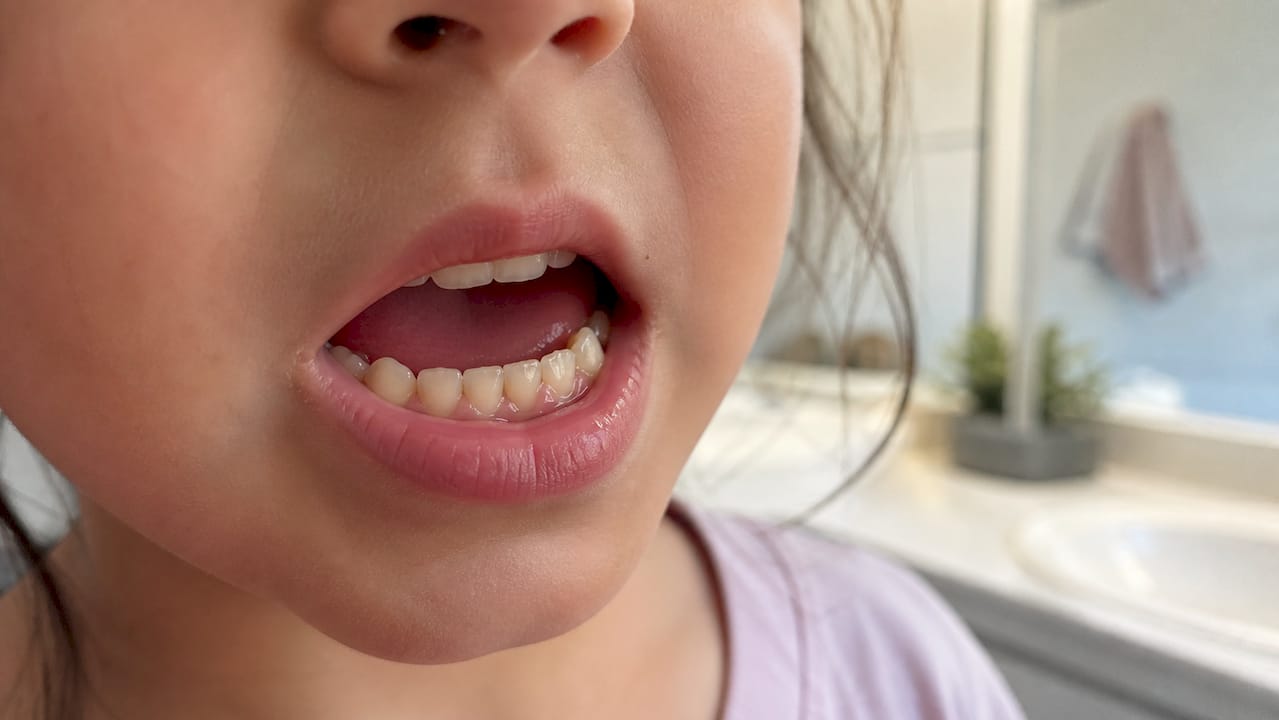
Most people notice a mild sticky or waxy feeling on the teeth. There is usually no pain. Some varnishes have a mild flavor (mint, bubblegum, or caramel are common), and the taste fades within an hour or so.
What is normal:
- Dull or slightly yellow appearance on tooth surfaces
- Sticky or waxy texture when running the tongue over teeth
- Mild taste that fades within an hour
- Small flakes of varnish coming off during eating — this is fine
What is not typical:
- Significant pain or sensitivity that develops after application
- Swelling of the gums, lips, or face
- Rash or hives anywhere on the body
Saliva and eating gradually soften and remove the varnish over 4–12 hours. For full-arch coverage in adults, leaving it on overnight is generally safe and often recommended by clinicians to maximize fluoride contact time.
Pro Tip: If varnish was applied to only a few teeth rather than the full arch, it may flake off a bit sooner. That is still effective — the fluoride has already been working since the moment it contacted saliva.
When should you call the dentist after fluoride varnish?
Most people leave the appointment without any issues. But a few situations do warrant a call.
Call the office immediately for:
- Signs of an allergic reaction: hives, swelling of the face, lips, or tongue, or difficulty breathing. This is rare but serious. Some varnishes contain rosin (colophonium), and patients with known resin allergies should flag this before application.
- Persistent nausea or vomiting after a child swallowed an unusually large amount of varnish during application
- Severe toothache or oral pain that develops in the hours after the visit
- Prolonged irritation or sores in the mouth that do not resolve within a day
Non-urgent but worth a call:
- Questions about resuming fluoride supplements or prescription fluoride rinses — the Nevada Department of Public Health protocol notes that clinicians should screen for existing fluoride supplement use before application, so if your child is on fluoride tablets, confirm with the office when to resume
- Uncertainty about whether a reaction is allergic or just sensitivity
For Littleton-area patients, Southlittletonfamilydental can be reached directly for post-appointment questions.
Why aftercare matters and how often varnish should be applied
Longer contact time between varnish and enamel means more fluoride uptake — which is the entire point of the treatment. That is why the eating, drinking, and brushing restrictions exist. They are not arbitrary; they protect the window during which fluoride is actively absorbing into the tooth surface.
The ADA’s clinical practice guideline recommends 2.26% sodium fluoride varnish as the standard professionally-applied topical fluoride, with repeat intervals tied to each patient’s caries risk. The American Academy of Pediatrics recommends varnish 2–4 times per year depending on risk, and notes that application can begin when the first tooth erupts.
| Caries Risk Level | Recommended Varnish Concentration | Repeat Interval |
|---|---|---|
| High risk | 2.26% sodium fluoride | Every 3 months |
| Low to moderate risk | 2.26% sodium fluoride | Every 6 months |
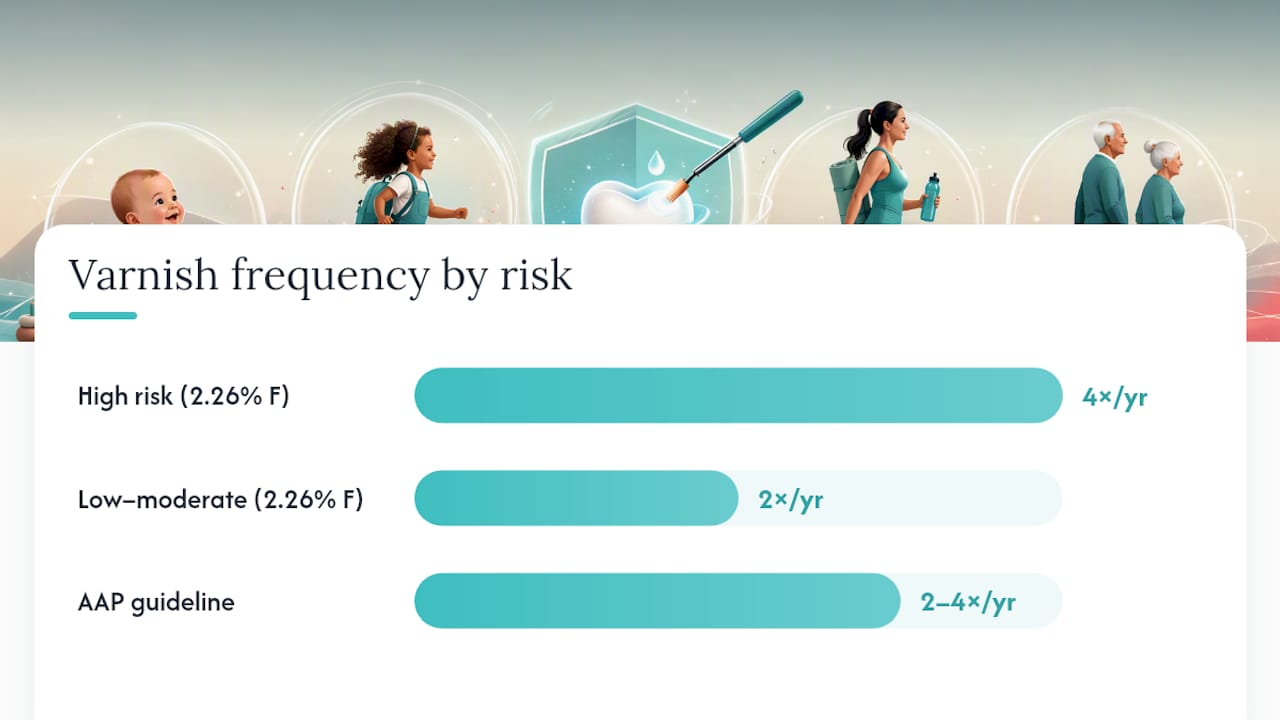
Sources: ADA Clinical Practice Guideline; Nevada Department of Public Health Fluoride Varnish Protocol
Pro Tip: Talk to your dentist about all the fluoride sources your child is already getting — fluoridated water, toothpaste, supplements — before adding more. Coordinating these prevents overexposure, which matters most for children under 8 whose permanent teeth are still developing.
A note from the clinic on what parents ask us most
The two questions we hear most after a varnish appointment: “Why do their teeth look yellow?” and “Did I do something wrong if the varnish flaked off?” Both are completely normal. The yellowish tint is the varnish itself, and flaking during eating just means it is doing its job and wearing off as expected.
Before every application, the team screens for allergy history — particularly sensitivity to rosin or pine-derived resins — so parents with concerns should mention this before the appointment starts, not after.
Varnish is one piece of a broader prevention plan. Paired with twice-daily brushing using fluoride toothpaste, a low-sugar diet, and regular dental visits, it gives teeth meaningful protection against decay. Southlittletonfamilydental applies varnish as part of routine preventive care for patients of all ages, and the staff is always glad to answer follow-up questions between visits.
Ready to schedule your child’s next preventive visit?
Fluoride varnish takes just a few minutes to apply and causes minimal discomfort — most children barely notice it. At Southlittletonfamilydental in Littleton, CO, varnish is part of a complete preventive dental visit that includes an exam, cleaning, and any other age-appropriate care your child or family member needs.

New to the practice? The new patient special makes it easy to get started without a large upfront cost. Call the office or book online to schedule — the team will walk you through what to expect and answer any questions before the appointment.
Sources
- Healthychildren
- Professionally-Applied and Prescription-Strength, Home-Use Topical Fluoride Agents for Caries Prevention Clinical Practice Guideline – ADA
- Patient Instructions after a Fluoride Varnish Treatment – CHOC
- MCH Child Health Protocols: Fluoride Varnish – Nevada Department of Public Health
- Premier® Tastytooth® Varnish Instructions for Use
This article is general information, not a substitute for advice from a qualified doctor. Consult a qualified healthcare professional about your own circumstances before acting on anything here.