

Dry mouth, known clinically as xerostomia, is most often caused by medication side effects or simple dehydration. Chronic, persistent cases usually point to something bigger: autoimmune disease like Sjögren syndrome, nerve damage, or prior head and neck radiation. If dryness lasts more than a few weeks, or shows up alongside other symptoms, the right next step is a medication review with your prescriber or a visit to your dentist or physician.
TL;DR:
- Medications such as anticholinergics, antidepressants, antihypertensives, antihistamines, opioids, and GLP-1 drugs are the main causes of dry mouth, especially in older adults on multiple prescriptions.
- Radiation therapy dose above 24 to 26 Gy significantly reduces the glands’ ability to recover, leading to permanent xerostomia, whereas chemotherapy effects typically improve post-treatment.
- Chronic dry mouth increases the risk of tooth decay, oral infections, and difficulty swallowing, with symptoms worsening without timely management.
- Lifestyle habits like mouth breathing, tobacco, alcohol, spicy food, and dehydration can exacerbate dry mouth and should be addressed alongside medical causes.
- Combining regular dental checkups, medication reviews, hydration, and saliva-stimulating products is essential for effective long-term management and prevention.
Table of Contents
- Why Saliva Matters and What Xerostomia Really Means
- Medications Are the Leading Cause of Dry Mouth
- Other Medical and Lifestyle Causes Worth Ruling Out
- How Clinicians Diagnose Dry Mouth
- Complications and Red Flags: When Dryness Becomes Urgent
- Treatment and Management: What Actually Helps
- How a Dental Visit Helps You Get to the Root Cause
- How Different Drug Classes Actually Dry Out Your Mouth
- What Happens if Dry Mouth Goes Untreated for Years
- Simple Habits That Lower Your Risk of Dry Mouth
- Aging, Menopause, and Why Dry Mouth Gets More Common Later in Life
- Can Stress and Anxiety Really Cause Dry Mouth?
- Where the Standard Advice on Dry Mouth Falls Short
- Sources
Why Saliva Matters and What Xerostomia Really Means
Saliva does far more than keep your mouth comfortable. It buffers acid, redeposits minerals into weakened enamel, controls bacteria, and lets you taste food and swallow without a struggle. When output drops, all of that breaks down at once.
Clinicians actually separate two related but distinct problems. One is the feeling of dry mouth, which can occur even when saliva output tests normal. The other is measurable salivary hypofunction, a real drop in flow rate that a dentist or doctor can quantify. Both matter, and the American Dental Association notes clinicians treat the symptom itself even when lab numbers look fine.
Prognosis depends heavily on the cause:
- Temporary dryness from dehydration, a cold, or a short course of antihistamines usually resolves once the trigger is removed.
- Long-term or permanent dryness from radiation-damaged glands, advanced Sjögren disease, or nerve injury tends to require ongoing management rather than a cure.
Medications Are the Leading Cause of Dry Mouth
If you take a prescription drug and have noticed a dry, sticky mouth, you’re not imagining a connection. Medication side effects are the single most common cause of xerostomia, and dozens of drug classes can reduce salivary flow, often by blocking the nerve signals that trigger saliva glands to work.
The classes most frequently implicated include:
- Anticholinergics (used for overactive bladder, some GI conditions)
- Antidepressants, particularly tricyclics and some SSRIs
- Antihypertensives, including diuretics used for blood pressure
- Antihistamines, both prescription and over the counter
- Opioid pain medications
- GLP-1 receptor agonists, increasingly prescribed for diabetes and weight management
Most of these drugs work through anticholinergic blockade: they interrupt the parasympathetic signal that tells salivary glands to secrete. Take two or three of these medications at once, a common scenario for older adults managing several chronic conditions, and the effect compounds. Older adults show a higher prevalence of xerostomia, largely because polypharmacy is more common in that group.
Statistic Callout: Radiation therapy to the head and neck adds a second major pathway to dry mouth, and it’s dose-dependent. Mean parotid gland doses above roughly 24 to 26 Gy are linked to poor salivary recovery and lasting xerostomia, while lower doses give glands a better chance to bounce back. Chemotherapy, by contrast, usually causes dryness that improves once treatment ends, since it affects gland function temporarily rather than destroying tissue.
Other Medical and Lifestyle Causes Worth Ruling Out
Not every case traces back to a pill bottle or a radiation oncologist. Autoimmune and systemic disease account for a meaningful share of chronic dry mouth, and lifestyle habits quietly worsen almost every case regardless of the root cause.
Sjögren disease deserves special attention. It’s an autoimmune condition where the immune system attacks moisture-producing glands, and it typically causes both dry mouth and dry eyes together. Blood tests for anti-SSA (Ro) or anti-SSB (La) antibodies support the diagnosis when a clinician suspects it.
Beyond Sjögren, several other conditions and habits show up repeatedly:
- Uncontrolled diabetes, HIV, end-stage renal disease, and graft-versus-host disease after a transplant
- Nerve injury from surgery or trauma affecting the glands’ signaling
- Rare congenital salivary gland agenesis, present from birth
- Mouth breathing, tobacco use, alcohol, cannabis, and methamphetamine
- High caffeine intake and habitually spicy or salty food, which increase fluid loss and irritation
Dehydration ties all of this together. It’s rarely the sole cause in someone with a chronic condition, but it makes every other cause worse.
How Clinicians Diagnose Dry Mouth
Figuring out why your mouth is dry usually follows a fairly predictable sequence, and knowing it ahead of time helps you come prepared.
- Medication and symptom history. Your clinician will ask about every prescription, supplement, and over-the-counter drug you take, plus when the dryness started and whether it’s constant or comes and goes.
- Oral exam. They’ll look for dry or fissured mucosa, a cracked tongue, unusual patterns of tooth decay, and signs of oral thrush (candidiasis), which thrives in a low-saliva environment.
- Objective salivary flow testing. Sialometry measures unstimulated and stimulated saliva output directly, giving a hard number rather than relying on how dry your mouth feels.
- Targeted lab work or imaging. When autoimmune disease is suspected, blood tests for anti-SSA/SSB antibodies may follow, sometimes alongside imaging of the salivary glands.
- Specialist referral. Persistent or unexplained cases often get referred to rheumatology, ENT, or oral medicine for further workup.
Complications and Red Flags: When Dryness Becomes Urgent
Left unaddressed, dry mouth doesn’t stay a minor annoyance. It raises the risk of tooth decay, gum disease, and oral infections, because saliva normally keeps bacteria and acid in check.
Common downstream problems include:
- Rapid, hard-to-control cavities, even in people who never had dental problems before
- Denture discomfort and sores from reduced lubrication
- Oral candidiasis, showing up as white patches or a burning sensation
- Trouble chewing, tasting food accurately, sleeping through the night, or speaking clearly for long stretches
Most of this develops gradually. Some symptoms demand same-day attention instead. Seek urgent care for severe oral pain, facial swelling, fever, sudden neurological symptoms, or rapidly worsening difficulty swallowing.
Treatment and Management: What Actually Helps
Management starts simple and escalates only when simple measures aren’t enough. Initial treatment leans on patient education and local measures before moving to prescription drugs, which is good news for anyone worried they’ll be handed a new medication on day one.
Self-care steps worth trying first:
- Sip water throughout the day instead of chugging large amounts occasionally
- Chew sugar-free gum or suck on sugar-free lozenges to stimulate natural flow
- Run a humidifier at night, especially if you breathe through your mouth while sleeping
- Cut back on alcohol, tobacco, and heavy caffeine intake
- Keep up rigorous brushing, flossing, and fluoride use to offset the loss of saliva’s protective effect
For added relief, over-the-counter saliva substitutes, oral moisturizing gels, and xylitol-based products bridge the gap between meals and hydration. A dentist may also prescribe topical fluoride specifically to prevent the rapid decay that comes with chronic dryness. If lifestyle changes and topical products fall short, prescription options like pilocarpine and cevimeline stimulate the glands directly by activating muscarinic receptors. These drugs work well for many patients but carry real contraindications, including uncontrolled asthma and narrow-angle glaucoma, so they require prescriber oversight rather than a quick over-the-counter swap.
Pro Tip: Before assuming you need a new prescription for dry mouth, ask your pharmacist for a full medication review. Sometimes switching the timing of an existing dose, or swapping one drug in a class for another, solves the problem without adding anything new.
For nighttime-specific strategies, including how sleep position and mouth breathing interact with dryness, Snozzing’s guide to overnight dry mouth covers practical fixes worth trying alongside your dentist’s recommendations.
How a Dental Visit Helps You Get to the Root Cause
A dry mouth evaluation at Southlittletonfamilydental typically starts with the same basics any thorough clinician would run through: a full medication list, a timeline of when symptoms started, and an oral exam looking for the telltale signs of low saliva, from decay patterns to tissue changes.
From there, care often includes:
- A risk assessment for cavities and gum disease based on how dry your mouth currently is
- Preventive fluoride application to counter the loss of saliva’s natural remineralizing effect
- Recommendations for saliva substitutes or oral moisturizers suited to your specific symptoms
- Coordination with your physician or pharmacist when a medication adjustment looks like the most likely fix
Bring your current medication list and a rough timeline of when the dryness started. That single piece of prep often shortens the path to an answer. If you’re dealing with acute pain, swelling, or a denture problem tied to dryness, same-day emergency appointments exist precisely for that. Routine visits for ongoing dryness fall under general dentistry and preventive care, where fluoride treatment and monitoring happen at regular intervals rather than in a crisis.
How Different Drug Classes Actually Dry Out Your Mouth
Not all dry mouth medications work the same way, and understanding the mechanism helps explain why some cases respond to a simple dose adjustment while others need a completely different drug.
Anticholinergic drugs, the biggest offenders, block acetylcholine receptors that normally tell salivary glands to secrete. Overactive bladder medications, some antipsychotics, and certain GI drugs fall into this category, and the drier feeling often scales directly with dose.
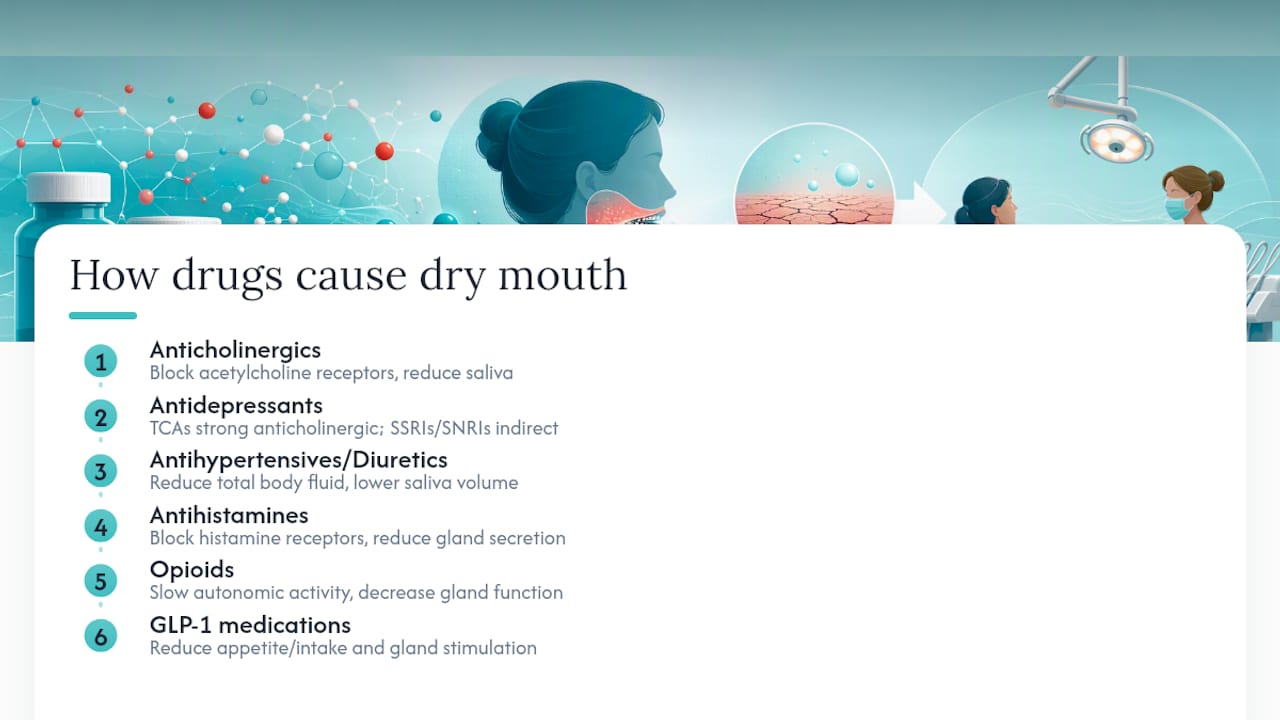
Antidepressants split into two rough groups. Older tricyclic antidepressants carry strong anticholinergic effects and tend to cause more pronounced dryness. Newer SSRIs and SNRIs cause it less severely, but still measurably, likely through effects on serotonin and norepinephrine pathways that indirectly dampen gland activity.
Antihypertensives, especially diuretics, reduce dryness through a different route: they lower total body fluid, which leaves less available for saliva production in the first place. That’s a volume problem rather than a nerve-signaling problem, which is why staying well hydrated sometimes offsets part of the effect.
Antihistamines, both first and second generation, block histamine receptors that also happen to influence secretory gland activity, drying out the mouth alongside the sinuses they’re meant to treat.
Opioids slow overall autonomic nervous system activity, gland function included, on top of the constipating and sedating effects most people already recognize. GLP-1 medications appear to affect appetite and gut signaling in ways that also reduce fluid intake and gland stimulation, though this mechanism is still less well mapped than the others.
What Happens if Dry Mouth Goes Untreated for Years
Beyond the dental damage most people expect, chronic untreated dry mouth reshapes daily life in ways that compound over time. Reduced saliva makes chewing and swallowing progressively harder, which pushes many people toward softer, less nutritious foods and, eventually, unintended weight changes.
Taste distortion is another underrecognized consequence. Saliva dissolves food compounds so taste buds can detect them; without enough of it, food tastes muted or metallic, which further discourages eating well.
Sleep suffers too. A parched mouth at night triggers frequent waking to drink water, fragmenting sleep in ways that feed into daytime fatigue and, for some people, mood changes. Speech can also become labored during long conversations, since a dry tongue sticks to the roof of the mouth and slows articulation.
Perhaps the most serious long-term risk is recurrent oral infection. Chronic candidiasis and bacterial overgrowth become more likely the longer saliva stays scarce, and in medically fragile patients, these infections can spread beyond the mouth. Denture wearers face a particular problem: without a saliva film to create suction and cushion the gums, dentures shift, rub, and cause sores that make eating painful enough to accelerate the nutrition problems already in motion.
None of this is inevitable. It’s the trajectory of dryness left unmanaged for years rather than addressed early.
Simple Habits That Lower Your Risk of Dry Mouth
Prevention is less about a single fix and more about removing the small daily stresses that add up over months.
Staying consistently hydrated matters more than any other single habit, since even mild dehydration reduces saliva output before you notice thirst. Reviewing medications annually with a pharmacist, especially once you’re taking three or more prescriptions regularly, catches drying side effects before they become entrenched.
Limiting alcohol, tobacco, and heavy caffeine use protects gland function directly, since all three interfere with normal fluid balance and irritate oral tissue. Treating chronic mouth breathing, whether from allergies, sleep apnea, or nasal obstruction, removes one of the most common and most overlooked drivers of nighttime dryness.
Routine dental checkups catch early warning signs, like unusual decay patterns, before they progress. A dentist looking at your mouth twice a year often spots dryness-related damage well before you’d notice it yourself. Sipping water through the day rather than in large infrequent gulps keeps oral tissue consistently moist rather than cycling between dry and hydrated.
For people already on medications known to cause dryness, proactive use of sugar-free gum, xylitol lozenges, or a bedside humidifier prevents mild dryness from progressing into something that damages teeth or disrupts sleep.
Aging, Menopause, and Why Dry Mouth Gets More Common Later in Life
Age itself doesn’t shut down salivary glands the way some people assume. What changes is everything surrounding it: more prescriptions, more chronic conditions, and a higher chance those conditions interact.
That said, hormonal shifts during menopause genuinely affect saliva production. Estrogen influences the tissue of salivary glands, and its decline during and after menopause is linked to measurable drops in flow for some women, alongside burning mouth sensations and altered taste that often accompany the dryness itself. It’s a distinct mechanism from medication-related dryness, and it’s frequently underdiagnosed because clinicians and patients alike attribute the symptom to aging generally rather than to a specific hormonal cause.
Combine that hormonal shift with the polypharmacy common in older adults, and the risk compounds. This is part of why prevalence climbs so noticeably in people over 65, a pattern documented across multiple studies of xerostomia risk. Anyone navigating menopause with new or worsening dry mouth has a legitimate reason to raise it specifically, rather than assuming it’s just a normal part of getting older.
Can Stress and Anxiety Really Cause Dry Mouth?
Yes, and the mechanism is more direct than most people expect. Stress activates the sympathetic nervous system, the “fight or flight” branch, which shifts saliva production toward a thicker, lower-volume secretion instead of the thin, plentiful saliva produced during calm, parasympathetic states.
This explains a familiar experience: the dry, cottony mouth right before a big presentation or a difficult conversation. For most people, it resolves as soon as the stressful moment passes. Chronic anxiety is a different story. Persistent sympathetic activation keeps saliva production suppressed for extended periods, and anxiety disorders often come paired with mouth breathing and clenching or grinding, both of which independently worsen oral dryness.
There’s also a medication overlap worth noting. Many anti-anxiety and antidepressant medications carry dry mouth as a documented side effect, which means people managing anxiety sometimes face two compounding causes at once: the physiological stress response and the drug prescribed to treat it. Recognizing that overlap matters, because treating only one side of it, medication without addressing the underlying stress, or vice versa, often leaves the dryness only partially resolved.
Where the Standard Advice on Dry Mouth Falls Short
Most consumer health content treats dry mouth as a hydration problem with a gum-chewing fix. That undersells what’s actually going on for a large share of people dealing with it. The research is fairly clear that medications and radiation, not simple thirst, drive the majority of persistent cases, and no amount of water intake reverses a gland damaged by radiotherapy or blocked by an anticholinergic drug.
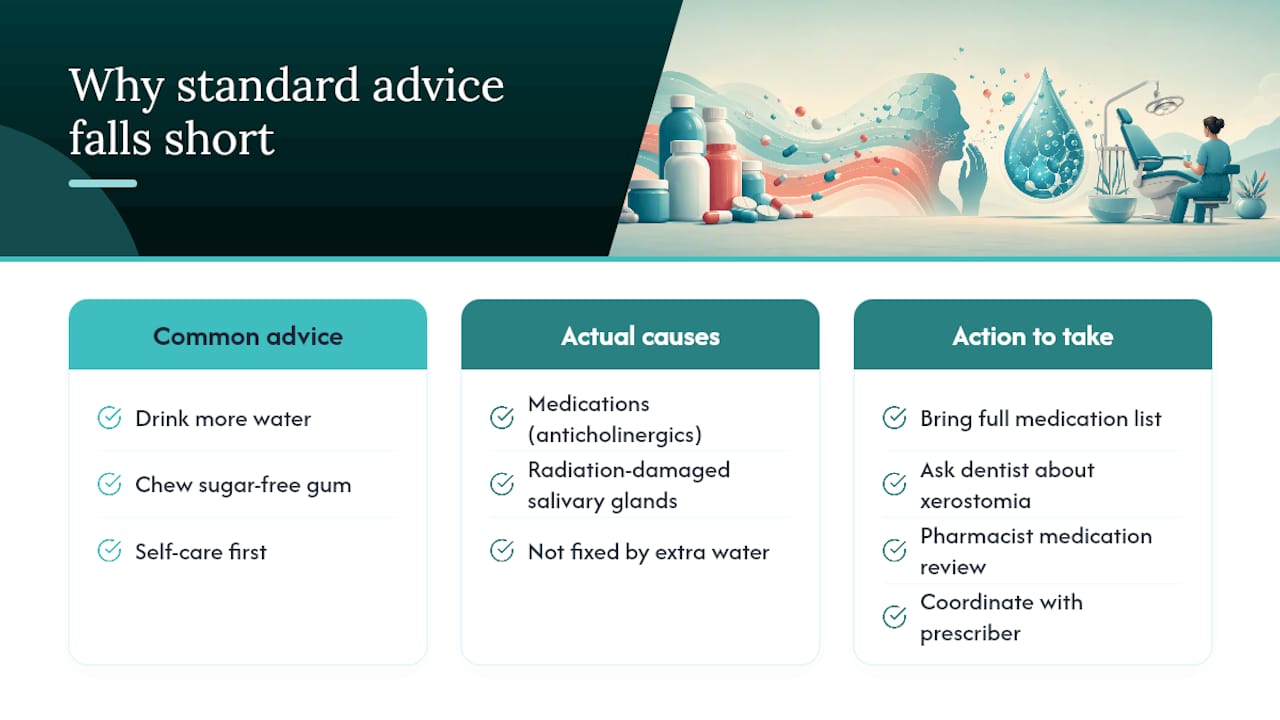
The bigger gap is coordination. Patients bounce between a prescriber who wrote the drug causing the dryness and a dentist watching the resulting decay, with nobody connecting the two. That’s backwards. A pharmacist-led medication review, done before reaching for a prescription like pilocarpine, catches reversible causes that self-care alone will never fix.
If there’s one thing worth prioritizing, it’s this: bring your full medication list to your next dental visit, not just your next doctor’s visit. Dentists see the physical evidence of xerostomia months before most physicians think to ask about it, which makes that appointment the most underused diagnostic opportunity in the whole process.
— Admin
If dry mouth has been bothering you for more than a few weeks, or you’ve noticed new cavities, gum irritation, or trouble with dentures, schedule a visit with South Littleton Family Dental in Littleton, CO. The team reviews your medication history alongside a full oral exam to pinpoint whether the cause is reversible, and coordinates with your physician or pharmacist when it isn’t. New patients can also take advantage of the new patient special to get a comprehensive exam and cleaning scheduled quickly.
This article is general information, not a substitute for advice from a qualified doctor. Consult a qualified healthcare professional about your own circumstances before acting on anything here.
Sources
- Xerostomia – StatPearls – NCBI Bookshelf
- Xerostomia | American Dental Association
- Dry Mouth – NIDCR (NIH)