

A dental numbing shot is a routine local anesthetic that usually numbs soft tissue for 1 to 7 hours and the treated tooth for roughly 30 to 90 or more minutes, allowing pain-free dental work. Mild, temporary sensations like tingling or lip heaviness are common, while serious reactions are rare. Call your dentist for lingering numbness or 911 for signs like trouble breathing.
TL;DR:
- Numbness from dental injections usually lasts between 30 to 90 minutes for the tooth and up to several hours for soft tissues, with duration depending on the anesthetic and individual factors.
- Using anesthetics with epinephrine helps prolong numbness and control bleeding but requires caution in patients with certain heart conditions.
- Mild, temporary side effects such as dizziness or tingling occur in about 26% of patients but typically resolve quickly, while serious reactions are rare.
- Lower back molars are more difficult to numb completely, often requiring multiple or alternative techniques if initial efforts fail.
- Patients should avoid hot foods, biting lips, or chewing until numbness fully subsides to prevent injuries and complications.
Table of Contents
- What a dental numbing shot is and why we use it
- Types of dental anesthetics: topical versus injectable
- What happens during the injection: a step-by-step walk-through
- How long numbness lasts and what changes the timeline
- After-effects and side effects: what’s normal and what’s not
- Safety: when to call your dentist or seek emergency care
- Practical tips to stay safe while you’re numb
- How we manage numbing, comfort, and safety
- What patients misunderstand about numbing shots
- Same-day help when numbing or dental pain becomes a concern
- FAQ
- Sources
What a dental numbing shot is and why we use it
Local anesthesia is a medication that blocks pain signals in a specific area of your mouth while you stay fully awake and aware. That sets it apart from sedation or general anesthesia, which change your level of consciousness. Local anesthetics work by temporarily stopping the nerve fibers near the injection site from sending pain signals to your brain, which is what Cleveland Clinic describes as the core mechanism behind the technique.
We reach for numbing shots constantly because most restorative work would be painful without them. Common uses include:
- Fillings, where a small area needs to stay numb for drilling and shaping.
- Crown preparations, which involve more tooth structure and longer appointment times.
- Extractions, where deeper numbness covers both tooth and surrounding bone.
- Root canals, which require numbing the tooth’s nerve chamber itself.
Types of dental anesthetics: topical versus injectable
Before any needle touches your gum, we typically apply a topical anesthetic gel directly to the tissue. This numbs the surface so the initial pinch of the injection is far less noticeable, a step Cleveland Clinic notes is standard practice before an injectable anesthetic.
Once the injection itself is given, the specific drug matters. Common injectable agents include:
- Lidocaine, the most widely used agent, valued for its reliable safety profile.
- Articaine, often chosen when a faster onset or longer pulpal effect is needed.
- Bupivacaine, which tends to provide longer-lasting numbness for extended procedures.
- Prilocaine, sometimes used for shorter procedures or specific patient needs.
Many dental anesthetics include epinephrine, a vasoconstrictor that narrows blood vessels at the injection site. This slows how fast the drug leaves the area, which prolongs the numbing effect and reduces bleeding during treatment, according to Cleveland Clinic. Epinephrine is generally safe, but dentists use it cautiously in patients with certain heart conditions.
What happens during the injection: a step-by-step walk-through
Knowing the sequence ahead of time takes most of the mystery out of the appointment.
- We review your medical history and current medications to confirm which anesthetic and dose fit you safely.
- A topical gel is applied to the injection site and given a minute or two to take effect.
- You’re positioned comfortably, and the injection is given slowly, which feels like brief pressure or a quick sting rather than ongoing pain.
- Numbness typically begins within a few minutes, starting as tingling and spreading into a heavier, duller feeling.
- Some patients notice mild drooling or slightly slurred speech while the lip, cheek, or tongue is numb, which is completely normal and temporary.
How long numbness lasts and what changes the timeline
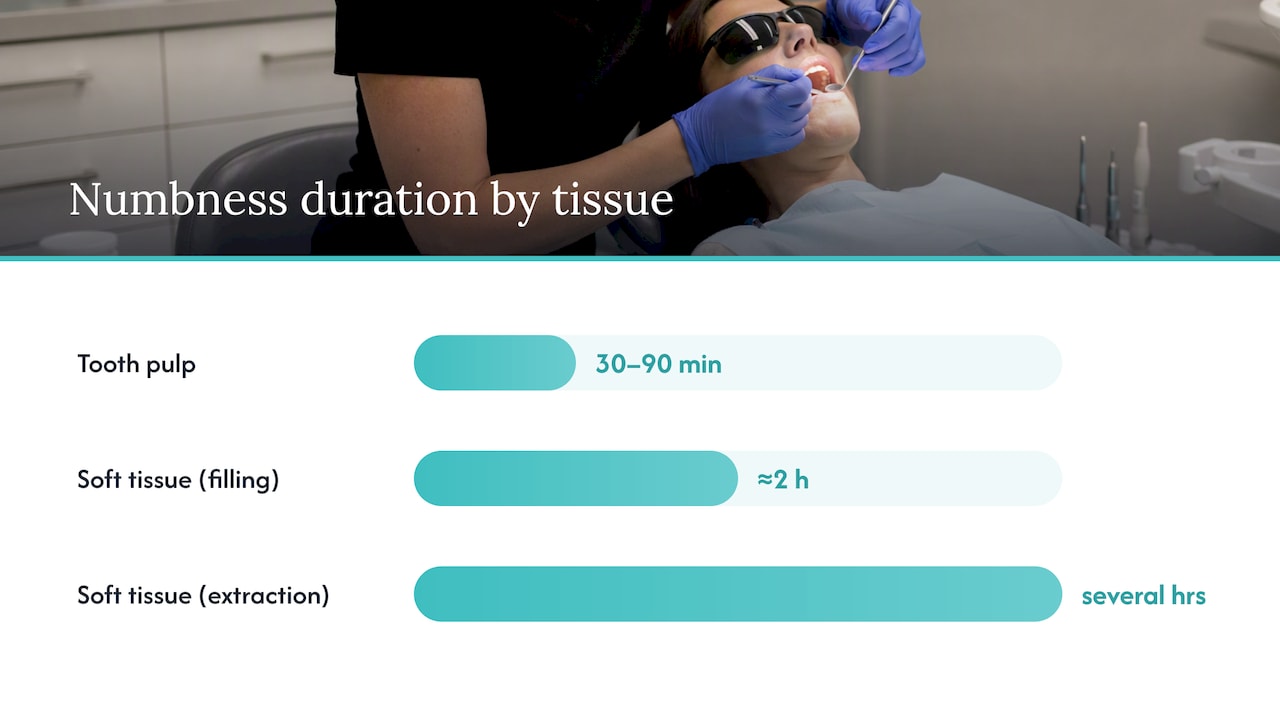
Soft tissue, meaning your lips, cheek, and tongue, generally stays numb longer than the tooth itself. MedlinePlus notes that with lidocaine injections, numbness can take several hours to fully resolve in some cases, while the treated tooth’s pulp is often numb for a shorter window, commonly in the range of 30 to 90 minutes or somewhat longer depending on the drug used.
The specific anesthetic changes the math. A comparative clinical study found that articaine formulations often had faster onset and longer pulpal anesthesia than lidocaine than lidocaine with epinephrine during maxillary injections, which is one reason dentists sometimes choose it for longer procedures.
Several other factors shift your personal timeline:
- The drug’s concentration and whether epinephrine is included.
- Where exactly the injection is placed and the technique used.
- Your individual metabolism, body weight, and any medications you’re taking.
A routine filling usually means numbness fades within a couple of hours. An extraction, which often uses a stronger dose over a larger area, can leave soft tissue numb for most of the afternoon.
After-effects and side effects: what’s normal and what’s not
Most of what you feel after leaving the chair is harmless and expected. Numb lips, cheek, or tongue, lingering tingling, and mild soreness right at the injection site are all typical and fade on their own.
Some reactions go slightly further without being dangerous. A clinical survey of 179 dental patients found that about 26% reported at least one mild, temporary reaction such as dizziness, heart palpitations, or lightheadedness within two hours of receiving local anesthesia. These symptoms typically resolve without treatment.
A smaller set of effects need attention:
- Allergic reactions, which can include rash, swelling, or difficulty breathing.
- Local anesthetic systemic toxicity, a rare but serious condition involving neurological or cardiac symptoms that require emergency care.
- Paresthesia, meaning numbness that persists well beyond the expected window, sometimes for days or longer.
Pro Tip: If numbness in one area feels unusually intense or spreads somewhere unexpected, mention it to your dental team before you leave the office rather than waiting to see if it passes.
Safety: when to call your dentist or seek emergency care
Most numbing experiences resolve without incident, but knowing the warning signs matters.
- Call 911 immediately for trouble breathing, swelling of the throat or tongue, fainting, or seizures.
- Contact your dentist promptly for numbness or pain that persists well beyond the expected window, worsening discomfort, or signs of infection like fever or spreading swelling.
- Before your appointment, tell your dentist about heart conditions, pregnancy, antidepressant use, and your weight, since these all factor into anesthetic choice and dosing, a point echoed in the ADA’s patient guidance.
Practical tips to stay safe while you’re numb
A few simple habits prevent most numbing-related mishaps.
- Stick to soft foods and avoid hot beverages until feeling fully returns, since MedlinePlus warns against chewing solid foods while numb.
- Check your cheek and lip periodically for accidental biting, especially with children, who face a higher risk of soft-tissue injury while numb.
- Ask your dentist about a warm compress or gentle massage once you’re home if you want to ease residual tightness, but only with their approval.
- If lingering numbness would interfere with work, speech, or an event, ask whether a reversal agent like phentolamine mesylate (OraVerse) is appropriate for your visit.
Pro Tip: Set a phone timer for when feeling should return based on what your dentist tells you, so you’re not guessing whether something feels off.
How we manage numbing, comfort, and safety
We build every appointment around compassionate, individualized care, which starts with a full medical history review before any anesthetic is chosen. Doses and drug selection are tailored to your health profile, and our team monitors you throughout treatment and sends you home with clear written instructions. We offer emergency appointments for patients with sudden pain or unexpected reactions. If you’d prefer a topical numbing option or want to talk through sedation choices before your visit, ask us when you book.
What patients misunderstand about numbing shots
The biggest misconception we hear is that the shot itself will hurt badly or that numbness might never fully wear off. In reality, topical gel blunts most of the sting, and even longer-lasting numbness from agents like bupivacaine resolves within hours. If injections make you anxious, ask for extra topical anesthetic and a short pause before the needle goes in, or explore options like nitrous oxide sedation to help keep you calm. That brief wait lets the surface numb more completely, which makes a real difference in what you feel.
— Admin
Same-day help when numbing or dental pain becomes a concern

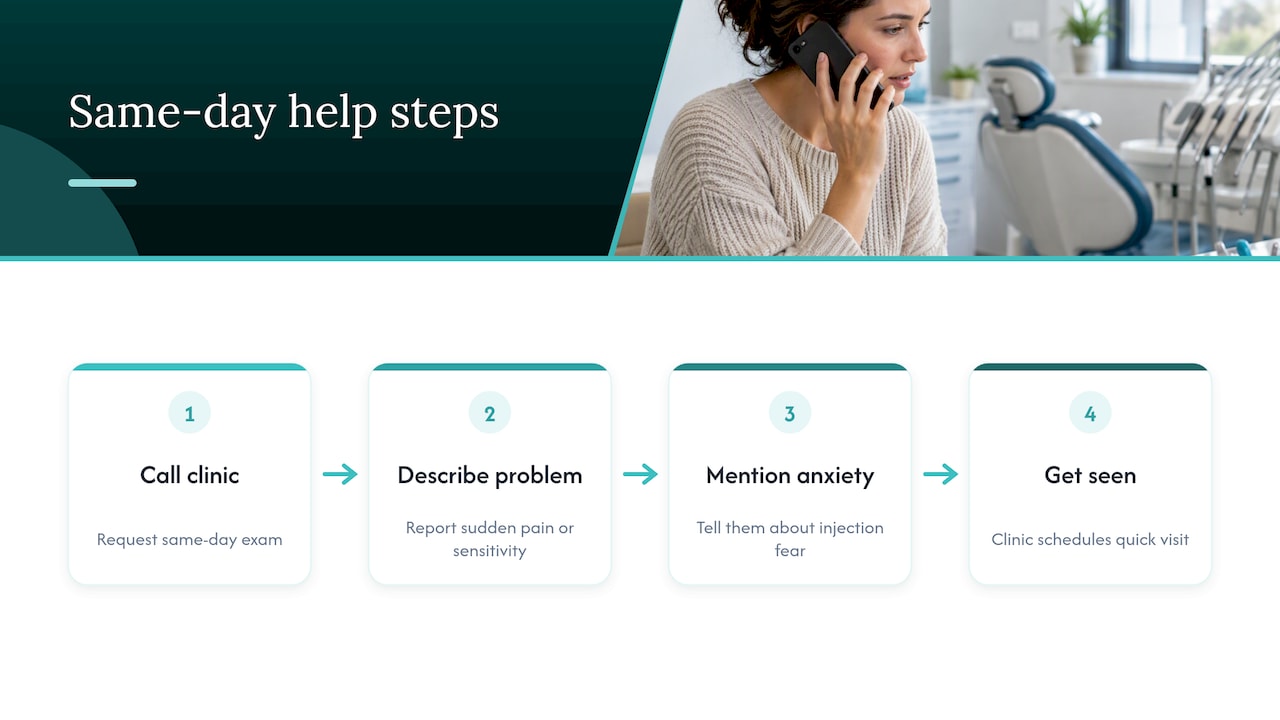
Whether you’re due for routine work or dealing with sudden tooth pain, we offer same-day exams so you’re not stuck waiting days for answers. Our emergency dentistry visits are built for exactly these situations, from unexpected sensitivity to a filling or crown that needs attention right away. If anxiety about the injection itself has kept you from scheduling, mention it when you call. We’ll walk you through your options and get you seen quickly.
This article is general information, not a substitute for advice from a qualified doctor. Consult a qualified healthcare professional about your own circumstances before acting on anything here.
FAQ
What should I avoid doing after dental numbing?
Avoid chewing solid food, drinking hot beverages, or biting your lip and cheek until feeling fully returns, since you won’t notice an injury while numb. MedlinePlus notes this precaution is especially important because numbness can last up to 7 hours with some anesthetics.
Why do I feel strange after dental numbing?
The tingling, heaviness, or slightly slurred speech you notice comes from the anesthetic temporarily blocking nerve signals in your lips, cheek, or tongue. A clinical survey also found that about 26% of patients reported mild, short-lived symptoms like dizziness or lightheadedness, which usually pass within a couple of hours.
Which tooth is hardest to numb?
Lower back molars, particularly those with dense bone or extra root canals, are generally considered more difficult to numb completely than front teeth. Dentists sometimes switch anesthetic types or use additional injection techniques when standard numbing isn’t fully effective.
How painful is the numbing shot at the dentist?
Most patients describe the injection as a brief pinch or pressure rather than significant pain, especially since topical gel is applied to the gum first to reduce sensation. Cleveland Clinic notes that a slow, careful injection technique further reduces how much discomfort patients notice.
Does dental insurance cover root canals or crowns?
Coverage for root canals and crowns varies by individual insurance plan, so it’s best to confirm your specific benefits with your provider before treatment. Many plans cover a portion of these procedures under major or restorative care categories, though out-of-pocket costs differ by plan.
Sources
- Local Anesthesia — Cleveland Clinic
- Lidocaine injection (MedlinePlus)
- Adverse reactions to local anesthesia (clinical survey)
- Local anesthetic systemic toxicity — clinical management (NCBI Bookshelf)