

A chipped tooth is an emergency only when specific red flags show up: uncontrolled bleeding, exposed pulp, severe continuous pain, a large lost fragment, a displaced tooth, or facial trauma that threatens the airway. If any of those apply, call your dentist immediately or go to the emergency room for airway or bleeding issues. Without those signs, most chips can wait 24 to 48 hours for an urgent but non-emergency dental visit.
TL;DR:
- Most chipped teeth can wait 24 to 48 hours for treatment unless they show signs of pulp exposure, ongoing pain, or bleeding that won’t stop.
- A visible nerve, persistent pain, bleeding, or facial swelling indicate a need for same-day emergency care.
- Preserve any broken fragment in milk or Save-A-Tooth and follow first aid steps immediately to improve the chances of saving the tooth.
- Treatment varies from smoothing minor chips to root canals or extraction, depending on the depth of the fracture and pulp involvement.
- Prompt care within hours significantly increases the likelihood of tooth preservation, especially for injuries involving pulp exposure or displacement.
Table of Contents
- How to Tell Whether a Chipped Tooth Needs Same-Day Emergency Care
- First Aid for a Chipped Tooth in the First 30 Minutes
- Treatment Options by Severity, From Smoothing to Extraction
- Why Some Chips Need a Root Canal or Extraction, and When Timing Decides the Outcome
- Preventing the Next Chipped Tooth and Protecting a Repaired One
- What Same-Day Emergency Care Actually Looks Like at Our Practice
- Get Same-Day Care for a Chipped Tooth in Littleton
- Sources
- FAQ
How to Tell Whether a Chipped Tooth Needs Same-Day Emergency Care
Not every chip means dropping everything and rushing to a clinic. The difference comes down to what you can see and feel in the first few minutes after it happens.
Signs that mean same-day care:
- A pink or red dot visible in the broken tooth (that’s the pulp, the nerve and blood supply, exposed to air and bacteria)
- Pain that doesn’t ease up, especially with hot, cold, or biting pressure
- Bleeding that doesn’t stop after a few minutes of pressure
- A fragment large enough to change your bite or expose a sharp edge cutting your tongue or cheek
- Facial swelling, fever, or a bad taste suggesting infection has already started
- The tooth feels loose, pushed in, or visibly out of position
Signs that usually aren’t urgent: a small enamel chip with no sharp edge, no pain, and no visible discoloration. That can typically wait for a scheduled appointment within a week or two, though it still needs a look.
Kids complicate the calculus. A permanent tooth that hasn’t finished developing its root has a wider open canal, and evidence-based management of dentoalveolar trauma shows that immature teeth respond differently to pulp exposure than fully mature ones. Pediatric dentists often move faster to protect the pulp because that tissue is still capable of healing on its own if treated soon enough.
Timing genuinely changes outcomes. The same systematic review found that repositioning and splinting within 24 hours for children and 48 hours for adults consistently produced better results than delayed treatment.
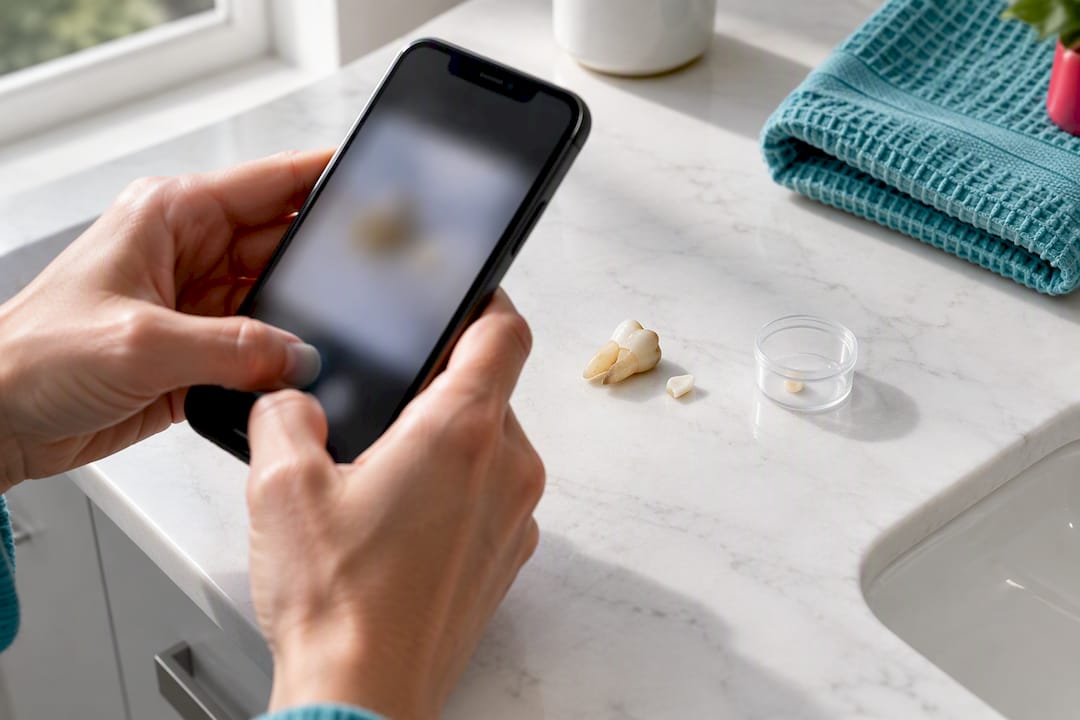
Pro Tip: Take a photo of the chip and the fragment right after it happens. If swelling develops later, you and your dentist will have a clear “before” reference to judge how fast things are changing.
First Aid for a Chipped Tooth in the First 30 Minutes
What you do in the minutes right after the injury can decide whether a tooth gets saved or lost. Work through these steps in order.
- Rinse and control bleeding. Swish warm water gently to clear debris, then bite down on a folded piece of gauze for 10 to 15 minutes to stop any bleeding from the gum line.
- Find and preserve the fragment. If a piece broke off, or the whole tooth came out, place it in milk or a product like Save-A-Tooth rather than tap water, which damages the root surface cells needed for reattachment. Never try to reinsert an avulsed baby tooth. That’s a job for adult permanent teeth only, since forcing a primary tooth back in can injure the permanent tooth developing underneath it.
- Manage swelling and pain. Hold a cold compress against the cheek near the injury for 15 to 20 minutes at a time. Take an over-the-counter pain reliever as directed on the label, but never place aspirin directly against the tooth or gum. It can burn the soft tissue.
- Call your dentist before you do anything else drastic. Describe the injury, mention whether you have the fragment, and ask whether you should come in immediately or the next morning. If there’s uncontrolled bleeding, facial swelling closing an eye, or trouble breathing or swallowing, skip the call and go straight to the emergency room.
Pro Tip: Keep a small dental first-aid kit with gauze, a travel-size carton of milk substitute (or a Save-A-Tooth kit), and your dentist’s after-hours number somewhere you’d actually find it under stress, like your car’s glove box.
Treatment Options by Severity, From Smoothing to Extraction
Treatment depends almost entirely on how deep the fracture goes. A clinical treatment table for dental injuries maps injury depth to specific interventions, and the pattern holds up in practice.
- Enamel-only chips: The dentist smooths and polishes the rough edge, sometimes adding a thin layer of composite bonding to restore shape. This is a single visit, and the fix typically holds for several years with normal care.
- Moderate fractures without pulp exposure: These usually call for composite bonding, a porcelain veneer, or, when a significant amount of tooth structure is gone, a full crown. A crown becomes the better option once the remaining tooth can’t support a filling on its own.
- Fractures that expose the pulp: This is where timing turns critical. A dentist may place a protective pulp cap or perform a partial pulpotomy to try to keep the nerve alive, particularly in kids whose teeth haven’t finished developing. Adults with persistent pain, infection, or a fully mature root more often need root canal therapy, sometimes with a temporary filling first and a permanent crown placed weeks later.
- Severe crown-root fractures: When the break extends below the gum line or the tooth can’t reasonably be saved, extraction is the safer path, followed by a bridge, partial, or implant to replace it.
- Displaced or loose teeth: These require repositioning and splinting to a neighboring tooth, generally followed up at one, two, and four weeks to confirm the tooth is stabilizing rather than dying.
Why Some Chips Need a Root Canal or Extraction, and When Timing Decides the Outcome
The decision isn’t arbitrary. A root canal becomes necessary once the pulp is irreversibly inflamed or infected, which shows up as pain that lingers well after a hot or cold stimulus, or as a tooth that’s turned visibly darker. Extraction gets recommended when there isn’t enough healthy structure left to anchor a restoration, or when keeping the tooth risks spreading infection.
- Root maturity matters: immature teeth in kids have more healing potential and are managed more conservatively.
- Tooth location matters: front teeth taking on more bite force get watched more closely for stability.
- Time since injury matters most of all. The IADT guidelines for traumatic dental injuries put the ideal replantation window for a knocked-out adult tooth at about one hour, and survival rates drop sharply after that.
Preventing the Next Chipped Tooth and Protecting a Repaired One
A repaired tooth is not indestructible, and a lot of chips are preventable in the first place.
- Wear a properly fitted mouthguard for contact sports. Off-the-shelf versions help, but a custom-fitted one distributes impact better.
- If you grind your teeth at night, ask about a custom night guard. Bruxism is a quiet, common cause of cracked cusps.
- Skip the ice chewing, the pen-biting, and using your teeth as a bottle opener. Enamel doesn’t grow back once it’s gone.
- After a temporary crown or bonding, avoid sticky or hard foods on that side until the permanent restoration is placed.
- Keep the follow-up appointment even if the tooth feels fine. Some pulp damage doesn’t show symptoms until weeks later.
Pro Tip: If you’ve chipped the same tooth more than once, that’s usually a sign of a bite problem or grinding habit, not bad luck. Worth mentioning to your dentist before it happens a third time.
What Same-Day Emergency Care Actually Looks Like at Our Practice
The practice keeps same-day slots open for trauma cases like this, supported by an emergency exam and personalized care plans rather than one-size-fits-all solutions. Call ahead with what happened and whether you have the fragment, bring your insurance card, and head to the emergency room instead if you’re dealing with uncontrolled bleeding or a compromised airway.
— Admin
Get Same-Day Care for a Chipped Tooth in Littleton
Waiting on a chipped tooth rarely improves the outcome, and the hours right after the injury are when the tooth’s chances are highest. The practice holds same-day slots specifically for cracked and chipped teeth, and new patients can get seen with an emergency exam instead of higher walk-in rates some urgent-care dental clinics charge for the same visit.

Call the office and describe exactly what happened. Whether you have the broken piece, whether there’s bleeding, whether the pain is sharp or constant. That detail helps the team prep the right materials before you even walk in, whether the fix turns out to be simple bonding or something that needs a restorative approach like a crown. If the injury involves heavy bleeding or facial trauma affecting breathing, go to the emergency room first and follow up with the practice after. For everything else, visit the emergency dentistry page to see same-day availability and book your visit today.
This article is general information, not a substitute for advice from a qualified doctor. Consult a qualified healthcare professional about your own circumstances before acting on anything here.
Sources
- Dental Emergency – What if I break a Tooth | MouthHealthy – Oral Health Information from the ADA
- Evidence-based management of isolated dentoalveolar fractures: a systematic review – PMC
- StatPearls – Treatment table for dental injuries (NCBI Bookshelf)
- International Association of Dental Traumatology guidelines for the management of traumatic dental injuries
FAQ
Can the ER Do Anything for a Chipped Tooth?
Emergency rooms can control severe bleeding, treat facial trauma, and prescribe pain medication or antibiotics, but most ERs don’t have the equipment to actually restore or bond a tooth. For the chip itself, you’ll still need to follow up with a dentist, ideally the same day if pulp is exposed.
How Urgent Is It to Fix a Chipped Tooth?
It depends on what’s exposed. If the pulp is visible or bleeding hasn’t stopped, treat it as urgent and call a dentist right away; a minor enamel chip with no pain can usually wait a week or two for a scheduled visit.
Is a Badly Chipped Tooth an Emergency?
Yes, when the fracture is large enough to expose the nerve, cause continuous pain, or displace the tooth. These situations benefit from same-day treatment, and outcomes improve when care happens within 24 to 48 hours of the injury.
Will an Emergency Dentist Fix a Chipped Tooth?
Yes. An emergency dentist visit typically includes an exam, X-rays if needed, and same-day treatment like bonding, a temporary restoration, or a referral for root canal therapy depending on severity. An emergency exam is offered for this kind of same-day assessment.