

A dental insurance waiting period is the stretch of time after you buy a plan when certain treatments are not yet covered. Cleanings and exams usually start right away. Fillings often wait about 3 to 6 months, and crowns, bridges and dentures commonly wait 6 to 12 months. You can still see a dentist during that time. You just need to know who pays for what.
TL;DR
- Preventive care (exams, cleanings, X-rays) usually has no waiting period. Basic care (fillings, simple extractions) may wait 3 to 6 months. Major care (crowns, dentures) typically waits 6 to 12 months.
- You can book appointments during a waiting period, but if a service is still locked, you pay the full cost. You also keep paying your premiums.
- A waiting period may be waived if you switch from a similar plan with no gap in coverage. Always get this confirmed by the insurer.
- Even after the wait ends, most plans do not pay 100%. Deductibles, coinsurance and annual maximums still apply.
- If you have a painful tooth now, do not wait on paperwork. Urgent problems can be treated first, and the billing sorted out alongside.
Table of Contents
- What a dental waiting period actually is
- How long waiting periods run by type of care
- Can you see a dentist during the waiting period?
- Can the waiting period be waived?
- Plans with no waiting period
- What you still pay after the wait ends
- Our perspective on timing treatment around coverage
- Planning care when you are in a waiting period
- Care in Littleton without waiting on your plan
- FAQ
- Sources
What a dental waiting period actually is
Think of it as a delay on benefits, not on care. According to Delta Dental, a waiting period is the time after you buy a plan before treatment benefits become available, and the length varies by plan. Humana says standard waiting periods can be 3, 6 or 12 months before all dental procedures are covered.
A 12-month waiting period means coverage for that service begins once the 12 months are complete. If your plan started in January, a covered crown placed in the following January is the first one the plan would consider.
Your premium does not pause while you wait. HealthCare.gov notes that you must keep paying your monthly premiums for a dental plan during a waiting period.
Why insurers use them
The main reason is to discourage people from buying a plan only to cover a big procedure they already know they need. Delta Dental describes the exclusion period as a guard against enrolling solely for a major procedure identified before enrollment. Dental plans also tend to be treated as supplemental coverage, which Humana points to as part of why insurers add time-based limits on certain tiers.
That logic is useful to you. It tells you where the waits sit: on the expensive, planned work, not on routine upkeep.
How long waiting periods run by type of care
Most plans sort treatment into three tiers. The tier decides whether a wait applies.
| Tier | Typical services | Typical waiting period |
|---|---|---|
| Preventive | Exams, cleanings, X-rays | Usually none |
| Basic | Fillings, non-surgical extractions | None to 3 to 6 months, depending on the plan |
| Major | Crowns, bridges, dentures | Often 6 to 12 months |
The figures come from several insurers. Anthem says most plans cover preventive care immediately, and that basic procedures such as fillings or non-surgical extractions may require a wait of three to six months. Humana says major procedures such as crowns or dentures typically carry a 6- or 12-month wait, while basic care may or may not have one. Delta Dental says 6 to 12 months is common for restorative services, and 12 months is often standard for major services.
These are ranges, not promises. Your own plan document is the only place that tells you your tier definitions and your waits.
Where implants, root canals and oral surgery land
This is the question that trips people up, because plans file the same procedure under different tiers. A root canal may be basic on one plan and major on another. Implants are covered under some plans and excluded under others. Extractions can be basic (simple) or major (surgical). Bone grafting and socket preservation are often grouped with oral surgery.
Before you commit to a treatment plan, ask your insurer which tier each procedure code falls under and whether a wait applies. Your dental office can give you the codes for your recommended treatment.
Orthodontics and other exceptions
Some plans differ from the usual pattern. The U.S. Office of Personnel Management notes that orthodontic services may have no waiting period in certain dental plans. That is the reverse of what many people expect, which is why reading the plan matters more than assuming.
Can you see a dentist during the waiting period?
Yes. Humana confirms you can visit a dentist while you wait, and services such as routine cleanings and exams are usually covered right away. The catch is that if you receive basic or major care still subject to a wait, the plan will likely not pay and you owe the full cost.
In practice, that gives you a sensible way to use the first months:
- Get the exam, X-rays and cleaning done early. They are typically covered from day one, and they give your dentist a full picture of what you will need.
- Ask for a written treatment plan with procedure codes. You can then match each item to your plan’s tiers and waiting periods.
- Sequence the work. Urgent items go first. Items that can safely be scheduled later can be timed to when coverage begins.
- Ask about payment options. For work you cannot postpone, a practice’s own payment arrangements can bridge the gap.
What you should not do is delay treatment of something that hurts, is infected, or is getting worse just to reach a coverage date. A small cavity left alone can turn into a root canal and a crown. If a cavity is already there, our page on when to replace an old filling explains the signs a filling needs attention.
Can the waiting period be waived?
Sometimes. The most common route is prior coverage. Humana says waits may be waived if you switch to a new plan without a break in coverage, provided the old and new plans are similar, or if you stay with the same insurer when you change employers.
The details differ by insurer:
- Delta Dental says waiting periods may be waived if you can show you held a comparable plan that ended within 30 to 60 days before the new plan’s effective date.
- HMSA, in its 2026 individual PPO guide, says prior HMSA dental coverage may satisfy waiting-period criteria if it was similar and continuous for 12 months before the new plan’s effective date.
So the same idea, “show me you were covered before,” comes with different windows and proof requirements at each insurer. The practical step is to request a letter or certificate of prior coverage from your old carrier before it ends, and send it to the new one at enrollment.
Behind the scenes, the insurer or the dental office checks your active dates, plan details and covered services through a process called eligibility verification. When a waiver is in play, that check is where it either shows up or does not, so ask for the result in writing and do not rely on a verbal “you should be fine.”
Who should push hardest for a waiver
People changing jobs, people aging off a parent’s or spouse’s plan, and people moving from a marketplace plan to an employer plan. If any of those is you, keep your old plan active until the new one begins, so there is no gap.
Plans with no waiting period
They exist. eHealth says some plans offer no waiting periods, though they may come with higher premiums. The same page advises checking exclusions, benefit limitations and whether the plan covers the procedures you need, since some policies may not cover treatment that was already in progress.
That last point matters most. A no-wait plan can still exclude a tooth that was already prepped for a crown, or limit how much it pays in year one. Before enrolling when you need treatment soon, Humana suggests looking for plans with short or no waits, or asking whether prior continuous coverage qualifies you for a waiver.
Use this checklist when comparing plans:
- Which services have a waiting period, and how long is each one?
- Is the procedure you need classed as basic or major?
- Is there a pre-existing condition exclusion for treatment already planned or started?
- What is the annual maximum, and does it apply in the first year?
- Does the plan accept prior coverage as credit, and what proof does it want?
- Is our dentist in the plan’s network?
What you still pay after the wait ends
A finished waiting period does not mean free care. HMSA’s 2026 guide is clear that even a covered service may leave you owing part of the cost, amounts above eligible charges, and anything beyond service or calendar-year limits. You also have to meet its payment criteria and any cost-sharing.
Preventive care is the friendly exception. eHealth notes that preventive care is often fully covered without deductibles or copays, because catching problems early reduces the need for costlier care later.
For a realistic budget, work through three numbers for each treatment: your deductible, your coinsurance share, and how much of your annual maximum is left. If you use a health savings account, our guide to what dental work is HSA eligible can help you cover the share your plan does not.
Our perspective on timing treatment around coverage
At South Littleton Family Dental, we see the same pattern often. Someone enrolls in a plan, learns that a crown or an implant sits behind a 12-month wait, and then either postpones care that should not wait or skips the dentist altogether.
We would rather you did neither. Our approach is built around individualized care plans: we look at what is urgent, what is stable, and what can be scheduled, so your treatment does not hinge on a date on an insurance calendar. Same-day emergency care is part of how we work, because pain and infection do not follow benefit schedules.
We also care about anxiety and discomfort, which are the real reasons many people put off a visit. A clear, itemized plan, explained before anything starts, takes much of that fear away. Ask us for it, bring your plan details, and we will help you match each step to your coverage as it stands.
the author
Planning care when you are in a waiting period
Here is a simple way to handle the first year with a new plan.
Months 0 to 3. Book your exam, X-rays and cleaning. Ask for a full treatment plan. Get your plan’s tier list in writing. If you have prior coverage, submit proof now.
Months 3 to 6. Basic work such as fillings may become covered, depending on the plan. If a cavity is small and stable, your dentist can tell you whether timing it makes sense.
Months 6 to 12. Crowns, bridges and dentures may become covered on plans with a 6-month wait. Anything with a 12-month wait comes next. If you are planning a tooth replacement, our dental implant timeline shows how long the process takes from start to finish, which helps you work out when to begin.
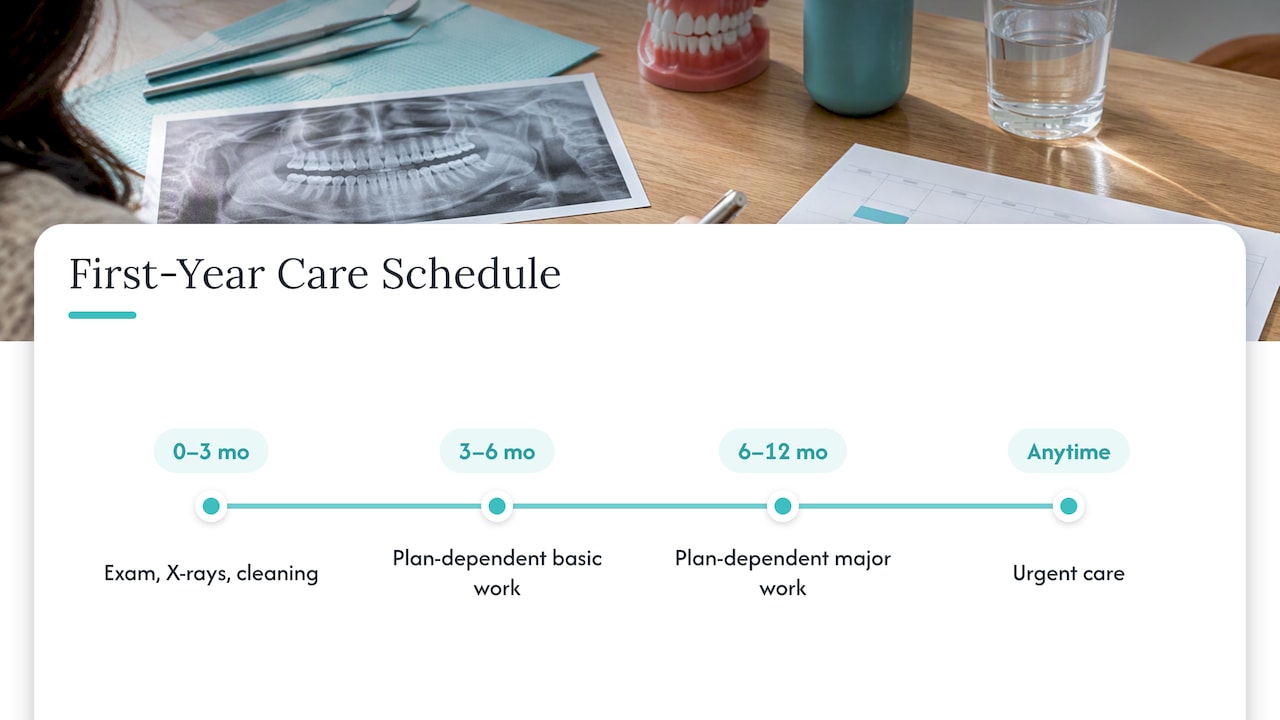
Urgent at any point. Severe pain, swelling, a broken tooth or a lost crown should not wait. If a crown comes off, our crown action plan lists what to do in the first 24 to 48 hours, and our temporary crown care guide covers the weeks that follow.
For older restorations, see how long they should last in our piece on crown lifespan, so you can plan a replacement ahead of time rather than in a rush.
Care in Littleton without waiting on your plan
If you are new to a plan, between plans, or paying out of pocket, you do not have to hold off on a checkup. We offer a $99 cleaning package and an emergency exam for $49 for patients in Littleton, CO. Offers can change, so confirm current terms when you call.
Our general dentistry services cover exams, cleanings, X-rays, fillings, crowns and sealants for all ages. For anything urgent, our emergency dentistry team offers same-day care.

If you want to start with the new patient offer, see our new patient special page, or reach us through our main site.
FAQ
What is the typical waiting period for dental insurance?
There is no single number. Preventive care usually has none, basic care may wait 3 to 6 months, and major care commonly waits 6 to 12 months. Some plans use 24 months for major work, so check your plan’s benefit summary for exact figures.
Which dental insurance has no waiting period?
Some plans advertise none, often at higher premiums. Because plans, states and prices change, check each insurer’s current plan documents. Also confirm exclusions, annual maximums and whether work already in progress is covered.
Do any dental plans cover 100%?
Usually only preventive care comes close, and even that depends on the plan. For other services, you may owe a deductible, coinsurance, or the amount above eligible charges. Annual or service limits can also leave you with a balance.
Can I get a cleaning during my waiting period?
Usually yes. Most plans cover exams, cleanings and X-rays immediately, as insurers such as Anthem and Humana describe. If your plan is an exception, your member services line can confirm it before you book.
Sources
- What Does Waiting Period Mean in Dental Insurance? | Delta Dental
- What is a Dental Insurance Waiting Period? | Humana
- Dental Insurance Waiting Periods | Anthem
- What services do dental plans include? | OPM.gov
- Dental Coverage in the Health Insurance Marketplace | HealthCare.gov
- Prospective member FAQs | Delta Dental
- 2026 Individual Dental PPO Gold Guide to Benefits | HMSA
- Dental insurance with no waiting period | eHealth
- Preventive vs. basic dental care | eHealth
- Eligibility Verification process | ClaroClaim