
If you grind your teeth in your sleep, the practical answer is this: the habit is common, it often goes unnoticed until your teeth or jaw complain, and a dentist can check for damage and recommend protection. A custom night guard made by a dentist is the most widely recommended way to shield your teeth, while stress, sleep problems and some medicines are the usual things to look at behind it. Below you will find the signs, the likely triggers, how a night guard compares with a retainer and a sports mouthguard, and when to book a visit.
TL;DR
- Sleep bruxism is grinding or clenching during sleep. Many people only find out from a partner or from sore jaws, headaches or worn teeth.
- Stress, sleep apnea, caffeine, alcohol, smoking and some medicines are linked to it, and it tends to run in families.
- A dentist-made night guard is preferred over boil-and-bite versions. A retainer and a sports mouthguard are different devices with different jobs.
- Severe grinding can crack teeth and strain the jaw, so see a dentist if you notice pain, sensitivity or chipped teeth.
- Damage from grinding can be repaired, but the habit needs attention too, or new work can wear down again.
Table of Contents
- What teeth grinding at night actually is
- Signs you may be grinding in your sleep
- What triggers grinding during sleep
- Is grinding your teeth at night harmful?
- How grinding is treated
- Night guard for grinding: what it does
- Night guard vs retainer
- Mouthguard vs night guard
- Everyday habits that may help
- Perspective: why we treat grinding as a whole-mouth question
- When to book a visit in Littleton
- FAQ
- Sources
What teeth grinding at night actually is
Bruxism is the medical term for grinding, clenching or gnashing the teeth. It can happen while you are awake or asleep, and sleep-related bruxism is classed as a movement disorder that occurs during sleep. You are not choosing to do it, which is why willpower alone rarely solves it.
Grinding and clenching are not quite the same. Grinding is the sideways, rubbing motion that wears enamel flat. Clenching is pressing the teeth together hard without moving them. Either one loads your teeth and the muscles that close your jaw far beyond normal chewing.
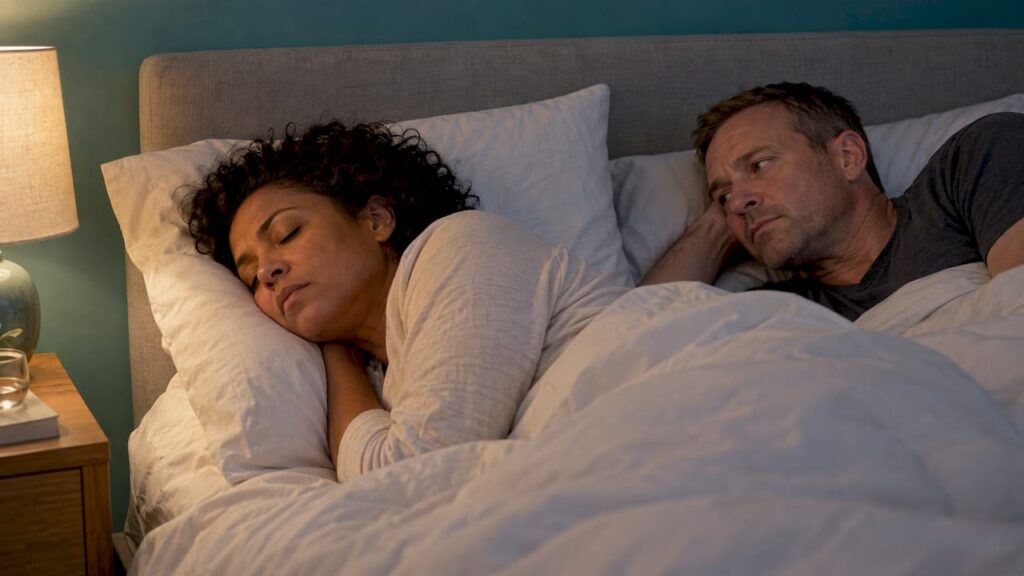
The tricky part is that you are asleep. Some people do not know they have sleep bruxism until they develop tooth or jaw problems. A bed partner who hears a rasping or clicking sound is often the first clue.
Signs you may be grinding in your sleep
The National Institute of Dental and Craniofacial Research lists flattened, chipped, cracked or loose teeth, worn enamel, tooth sensitivity or pain, jaw muscle soreness, tightness or tiredness, headache and facial pain. Penn Medicine adds earache and morning muscle tenderness.
A quick self-check when you wake up:
- Is your jaw tired, tight or sore, especially first thing in the morning?
- Do you have a dull headache near your temples that fades during the day?
- Do your teeth feel sensitive to cold air or drinks for no clear reason?
- Do the edges of your front teeth look shorter, flat or slightly chipped?
- Does your jaw click, or does it feel hard to open wide?
Pain in the jaw or ear can have other sources, including sinus trouble and tooth problems unrelated to grinding. If you are not sure what you are feeling, our guides on sinus tooth pain and sudden tooth sensitivity walk through how a dentist sorts one cause from another.
What triggers grinding during sleep
Researchers do not point to a single cause. The NIDCR says stress, mood, distress and nervousness, genes, alcohol, caffeine, smoking, and certain medicines for depression, seizures or ADHD may play a role. That is a list of factors that may contribute, not a diagnosis for any one person.
Stress and a busy mind
Stress and anxiety are the most familiar triggers. A tense week often shows up as a tight jaw. If dental visits themselves make you anxious, that tension can build before an appointment too, and we cover comfort options in our guide to dental anxiety and sedation options.
Sleep disorders
Sleep bruxism is associated with other sleep disorders, such as sleep apnea, and tends to occur in families. If you also snore loudly, wake gasping or feel exhausted after a full night, tell your doctor. A sleep evaluation is a medical question, not something a night guard can answer. This overview of teeth grinding causes covers how these triggers fit together.
Substances and medicines
Caffeine late in the day, alcohol near bedtime and smoking are all on the list of factors. Do not stop a prescribed medicine on your own. If you suspect a medication, talk to the prescriber. A clinical evaluation is how a professional separates awake from sleep bruxism and rules out a medical disorder or medication that could be behind it.
Is grinding your teeth at night harmful?
For most people it does not lead to serious complications. Severe bruxism may damage teeth or jaws and cause tension-type headaches, severe facial or jaw pain, or TMJ problems, and the Mayo Clinic advises seeing a dentist or health professional about symptoms that grinding or clenching could cause.
That gives you a simple rule of thumb:
| What you notice | What to do |
|---|---|
| Mild morning jaw tightness now and then | Cut back on late caffeine and alcohol, and mention it at your next exam |
| Regular headaches or jaw soreness | Book a dental exam to check your bite and teeth |
| Flat, chipped or loose teeth, or new sensitivity | Book soon, since wear does not grow back |
| A tooth that cracked or hurts sharply | Seek same-day dental care |
| Loud snoring, gasping, daytime exhaustion | Raise it with your doctor as well as your dentist |
How grinding is treated
Treatment aims to reduce pain, prevent permanent tooth damage and reduce clenching as much as possible. In practice that usually combines three things.
- Protect the teeth. A properly fitted oral appliance keeps your teeth from wearing against each other.
- Address the triggers. Evening wind-down habits, less caffeine and alcohol, and medical follow-up for sleep problems or medication questions.
- Repair existing damage. Worn, cracked or sensitive teeth may need fillings, crowns or other restorative care.
The third point matters more than people expect. One 2026 paper in a dental journal notes that technically excellent dental work can fail if habits like bruxism are left unaddressed. A new crown or veneer placed in a mouth that keeps grinding is working against the same forces that damaged the original tooth.
Night guard for grinding: what it does
A night guard, sometimes called an occlusal guard or bite splint, is a dental appliance worn during sleep. It does not necessarily stop the grinding. It puts a smooth barrier between your upper and lower teeth so the force lands on the guard rather than your enamel.
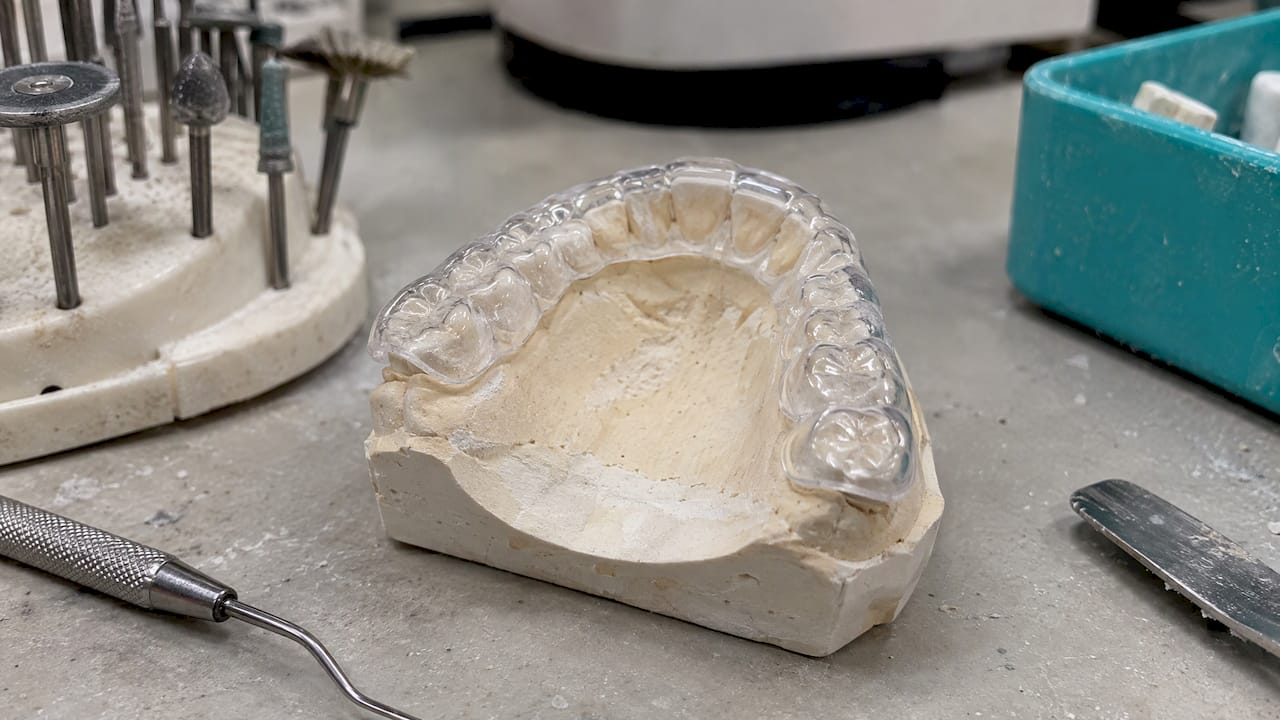
Fit is the main issue. Dentist-made guards are preferred over over-the-counter boil-and-bite versions to ensure proper alignment and protection. A guard that sits badly can feel bulky, slip at night or leave you with a changed bite sensation, so you want one made from an impression or scan of your own teeth.
If you are considering one:
- Have your teeth and bite examined first, so the guard fits the teeth you have now and not the ones you had before a chip or crown.
- Ask your dentist how to clean it each morning and how to store it.
- Bring it to your checkups so the dentist can look at wear on the guard itself, which shows how hard you are grinding.
- Tell your dentist if it causes jaw soreness or a feeling that your teeth no longer meet normally.
Night guard vs retainer
They look similar, and many people try to use one for the other. They have different jobs.
| Night guard | Retainer | |
|---|---|---|
| Main purpose | Protects teeth from grinding and clenching | Holds teeth in position after orthodontic treatment |
| Who needs it | People with bruxism | People who have had braces or aligners |
| Typical thickness | Thicker, built to absorb force | Thinner, built to hold alignment |
| If you skip it | Teeth may wear, chip or crack | Teeth may drift back toward their old position |
A nightguard protects against grinding, while orthodontic treatment may relapse if retainers are not worn consistently. If you have both needs, do not guess which to wear. Ask your dentist whether one appliance can serve both purposes or whether you need two, because a thin retainer is not designed to take the force of heavy grinding.
Mouthguard vs night guard
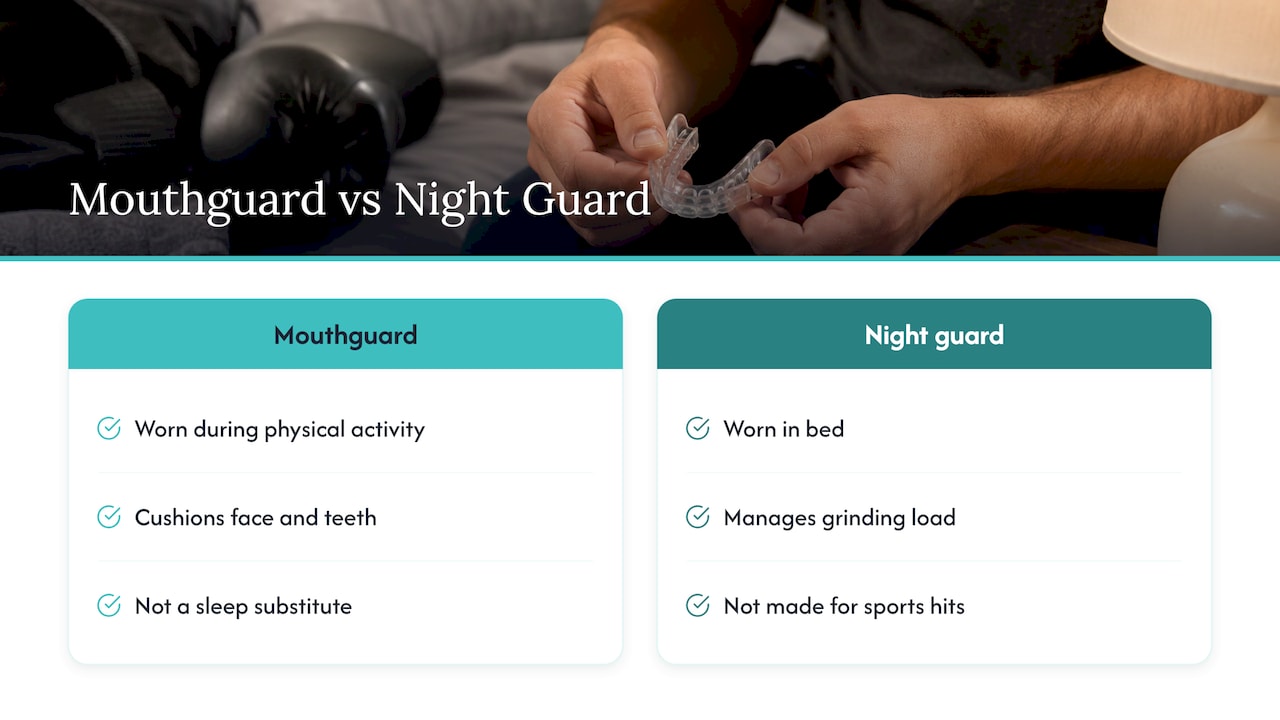
A mouthguard is usually the sports kind: a device worn during physical activity to cushion blows to the face and teeth. A night guard is worn in bed to manage the repetitive load of grinding. The two are built for different forces, so a sports mouthguard is not a good substitute for sleep, and a night guard is not made to take a hit during contact sports. If you play contact sports and grind your teeth, you may need both, and your dentist can tell you which fits which situation.
Everyday habits that may help
Habits will not replace dental care, but they stack the odds in your favor:
- Stop caffeine earlier in the day and go easy on alcohol near bedtime, since both are on the list of possible contributors.
- Build a calm half hour before bed without screens or work email.
- During the day, notice clenching. Teeth should rest apart with lips closed and the jaw relaxed.
- Keep a short log of morning symptoms for a few weeks to show your dentist.
- Ask a partner whether they hear grinding, or whether you snore or stop breathing briefly.
Perspective: why we treat grinding as a whole-mouth question
Patients rarely come to us saying they grind their teeth. They come in with a tooth that suddenly hurts, a filling that keeps chipping, or a jaw that aches by mid-morning. When we look closer, grinding is often part of the story.
That is why we do not treat a worn tooth in isolation. Our approach is built around individualized care plans: we look at the whole picture, explain what we see in plain language, and lay out the options so you can decide with clarity. Preventive care comes first, and when damage has already happened, we can repair it with restorative options such as composite fillings and dental crowns.
Because we know many people feel uneasy in the dental chair, we aim to make visits comfortable and unhurried. If something is urgent, same-day emergency care is part of how we work. Repairing a tooth is only half the job. Protecting that repair from the forces that damaged it is the other half.
the author
When to book a visit in Littleton
See a dentist if grinding signs persist, if teeth look shorter or chipped, or if a tooth suddenly hurts. At South Littleton Family Dental, a general dentistry exam is the right first step: we check your teeth, gums and bite, talk through what you are noticing and build a plan around you. If grinding has already worn or cracked teeth, our restorative dentistry services include composite fillings, crowns, bridges and dentures.
If a tooth has cracked or you are in sharp pain, we offer same-day emergency care, with an emergency exam for $49. Call us or see our emergency dentistry page for details.

New to the practice? Our $99 new patient special is a good way to start, and our team can talk you through payment options and insurance.
FAQ
How can I stop grinding my teeth at night?
There is rarely a single switch. Most people combine a dentist-fitted night guard to protect their teeth with lifestyle changes such as less late caffeine and alcohol and a calmer bedtime routine. If a sleep disorder or medicine may be involved, your doctor should look at that part. A dental exam is the best place to start.
What triggers teeth grinding in sleep?
Stress, nervousness, genes, alcohol, caffeine, smoking and certain medicines for depression, seizures or ADHD may play a role. Sleep bruxism is also associated with sleep disorders such as sleep apnea. Because causes differ from person to person, a professional evaluation is the way to find yours.
Is teeth grinding a serious problem?
For most people it does not cause serious complications. Severe grinding, though, can damage teeth and jaws and lead to tension-type headaches, facial or jaw pain and TMJ problems. If you have those symptoms, see a dentist rather than waiting.
Can a retainer replace a night guard?
Not reliably. A retainer holds your teeth in place after orthodontic work, while a night guard is made to cushion grinding forces. If you need both, ask your dentist how to handle it.
Sources
- Teeth grinding (bruxism): Symptoms and causes, Mayo Clinic
- Bruxism, National Institute of Dental and Craniofacial Research
- Bruxism, Penn Medicine
- Current Treatments of Bruxism, PMC
- How To Stop Grinding Your Teeth at Night, Cleveland Clinic
- The value of prognosis discussions in dentistry, Virginia Dental Journal
- Teeth grinding causes