
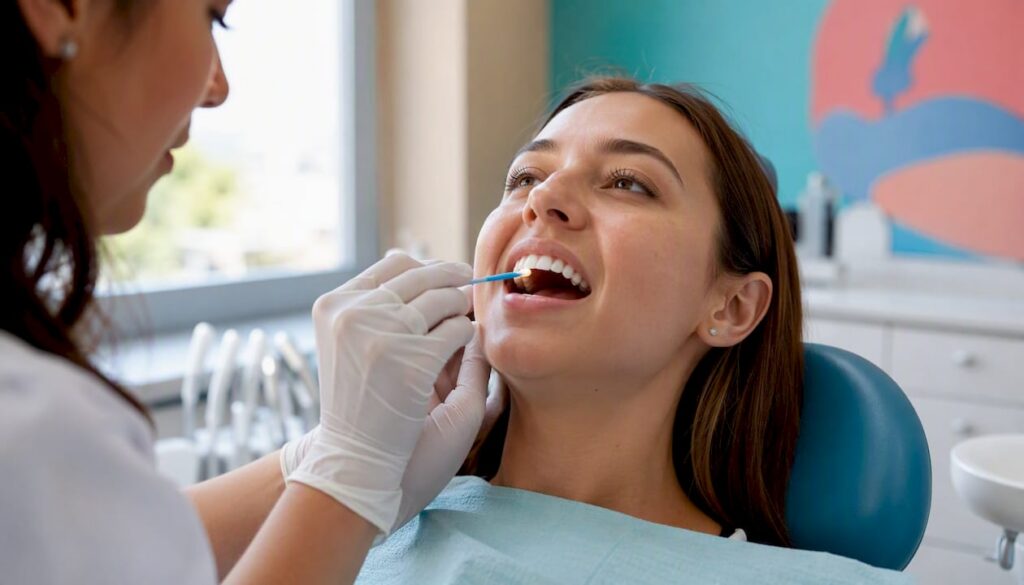
For most adults with healthy teeth and gums, in-office teeth whitening is worth it if you want a noticeably brighter smile in a single visit rather than weeks of gradual change. A 2026 retrospective clinical study found high-concentration bleaching kept results in a clinically acceptable range for up to 18 months, and the American Dental Association backs professional supervision as the safer route compared to unsupervised options.
A typical appointment runs 60 to 90 minutes and can lift shade several levels immediately. Expect mild, short-lived sensitivity afterward.
- Session length: usually one 60 to 90 minute visit
- Immediate result: visible shade change the same day
- Common side effects: temporary sensitivity, mild gum irritation, both usually resolving within a day or two
- Typical single-visit cost: often several hundred dollars, higher with take-home trays, custom protocols, or added pre-treatment dental work
Key Takeaways
In-office whitening delivers same-day results using higher peroxide concentrations under dentist supervision, with moderate concentrations often matching strong results while reducing sensitivity.
| Point | Details |
|---|---|
| Speed vs. alternatives | In-office whitening shows results the same day, while trays and OTC products take days to months. |
| Moderate concentration often wins | Peroxide levels around 25 to 35% frequently match higher concentrations with less sensitivity. |
| Sensitivity is common but temporary | Most sensitivity and gum irritation resolve within one to two days after treatment. |
| Restorations won’t whiten | Crowns, veneers, and fillings stay the same shade, so discuss visible dental work before booking. |
| Southlittletonfamilydental’s approach | Offers Lumi & KoR in-office whitening with take-home options, plus a free whitening offer and $99 new patient special. |
Table of Contents
- What Is In-Office Teeth Whitening and Why Do People Choose It?
- What Are the Downsides and Risks of Professional Whitening?
- What Happens During an In-Office Whitening Appointment?
- How Do Popular In-Office Whitening Systems Compare?
- How Much Does In-Office Whitening Cost?
- Are You a Good Candidate for In-Office Whitening?
- How Should You Prepare and Maintain Your Results?
- How Do Dentists Manage Sensitivity During Whitening?
- In-Office vs. Take-Home Trays vs. Over-the-Counter Whiteners
- What Does Quality In-Office Whitening Actually Look Like?
- A Note From Our Dental Team
- Ready to Brighten Your Smile? Here’s Your Next Step
- Frequently Asked Questions
- Sources
What Is In-Office Teeth Whitening and Why Do People Choose It?
The appeal comes down to three things: speed, strength, and supervision. A dentist applies a higher-concentration peroxide gel than anything sold over the counter, then manages the entire process in a controlled setting instead of leaving you to guess with a drugstore kit.
Higher concentrations translate directly into faster color change. A CDEWorld clinical review describes how power bleaching techniques use these stronger gels precisely because they shorten treatment time without requiring weeks of nightly trays. Before any gel touches your teeth, the dentist checks for cavities, worn enamel, and gum health, then isolates your gums with a protective barrier so only the tooth surface is exposed to the bleaching agent.
That oversight matters more than it sounds. The AACD has publicly backed the ADA’s position against non-dentist providers offering whitening without a proper exam, precisely because unsupervised high-concentration bleaching carries real risk.
- Immediate, visible results in one visit
- Stronger, dentist-grade peroxide concentrations
- Custom protocols based on your specific enamel and sensitivity history
- Results that can hold in a clinically acceptable range for up to 18 months with good habits
What Are the Downsides and Risks of Professional Whitening?
The honest trade-off is comfort for speed. Temporary tooth sensitivity and gum irritation are, according to the ADA, the most common adverse effects of any vital tooth whitening procedure, in-office or otherwise. Most patients feel this as brief zinging pain with cold air or drinks, and it typically fades within a day or two.
Restorations are a separate issue entirely. Crowns, veneers, and fillings do not respond to bleaching gel, so a mouth with visible dental work can end up with mismatched color between natural teeth and restorations after treatment. There’s also a psychological trap: teeth often look temporarily whiter right after treatment partly from dehydration, and that peak fades slightly as your mouth rehydrates over the following days.
Some situations call for delaying treatment altogether:
- Active gum disease or untreated cavities
- Pregnancy or breastfeeding, pending your physician’s input
- Very young patients whose enamel is still developing
- Recent dental work that hasn’t been color-matched yet
Dentist supervision exists specifically to catch these issues before they become problems, which is the core argument against DIY high-concentration bleaching.
What Happens During an In-Office Whitening Appointment?
The process follows a fairly consistent sequence across most dental offices, though the exact gel concentration and timing vary by system.
- Exam first. The dentist checks for decay, restorations, and gum health, because bleaching over an untreated cavity or inflamed gum tissue can cause real harm.
- Isolation. A barrier or retractor shields your gums and soft tissue, so only enamel gets exposed to the whitening gel.
- Gel application. Concentrations for in-office use commonly run higher than take-home products, sometimes in the 25 to 40% hydrogen peroxide range depending on the system and protocol.
- Activation cycles. The gel sits for a set interval, often reapplied two or three times per visit. Some offices use a light, but a systematic umbrella review found routine light activation generally adds little clinical benefit and can actually increase sensitivity.
- Post-treatment care. Rinsing, fluoride or desensitizing gel, and clear instructions on what to avoid for the next day or two.
Pro Tip: Ask your dentist three questions before you sit down: what peroxide concentration they’re using, what desensitizing step follows treatment, and what the maintenance plan looks like afterward. The answers tell you a lot about how tailored your treatment actually is.
How Do Popular In-Office Whitening Systems Compare?
You’ll likely encounter a handful of branded systems across dental offices, and while marketing varies, they solve the same problem in slightly different ways.
- Philips Zoom (including Zoom WhiteSpeed and Zoom QuickPro): one of the most widely used light-activated systems, though its light’s added benefit over gel chemistry alone is debated in current evidence.
- Opalescence Boost (Ultradent): a chemically activated, no-light formula that relies on the gel’s own mixing reaction rather than a lamp.
- BriteSmile: historically known for closed-mouth light-based protocols aimed at reducing soft-tissue exposure.
- TheraSmile: built around a closed-mouth, hydration-focused approach designed to limit dehydration and reduce the sensitivity spike some patients feel with open-tray systems.
Here’s what actually matters more than the brand name on the box: peroxide concentration, how long the gel sits on your teeth, and whether a real desensitizing protocol is built in. Southlittletonfamilydental’s Lumi & KoR teeth whitening service reflects that same principle, prioritizing protocol quality over gimmicks. And no matter which system your dentist uses, restorations still won’t change shade, so that conversation needs to happen before treatment, not after.
How Much Does In-Office Whitening Cost?
Single-visit in-office whitening in the U.S. commonly costs several hundred dollars or more, depending heavily on where you live and what’s included. A basic single session costs less than a package that bundles take-home trays for touch-ups, and multi-visit treatment plans for stubborn intrinsic staining cost more than a one-and-done appointment.
Several factors push the price up or down:
- Geography: urban markets and higher cost-of-living areas tend to charge more.
- System used: some branded protocols carry higher supply costs than others.
- Take-home trays included: bundling custom trays for maintenance adds to the upfront price but can extend your results.
- Pre-treatment work: if you need a cleaning or a cavity filled first, factor that cost in separately.
- Add-ons: touch-up sessions or desensitizing treatments beyond the standard protocol.
Because whitening is elective and cosmetic, dental insurance typically won’t cover it, meaning most patients pay out of pocket. Watch for new-patient specials or promotional offers, which can meaningfully lower your entry cost.
Pro Tip: When comparing quotes between offices, ask for an itemized breakdown: the exam fee, the whitening session itself, any take-home materials, and desensitizing treatment. A single bundled number hides where your money is actually going.
Are You a Good Candidate for In-Office Whitening?
Good candidates are adults with healthy gums, no untreated decay, and mostly extrinsic staining from coffee, wine, or tobacco on natural teeth. If that’s you, a single visit can deliver dramatic results.
Poor candidates include people with extensive crowns or veneers on visible teeth, active gum disease, untreated cavities, or recent dental work still awaiting a color match. Pregnant or breastfeeding patients should check with their physician and dentist before proceeding, and very young patients are typically advised to wait.
If you have a history of sensitive teeth, tell your dentist upfront. Many offices adjust the protocol with lower concentrations, shorter contact time, or built-in desensitizing steps specifically for sensitive teeth whitening.
Quick checklist before booking:
- Have you had a dental exam in the last six months?
- Do you have any restorations on visible teeth?
- Do you have a history of tooth sensitivity?
How Should You Prepare and Maintain Your Results?
Preparation starts weeks before your appointment, not the morning of. A complete exam catches problems early, and any cavities or gum issues need treatment first since bleaching over compromised tissue increases irritation risk.
Before your visit:
- Schedule a professional cleaning to remove surface buildup that can interfere with even whitening.
- Address any cavities or restorations needing attention.
- Ask your dentist whether to avoid heavily staining foods and drinks in the 24 to 48 hours prior.
After your visit, avoid coffee, red wine, dark sauces, and tobacco for at least a day or two while your enamel is most porous. Stick with the toothpaste your dentist recommends, and don’t skip the touch-up conversation.
Long-term maintenance checklist:
- Brush and floss consistently, and keep up with routine cleanings.
- Limit staining beverages or use a straw when you do indulge.
- Schedule an in-office refresh or use dentist-supplied trays every several months to a year, depending on your lifestyle.
- If you smoke, know that it will shorten how long your results last more than almost anything else.
How Do Dentists Manage Sensitivity During Whitening?
Sensitivity after whitening typically shows up within hours of treatment and resolves within one to two days for most patients, though some feel it linger slightly longer; learn more about managing this in our dental abrasion treatment guide. It’s uncomfortable, not dangerous, and the industry has gotten fairly good at managing it.
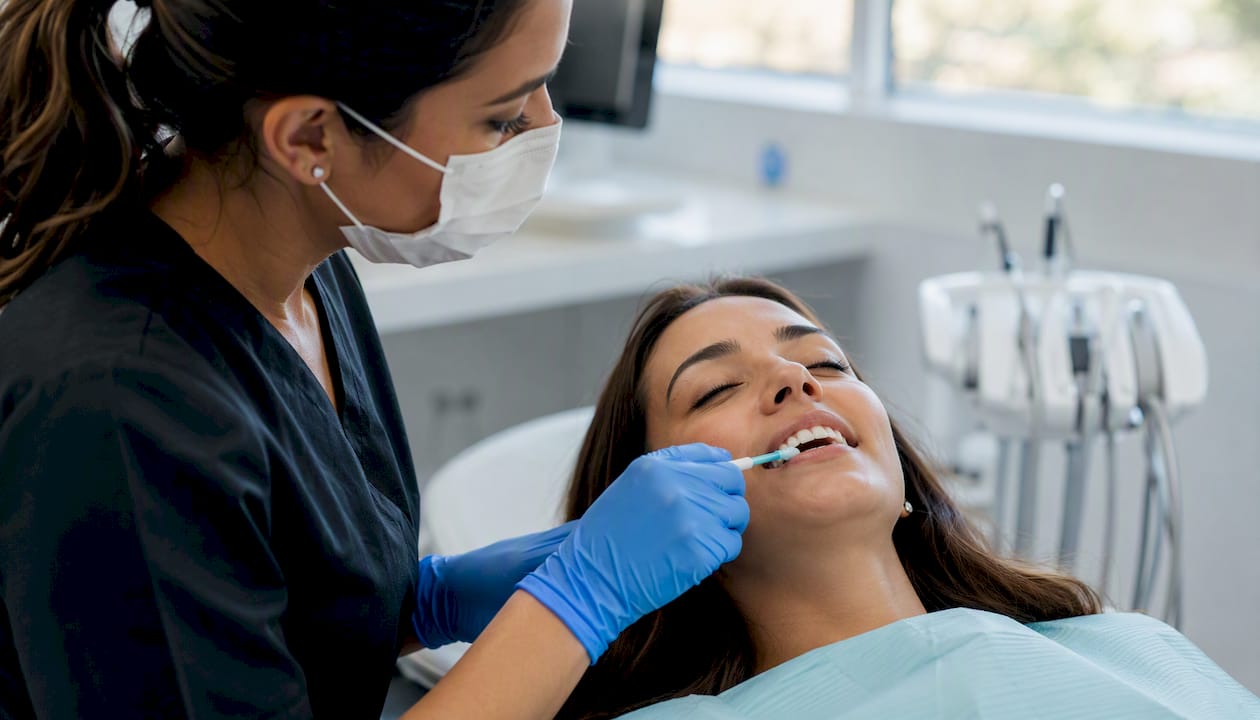
Recent clinical evidence suggests moderate hydrogen peroxide concentrations, roughly 25 to 35%, often produce whitening comparable to higher concentrations while causing noticeably less sensitivity. That’s a meaningful finding: it means going with the strongest possible gel isn’t always the smartest move.
Dentists commonly use potassium nitrate and sodium fluoride, either during or immediately after treatment, to blunt nerve sensitivity without weakening the whitening effect, a practice supported by clinical literature on desensitizing agents. The same umbrella review mentioned earlier found these agents work without compromising results.
Pro Tip: If you’ve had painful sensitivity with whitening before, say so at your consult. Ask specifically whether they’ll use a moderate-concentration gel and a desensitizing step, since that combination tends to be the most comfortable path to real results.
In-Office vs. Take-Home Trays vs. Over-the-Counter Whiteners
Speed is the clearest differentiator. In-office treatment delivers visible change the same day, dentist-supplied take-home trays take days to weeks, and OTC strips or gels can take weeks to months for a comparable effect, if they get there at all.
Professional products, whether chairside or take-home, use higher, more consistent peroxide concentrations than most retail strips and are backed by an exam that OTC products skip entirely. That’s the core distinction: predictability and safety versus convenience and low upfront cost.
Many patients get the best of both by combining approaches: an in-office session for the dramatic initial change, followed by dentist-supplied trays for periodic touch-ups at home.
| Method | Typical Speed | Oversight |
|---|---|---|
| In-office whitening | Immediate, same-day result | Full dental exam and supervision |
| Dentist take-home trays | Days to weeks | Dentist-prescribed, custom-fitted |
| Over-the-counter strips/gels | Weeks to months | None |
What Does Quality In-Office Whitening Actually Look Like?
A well-run whitening protocol often includes closed-mouth hydration techniques to limit dehydration-driven sensitivity, along with a desensitizing gel applied either during or right after treatment. Some practices send patients home with custom trays for maintenance, extending the value of the initial visit.
At your consult, ask about peroxide concentration, the desensitizing plan, expected shade change, and a full cost breakdown before committing. Southlittletonfamilydental structures its whitening services around exactly these questions, pairing in-office treatment with take-home options for patients who want lasting results.
A Note From Our Dental Team
We’d rather under-promise and deliver a comfortable, predictable result than chase the biggest possible shade change at your expense. Every whitening plan we build starts with your exam, your sensitivity history, and what you actually want your smile to look like, not a one-size-fits-all gel and light combo. Personalized care isn’t a slogan for us. It’s the exam before the gel touches your teeth.
Ready to Brighten Your Smile? Here’s Your Next Step
Southlittletonfamilydental offers in-office whitening built around comfort, not just speed, with take-home tray options and desensitizing protocols for patients with a history of sensitive teeth.

Unlike a drugstore strip you apply blind, our team starts with a real exam so we catch restorations, cavities, or gum issues before any gel touches your teeth, then tailors the concentration and desensitizing plan to you specifically. We currently offer a free teeth whitening promotion for qualifying patients and a $99 new patient special that covers the exam most people need before whitening anyway. If you’re dealing with sensitivity or other dental concerns beyond whitening, our general dentistry services address that first. Call our Littleton office or book online today to find out what a tailored whitening plan looks like for your smile.
Frequently Asked Questions
How long does in-office teeth whitening last?
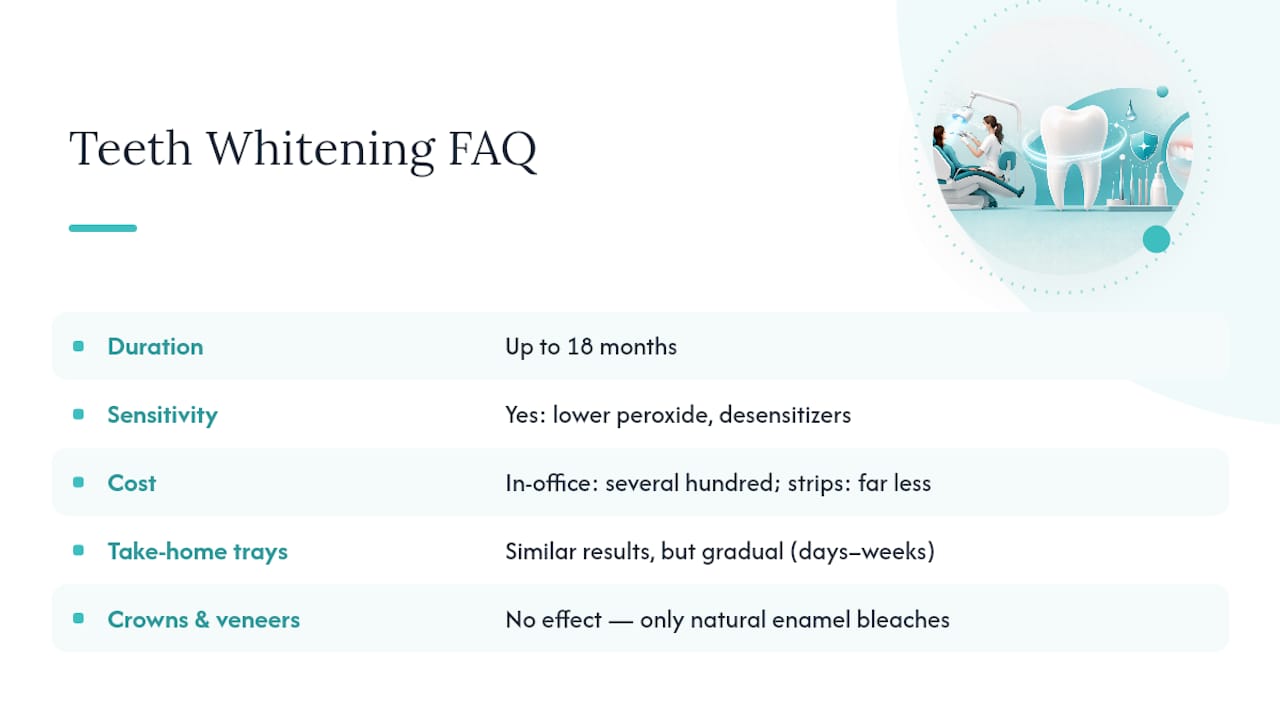
Results often stay within a clinically acceptable range for up to 18 months, though diet, smoking, and oral hygiene affect how quickly your teeth relapse toward their original shade.
Is in-office whitening safe for sensitive teeth?
Yes, with adjustments. Dentists often lower the peroxide concentration, shorten gel contact time, and add desensitizing agents like potassium nitrate or sodium fluoride specifically for patients with a sensitivity history.
How much is teeth whitening at a dental office compared to strips?
Professional in-office treatment typically costs several hundred dollars or more for a single visit, while OTC strips cost far less upfront but take weeks to months and produce less predictable, less dramatic results.
Do whitening trays work as well as in-office treatment?
Take-home trays prescribed by a dentist can reach similar final results, just more gradually over days to weeks rather than in a single appointment.
Will whitening work on crowns or veneers?
No. Bleaching gel only affects natural enamel, so crowns, veneers, and fillings stay their original color regardless of how many sessions you do.
This article is general information, not a substitute for advice from a qualified doctor. Consult a qualified healthcare professional about your own circumstances before acting on anything here.
Sources
- PubMed: retrospective clinical study (2026)
- Whitening | American Dental Association
- In-office tooth bleaching protocols: an umbrella review (Saudi Dental Journal / Springer Nature)
- PubMed: moderate-concentration whitening evidence
- PubMed: desensitizing agents and bleaching-related sensitivity