
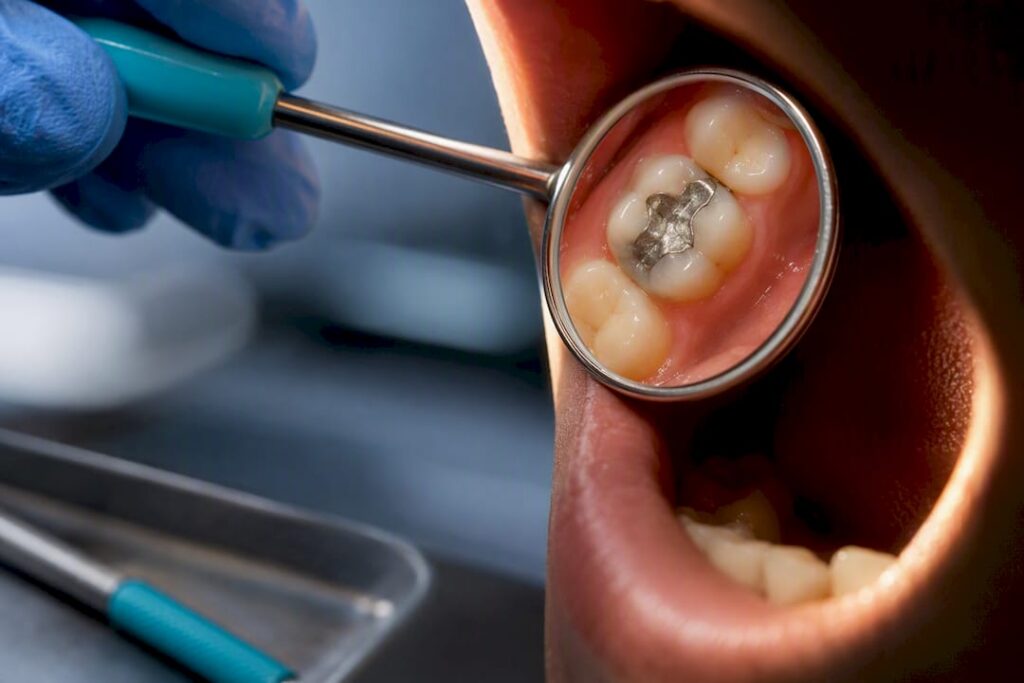
Most cases of a metal taste in mouth are temporary and tied to something ordinary: a buildup of plaque, a new medication, or a lingering sinus infection. The NIDCD and Harvard Health both point to oral hygiene issues and drug side effects as the leading culprits. If the taste sticks around past one to two weeks, keeps coming back, or shows up with red flags like slurred speech or trouble swallowing, get it checked. A dental exam at a practice like Southlittletonfamilydental is a smart first stop, since dental causes are among the most common and most fixable.
TL;DR:
- Most metallic taste cases are temporary and linked to oral hygiene issues, medications, or sinus infections, and often resolve without further intervention.
- Dental causes like corroding restorations, gum disease, or oral thrush are highly common and can be effectively treated during a routine exam.
- A taste lasting over two weeks, recurring, or accompanied by other symptoms such as mouth pain or fever warrants an immediate or scheduled medical evaluation.
- Medications, reflux, and environmental exposures contribute to metallic taste, with timing and associated symptoms helping narrow the cause.
- Simple measures like hydration, tongue scraping, and avoiding metal utensils can provide relief while identifying underlying issues.
Table of Contents
- What Causes a Metallic Taste, and How to Tell Them Apart
- Why a Dental Exam Is the Logical First Step
- How to Ease a Metallic Taste While You Sort Out the Cause
- When to See a Doctor or Dentist
- Preventing a Metallic Taste From Coming Back
- Could It Be Something Neurological?
- The Mind-Body Connection: Stress, Anxiety, and Taste Perception
- Do Allergies and Food Intolerances Play a Role?
- A Clinic-First Take on the Metallic Taste Puzzle
- Sources
- FAQ
What Causes a Metallic Taste, and How to Tell Them Apart
The causes of metallic taste in mouth split into a handful of clear categories, and the pattern of onset usually points you toward the right one.
Oral and dental issues top the list. Bleeding or infected gums release a faint iron flavor that mimics the taste of blood, which is essentially what it is. A crown or filling that’s corroding, especially older amalgam or metal restorations, can leach a subtle metallic tang directly at the source. Oral thrush, a fungal overgrowth, and dry mouth from reduced saliva flow both interfere with how taste buds process flavor, often producing a metallic or bitter edge.
Medications and supplements cause a metallic taste in mouth through more than one mechanism. Some drugs, like metformin, get excreted directly into saliva. ACE inhibitors and certain antibiotics do the same. Iron and zinc supplements carry an inherent metallic mineral taste that lingers after swallowing. Antihistamines and some antidepressants cause dry mouth, which indirectly distorts taste.
Infections and postinfectious changes matter more than most people realize. Sinusitis, ordinary upper respiratory infections, and COVID-19 all disrupt retronasal olfaction, the process where aromas travel from the back of your throat up into your nasal passages. Since smell drives most of what we perceive as taste, a clogged or inflamed sinus system can register as a persistent metallic taste after eating, even when the food itself is fine.
Systemic and other triggers round out the list:
- Kidney or liver disease, which alters how waste products circulate and affects taste perception
- GERD, where stomach acid and partially digested food reflux into the mouth and produce a bitter, metallic flavor, especially after meals or lying down
- Chemical or heavy-metal exposure, relevant for people working with lead, mercury, or industrial solvents
Timing is your best diagnostic clue. A metallic taste that started the same week as a new prescription points to medication. One that shows up specifically after meals suggests reflux. One tied to a stuffy nose points to sinus involvement.
Why a Dental Exam Is the Logical First Step
Dental causes are common enough, and treatable enough, that starting with a dentist often resolves the mystery faster than a round of specialist referrals. A targeted exam looks at exactly the structures most likely to be responsible.
During an evaluation, a dentist typically checks:
- Gum tissue for inflammation, bleeding, or periodontal pockets
- Existing crowns, fillings, and bridges for corrosion or breakdown
- The tongue’s surface for coating, thrush, or irritation
- Saliva flow and signs of dry mouth
- X-rays, when there’s reason to suspect infection under a restoration
Fixing the underlying issue usually stops the taste. Treating gum disease with a deep cleaning, replacing an old or failing filling, or managing oral thrush with an antifungal rinse each address the taste at its source rather than masking it. When dental causes are ruled out, a dentist’s next move is typically a referral to an ENT for sinus-related concerns or back to a primary care provider for a broader workup.
Pro Tip: Bring a full list of your current medications and supplements to your dental visit. Dentists cross-reference that list against known causes of dysgeusia far more often than patients expect.
A dental practice offering same-day emergency exams for sudden-onset symptoms, alongside preventive visits and individualized treatment plans, makes ruling out dental causes a fast, low-friction first move rather than a weeks-long wait.
How to Ease a Metallic Taste While You Sort Out the Cause
A few simple changes can take the edge off while you and your provider figure out what’s driving it.
- Rinse with a baking soda or saline solution a few times a day to neutralize acidity and clear residue.
- Scrape your tongue each morning; a coated tongue holds onto metallic and bitter flavors longer than a clean one.
- Stay hydrated throughout the day, since dry mouth intensifies almost every taste distortion.
- Chew sugar-free gum to stimulate saliva flow between meals.
- Swap metal utensils and cookware for glass, ceramic, or plastic alternatives if you’re sensitive to that flavor note.
- Favor cold or mild foods over hot, strongly seasoned dishes, which tend to amplify metallic notes.
If a medication is the likely trigger, talk to the prescriber before changing anything. Never stop a drug like metformin or an ACE inhibitor on your own; clinicians can often adjust timing, switch to an alternative, or confirm the taste is a manageable, temporary side effect.
Zinc deserves a specific note here. Randomized trials of zinc gluconate have shown improvement in some patients with idiopathic taste disorders, but serum zinc levels don’t reliably predict who will respond. That’s an important caveat: this isn’t a supplement to self-dose at high levels hoping for a fix. Work with a clinician who can monitor for both response and side effects.
On the clinical side, treatment tracks the cause. Infections get antibiotics or antifungals. Corroded restorations get replaced. Reflux gets managed with dietary changes or acid-reducing medication. Dry mouth gets addressed with saliva substitutes or a review of contributing drugs, an approach Harvard Health recommends as a starting point while the underlying trigger gets identified.
When to See a Doctor or Dentist
A metallic taste that’s your only symptom is usually nothing serious. The Cleveland Clinic notes that isolated cases tend to trace back to oral hygiene, medication, or a passing infection. The calculus changes with duration and company.
Book an evaluation if the taste lasts more than one to two weeks or keeps returning after it seems to resolve. Seek immediate care for stroke signs (sudden facial drooping, slurred speech, arm weakness), difficulty breathing, or chest pain alongside the taste change, since these point to something acute rather than a taste disorder on its own.
Schedule a prompt, non-emergency visit for:
- Unexplained weight loss
- Persistent bad breath that doesn’t respond to brushing
- Mouth or facial pain
- Fever
- A taste change following recent dental work that doesn’t improve after a few days
Expect a workup that includes a medication review, an oral exam, possibly a CBC or metabolic panel, and B12 or zinc levels if a deficiency seems plausible. ENT evaluation or imaging comes into play only when sinus or neurological symptoms point that direction.
Preventing a Metallic Taste From Coming Back
Small daily habits cut recurrence risk more than any single treatment.
- Brush twice daily, floss once, and scrape your tongue each morning as part of a consistent routine.
- Address dry mouth early with water, sugar-free gum, or an artificial saliva product, and see a dentist if it’s tied to a night guard or a medication you can’t easily change.
- Keep a short food and symptom journal for a couple of weeks if the taste is intermittent. Patterns tied to specific meals or times of day narrow the cause fast.
- Loop in your prescriber before adjusting any medication linked to taste changes.
- If you work around lead, mercury, or industrial chemicals, ask your employer about exposure monitoring and occupational safety guidance.
Pro Tip: Quitting smoking often improves taste perception within weeks, since tobacco dulls taste buds and dries out the mouth, two factors that make metallic taste worse.
Could It Be Something Neurological?
Metallic taste occasionally traces back to the nervous system rather than the mouth or gut, though this is far less common than dental or medication-related causes.
Bell’s palsy, a sudden, usually one-sided facial nerve paralysis, can distort taste on the affected side of the tongue because the facial nerve carries taste signals from the front two-thirds of the tongue. Migraines sometimes come with an aura phase that includes taste disturbances alongside the more familiar visual symptoms. Seizures, particularly those originating in the temporal lobe, can produce a brief metallic or otherwise unusual taste as part of the aura that precedes the event itself.
What separates these from the more common causes is the company they keep. Bell’s palsy shows up with visible facial drooping. Migraine-related taste changes appear alongside a headache pattern you likely already recognize. Seizure auras are brief, often repetitive in character, and typically followed by other neurological symptoms.
If a metallic taste ever appears suddenly alongside facial weakness, vision changes, confusion, or a headache unlike any you’ve had before, treat it as a signal to seek care quickly rather than something to monitor at home. Isolated neurological causes of taste disturbance are uncommon enough that most people experiencing a metallic taste don’t need to worry about this category, but it’s worth knowing the warning signs.
The Mind-Body Connection: Stress, Anxiety, and Taste Perception
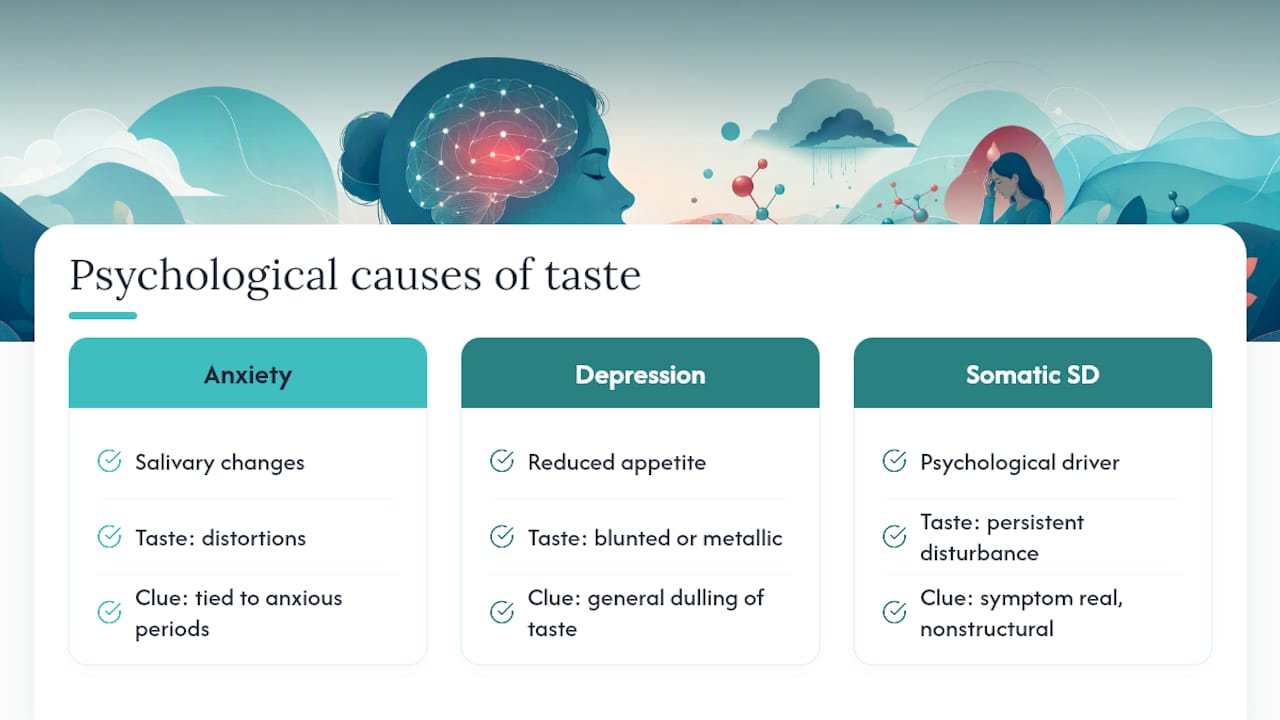
Psychological states genuinely alter how food and saliva taste, not just how much you notice or complain about it. Anxiety and chronic stress change salivary flow and composition, which shifts how taste receptors interact with what’s in your mouth. People with heightened anxiety also tend to report taste distortions more frequently, partly because anxiety sharpens attention toward bodily sensations that would otherwise go unnoticed.
Depression carries a related but distinct effect. It’s linked to reduced appetite and blunted taste perception generally, and some people describe a persistent metallic or “off” quality to food as part of that broader dulling.
Somatic symptom disorder deserves a careful mention. This is a real diagnosis where psychological distress manifests as persistent physical symptoms, including taste disturbances, and it’s not the same as saying the taste “isn’t real.” The sensation itself is genuine; the underlying driver is psychological rather than structural or chemical.
None of this means a metallic taste is “just stress” by default. It means psychological factors belong on the list of things to consider, especially when oral, medication, and infection causes have been ruled out and the taste correlates with anxious or depressive periods. A clinician who treats the underlying anxiety or mood disorder sometimes sees the taste symptom improve alongside it, which is itself a useful diagnostic clue.
Do Allergies and Food Intolerances Play a Role?
Seasonal and food allergies contribute to metallic taste more often than people expect, mostly through the same retronasal pathway that makes sinus infections taste-altering. Nasal congestion from pollen or pet allergies blocks the airflow that carries aroma compounds to your olfactory receptors, and since smell drives most flavor perception, that blockage reads as a taste change, sometimes with a metallic edge.
Oral allergy syndrome is a more specific case worth knowing about. Some people with pollen allergies react to raw fruits and vegetables that share proteins with that pollen, think apples for birch pollen or melon for ragweed, with tingling, itching, or an odd metallic aftertaste in the mouth right after eating them. Cooking the food usually eliminates the reaction, which is a useful clue if you notice the taste specifically after certain raw produce.
True food intolerances, as opposed to allergies, are a less direct contributor but still relevant. Intolerances tied to digestive discomfort can trigger reflux, and reflux is a well-established cause of metallic taste in its own right. If a metallic taste after eating tracks consistently with specific foods, an allergist can run targeted testing rather than leaving you to guess through elimination diets alone.
A Clinic-First Take on the Metallic Taste Puzzle
Most guides on this topic treat metallic taste as a mystery requiring a battery of specialist referrals. That’s backwards for most people. The evidence points toward oral and dental causes, plus medications, as the dominant drivers, and both are things a dentist can screen for in a single visit. Starting with an ENT or ordering bloodwork before ruling out a corroded filling or early gum disease wastes time and money for the majority of cases.
What’s underrated is how often the fix is boring: a cleaning, a medication timing adjustment, better hydration. What’s overrated is the assumption that a metallic taste signals something dire. It rarely does, especially when it’s the only symptom.
The priority is simple. If the taste has lasted more than a week or two, book a dental exam before anything else. It’s the fastest, least invasive way to rule out the most common causes, and if the dentist finds nothing, you’ve got a clean referral path forward instead of a guessing game.
— Admin
This article is general information, not a substitute for advice from a qualified doctor. Consult a qualified healthcare professional about your own circumstances before acting on anything here.
Sources
- Taste disorders | NIDCD
- Tips to fight “metal mouth” | Harvard Health
- How to manage taste disorders | PMC (2022)
- Common causes for a metallic taste in your mouth | Cleveland Clinic
FAQ
Does a Metallic Taste Mean I’m Having a Stroke?
A metallic taste alone is not a stroke symptom. It becomes a concern only when it appears suddenly alongside classic stroke signs like facial drooping, slurred speech, or arm weakness, in which case you need emergency evaluation immediately.
When Should I Worry About a Metallic Taste in My Mouth?
Worry if it lasts more than one to two weeks, keeps returning, or shows up with mouth pain, weight loss, fever, or trouble swallowing. An isolated metallic taste with no other symptoms is usually benign and often traces back to oral hygiene or a medication.
Can Metallic Taste Be a Sign of Diabetes?
Yes, metallic taste can occur with diabetes, usually linked to nerve changes affecting taste perception or to dry mouth from elevated blood sugar. It’s rarely the only sign, so it’s worth mentioning to a doctor alongside other symptoms like increased thirst or fatigue rather than treating it as a standalone diagnosis.
What Vitamin Deficiency Causes a Metallic Taste?
Zinc deficiency is the most commonly cited nutritional cause, and clinical trials of zinc supplementation have shown improvement in some patients with taste disorders. B12 deficiency is also linked to taste changes, so a clinician may check both levels before recommending supplementation.
Does Metallic Taste After Eating Point to a Specific Cause?
A metallic taste that shows up specifically after meals often points to acid reflux, where stomach contents move back into the mouth and produce a bitter, metallic flavor. It can also signal a food-specific reaction, particularly with raw fruits or vegetables in someone with a pollen allergy.
Can a Dental Filling Cause a Metallic Taste?
Yes, an aging or corroding filling, especially older metal amalgam, can leach a subtle metallic flavor directly into the mouth. Replacing the restoration typically resolves it, which is why a dental exam is a sensible first step for anyone with an unexplained metallic taste.