

Molars arrive in distinct waves. Baby molars show up between 12 and 33 months, first permanent molars erupt around ages 5 to 7, second permanent molars follow around ages 10 to 13, and wisdom teeth typically show up somewhere between 17 and 25. Some kids run early, some run late, and both are usually fine. What isn’t normal is a high fever or severe swelling alongside a new tooth. That combination deserves a call to your dentist or pediatrician, not a shrug.
TL;DR:
- Permanent molars usually erupt between ages 5 and 13, with first molars around 5-7 years and second molars around 10-13 years.
- Wisdom teeth can arrive from age 17 to 25 but often do not erupt at all, and delayed eruption can be typical in some children.
- Symptoms like excessive drooling, swelling, or fussiness often occur a few days before molar eruption, but high fever or severe swelling need prompt medical attention.
- Proper home remedies include chilled teething rings and gum massage, with over-the-counter pain relief advised only if symptoms are severe; avoid benzocaine gels.
- Clear warning signs for concern include fever over 100.4°F, persistent vomiting or diarrhea, facial swelling affecting breathing, or symptoms lasting well past a typical 8-day eruption window.
Table of Contents
- When Do Molars Come In? The Full Eruption Timeline
- Baby Molars vs. Permanent Molars: What’s Actually Different
- Signs Your Child’s Molars Are Coming In
- How to Ease Molar Discomfort at Home
- When to Call the Dentist or Pediatrician
- How South Littleton Family Dental Supports Families Through the Molar Years
- A Dentist’s View on Molar Timing and Parent Anxiety
- Sources
- FAQ
When Do Molars Come In? The Full Eruption Timeline
Molar eruption isn’t a single event. It happens in four separate waves spread across two decades, and each wave has its own predictable window.
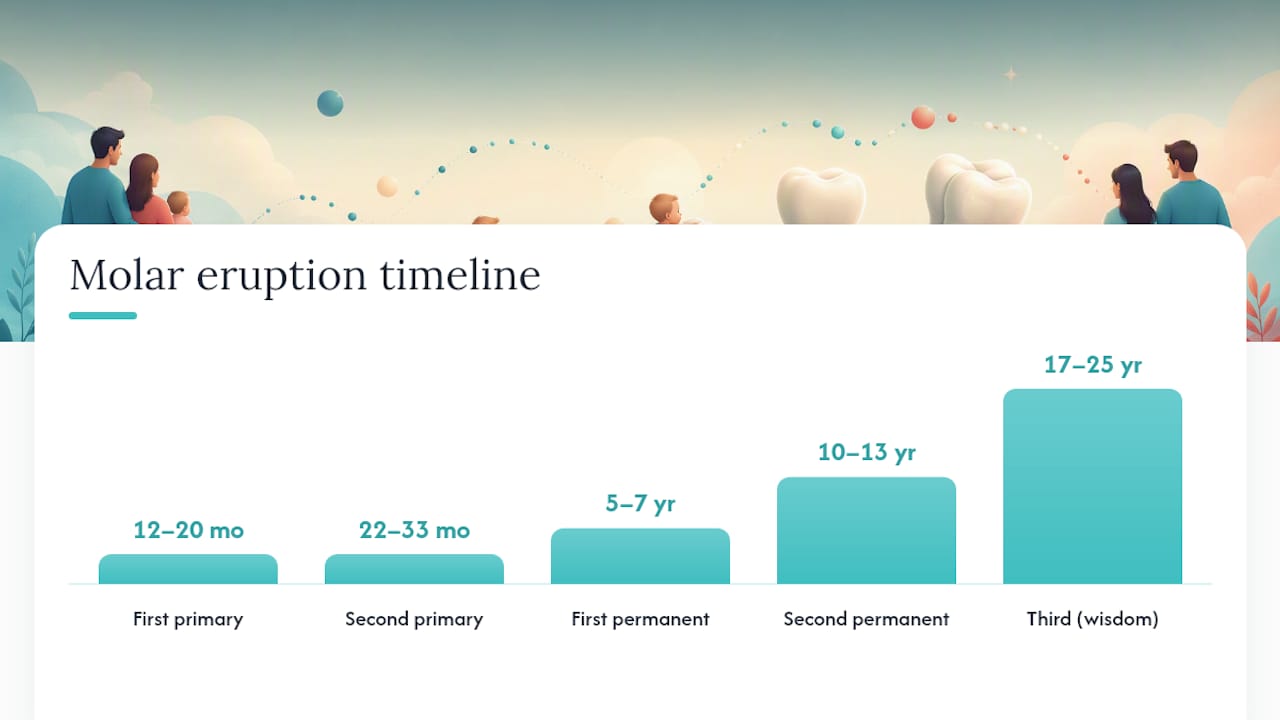
First primary molars usually break through between 12 and 20 months, with second primary molars following between 22 and 33 months, according to the ADA’s tooth development chart. The Cleveland Clinic puts the first primary molars slightly earlier, between 13 and 19 months, which just reflects how much natural spread exists even in “average” ranges. By around age 3, most kids have all 20 primary teeth in place.
Then things go quiet for a couple of years, until the permanent molars start their climb.
| Molar type | Typical eruption age | Location note |
|---|---|---|
| First primary molars | 12–20 months | Upper and lower, behind canines |
| Second primary molars | 22–33 months | Completes the primary set |
| First permanent molars (“6-year molars”) | 5–7 years | Erupt behind baby teeth, don’t replace anything |
| Second permanent molars (“12-year molars”) | 10–13 years | Behind the 6-year molars |
| Third molars (wisdom teeth) | 17–25 years | Last to arrive, if they arrive at all |
The detail that trips up a lot of parents: first permanent molars don’t replace any baby tooth. They erupt in new real estate at the back of the jaw, which is exactly why so many parents mistake a new 6-year molar for “just another baby tooth” and skip the extra brushing attention it needs.
Timing varies by more than just luck. Kids born prematurely often see delayed eruption, family patterns matter (if a parent got early molars, their kid likely will too), and some research on sex differences in dental development suggests girls trend slightly ahead of boys in permanent tooth eruption. None of this is diagnostic on its own. It’s just why eruption charts are ranges, not deadlines.
Baby Molars vs. Permanent Molars: What’s Actually Different
Primary molars are smaller, thinner enameled, and built to do one job for a limited time: chew through toddlerhood until they’re pushed out by permanent teeth underneath. Permanent molars are bigger, structurally tougher, and have deep grooves on their chewing surfaces called pits and fissures. That grooved surface is great for grinding food and terrible for keeping out cavity-causing bacteria, which is exactly why first permanent molars are the teeth dentists worry about most in kids ages 6 to 9.
Here’s the replacement logic broken down simply:
- Baby front teeth and baby molars get replaced by permanent teeth over several years.
- First permanent molars never replace anything. They arrive as brand-new teeth behind the primary set.
- Second permanent molars, arriving around ages 10 to 13, are also new additions, not replacements.
- Wisdom teeth, when they show up, are the final new additions, with no primary predecessor at all.
Because six-year molars sit far back and are new to the mouth, a lot of kids don’t brush them well, and parents don’t always know they need extra attention. Dental sealants applied soon after eruption fill those deep grooves before decay gets a foothold. If your child is approaching age 6, ask your dentist about sealant timing at the same visit where you’re checking eruption progress.
Signs Your Child’s Molars Are Coming In
Molar teething tends to announce itself a few days before the tooth actually breaks the gum line. Watch for excessive drooling, gum swelling or a visible white cusp poking through, increased chewing on hands or toys, disrupted sleep, and general fussiness that’s worse than usual.
In a clinical trial tracking primary tooth eruption, drooling appeared in about 92% of cases, sleep disturbances in 82.3%, and irritability in 75.6%. The same study found no meaningful link between teething and true fever or diarrhea, according to research published in PMC.
That last point matters more than the symptom list itself. A lot of parents assume a feverish, diarrhea-hit kid is “just teething” and wait it out. The clinical evidence doesn’t back that assumption up. A low-grade temperature bump on the actual day a tooth breaks through can happen, but a real fever, generally defined as 100.4°F or higher, usually points to something else, according to pediatric guidance on teething and fever. Treat fever as its own problem until you know otherwise.
How to Ease Molar Discomfort at Home
Molar teething tends to run in a predictable window: symptoms often ramp up about 4 days before the tooth erupts, peak around the eruption day itself, and taper off within roughly 3 days after, an 8-day arc documented in the PMC clinical trial on teething remedies. If discomfort drags on well past that window, it’s worth a second look rather than more patience.
Here’s what to try, in order of what the evidence actually supports:
- Chilled teething rings. Refrigerate, don’t freeze. A frozen ring gets hard enough to bruise sensitive gum tissue.
- Gentle gum massage. Clean finger, light pressure, along the swollen ridge. Simple and surprisingly effective.
- Cuddle therapy. Sounds soft, but the same clinical trial found that comfort measures like extra holding and closeness ranked among the top parent-rated remedies for easing symptoms.
- Age-appropriate teething foods. Cold applesauce or chilled fruit in a mesh feeder for kids already eating solids.
- Over-the-counter pain relief when needed. Acetaminophen or ibuprofen dosed for your child’s weight and age can help on rough days. Check with your pediatrician on dosing before you start.
What to skip entirely: benzocaine-containing teething gels. They’ve been linked to a rare but serious blood condition called methemoglobinemia, and Harvard Health has flagged the risk clearly enough that most pediatric groups now advise against them for infants and young kids.
Pro Tip: Keep two or three teething rings in the fridge on rotation. Molar discomfort flares in bursts, and having a cold one ready beats scrambling while your toddler is already upset.
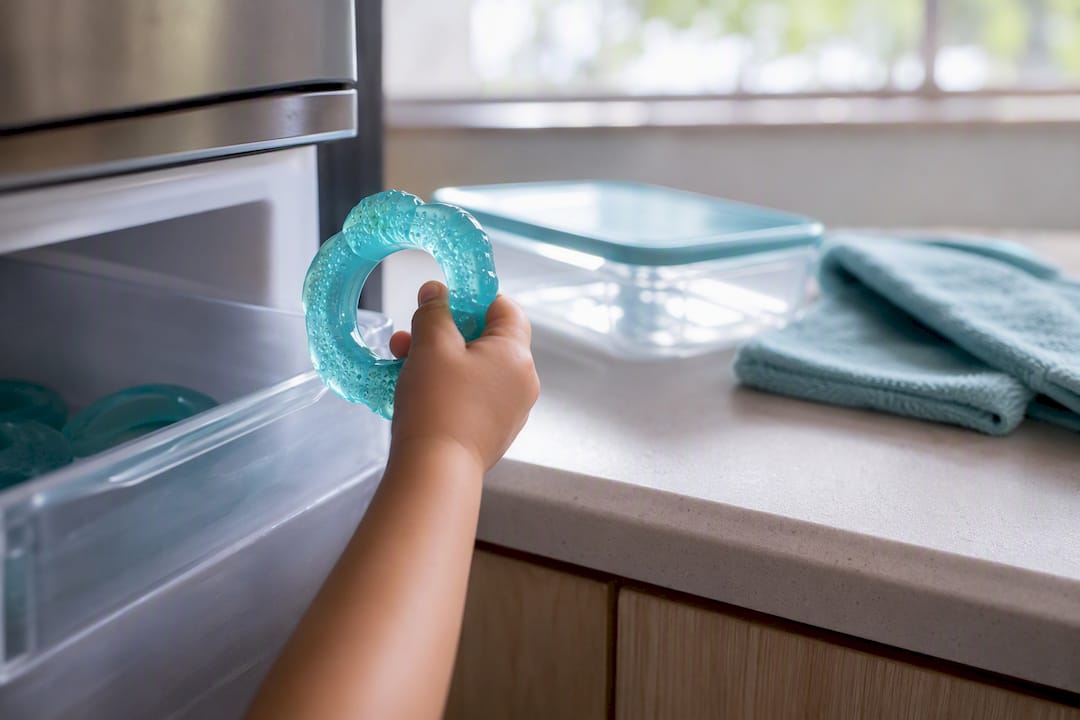
Always supervise chewing on any teething toy, and check it regularly for cracks or loose pieces before handing it over.
When to Call the Dentist or Pediatrician
Most molar eruption is uneventful and doesn’t need a special appointment. But a few signs cross the line from “normal teething” into “get it checked.”
- A fever at or above 100.4°F, especially if it lasts more than a day.
- Persistent vomiting or diarrhea, which teething doesn’t typically cause on its own.
- Facial swelling that affects breathing, swallowing, or looks lopsided.
- Discomfort that doesn’t improve at all within the usual 8 day teething window.
Outside of urgent flags, plan two routine touchpoints: the first dental visit by your child’s first tooth or by age 1, and a specific check when first permanent molars start erupting around age 6, when sealant timing and preventive care are worth discussing directly with your dentist. A good primer on first-visit timing can help you know what to expect if this is your family’s first go-round. At the molar-stage visit, expect your dentist to check eruption progress, look for early decay in those new grooves, and talk through sealant options before problems start.
How South Littleton Family Dental Supports Families Through the Molar Years
Molar eruption spans toddlerhood through the teenage years, which means your family dentist becomes a long-term partner, not a one-time stop. South Littleton Family Dental in Littleton, CO built its children’s dentistry services around exactly that stretch, with comfort-focused visits designed to keep kids calm during exams and treatment.
What that looks like in practice:
- Routine exams timed to catch new permanent molars right as they erupt, so sealants can go on before decay starts.
- Same-day emergency exams and treatment if a molar comes in with real pain or swelling that can’t wait for a scheduled slot.
- Accessible entry points for new patients, including introductory offers so cost isn’t the reason a molar issue goes unchecked.
- Individualized care plans that account for how your specific child is progressing through the eruption timeline, not a one-size script.
Before a visit tied to molar concerns, jot down when you first noticed symptoms, what you’ve already tried at home, and any questions about sealant timing. That short prep list makes the appointment more useful for everyone.
A Dentist’s View on Molar Timing and Parent Anxiety
Eruption charts are useful, but they’re averages built from thousands of kids, not a report card on your specific child. I’ve seen plenty of healthy kids get their first permanent molars at 4 and a half, and plenty of equally healthy kids wait until just past 7. Neither extreme is a red flag by itself.
What actually deserves your attention isn’t the calendar. It’s the pattern of symptoms. Fever, real swelling, or discomfort that won’t quit past that 8-day window are the signals worth acting on, not the exact week a tooth breaks the surface. Stay calm about timing, stay alert about symptoms that don’t fit the normal profile, and call your dentist when something feels off. That’s the whole strategy, and it works.
— Admin
Sources
- Give Kids A Smile — ADA eruption chart
- Signs and symptoms associated with primary tooth eruption: a clinical trial of nonpharmacological remedies (PMC)
- Teething (teething syndrome) — Cleveland Clinic
This article is general information, not a substitute for advice from a qualified doctor. Consult a qualified healthcare professional about your own circumstances before acting on anything here.
FAQ
What Are the Symptoms of Molars Coming In?
The most common signs are heavy drooling, gum swelling or a visible tooth cusp, increased chewing, sleep disruption, and irritability. A clinical trial found drooling in about 92% of cases and sleep disturbances in 82.3%, with no reliable link to fever or diarrhea.
How Do You Know Which Tooth Is Coming In?
Check the location and timing against the eruption chart: molars erupt further back in the jaw than incisors or canines, and baby molars arrive between 12 and 33 months while permanent molars follow years later. A visible white ridge or bump on the gum, combined with your child’s age, usually points to which tooth is on its way.
Are Molars the Most Painful Teeth for Babies?
Molars are generally considered more uncomfortable than smaller front teeth because they’re wider and have to push through more gum tissue at once. That said, discomfort varies a lot by child, and the 8-day symptom window documented in teething research applies to molars just as it does to other teeth.
What Are the Stages of Tooth Eruption?
Eruption generally moves through four broad stages: primary front teeth and canines in infancy, primary molars between 12 and 33 months, permanent teeth replacing primary ones starting around age 6, and the final permanent molars, including wisdom teeth, arriving from the pre-teen years into the mid-20s. Timing within each stage varies by child and family history.
How Long Does Molar Teething Usually Last?
Symptoms typically follow an 8-day pattern: about 4 days of buildup before the tooth breaks through, the eruption day itself, and roughly 3 days of settling afterward, based on the PMC clinical trial. If discomfort continues well beyond that window, it’s worth having your child evaluated.