

Follow your dentist’s written instructions first, because they override any generic advice. In the first hours, bite on gauze to control bleeding, rest with your head raised, ice the cheek for swelling, take the pain medicine you were given, and skip smoking and straws. Call your dental office right away for heavy bleeding, high fever, pain that keeps climbing, or pus.
TL;DR:
- Pink saliva can be normal, but steady bright red bleeding needs prompt dental advice; ask before combining acetaminophen and ibuprofen.
- Brush other teeth normally, but keep bristles away from the implant until cleared; start salt water rinses when instructed, usually after day one.
- Choose soft, lukewarm foods such as yogurt or scrambled eggs; avoid crunchy foods, small seeds, and very hot or icy items.
- Avoid smoking and vaping throughout healing; smokers face higher risks of implant failure, postoperative infection, and bone loss than nonsmokers.
- Bone fusion may take 2 to 6 months or longer, and grafting can add time; dentists recommend lifelong recalls, often every 3 to 6 months.
Table of Contents
- How do you control bleeding, swelling, and pain in the first 72 hours?
- How do you keep the area clean while it heals?
- What should you eat after implant surgery?
- When can you exercise, and how does smoking affect healing?
- What does the healing timeline look like?
- Which warning signs mean you should call right away?
- How do you prevent peri-implantitis over the long term?
- Clinic perspective: most implant recoveries are predictable
- Need a post-op check or implant follow-up? We can help
- FAQ
- Sources
How do you control bleeding, swelling, and pain in the first 72 hours?
Some oozing may occur after surgery. Pink-tinged saliva is fine; a steady flow of bright red blood is not.
- Fold fresh gauze, place it directly over the site, and bite down firmly without peeking. Follow your dentist’s instructions, and seek urgent care for heavy or uncontrolled bleeding.
- Replace the gauze when it is soaked, and keep your head elevated, even when sleeping.
- Ask your dentist whether and how to use an ice pack. Swelling patterns vary.
- Acetaminophen and ibuprofen are common over-the-counter choices, and some people alternate them. Ask your dentist before combining them, and use a prescription analgesic only as directed.
Your clinician may also prescribe an antibiotic, most often amoxicillin, or clindamycin if you are allergic to penicillin. The reasoning has support: a systematic review and meta-analysis found that antibiotic prophylaxis significantly reduces early implant failures in healthy patients, and a single dose before surgery was often enough. Take whatever regimen your dentist sets.
How do you keep the area clean while it heals?
Cleanliness matters, but so does leaving the surgical site alone. Brush your other teeth normally with a soft-bristled brush, and keep bristles away from the implant area until your dentist says otherwise. Spitting and swishing hard can disturb the clot, so let rinse water fall out of your mouth gently.
- Start warm salt-water rinses when instructed, usually after the first day.
- If your dentist prescribes chlorhexidine, follow the timing and duration they give you, since long use can stain teeth.
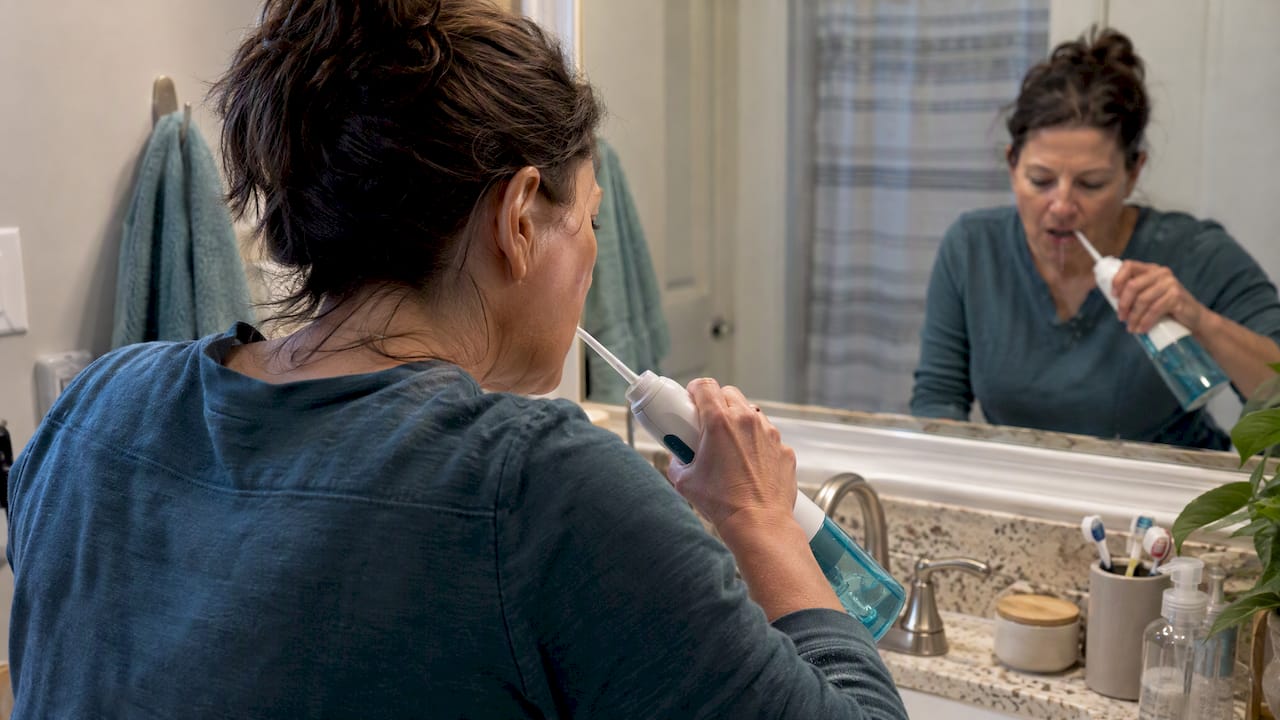
- Once cleared, add interdental cleaning: floss, small interdental brushes, or a water flosser.
A systematic review of home and professional care strategies found that water flossers used with chlorhexidine reduced inflammation and looked promising next to other interdental methods. The same review found that glycine powder air-polishing and ultrasonic devices in the dental chair also reduce inflammation around implants.
Pro Tip: Set the water flosser to its lowest pressure and aim along the gumline, never straight into the surgical site, until your dentist approves it.
What should you eat after implant surgery?
Think soft, lukewarm, and easy. While your mouth is healing, pureed soups, smoothies eaten with a spoon, scrambled eggs, yogurt, and mashed vegetables may work well.
- Avoid crunchy chips, nuts, sticky candy, and very hot or icy items.
- Skip small seeds and grains that can lodge in the site.
- Do not use straws, because suction can dislodge the clot.
Protein matters for repair. AAOMS educational material describes nutritional status as a modifiable factor in surgical outcomes, with vitamin D, vitamin C, K2, magnesium, calcium, and B vitamins all playing roles in bone and soft-tissue healing. If you suspect a deficiency, bring it up with your dentist or physician rather than self-dosing supplements.
When can you exercise, and how does smoking affect healing?
Take it easy after surgery. Ask your dentist when to resume walking, heavy lifting, running, and other exercise, and ease back in as they clear you.
- Alcohol can interact with pain medicine and slow healing, so skip it while you are taking either.
- Skip smoking and vaping entirely during healing, and ideally quit for good.
Smokers face higher implant failure, more postoperative infections, and greater marginal bone loss than nonsmokers, according to a review in the Journal of the American Dental Association. That makes smoking one of the biggest risks you can actually change. If you want help quitting, tell your dental team so they can plan around it.
What does the healing timeline look like?
Every mouth heals at its own pace, and your treatment plan sets the exact dates. Our week-by-week implant timeline goes deeper. A typical path looks like this:
- Days 1 to 3: Oozing tapers off, swelling peaks, and you manage pain with a soft diet and ice.
- End of week 1: Swelling and pain ease, stitches come out if they were not dissolvable, and you gradually resume normal hygiene.
- Weeks 2 to 6: Gum tissue closes and firms up, and you reintroduce firmer foods step by step while attending follow-up visits.
- Months 2 to 6 or more: The implant fuses with the jawbone, and your dentist places the abutment and final crown once that is complete. Bone grafting adds time.
If you had a graft, our page on bone grafting and socket preservation has more information.
Which warning signs mean you should call right away?
Most recoveries are uneventful, but contact your dental team about concerning symptoms, and seek emergency care for severe or rapidly worsening symptoms.
- Heavy or uncontrolled bleeding
- Fever or chills
- Pain that grows worse after it had been improving
- A foul taste, drainage, or pus
- An implant, abutment, or crown that feels loose
When you call, tell us how long ago the surgery was, what symptoms you have, and which medicines you have taken. Keep pressure on any bleeding while you wait. Go to an emergency room for uncontrolled bleeding, trouble breathing or swallowing, or swelling that spreads to your eye or neck. Our implant failure signs checklist lists more detail.
How do you prevent peri-implantitis over the long term?
Once healing is done, the goal shifts to keeping the tissue around your implant healthy for decades.
- Brush twice a day, and pick interdental tools that suit your restoration.
- Expect a baseline exam with probing and radiographs, then recall visits every 3 to 6 months or at least every 6 months, as your dentist recommends.
- Follow the tailored home instructions your dental team gives you.
Clinical practice guidelines call for individualized, lifelong recall for implant-borne restorations, with at-home brushing plus aids like water flossers or interdental brushes. In the chair, ultrasonic tools and glycine powder air-polishing help keep inflammation down.
Pro Tip: Book your next recall before you leave the office, so maintenance never slips off your calendar.
Clinic perspective: most implant recoveries are predictable
When aftercare is followed, implant recovery usually follows a steady, predictable course. We share information about implant processes and timelines. If something feels off, call us.
— Admin
Need a post-op check or implant follow-up? We can help
If you are recovering from implant surgery and want a second set of eyes, we can see you.
- Emergency dentistry for urgent post-op problems
- Information on implant candidacy and the full process

Call our Littleton office or book through our website, and tell us it is about your implant. Read more about our dental implant services or reach us from Southlittletonfamilydental.
This article is general information, not a substitute for advice from a qualified doctor. Consult a qualified healthcare professional about your own circumstances before acting on anything here.
FAQ
What are the steps in a dental implant procedure?
The process usually starts with an evaluation and imaging, then implant placement, a healing period while the implant fuses with bone, and finally the abutment and crown. Bone grafting may be added first when needed. Our implant process page explains each stage.
What painkiller should I take after implant surgery?
Many dentists suggest acetaminophen, ibuprofen, or a prescription analgesic for stronger pain. Your dentist will tell you which to use and whether it is safe to combine them. Check with them before mixing medicines, especially if you take other prescriptions.
How do you know if your body is rejecting an implant?
True rejection is uncommon. More often the cause is infection or failure to fuse, and the signs are pain that returns or worsens, swelling, pus, a bad taste, or a loose implant. Call your dental office promptly if you notice any of these. Our implant FAQs cover more.
How often should I see my dentist after the implant heals?
How often patients return depends on individual risk and the dentist’s recommendation. Guidelines support individualized, lifelong recall for implant restorations. Your dentist sets the schedule that fits your mouth.
Sources
- Systemic Antibiotic Prophylaxis to Reduce Early Implant Failure: A Systematic Review and Meta-Analysis
- Limited evidence suggests higher risk of dental implant failures in smokers than in nonsmokers – The Journal of the American Dental Association